Seasonal Fruits in Winter India – What to Eat, Comfort Vegetables & Simple Homemade Ideas
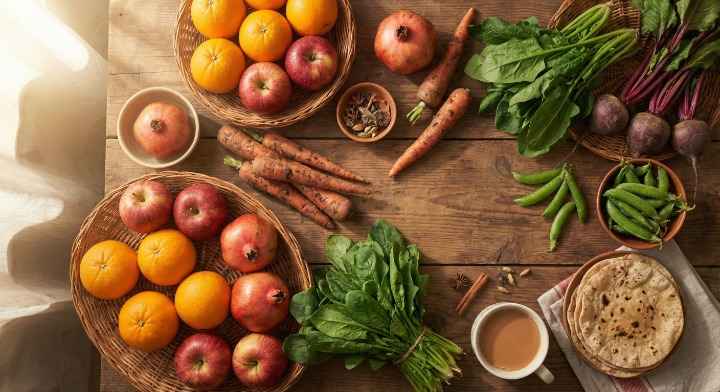
Seasonal fruits in winter India are naturally sweeter, fresher, and packed with essential nutrients that help support immunity during the colder months. Popular winter fruits in India include oranges, apples, pomegranates, grapes, guava, custard apples, and dates. These seasonal fruits are rich in vitamins, antioxidants, and fibre, making them an important part of a healthy winter diet.
Winter also brings an abundance of fresh vegetables such as carrots, beetroot, cauliflower, green peas, spinach, and broad beans. Eating seasonal produce not only enhances flavour but also provides the nutrients our bodies need during winter.
In this guide, you’ll discover the best winter fruits and vegetables available in India, their health benefits, simple homemade meal ideas, and practical tips to enjoy seasonal eating during the colder months.
List of Seasonal Fruits in Winter in India
1. Oranges
Oranges are among the most popular winter fruits in India. They are naturally rich in Vitamin C, antioxidants, and fibre, helping support immunity and overall health during the colder months.
2. Apples
Apples are widely available during winter and make a healthy everyday snack. They are high in fibre and can help support digestion and heart health.
3. Pomegranates
Pomegranates are packed with antioxidants, iron, and essential nutrients. They can be enjoyed fresh, added to fruit salads, or sprinkled over curd rice.
4. Grapes
Winter grapes are naturally sweet, juicy, and refreshing. They provide natural energy and are a good source of vitamins and antioxidants.
5. Guava
Guava is one of the richest sources of Vitamin C. This affordable winter fruit helps support immunity and can be eaten fresh or with a sprinkle of chilli powder and salt.
6. Custard Apple
Custard apples are creamy, naturally sweet, and rich in fibre. They make a delicious dessert fruit during winter.
7. Dates
Dates provide natural sweetness and energy. Many families include dates in porridge, sweets, and snacks during winter for extra nourishment.

Best Winter Vegetables in India
Winter is the best season to enjoy fresh, flavourful vegetables. Many winter vegetables in India are rich in vitamins, minerals, and antioxidants that help support immunity and overall health.
1. Carrots
Carrots are one of the most popular winter vegetables. They are rich in beta-carotene, Vitamin A, and fibre. Carrots can be used in poriyal, soups, salads, and the traditional carrot halwa.
2. Beetroot
Beetroot is packed with antioxidants, iron, and essential nutrients. It can be prepared as poriyal, juice, soup, or added to salads for a healthy meal.
3. Green Peas
Fresh green peas are widely available during winter. They add natural sweetness and nutrition to curries, pulao, upma, and kootu recipes.
4. Cauliflower
Cauliflower is a versatile winter vegetable that can be used in curries, stir-fries, biryani, and soups.
5. Spinach and Greens
Spinach and other leafy greens are rich in iron, calcium, and fibre. They can be included in dal, poriyal, kootu, and soups.
6. Broad Beans
Broad beans are commonly used in South Indian cooking during winter. They pair well with coconut-based poriyal and sambar.
7. Radish
Radish is another seasonal winter vegetable known for its crisp texture and digestive benefits. It can be added to sambar, salads, and parathas.
Practical Homemade Meal Ideas for Winter
Breakfast Ideas
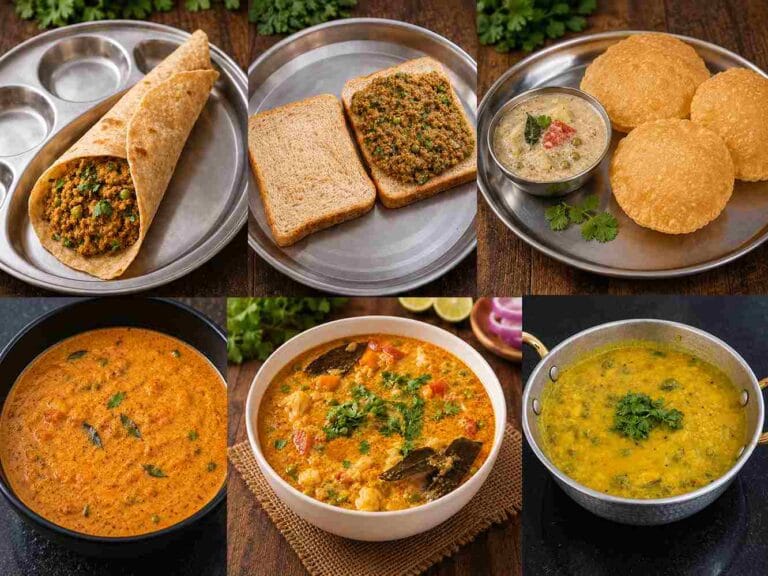
- Pongal with pepper and ghee
- Chapathi with peas curry
- Idiyappam with coconut milk
- Vegetable upma
- Healthy ragi porridge for chilly mornings
Lunch Ideas
- Rice with dal and spinach poriyal
- Vegetable biryani with raita
- Sambar rice with beetroot poriyal
- Chapathi with curry kuzhambu
- Rice with fish fry on the side
Dinner Ideas
- Soft phulkas with tomato curry
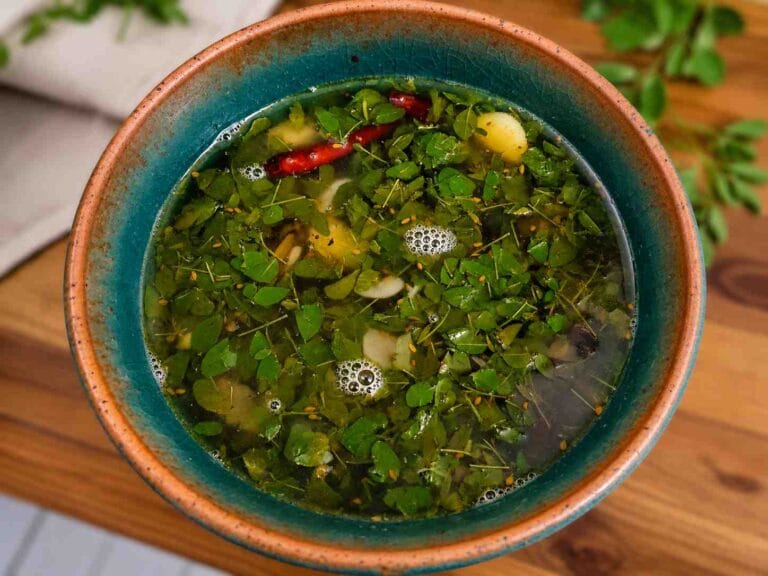
- Kollu rasam with potato roast
- Vegetable soup with toasted bread
- Carrot and peas khichdi
- Warm kanji with simple poriyal
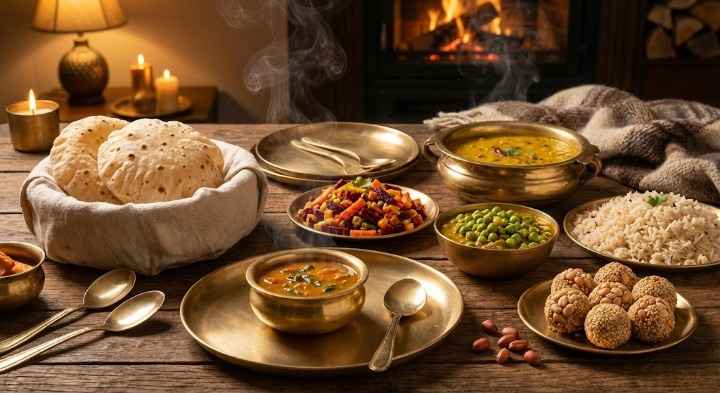
These simple homemade meals are comforting, nutritious, and perfect for staying warm and energetic during winter.
Simple habits for winter strength & energy
Not heavy food — careful food:
- Use pepper & ginger in cooking
- Garlic for curries, sambar and rasam
- Warm porridge / kanji in the evening
- 1 tsp ghee with rice or chapathi
- Peanut, sesame & jaggery snacks
- Warm milk at bedtime if it suits the body
Tiny winter habits → big difference in immunity.
Keeping winter fruits & vegetables fresh longer
A few storage habits prevent wastage:
| Item | Best Storage Method |
|---|---|
| Carrots / Beetroot / Radish | Wrap in paper, refrigerate |
| Green peas | Shell & freeze airtight |
| Spinach & greens | Wash, dry, wrap in newspaper |
| Tomatoes | Store outside the fridge |
| Oranges / Apples / Grapes | Refrigerate |
| Bananas / Custard apples | Keep outside |
Freshness is not luck — it’s routine.
Winter food memories — the real soul of the season
This part is personal for many of us:
- Sitting in the balcony sunlight eating oranges
- Warming hands near the stove while chapathis puff
- Grandmothers insisting on peanuts and sesame “for strength”
- Mothers saying “it’s winter, add more ghee”
- Waiting for the smell of carrot halwa to fill the home
Winter meals feel like care — not just recipes.
FAQs for Seasonal Fruits in Winter India
Which fruit is best to eat during winter in India?
Oranges, guava, apples, pomegranates, and dates are among the best fruits to eat during winter in India because they are rich in vitamins, antioxidants, and fibre.
Which winter fruits are rich in Vitamin C?
Oranges, guava, and amla are excellent sources of Vitamin C. These fruits help support immunity and overall health during the winter season.
Are bananas good to eat during winter?
Yes. Bananas are available throughout the year and provide natural energy, potassium, and fibre. They can be enjoyed as a snack, in porridge, or as part of a fruit bowl during winter.
What foods should be eaten during winter in India?
Warm home-cooked meals prepared with seasonal fruits, vegetables, whole grains, lentils, nuts, ginger, garlic, and ghee are ideal during winter in India.
Why is seasonal eating important during winter?
Seasonal foods are fresher, more nutritious, and naturally suited to the body’s needs during a particular season. Eating seasonal produce can support immunity, digestion, and overall well-being.
Final Thoughts
Winter teaches us that food doesn’t have to be complicated to be comforting.
Warm rotis, fresh vegetables, dal, peanuts and a sweet orange — that’s enough to make the body and heart feel safe.
When we enjoy seasonal fruits in winter India along with simple homemade meals, the body naturally receives warmth, strength and immunity without any stress or dieting.
Seasonal eating during winter gives us exactly what we need: warmth, energy, immunity and love. So this season, focus less on fancy recipes and more on fresh, homely meals shared with the people you care about.
“Choosing seasonal fruits and vegetables during winter not only improves nutrition but also supports local farmers and sustainable eating habits.”