Ambur Chicken Dum Biryani (Authentic Homestyle Recipe with Homemade Masala)
Ambur chicken dum biryani is one of those recipes I truly enjoy making at home because it reminds me that good biryani doesn’t need complicated steps or store-bought masalas. This is an authentic homestyle recipe with homemade masala, cooked slowly and patiently, just the way it’s done in many South Indian households
What makes this Ambur style chicken biryani special is the flavour base. Instead of adding ready-made biryani masala, I use a simple paste of dry red chillies, ginger, and garlic. This gives the biryani its deep colour and bold taste without overpowering the rice or chicken. The process is straightforward, but every step adds its own layer of flavour.
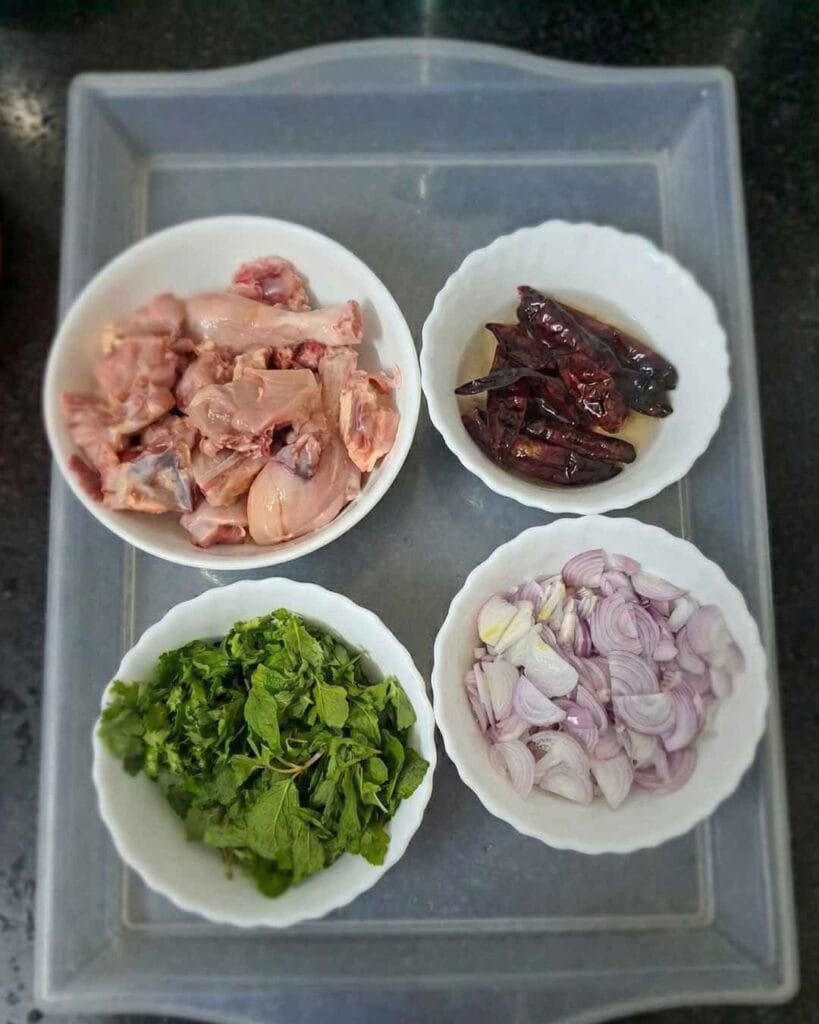
This chicken dum biryani recipe is perfect when you want something comforting yet special for a weekend lunch or family gathering. The chicken cooks gently in the masala, the basmati rice absorbs all the flavours, and the final dum brings everything together beautifully.
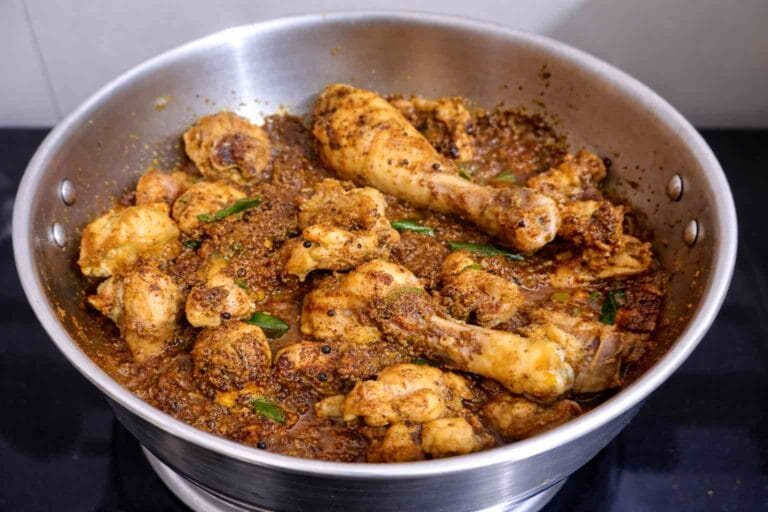
If you enjoy bold, spice-forward chicken dishes, you might also like my Pepper Chicken recipe, which uses freshly crushed pepper for heat and pairs really well as a side with mild biryani or plain rice. Both recipes follow the same homestyle approach—simple ingredients, slow cooking, and honest flavours.
This South Indian chicken biryani is not about restaurant-style excess. It’s about balance, aroma, and that satisfying feeling you get when you open the lid and see perfectly cooked biryani, ready to be served hot with raita.
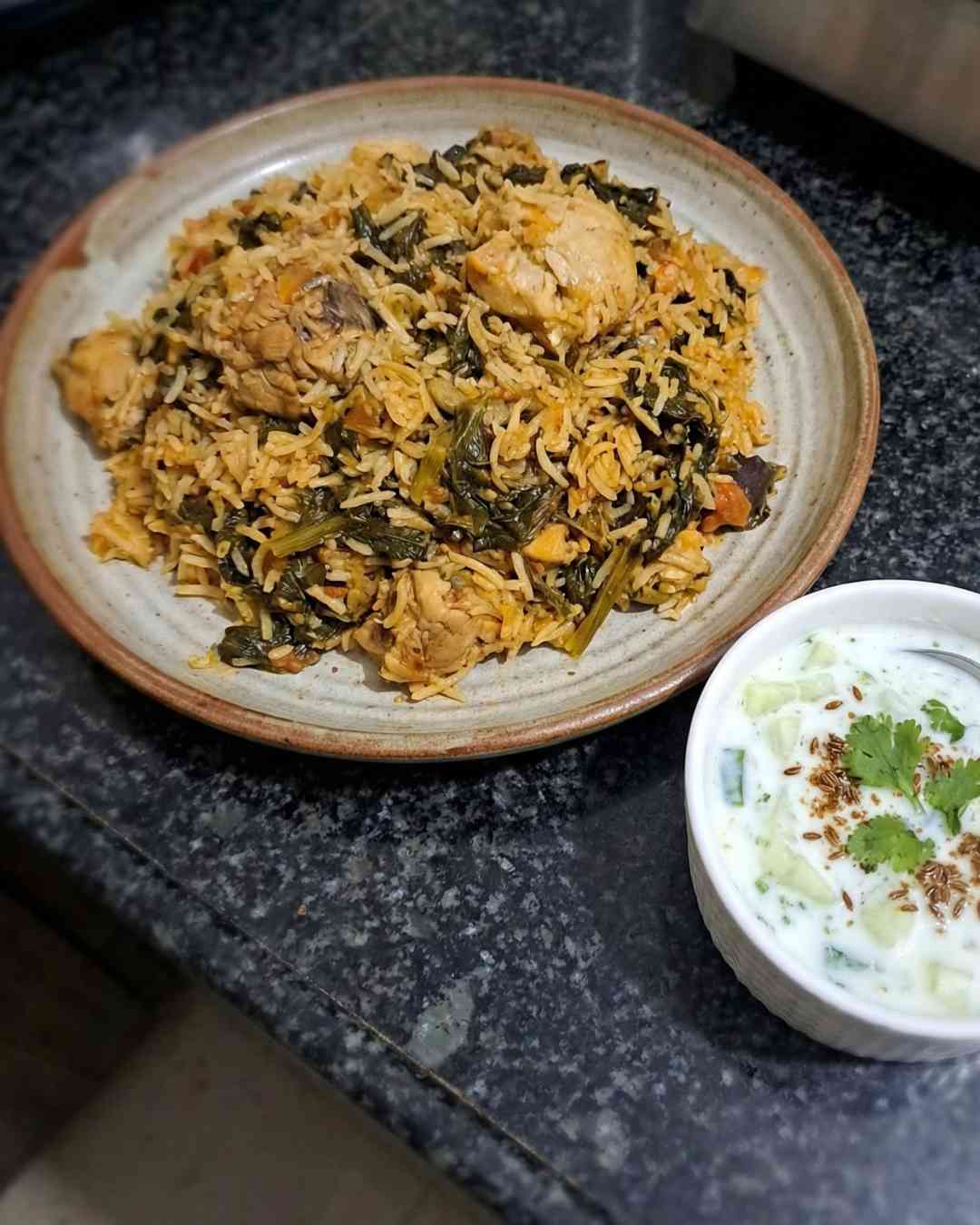
Ambur Chicken Dum Biryani (Authentic Homestyle Recipe with Homemade Masala)
Ingredients
Equipment
Method
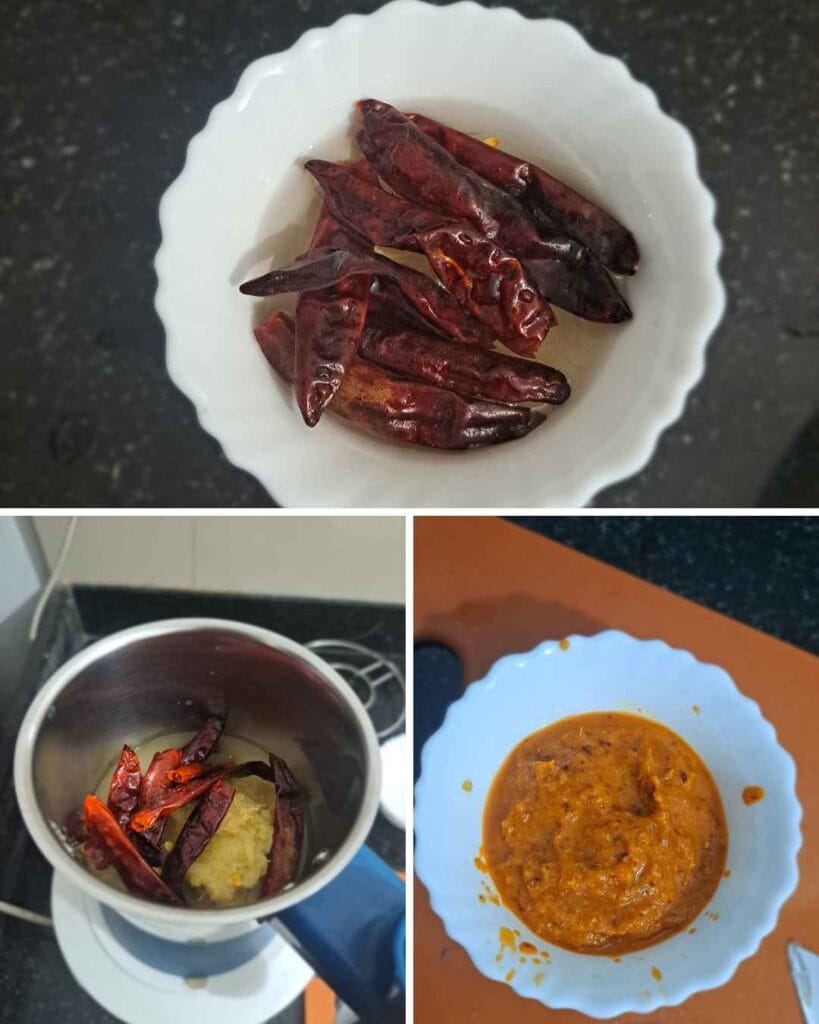
- Soak dry red chillies in hot water for 20 minutes. Grind soaked chillies, ginger, and garlic into a smooth paste and keep aside.
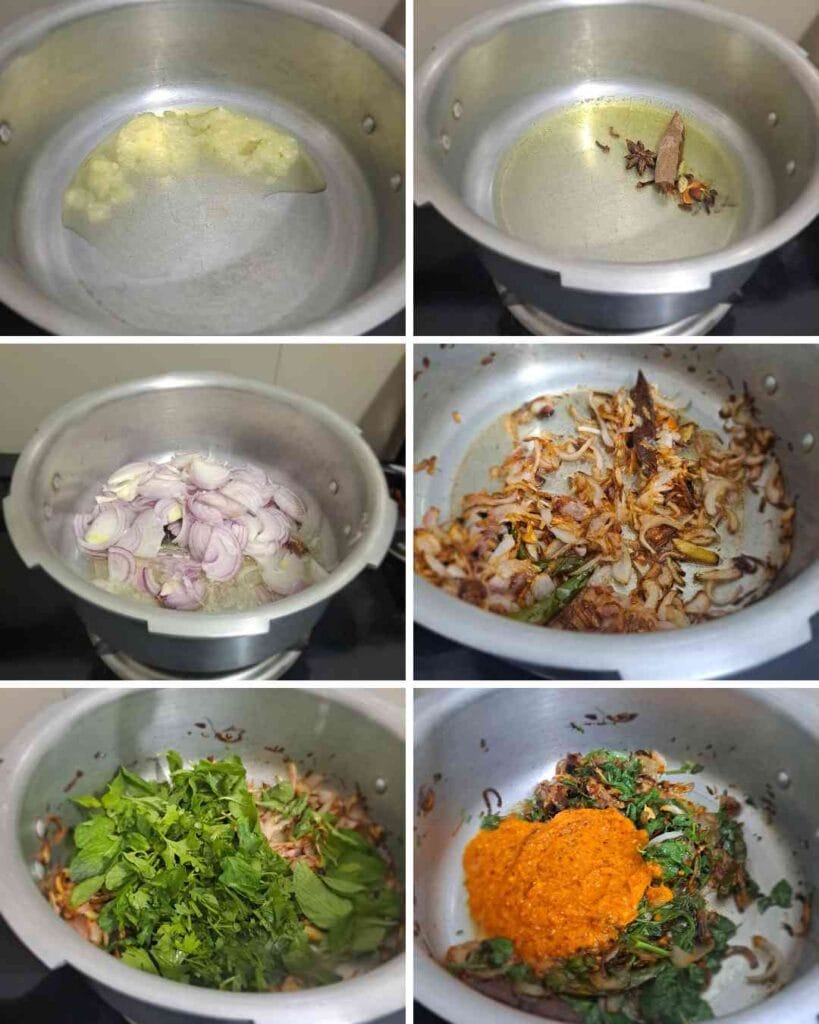
- Heat oil and ghee in a heavy-bottom biryani pot. Add bay leaf, cinnamon, cloves, cardamom, and mace.
- Add green chilli and sliced onions. Saute until onions turn golden brown.
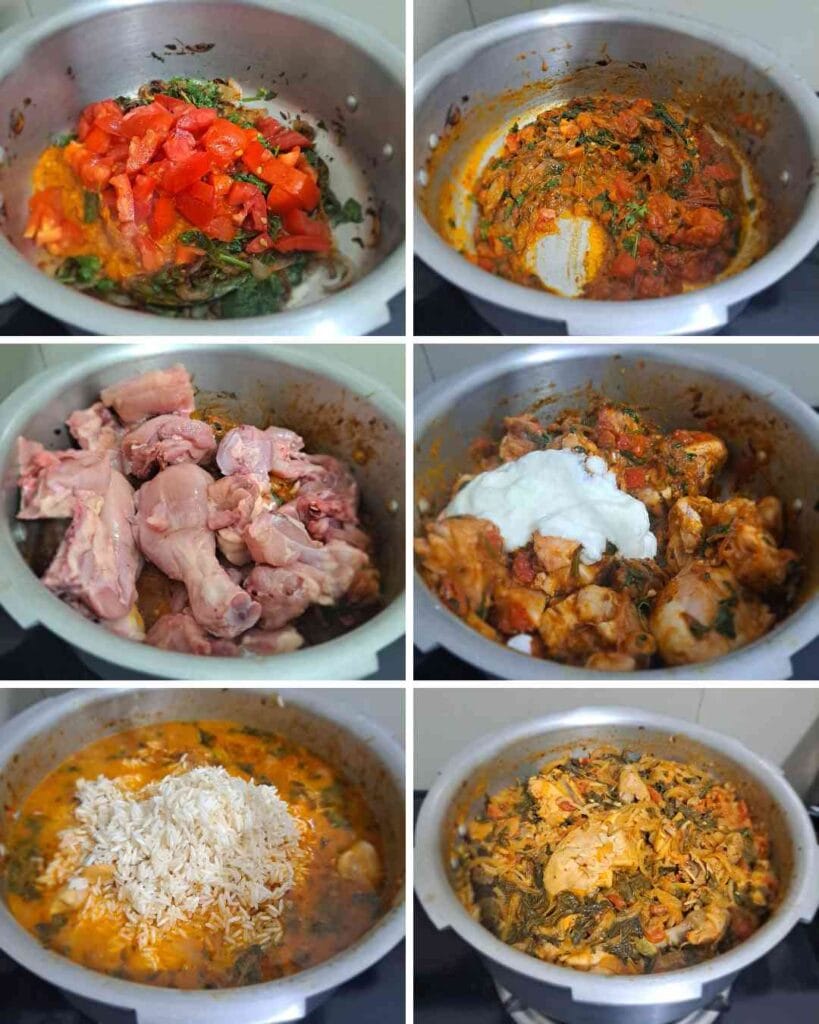
- Add chopped tomatoes and cook until soft.
- Add the grounded masala Mix well and cook until raw smell disappears.
- Add mint leaves and coriander leaves. Mix gently.
- Add cleaned chicken and mix until coated with masala.
- Add curd and turmeric powder. Mix well and cook for 2–3 minutes.
- Add 1 cup water to the chicken masala and let it boil for 5 minutes so the chicken starts cooking and the flavours blend well.
- Drain the soaked basmati rice completely and add it to the pot along with required salt, 1–2 teaspoons of lemon juice, and a small pinch of jaggery(optional). Mix gently once, making sure the rice is evenly spread without breaking the grains.
- Once the mixture starts bubbling and the rice begins to cook, reduce the flame to low, cover the pot tightly, and cook on dum for 15–20 minutes until the rice absorbs all the liquid and cooks fully.
- Switch off the flame and let the biryani rest for 10 minutes without opening the lid. This helps the steam settle and the rice grains stay fluffy.
- Open the lid, gently fluff the biryani from the sides, and serve hot with raita.
Notes
- Do not over-mix after adding rice; it may break the grains.
- If chicken releases more water, reduce added water slightly.
- Keep the pot tightly sealed during dum cooking.
- Avoid pressure cooking for this recipe—it affects texture.
- This biryani tastes best fresh and hot; reheating may dry it.
Tips & Variations
- Always cook on low flame after adding rice to avoid burning the bottom.
- Use aged basmati rice for better grain separation.
- Adjust dry red chillies based on spice tolerance.
- Ghee adds aroma, don’t skip it for authentic flavour.
- Let the biryani rest before serving for best texture.
- You can use Seeraga Samba rice instead of basmati rice for a more traditional flavour.
FAQs for Ambur Chicken Dum Biryani
How do I know when the biryani is cooked properly on dum?
After 15–20 minutes on low flame, the rice will absorb all the liquid and become fluffy. There should be no excess moisture at the bottom, and the aroma will be strong when you open the lid.
Why did my rice turn mushy during dum cooking?
This usually happens if there is too much water or if the biryani is cooked on high flame during dum. Always reduce the flame to low once the mixture starts bubbling and seal the pot tightly.
Can I reduce the number of dry red chillies without losing flavour?
Yes. You can reduce the chillies slightly and balance the flavour by cooking the masala well. The slow cooking process brings out depth even with less heat.
What should I do if the biryani sticks to the bottom of the pot?
This means the flame was too high during dum. Using a heavy-bottom vessel and cooking strictly on low flame helps prevent burning.
Is it okay if some moisture remains after dum cooking?
A small amount of moisture is normal immediately after cooking. Let the biryani rest for 10 minutes; the rice will absorb the remaining steam and settle perfectly.
Can this biryani be made in an induction or electric stove?
Yes, but ensure very low heat during dum and use a thick vessel to distribute heat evenly.
Can this Ambur chicken dum biryani be made in a pressure cooker with a whistle?
This recipe is best cooked using the dum method in a heavy-bottom pot. Using a pressure cooker with a whistle is not recommended because the high pressure can overcook the rice and make the biryani mushy.
If you must use a pressure cooker, cook without the whistle, keep the flame on low, and follow the dum timing carefully.
Can I use Seeraga Samba rice instead of basmati rice for this biryani?
Yes, Seeraga Samba rice can be used, and it gives a very traditional flavour. However, it should not be mixed with basmati rice in the same biryani because both rice varieties cook differently.
If using Seeraga Samba, reduce the water slightly and shorten the dum cooking time, as this rice absorbs water faster than basmati.
Why is my biryani watery even after dum cooking? What should I do?
This usually happens if the chicken releases extra water or if too much water was added before dum. After opening the lid, keep the biryani on very low flame for 3–5 minutes without covering, allowing excess moisture to evaporate.
Next time, reduce the added water slightly and make sure the biryani is bubbling before sealing for dum.
What if my biryani tastes too spicy before dum cooking?
After adding the rice, always taste the water before sealing the pot for dum. If it feels too spicy at this stage, mix in 1–2 tablespoons of curd or a little tomato juice or pulp to balance the heat. You can also add a small pinch of sugar/jaggery if needed to round off the sharp spice.
❤️ Final Thoughts
Why does Ambur chicken dum biryani taste better when cooked slowly on dum?
Because slow dum cooking allows the rice to absorb the chicken masala gently without breaking or turning mushy. Tasting and adjusting the spice before sealing the pot, cooking on low flame, and resting the biryani at the end all work together to create balance and aroma.
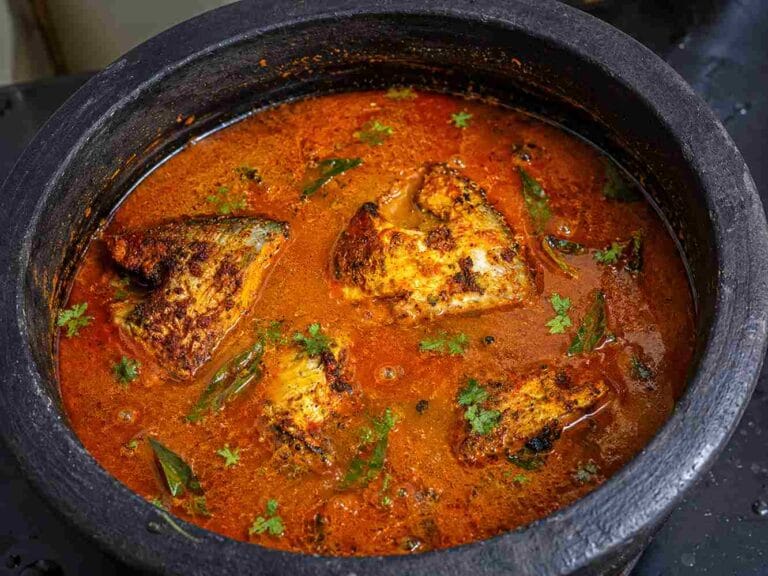
If you enjoy this kind of slow, flavour-rich cooking, you may also like my Chicken Curry Kuzhambu, which follows a similar homestyle approach and pairs beautifully with rice. To understand why dum cooking works so well, you can also read more about the dum cooking method