Kezhvaragu Koozh Recipe (Fermented Ragi Koozh) – Healthy Millet Summer Drink
About this Kezhvaragu Koozh Recipe
Looking for a traditional millet summer drink that keeps your body cool and energized during hot days?
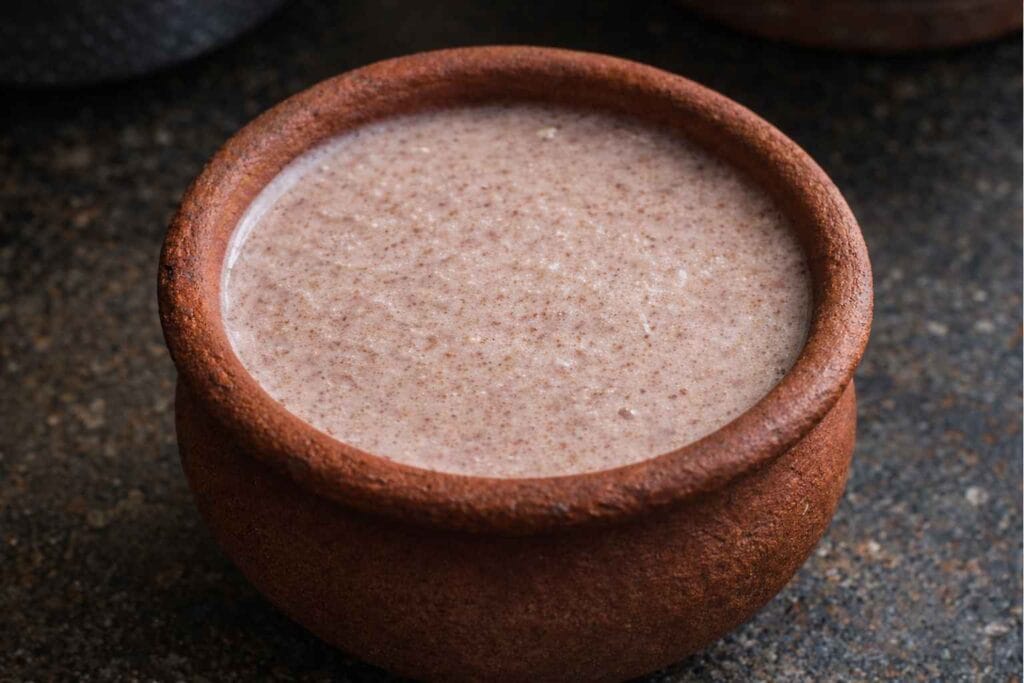
This Kezhvaragu Koozh recipe, also known as Aadi Koozh or fermented ragi koozh, is a healthy cooling food prepared especially during the Tamil month of Aadi. Made with finger millet (kezhvaragu), rice, and buttermilk, this ragi porridge for summer is both nutritious and refreshing.
If you are searching for a raghi koozh recipe for weight loss, diabetic-friendly breakfast, or traditional fermented food, this recipe is perfect for you.
For a wholesome start to the day, combine this fermented ragi koozh with other breakfast staples like Ven Pongal or Karuppu Ulundhu Kanji to create a balanced and satisfying morning spread
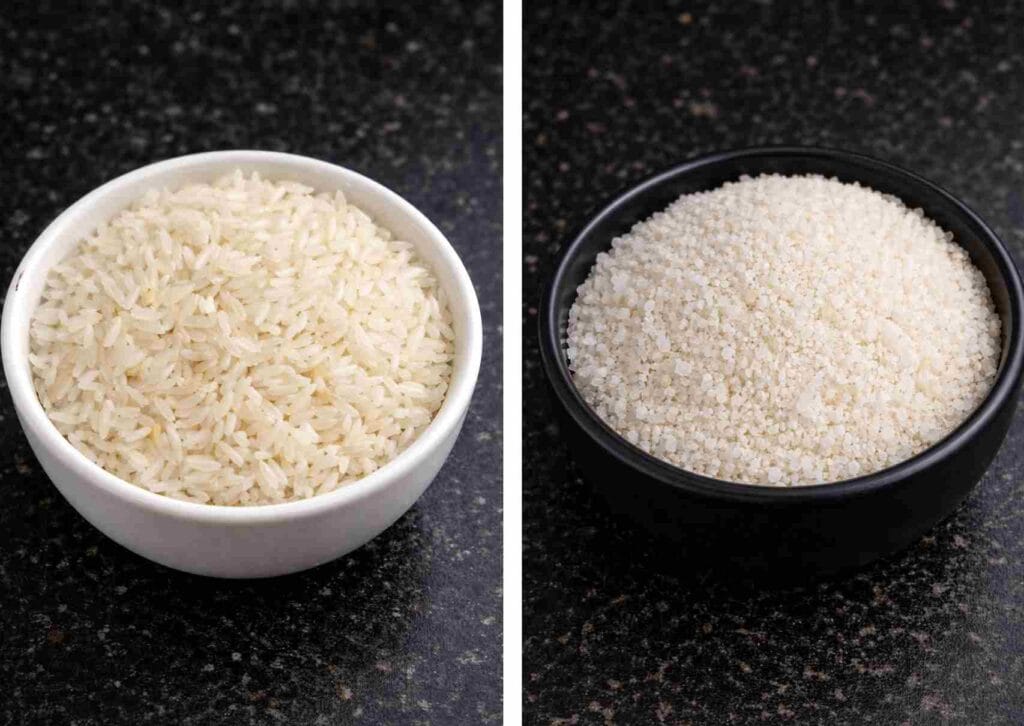
Step 1: Preparing Raw Rice for Kezhvaragu Koozh Recipe
For this fermented ragi koozh recipe, we coarsely grind raw rice to give the traditional Aadi koozh its authentic texture and thickness.
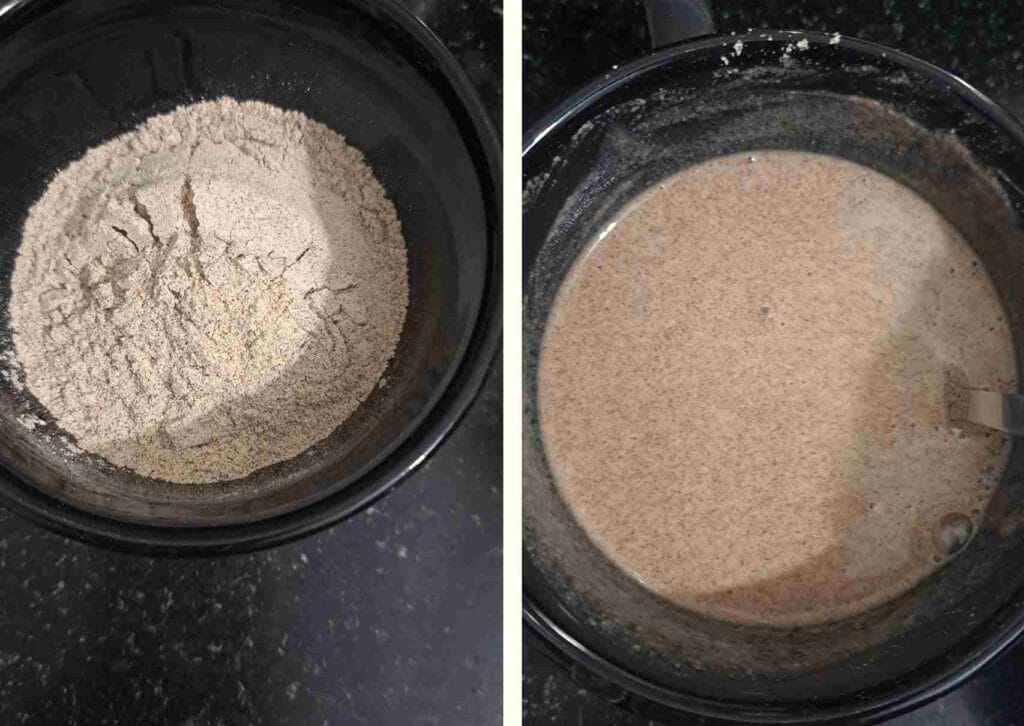
Step 2: How to Dissolve Ragi Flour Without Lumps for Fermented Ragi Koozh Recipe
Ragi flour is mixed with water smoothly without lumps before adding it to the cooked rice for traditional kezhvaragu koozh. For best results, use freshly prepared homemade ragi powder for better texture and flavor.
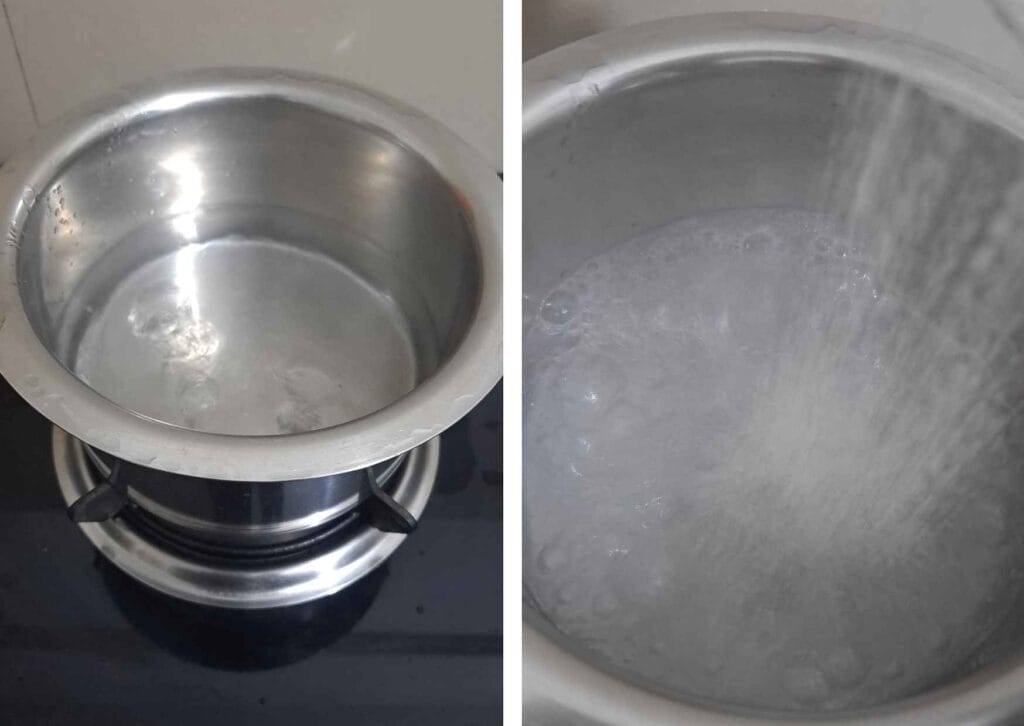
Step 3: Adding Coarsely Ground Rice to Boiling Water for Traditional Kezhvaragu Koozh
Coarsely ground raw rice is added to rolling boiling water and cooked to create the base texture for fermented ragi koozh.
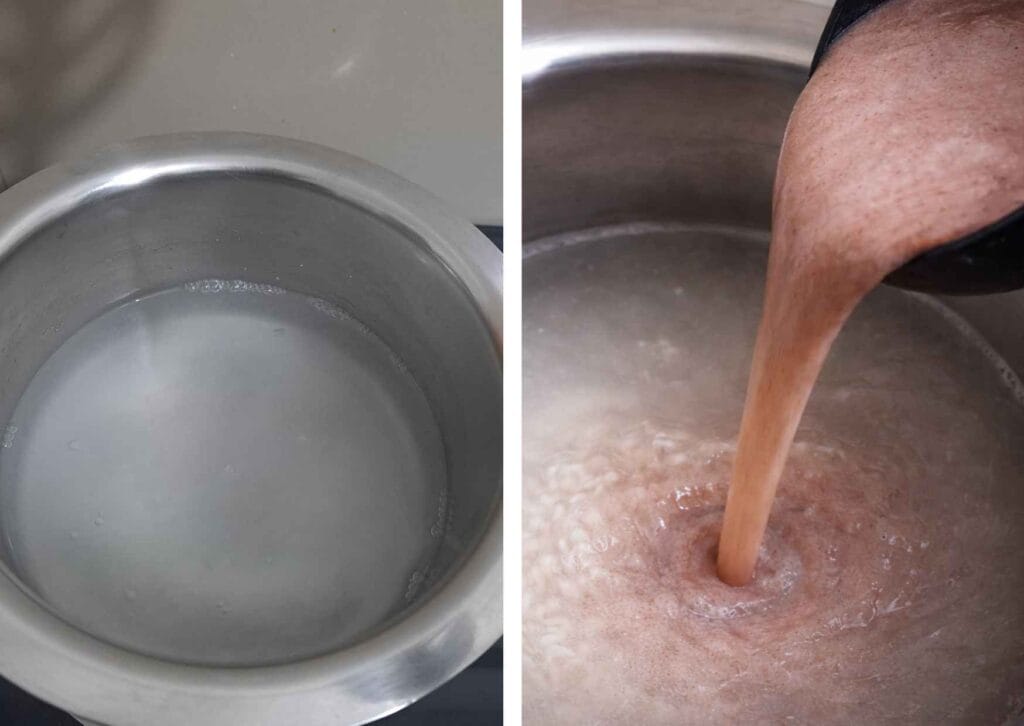
Step 4: Adding Dissolved Ragi Flour to Cooked Rice for Fermented Ragi Koozh Recipe
The smooth ragi flour mixture is slowly poured into the cooked rice base and stirred continuously to form thick kezhvaragu koozh.
Step 5: Cooking and Thickening the Ragi Mixture for Authentic Aadi Koozh
The ragi and rice mixture is stirred continuously for 15 minutes until it thickens into smooth traditional kezhvaragu koozh.
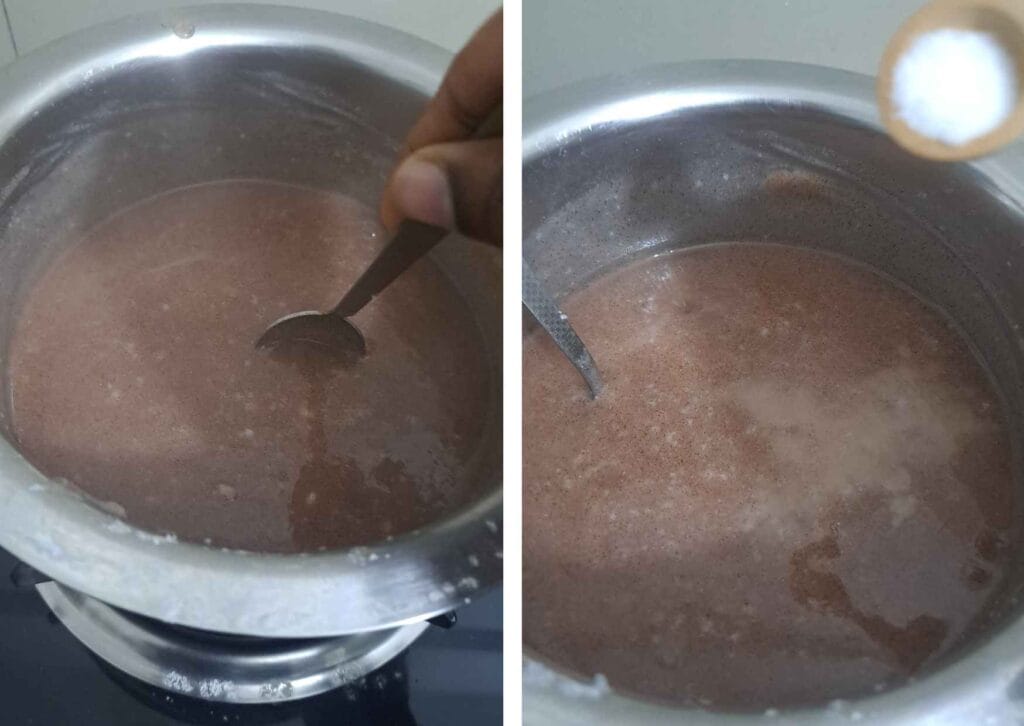
Step 6: Fermenting the Ragi Mixture for Traditional Aadi Koozh
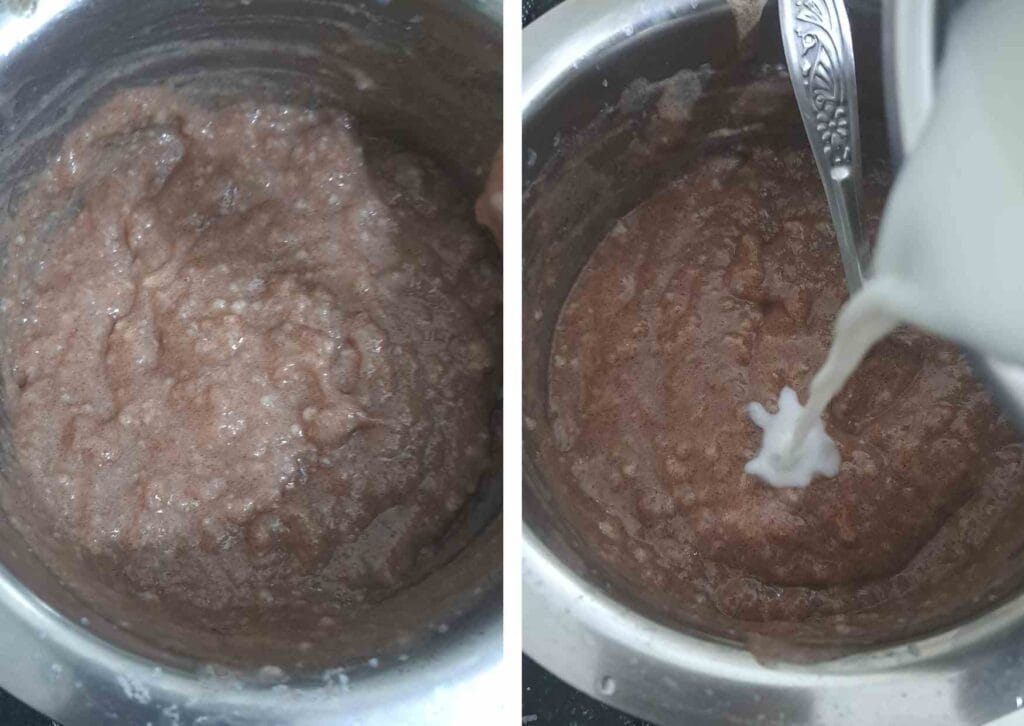
The cooked ragi mixture is covered and left to ferment for 8 hours, developing natural probiotics and the sour flavor of fermented ragi koozh.
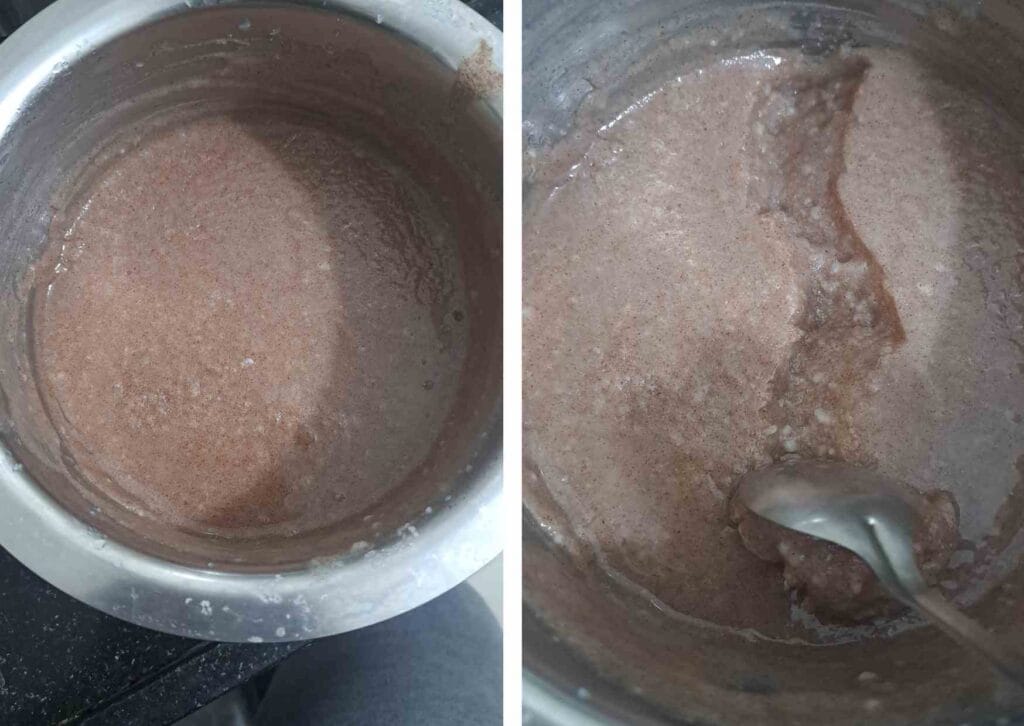
Step 7: Mixing Buttermilk with Fermented Ragi Koozh for a Cooling Summer Drink
Fresh buttermilk is added to the fermented ragi mixture and mixed well to create a smooth, refreshing millet summer drink.
Step 8: Smooth Fermented Ragi Koozh After Mixing Buttermilk
After adding buttermilk, the fermented ragi koozh turns smooth, light, and perfectly balanced as a healthy cooling millet summer drink.
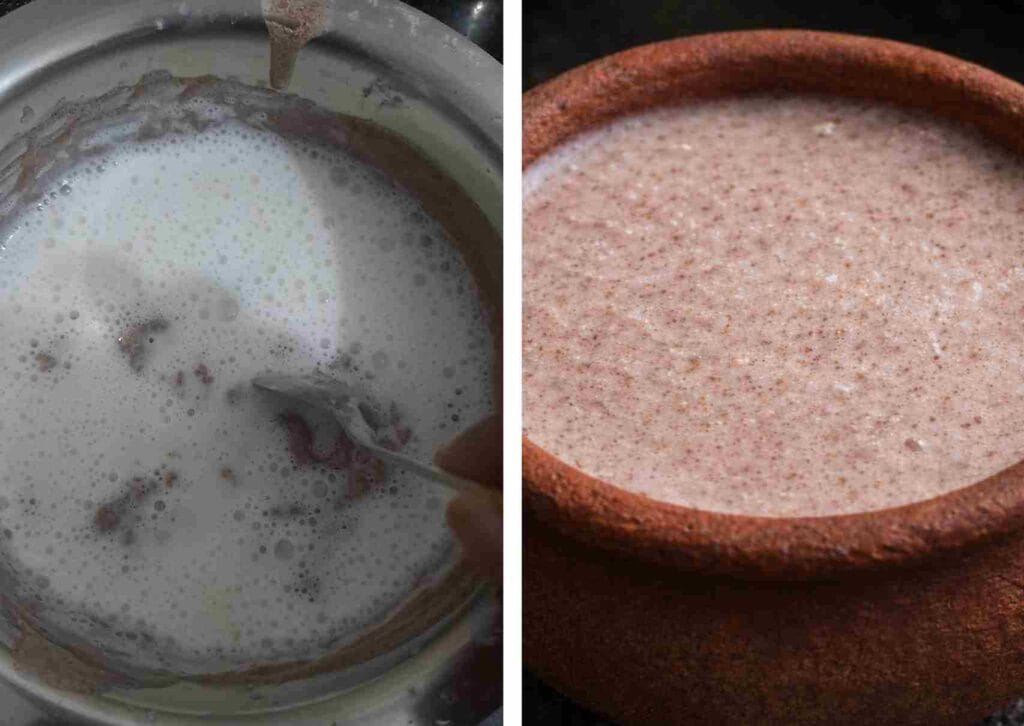
For more healthy and easy South Indian breakfast options, you can also explore our Idiyappam recipe and Vegetable Rava Upma.
Below is the detailed kezhvaragu koozh recipe with exact measurements, cooking time, and fermentation instructions for best results.
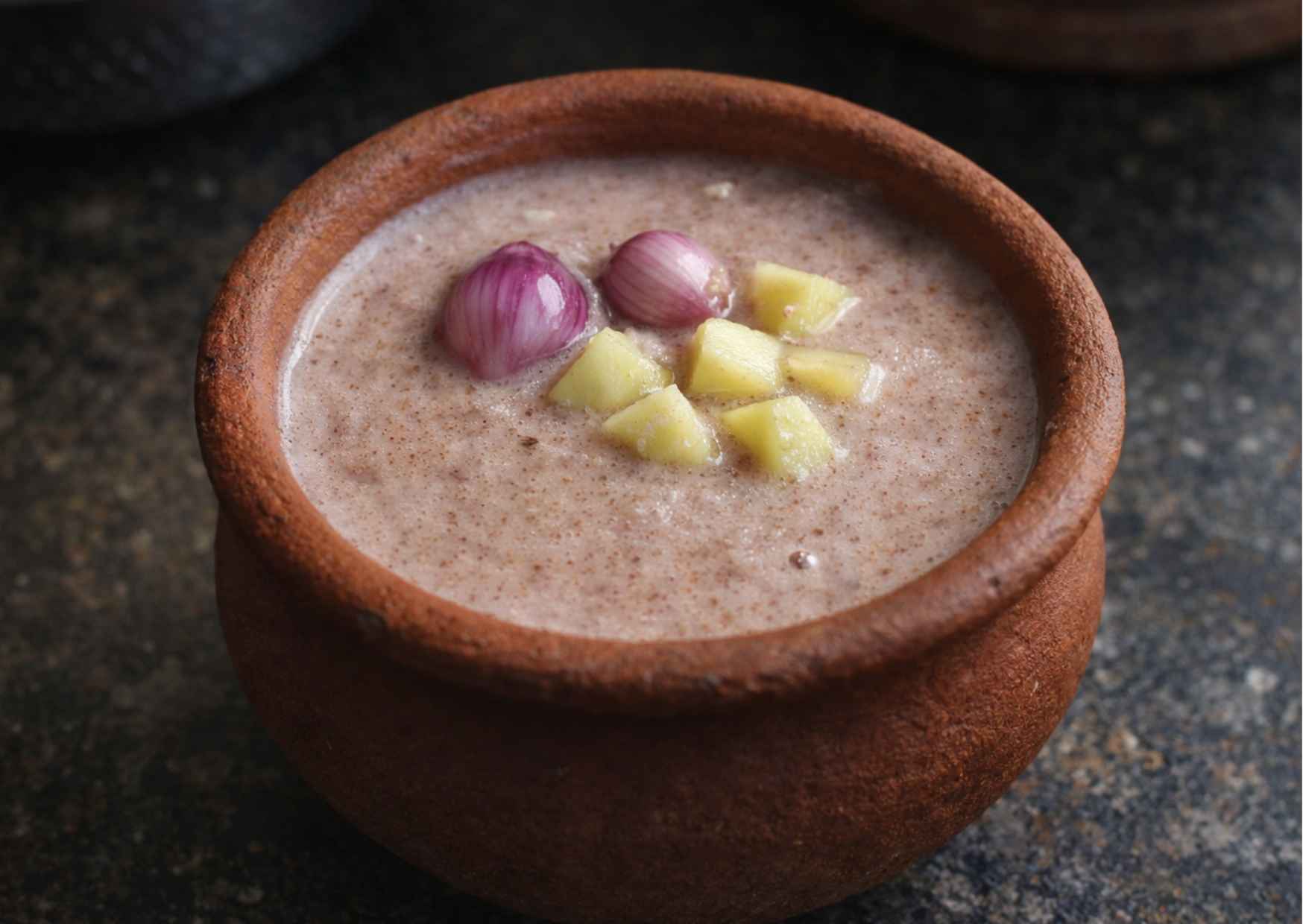
Traditional Fermented Ragi Koozh (Aadi Koozh)
Ingredients
Equipment
Method
- Prepare the Ragi Slurry : In a bowl, mix 1/4 cup ragi flour with 1/2 cup water. Whisk thoroughly until smooth and completely lump-free.
- Grind the Rice: Pulse 2 tbsp raw rice in a blender until it reaches a coarse, rava-like texture. Do not grind into a fine powder.
- Cook the Rice Base: Bring 1.5 cups water to a rolling boil in a heavy-bottomed pot. Add the coarsely ground rice and cook on medium heat for 10 minutes until soft.
- Add the Ragi Mixture: Lower the flame and slowly pour the ragi slurry into the pot while stirring continuously.
- Cook Until Thick: Cook on low-medium heat for 15 minutes, stirring constantly. The mixture will thicken and turn glossy. Add a pinch of salt and mix well.
- Ferment the Koozh: Cover the pot and allow it to ferment at room temperature for 8 hours (preferably overnight). This natural fermentation gives authentic Aadi Koozh flavor and probiotic benefits.
- Final Serving: Take the required portion of the fermented ragi base. Add 1/2 cup buttermilk and mix well until smooth and drinkable.
- Garnish & Serve: Serve chilled with chopped small onions and raw mango slices.
Notes
- Consistency: Fermented ragi koozh thickens significantly. Always dilute with buttermilk just before serving.
- Salt Tip: Adding salt after cooking helps better fermentation.
- For Babies: Skip fermentation and garnishes. Serve fresh, warm ragi porridge instead.
Tips
- Avoid Lumps: Never add dry ragi flour directly to boiling water. Always dissolve first.
- Traditional Method: Fermenting in a clay pot (man paanai) enhances cooling properties.
- Weight Loss Version: Use thin buttermilk (more water, less curd) for a lighter millet summer drink.
FAQs for Kezhvaragu Koozh Recipe
What is Aadi Koozh?
Aadi Koozh is a traditional fermented ragi drink prepared during the Tamil month of Aadi. It is made using kezhvaragu (finger millet), rice, and buttermilk, and is known as a natural cooling millet summer drink.
Is fermented ragi koozh good for weight loss?
Yes. Fermented ragi koozh is rich in fiber and keeps you full for longer, reducing unnecessary snacking. When prepared with thin buttermilk, it becomes a low-calorie, filling breakfast option.
Is ragi koozh diabetic-friendly?
Yes. Kezhvaragu koozh has a low glycemic index and is high in fiber, which helps regulate blood sugar levels. However, portion control is important for diabetics.
What are the benefits of fermented ragi koozh?
Fermented ragi koozh benefits include: Improved digestion (natural probiotics), Better gut health, Natural body cooling, Rich source of calcium and iron Sustained energy release
Can I give fermented ragi koozh to babies?
For babies above 8–10 months, ragi can be given as fresh porridge without fermentation. For infants, avoid adding salt, onions, or buttermilk unless advised by a pediatrician.
How long should ragi koozh be fermented?
Traditional Aadi koozh is fermented for about 8 hours at room temperature. In colder climates, it may take slightly longer to develop mild sourness.
Can I use Ragi flour instead of whole grains?
Yes. This kezhvaragu koozh recipe uses ragi flour for convenience and smoother texture. Traditionally, whole grains are soaked and ground, but flour works perfectly for home cooking.
What is the difference between Ragi Porridge and Ragi Koozh?
Ragi porridge is usually served warm and can be sweet or savory. Aadi Koozh, on the other hand, is fermented and mixed with buttermilk, onions, and raw mango, giving it a tangy flavor and probiotic benefits.
Final Thoughts
Kezhvaragu Koozh is more than just a recipe, it is a bowl of heritage passed down through generations. In a world filled with processed cereals and sugary energy drinks, this fermented ragi koozh stands out as a timeless, natural superfood.
Whether you are preparing it during the auspicious month of Aadi, searching for a ragi koozh recipe for weight loss, or simply looking for a healthy cooling food to beat the summer heat, this traditional millet summer drink never fails to nourish and satisfy.
The beauty of this dish lies in its simplicity and the patience of fermentation. It reminds us that true nutrition often comes from humble, local ingredients like kezhvaragu (finger millet).
Fermentation naturally increases probiotics, which support digestion. To understand more about how fermentation benefits gut health, you can learn more about the benefits of fermented foods for your digestive system from trusted health sources.
The next time the sun feels a little too harsh, skip the soda and reach for a chilled glass of this creamy, tangy Aadi Koozh. Your gut, your body, and your taste buds will thank you.