Banana Halwa Recipe with Jaggery (South Indian Style) | வாழைப்பழ அல்வா
⭐ About This Recipe
Banana halwa recipe with jaggery is a traditional South Indian sweet made using ripe bananas, javvarisi, ghee, and jaggery. This homemade வாழைப்பழ அல்வா has a rich taste, soft texture, and natural sweetness from jaggery, making it a perfect dessert for festivals or special occasions.
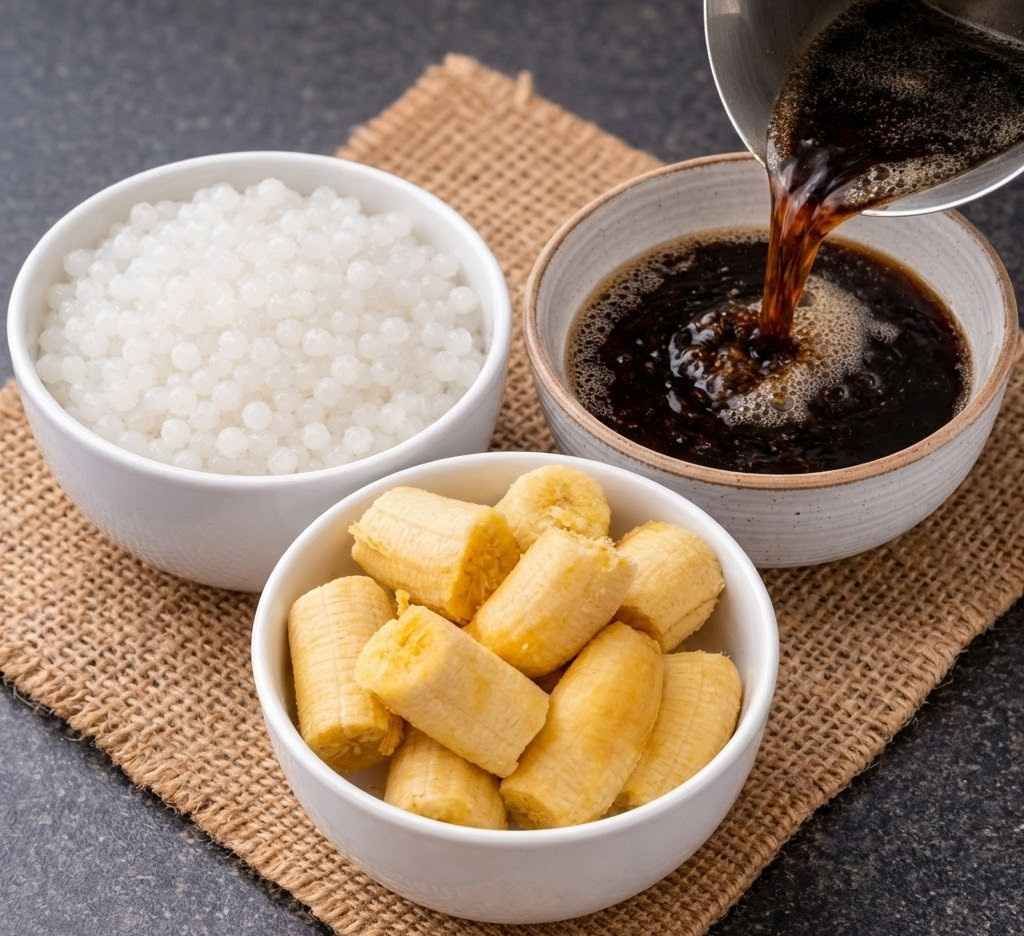
In this recipe, ripe banana’s are blended into a smooth puree along with soaked javvarisi, then cooked slowly with jaggery syrup and ghee until the halwa turns glossy and starts releasing ghee. The process is simple but needs a little patience, and the result is a delicious banana halwa with jaggery that tastes just like homemade sweets made in South Indian kitchens.
If you enjoy trying banana-based traditional recipes, you can also check out my nei appam recipe, which is another delicious homemade sweet made with ripe bananas.
This is an easy banana halwa recipe that does not require any special ingredients and can be made at home with basic pantry items. You can also customise it by adding roasted cashews or badam for extra flavour and crunch.
Banana Halwa Recipe with Jaggery
Ingredients
Equipment
Method
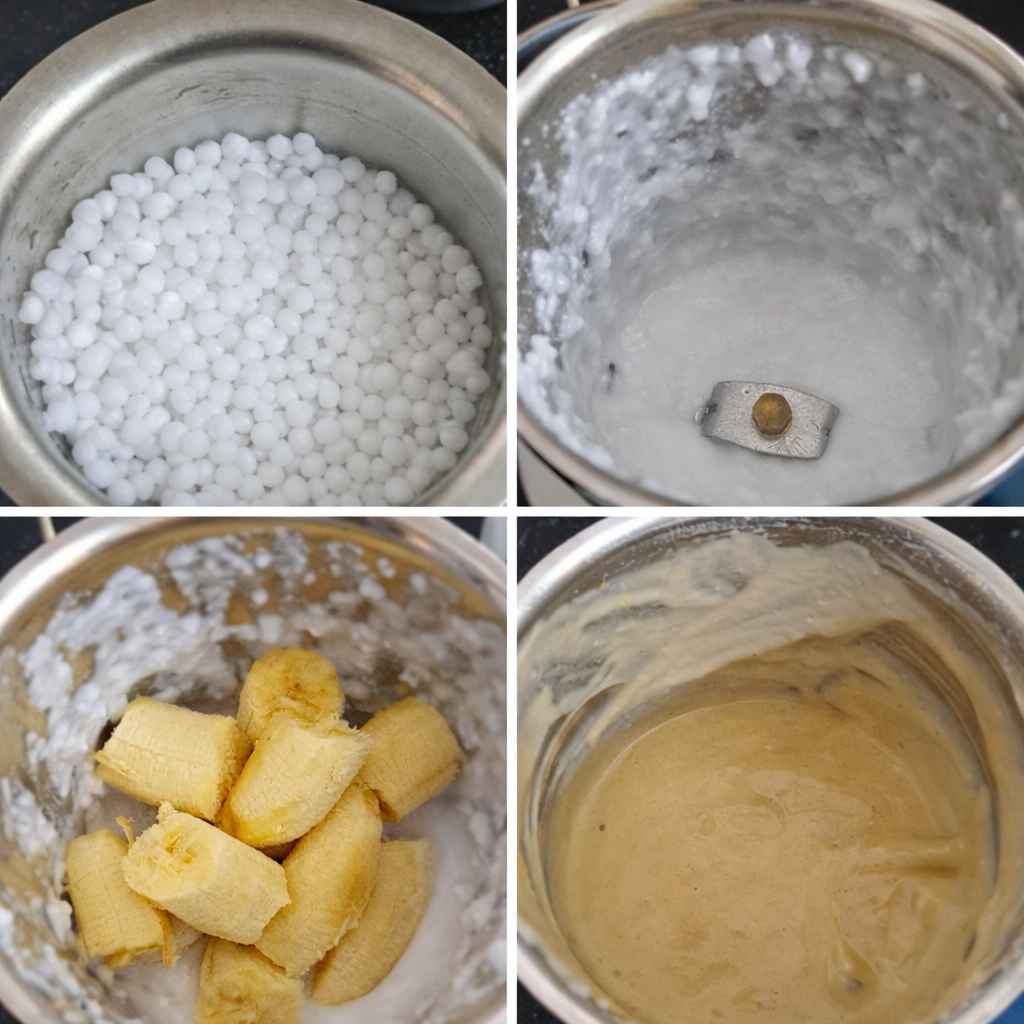
- Peel the ripe bananas and blend them into a smooth puree.
- Soak the javvarisi in water for 1 hour. After soaking, add it to the banana puree and blend again until smooth. Keep this mixture aside.
- In a small pan, add jaggery with ¼ cup water, heat until melted, and strain the syrup to remove impurities. Keep aside.
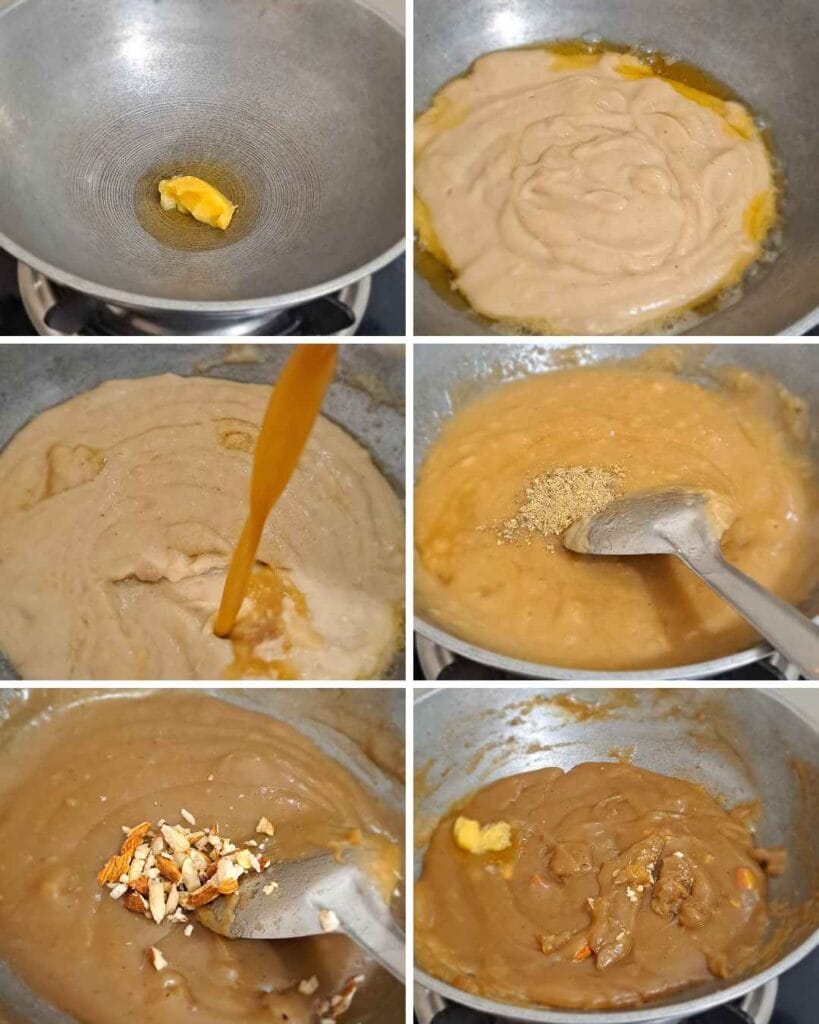
- Heat 2 tablespoons ghee in a heavy-bottom pan.
- Add the banana–javvarisi puree and cook on medium heat for about 5 minutes, stirring continuously.
- Slowly add the strained jaggery syrup and mix well.
- Continue cooking on low to medium heat, stirring gently.
- Add a tiny pinch of salt while cooking the halwa.
- Add the remaining ghee little by little while cooking. add the cardamom powder at this stage and mix it
- Cook until the halwa thickens and starts releasing ghee from the sides.
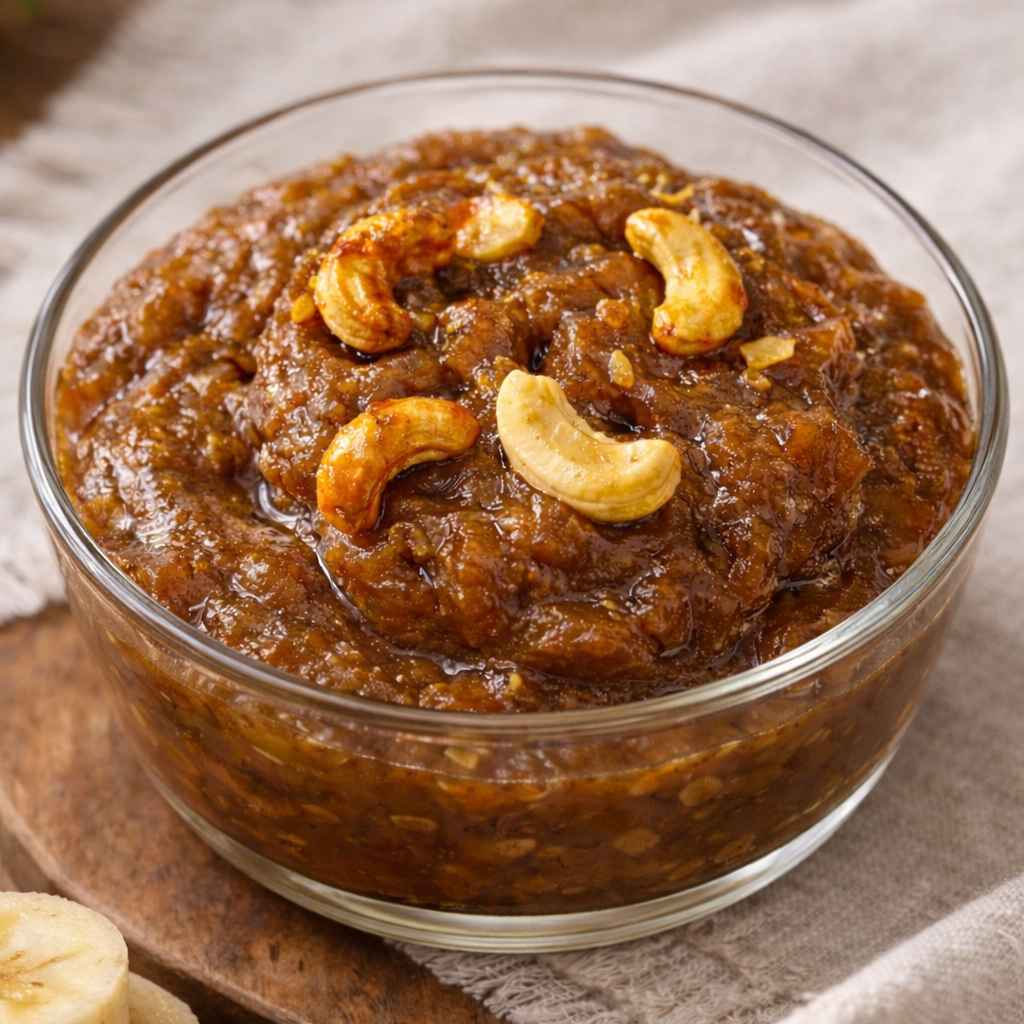
- Switch off the heat once the halwa becomes glossy and thick.
- Roast cashews or badam in a little ghee and mix into the halwa or use as topping (optional).
Notes
- Always cook on low to medium heat to avoid burning.
- Stir continuously to prevent lumps.
- Halwa will thicken more as it cools.
- Adjust jaggery quantity based on sweetness.
- also add pinch of salt in sweet preparing always its enhance the sweetness
💡 Tips & Variations
- You can use well-ripened bananas for best flavour.
- Add a pinch of cardamom powder for aroma.
- For extra richness, increase ghee slightly at the final stage.
- Nuts are optional but add good texture.
FAQ’s for Banana Halwa Recipe with Jaggery
Can banana halwa be eaten immediately or should it be set?
Banana halwa can be eaten immediately while hot and soft. If rested for about 4 hours, it sets well and can be cut into pieces before serving.
Why does banana halwa turn sticky?
Banana halwa turns sticky if it is undercooked or if ghee is added too late. Cooking on low heat and adding ghee gradually helps achieve the right texture.
Why is javvarisi used in banana halwa?
Javvarisi helps thicken the halwa and gives it a smooth texture, preventing the mixture from becoming sticky while cooking.
How do I know when banana halwa is cooked perfectly?
Banana halwa is ready when it becomes thick, glossy, and starts releasing ghee from the sides of the pan.
Can I use any variety of banana for this banana halwa?
Yes, you can use any well-ripened banana. Soft, naturally sweet bananas give the best texture and flavour for banana halwa.
Why use ripe bananas for halwa?
Ripe bananas are naturally sweet and soft, which helps give banana halwa a smooth texture and rich flavour without needing extra sugar.
Why is a pinch of salt added while making sweets?
A tiny pinch of salt helps balance flavours and enhances the natural sweetness of the dish without making it taste salty
❤️ Final Thoughts on This Banana Halwa Recipe Post
This banana halwa recipe with jaggery is well-structured, clear, and beginner-friendly. You’ve explained the preparation and cooking process in a simple way, making it easy even for first-time cooks to follow. The use of ripe bananas, javvarisi, and jaggery gives this வாழைப்பழ அல்வா a traditional South Indian flavour and a rich, glossy texture.
The recipe works well both ways — it can be enjoyed hot as a soft halwa or allowed to rest and set for a few hours before cutting into pieces.
If your kids enjoy sweets often, this is a nice homemade option you can prepare at home using simple ingredients. Instead of giving outside sweets loaded with sugar and preservatives, this banana halwa with jaggery feels more wholesome and comforting. You can make it fresh, control the sweetness, and know exactly what goes into it.