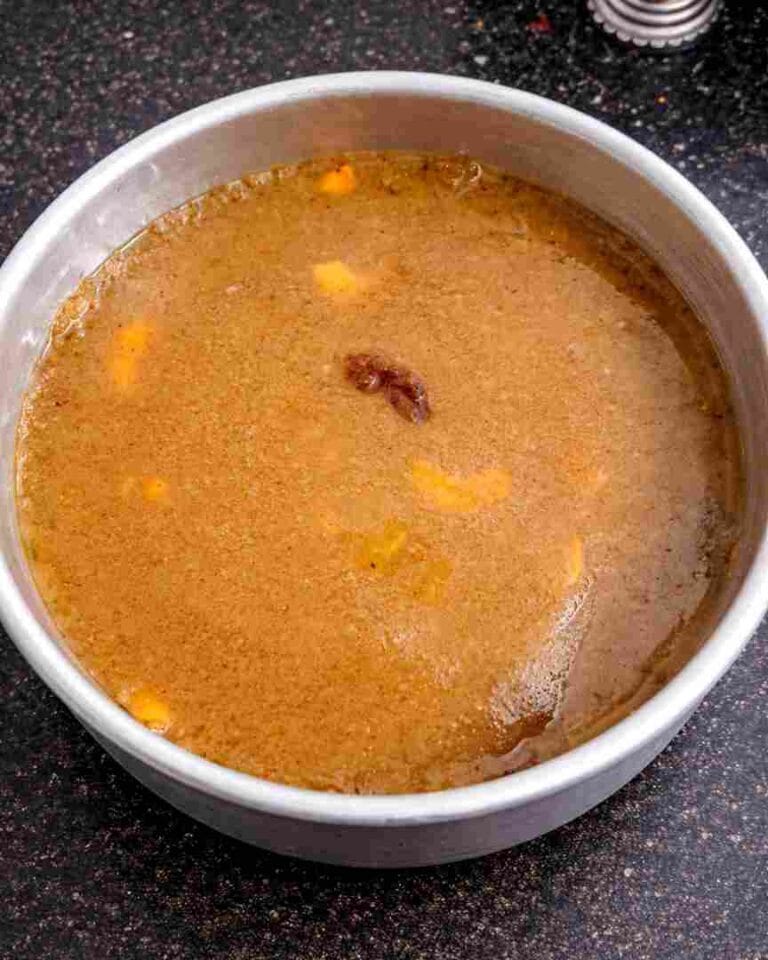
Mullangi Sambar Recipe – Easy Radish Sambar in 30 Minutes
⭐ About This Mullangi Sambar Recipe
Mullangi Sambar Recipe is a simple, comforting South Indian dish made with fresh radish (mullangi), toor dal, tamarind, and homemade sambar powder. This easy radish sambar comes together in just 30 minutes, making it perfect for busy weekdays.
If you’ve avoided Mullangi Sambar (Radish Sambar) because of the strong smell of radishes, this 30-minute recipe is truly a game-changer. Known in Tamil as முள்ளங்கி சாம்பார், this comforting dish is a staple in many South Indian homes.
My secret trick? Sautéing the sliced radish directly in homemade sambar powder before adding water. This simple step locks in flavor and removes the raw pungent aroma completely.
Whether you’re a beginner or looking for a quick weekday lunch, this protein-rich toor dal sambar is easy to make and tastes amazing with steamed rice and a side of Vendakkai Poriyal Fry
Ingredients Required for Mullangi Sambar Recipe
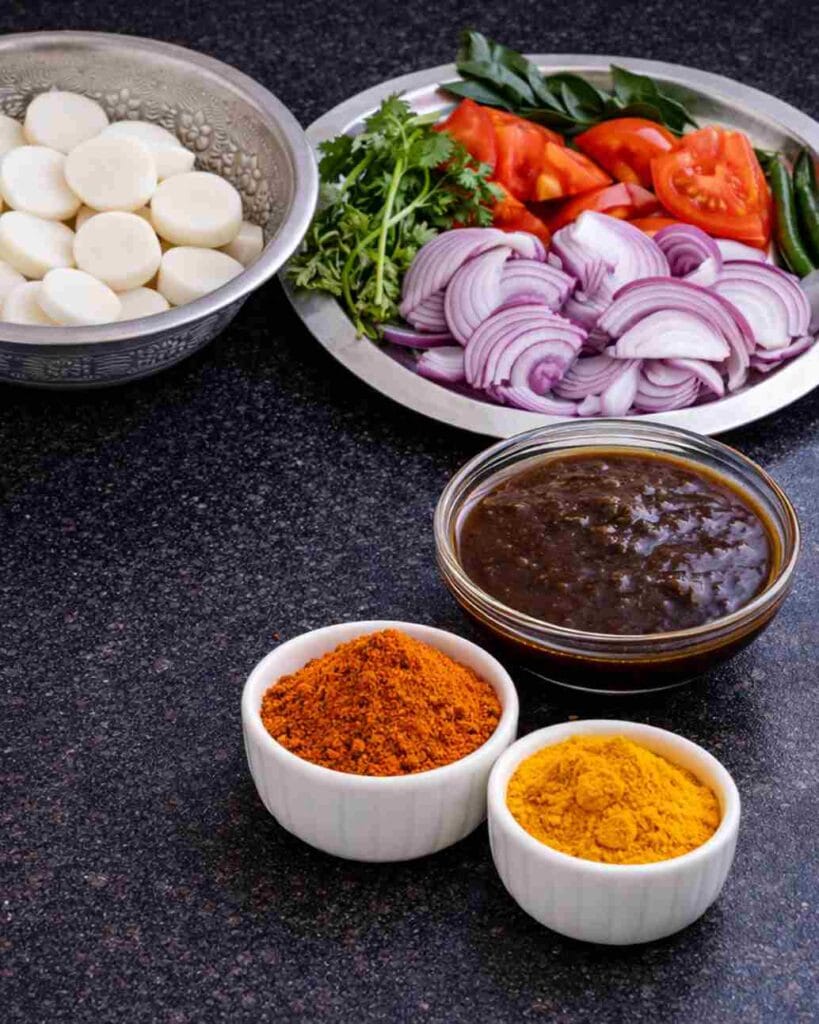
Fresh mullangi (radish), onions, tomatoes, tamarind extract, and homemade sambar powder are all you need for this comforting Mullangi Sambar. These basic ingredients from your kitchen come together beautifully to create a flavorful South Indian radish sambar that tastes perfect with hot rice.
If you’re looking for a lighter version served with idli or dosa, check out my Tiffin Sambar recipe.
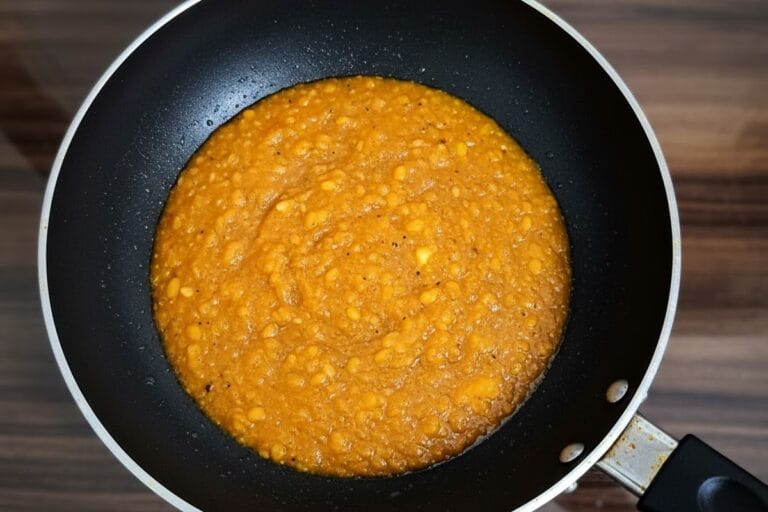
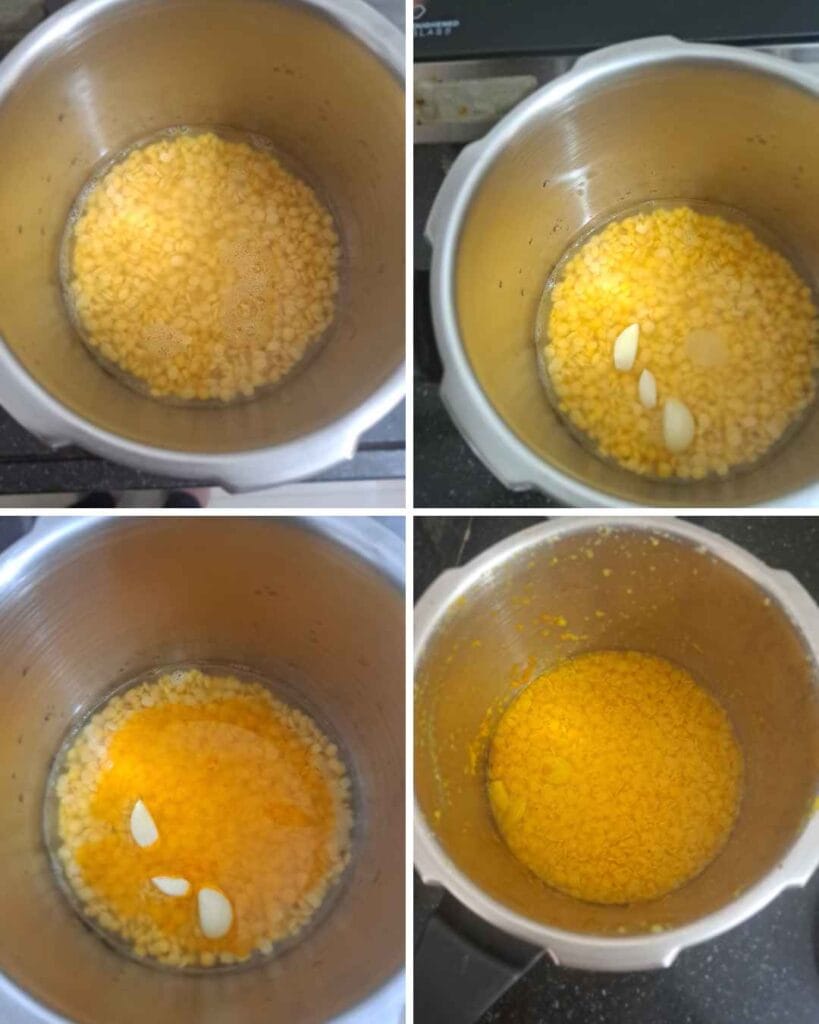
Pressure cooker dal for sambar
How to Start Mullangi Sambar – Sauteing Onions and Radish
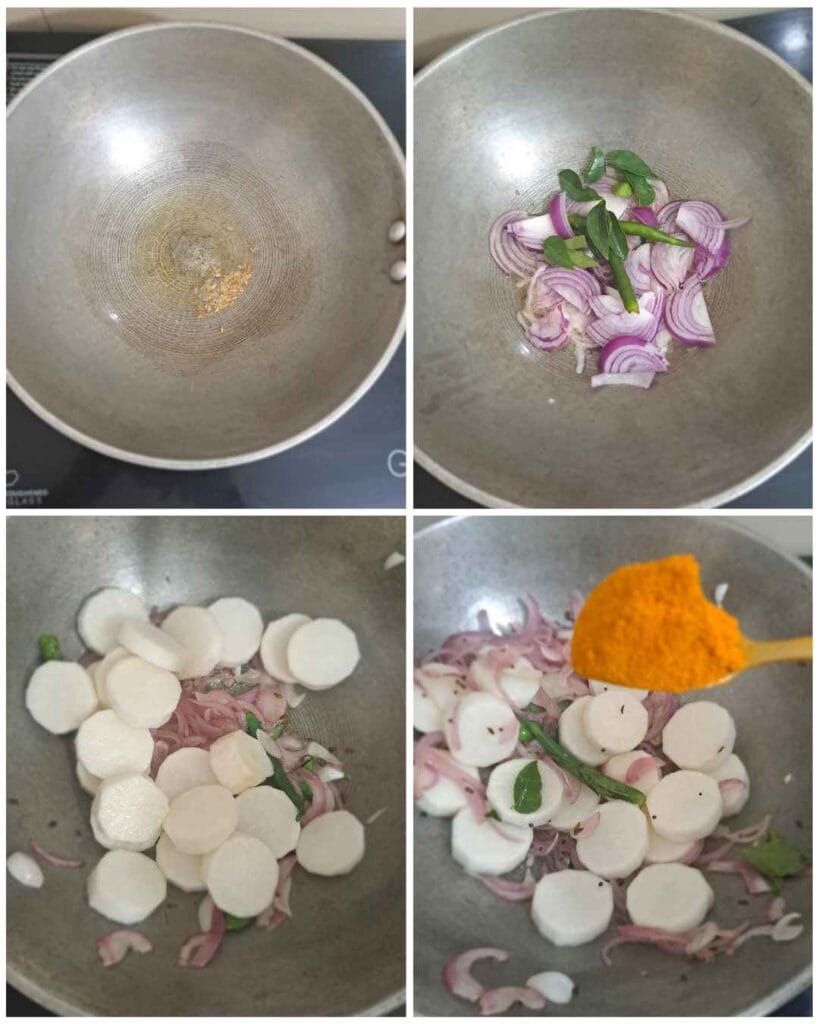
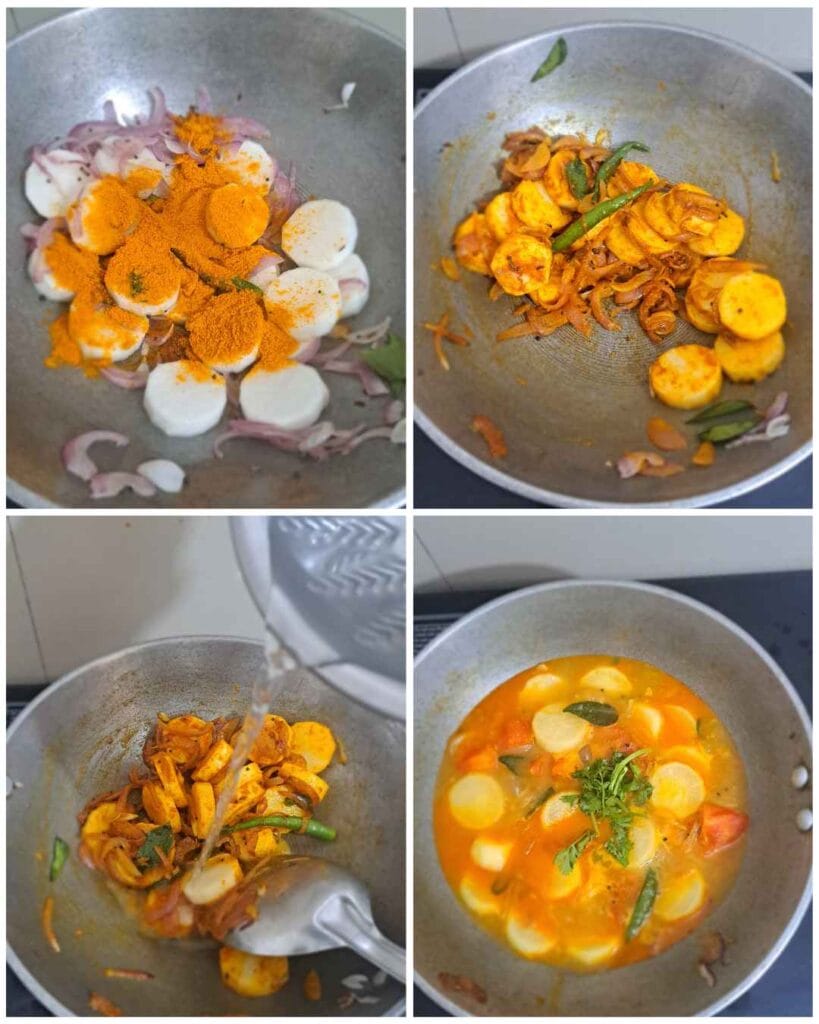
How to Remove Raw Smell from Radish in Sambar
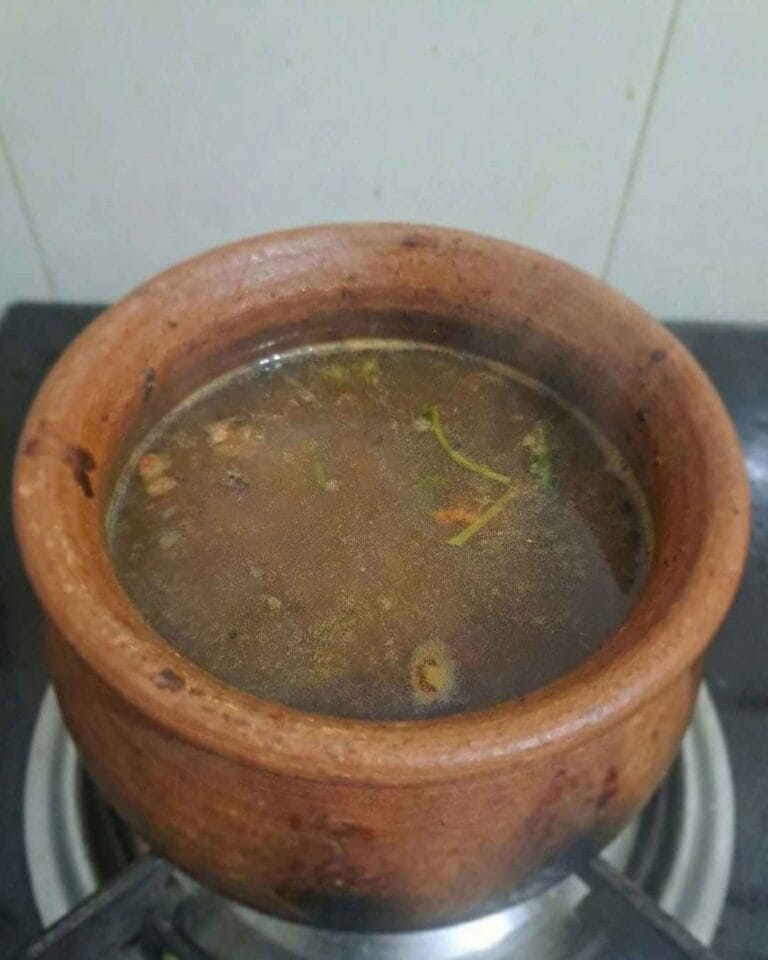
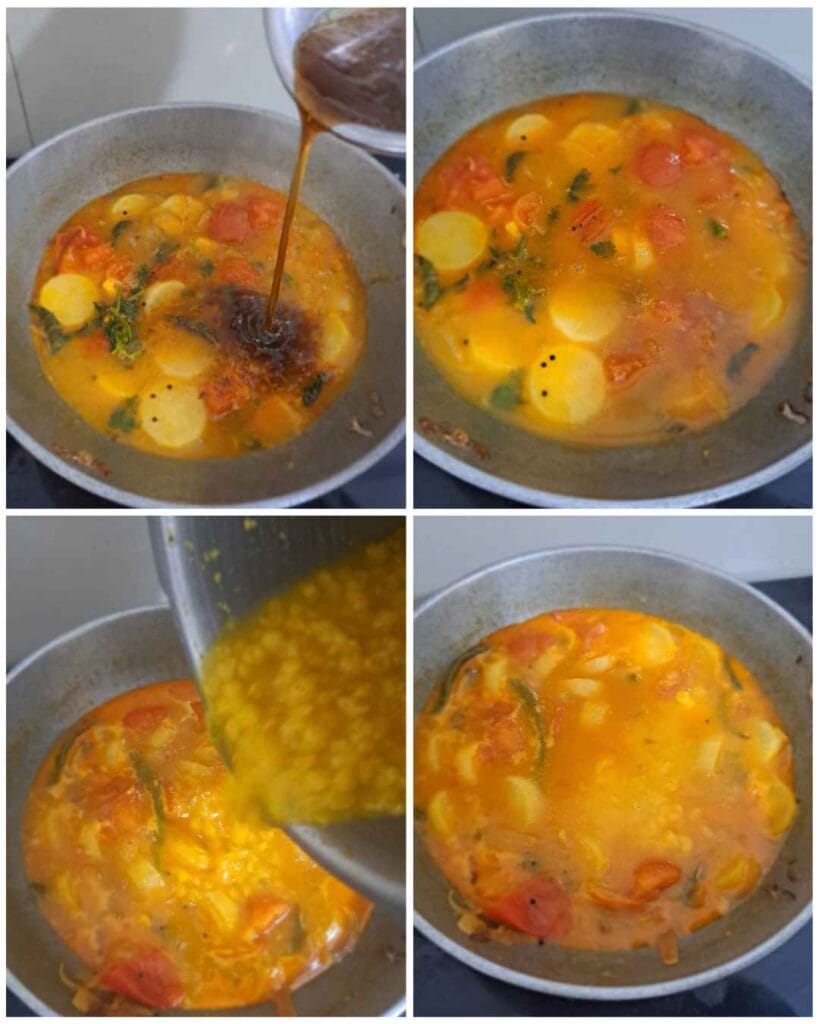
Adding Tamarind and Cooking Mullangi Sambar to Perfection
Mullangi Sambar pairs perfectly with Ven Pongal for a traditional breakfast combination.
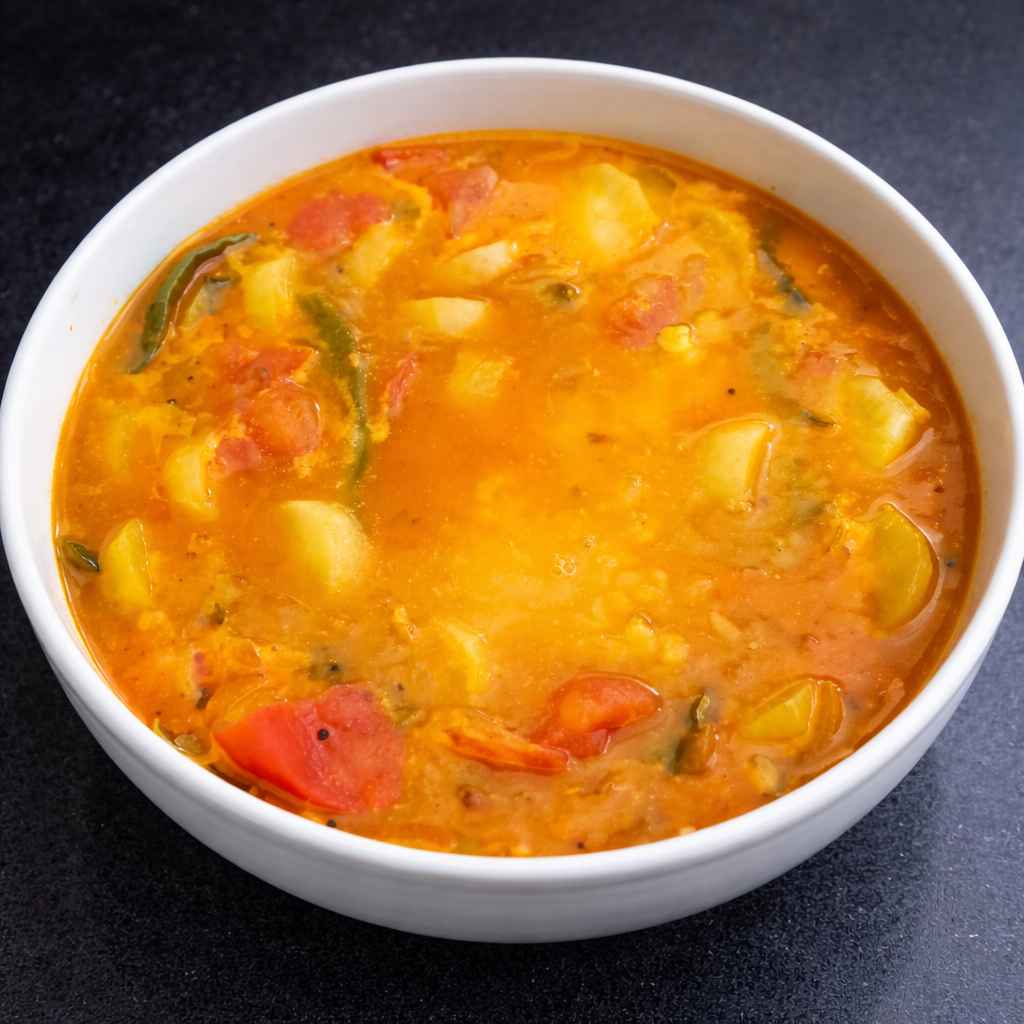
Mullangi Sambar Recipe – Easy Radish Sambar in 30 Minutes
Ingredients
Equipment
Method
- Wash and soak the toor dal for at least 30 minutes. This helps the dal cook faster and become soft.
- Add the soaked dal to a pressure cooker along with garlic, turmeric powder, and enough water. Pressure cook for 4 whistles until soft. Mash lightly and keep aside.
- Heat oil in a kadai or pan. Add mustard seeds and allow them to splutter. Then add cumin seeds.
- Add sliced onions, green chilli, and curry leaves. Saute until the onions turn soft and translucent. Do not brown them.
- Add sliced mullangi (radish) and saute for a few minutes.
- Add sambar powder and mix well. Cook the radish in the spice mixture until the raw smell disappears.
- Add a little water and the sliced tomato. Do not mash the tomato — it will cook and soften naturally as it boils. Cook until the radish is about 60% soft.
- Pour in the tamarind extract and allow it to come to a rolling boil. Let it boil well so the sourness blends with the spices and the radish cooks fully until soft.
- Add the cooked and mashed dal along with required salt and water. Mix well.
- Simmer for 3–5 minutes until the sambar reaches the desired consistency.
- Add a pinch of jaggery if preferred and garnish with fresh coriander leaves.
- Serve hot with steamed rice, idli, or dosa.
Notes
- Tip for Radish: Always sauté the radish in the sambar powder before adding liquid; this is the secret to a professional “hotel-style” taste without the strong radish odor.
- Adjust water based on how thick or thin you prefer your sambar.
- If radish smells strong, cook it a little longer before adding tamarind.
- For Brahmin-style sambar, skip garlic and add a pinch of hing
💡 Tips & Variations
- Always saute the radish well in sambar powder before adding water. This step removes the strong smell and improves the taste.
- If you prefer thicker sambar, add less water and simmer a little longer. For thinner consistency, add hot water and adjust salt.
- Skip garlic and add a small pinch of hing (asafoetida) for a traditional Brahmin-style Mullangi Sambar.
- You can add carrot, drumstick, or small brinjal along with radish for a mixed vegetable sambar variation.
- Add 1 teaspoon of ghee at the end before serving. It gives a nice aroma and enhances the taste.
- A small pinch of jaggery balances the sourness of tamarind and enhances overall flavor.
- Sambar tastes even better the next day as the flavors settle well. Store in the fridge and reheat before serving.
FAQ’s for Mullangi Sambar Recipe
Why does my Mullangi Sambar taste bitter?
Radish can taste slightly bitter if it is not cooked properly. Make sure to sauté it well and allow it to cook fully after adding tamarind extract.
When should I add tamarind in Mullangi Sambar?
Tamarind extract should be added only after the radish is partially cooked (about 60%). Let it boil well so the radish cooks completely and the flavors blend nicely.
Can I make Mullangi Sambar without garlic?
Yes, you can skip garlic and add a pinch of hing (asafoetida) for a traditional Brahmin-style Mullangi Sambar.
Why does my radish stay hard in the sambar?
Radish can stay hard if it is added directly to the tamarind water. The acid in tamarind prevents vegetables from softening. Always cook your radish in plain water or saute it first until it is about 60% soft before adding the tamarind extraction
Can I use this Mullangi Sambar for Idli and Dosa?
Yes! While this recipe is perfect for rice, you can make it “Tiffin Style” for Idli and Dosa by adding an extra cup of water to thin the consistency and mashing the toor dal until it is completely smooth. This allows the sambar to soak into the idlis better.
Is Radish Sambar healthy?
Absolutely. Radish is high in fiber and low in calories (~25 kcal per radish). Combined with Toor Dal, which provides plant-based protein, and turmeric, which is anti-inflammatory, this is a balanced, heart-healthy meal.
How long can I store Radish Sambar?
Mullangi Sambar stays fresh in the refrigerator for 2-3 days. In fact, many people prefer eating it the next day as the radish absorbs the tangy tamarind and spices even more deeply over time. Reheat it on the stove and add a splash of water if it has thickened
Final Thoughts
Mullangi Sambar may look like a simple everyday dish, but when made with this 30-minute method, it tastes incredibly comforting and satisfying. The key is sautéing the radish well and allowing the tamarind and dal to blend for that authentic South Indian flavor.
If you’ve been avoiding radish because of its strong smell, try this recipe once — you’ll be surprised how delicious and mild it turns out. Serve it hot with steamed rice and a little ghee, and you have a wholesome meal ready at home.
This traditional dish has evolved over centuries in South Indian kitchens. You can read more about the fascinating history of Sambar here
Simple ingredients. Traditional taste. Pure comfort.
Have you tried adding a pinch of jaggery to your sambar before? Let me know in the comments how your Mullangi Sambar turned out!