Ulundu Kali Recipe (கருப்பு உளுந்து களி) | Traditional Strength Food
⭐ About This Recipe
This ulundu kali recipe is a traditional, nourishing dish prepared at home using karuppu ulundhu, red rice, jaggery, and coconut oil. It is one of those recipes that takes time and patience, but the process itself feels calming and meaningful. From drying and roasting the grains to stirring the kali slowly on low flame, every step reminds us that good food cannot be rushed.
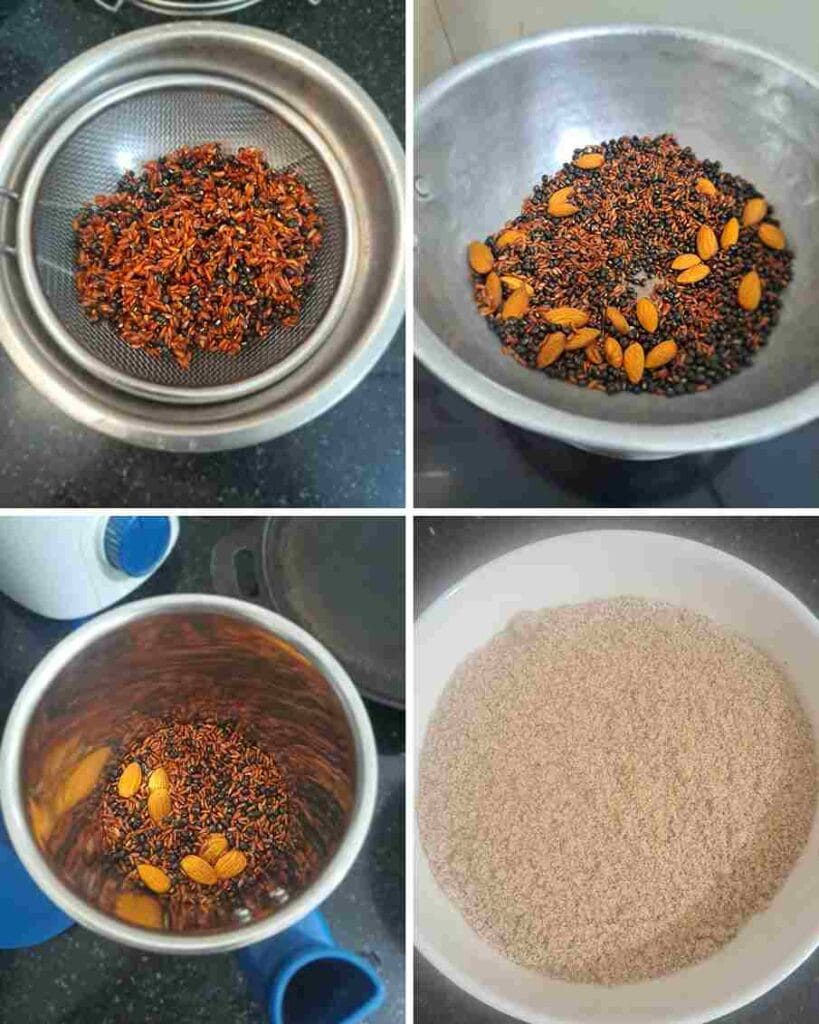
I make this kali using a combination of black urad dal and red rice, which gives it a balanced texture and makes it easier to digest. Coconut oil is used instead of gingley oil, adding a gentle aroma and keeping the dish lighter while still satisfying. A few badam are sometimes added during roasting, not as a rule, but as a small personal touch for extra nourishment.
Ulundu kali is naturally rich in plant protein, iron, and energy-giving nutrients. When prepared with jaggery and nalla ennai, it becomes a wholesome dish that feels warming and satisfying. If you prefer a lighter, drinkable version of the same ingredient, Karuppu Ulundhu Kanji is another traditional preparation that is commonly made for easy digestion and gentle nourishment.
This recipe focuses on a careful, lump-free cooking process, ensuring the kali turns smooth and non-sticky without using any shortcuts. Served hot, this ulundu kali reflects the essence of traditional home cooking simple ingredients, slow preparation, and food made with care.
Ulundu Kali Recipe (கருப்பு உளுந்து களி)
Ingredients
Equipment
Method
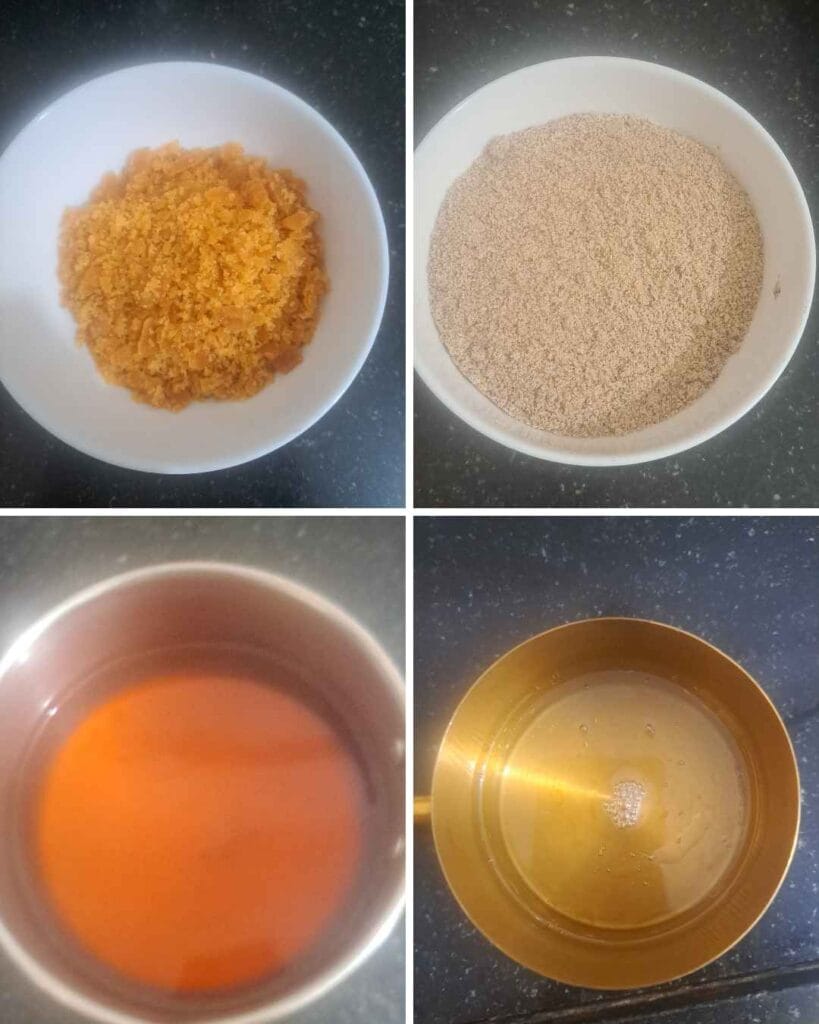
- Wash the black skin urad dal and red rice thoroughly. Strain the water completely and spread them on a plate. Allow them to air-dry for about 20 minutes until the surface moisture is gone.
- Dry roast the urad dal and red rice together on low flame until aromatic. If using badam, add and roast along with the grains. Switch off the flame and allow everything to cool completely.
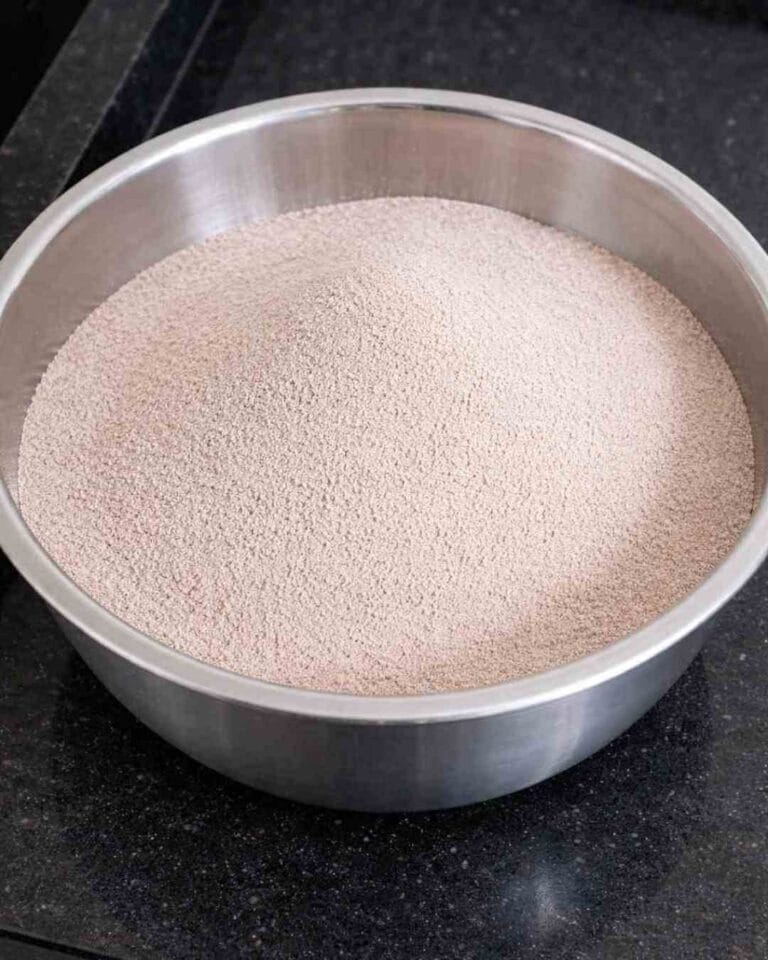
- Once cooled, grind the roasted ingredients into a fine powder and keep aside.
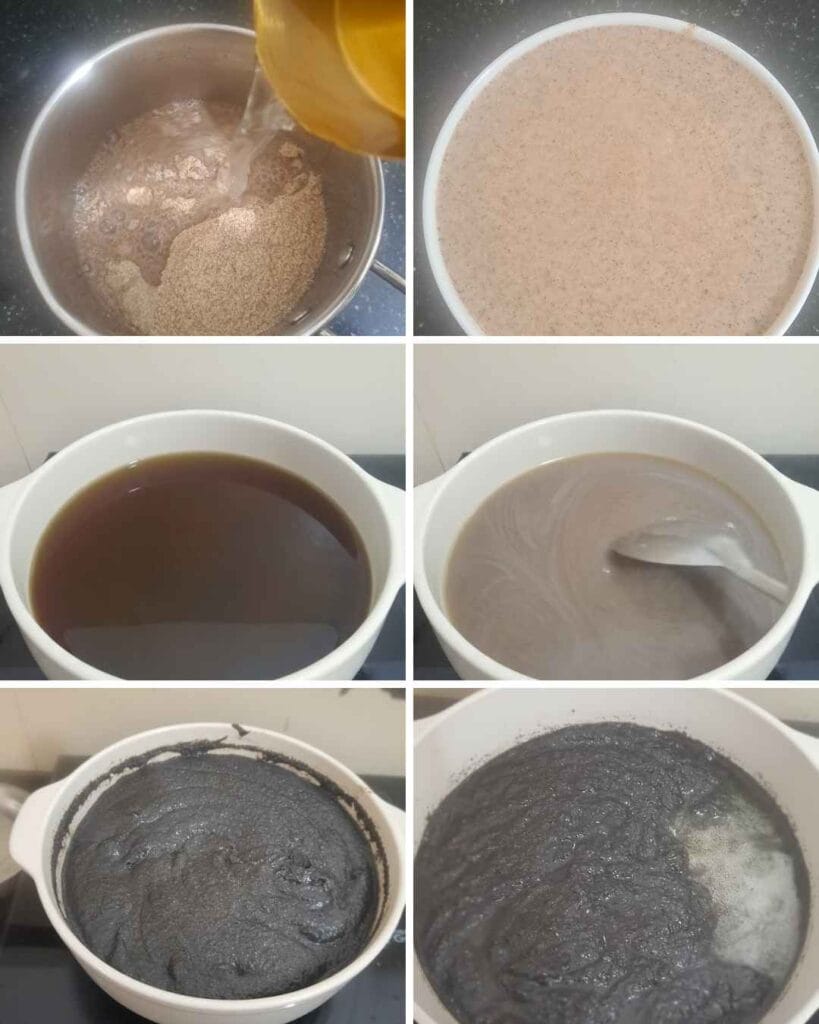
- In a bowl, mix the ground flour with the ½ cup water to and beat it until thin, watery mixture. This step helps prevent lump formation.
- In a small pan, add jaggery with 2 tablespoons of water. Heat gently until the jaggery melts completely. Strain the syrup to remove impurities and keep aside.
- Heat a heavy-bottom kadai and add the strained jaggery syrup along with 3 cups of water. Bring it to a rolling boil.
- When the jaggery water is boiling well, slowly pour in the flour mixture while stirring continuously.
- Add 2 tablespoons of nalla ennai and keep stirring on low to medium flame.
- Continue stirring for about 15 minutes, adding more oil little by little at each stage.
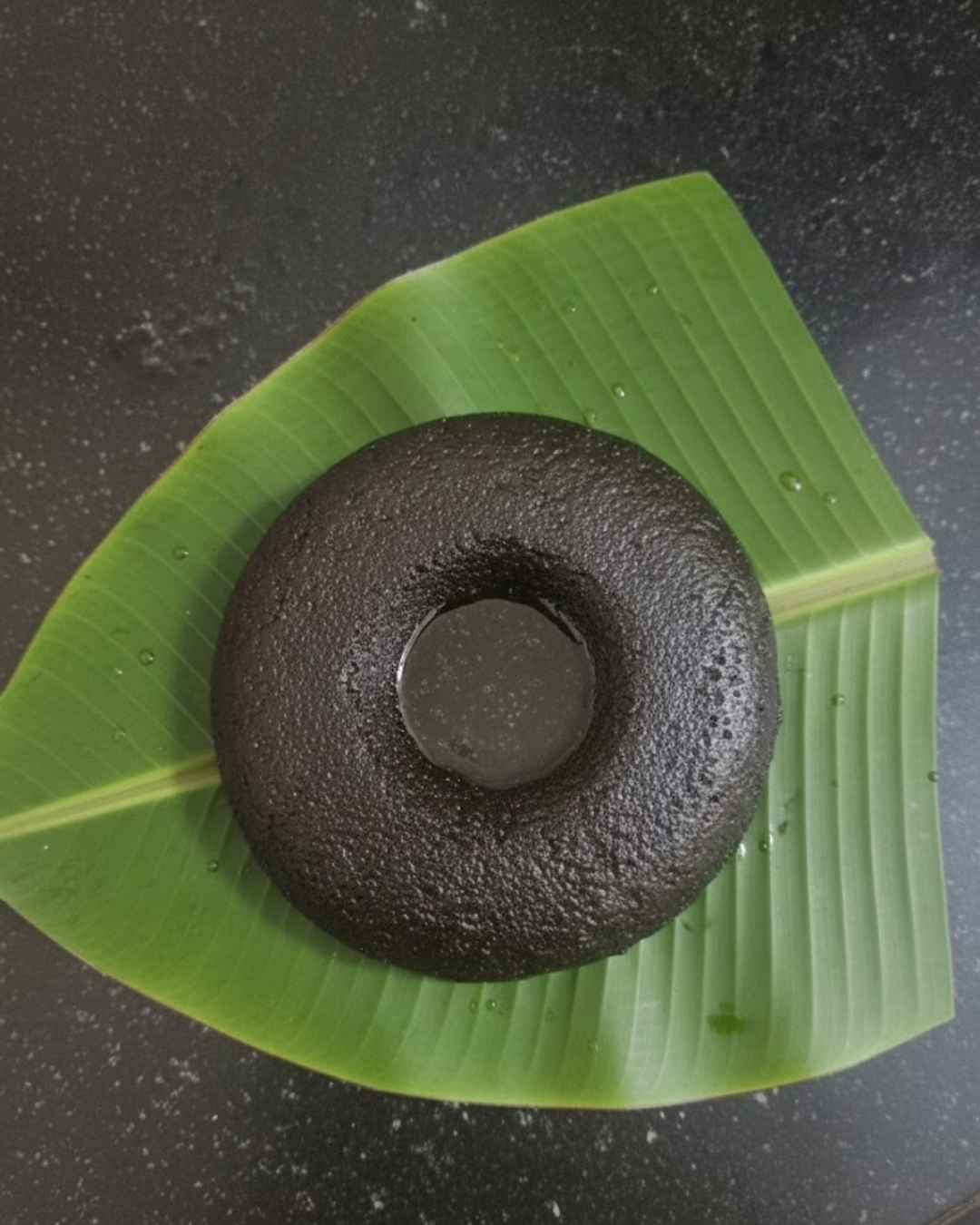
- As the water reduces, the kali thickens and turns glossy. When the mixture becomes non-sticky and oil starts releasing from the sides, the kali is ready.
- Switch off the flame and serve hot.
Notes
- Always use a heavy-bottom kadai to avoid burning and uneven cooking.
- The ground flour must be mixed with water and whisked well until smooth before adding to the boiling liquid. This step is very important to prevent lump formation.
- Stir continuously, especially after adding the flour mixture, to achieve a smooth and even texture.
- Keep the flame on low to medium throughout the cooking process for best results.
- The kali thickens further as it cools, so switch off the flame slightly before it reaches the final thickness.
- Adjust jaggery quantity based on sweetness preference.
💡 Tips & Variations
- Rice choice:
Instead of red rice, you can use pacharisi (raw rice) for a slightly smoother texture.
Kavuni arisi (black rice) can also be added for a deeper flavour and traditional touch. - Sweetener options:
Along with jaggery, karuppatti (palm jaggery) can be used as a more traditional alternative. It gives a slightly earthy taste and deeper colour. - Oil variation:
While this recipe uses nalla ennai (gingelly oil), you may adjust the quantity based on taste. Adding oil in stages always gives better texture. - Coconut milk option:
A small quantity of thick coconut milk can be added in the final stage for extra richness and aroma. This works well when making ulundu kali for special occasions. - Nut addition:
Badam is optional and can be skipped completely if you prefer a more traditional, plain version.
FAQs for Ulundu kali recipe
Is ulundu kali Recipe good for health?
Yes, ulundu kali is naturally rich in plant protein and iron. When prepared with jaggery and coconut oil, it becomes a filling and nourishing traditional food.
Why is jaggery made into syrup before adding?
Jaggery may contain small impurities. Melting it into syrup and straining helps keep the kali clean, smooth, and free from grit.
How to avoid lumps while making ulundu kali?
Always mix the ground flour with water separately and whisk well to form a smooth, watery mixture before adding it to boiling liquid. Continuous stirring is also important.
Can ulundu kali be made without nuts?
Yes, badam is completely optional. Ulundu kali tastes traditional and wholesome even without adding any nuts.
Who can consume ulundu kali?
Ulundu kali can be consumed by children, adults, and elders. It is a traditional, filling food commonly prepared at home when simple, nourishing meals are preferred.
Why is ulundu kali given to kids?
Ulundu kali is often given to kids because it is made with whole ingredients like urad dal, jaggery, and oil, which provide steady energy and keep them full for longer hours.
Can ulundu kali be eaten for breakfast?
Yes, ulundu kali is commonly eaten for breakfast as it is heavy, filling, and keeps hunger away for a long time.
How should ulundu kali be stored?
Ulundu kali is best eaten fresh and hot. If needed, it can be stored in the refrigerator upto a week
Is ulundu kali eaten only during winter?
Ulundu kali is commonly prepared during winter because it feels warming, but it can be consumed in all seasons when prepared in moderate quantity and eaten fresh.
How often can ulundu kali be consumed?
Ulundu kali can be consumed once a week as part of a regular home diet. Since it is filling and heavy, moderate intake is recommended.
❤️ Final Thoughts
Why is this Ulundu Kali recipe traditionally made using black skin urad dal?
Black skin urad dal has been used in traditional cooking for generations because of its natural strength-giving properties. It is known for its plant protein content, iron, and ability to keep the body feeling full and energised for longer hours. This is one of the reasons ulundu kali is commonly prepared for growing children, women, and elders as part of a balanced home diet.
Traditional food practices and nutritional references also speak about black urad dal as a wholesome pulse that supports stamina when included regularly in simple meals. When combined with jaggery and coconut oil/nalla ennai, it becomes easier to digest and more satisfying, especially when cooked slowly and eaten warm.
Ulundu kali is best enjoyed fresh and warm, prepared with attention rather than speed. It reflects the essence of traditional home cooking ,where ingredients were chosen carefully, methods were mindful, and food was made to nourish both body and mind. Many traditional food and nutrition resources also highlight the benefits of consuming black urad dal, especially for its natural protein content, iron, and energy-supporting nutrients when included as part of a balanced diet.