Vegetable Rava Upma Recipe: Easy Oil-Free South Indian Breakfast in 20 Minutes
⭐ About This Recipe
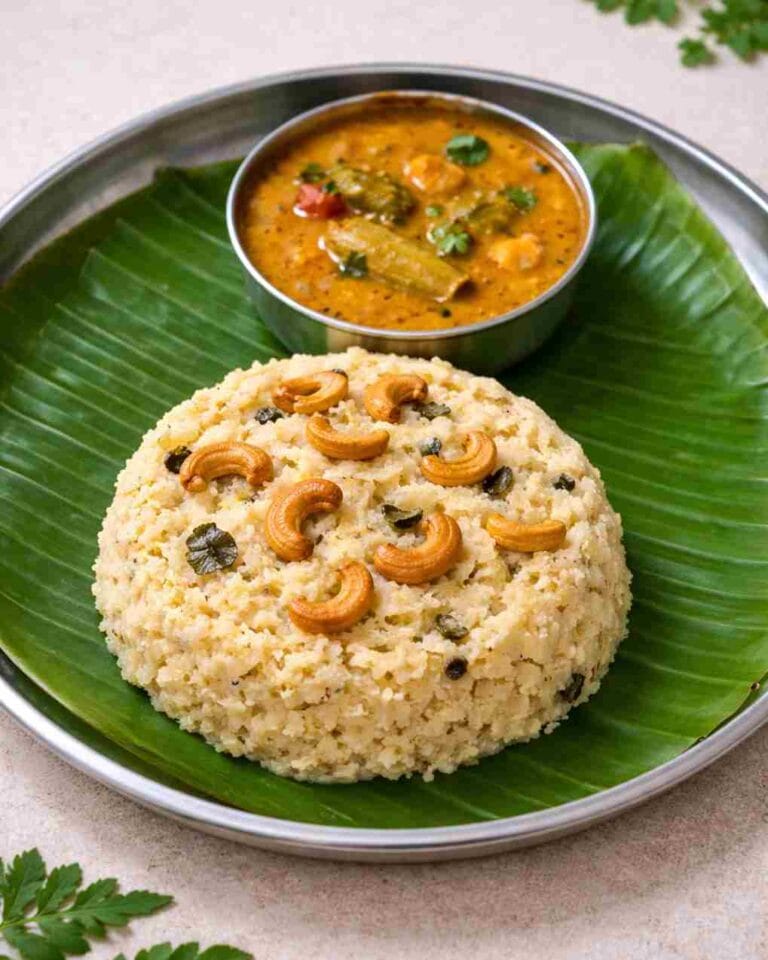
Vegetable Rava Upma is a simple South Indian breakfast recipe that you can make under 20 minutes, even on busy mornings. This is an easy oil-free recipe made using ghee and is also ginger-garlic free, which makes it perfect for everyday home cooking.
I usually make this vegetable rava upma when I want something quick, light, and filling without spending too much time in the kitchen. On similar mornings, I also prepare my Ven Pongal Recipe, as both are comforting South Indian breakfasts that need very few ingredients and minimal effort.
With carrots, green peas, and basic ingredients easily available at home, this recipe is very beginner friendly and hard to mess up. If you are looking for a south indian breakfast without oil, this upma is a good choice.
The rava is roasted well, cooked with the right water ratio, and mixed carefully so the upma turns out soft and non-sticky, without lumps. This ginger-garlic free upma is suitable for kids, elders, and anyone who prefers simple home-style cooking. It tastes best when served hot with coconut chutney or even plain sugar on the side.
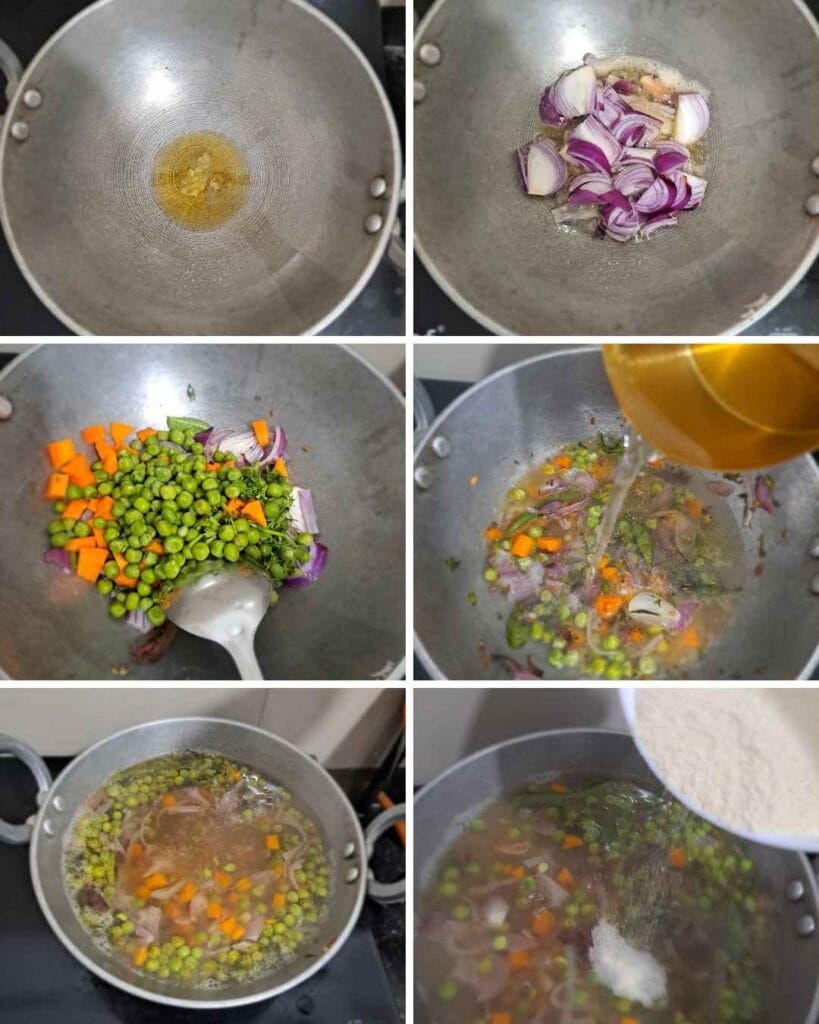
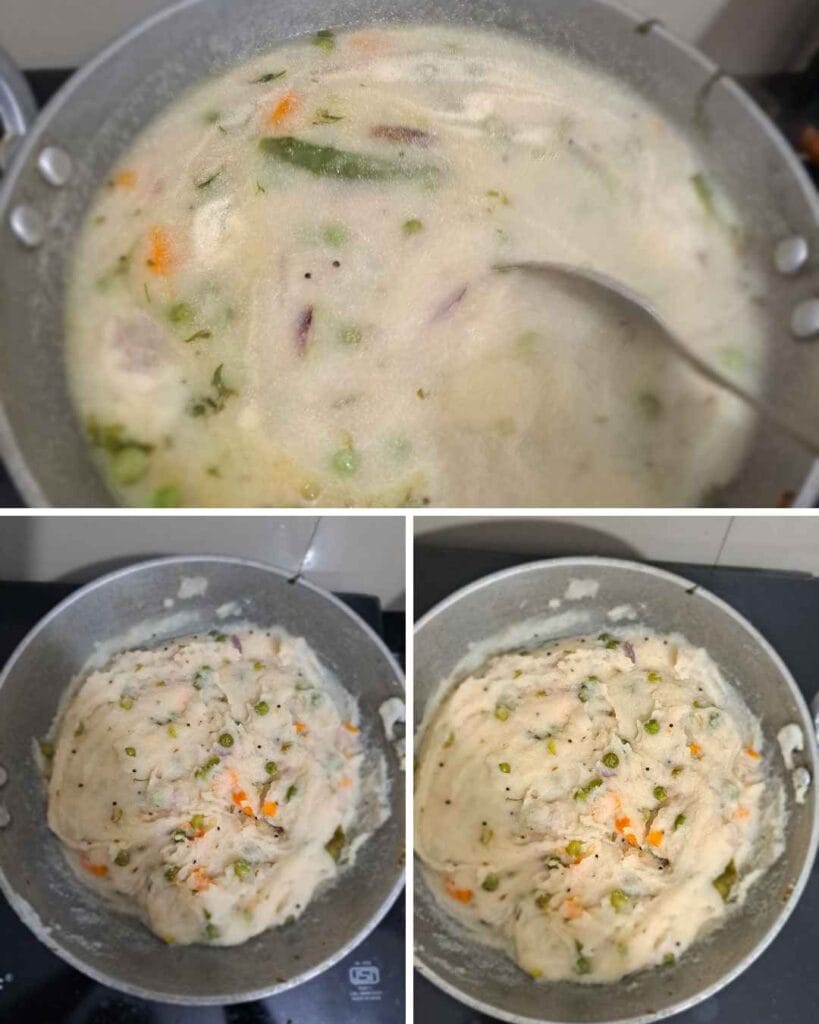
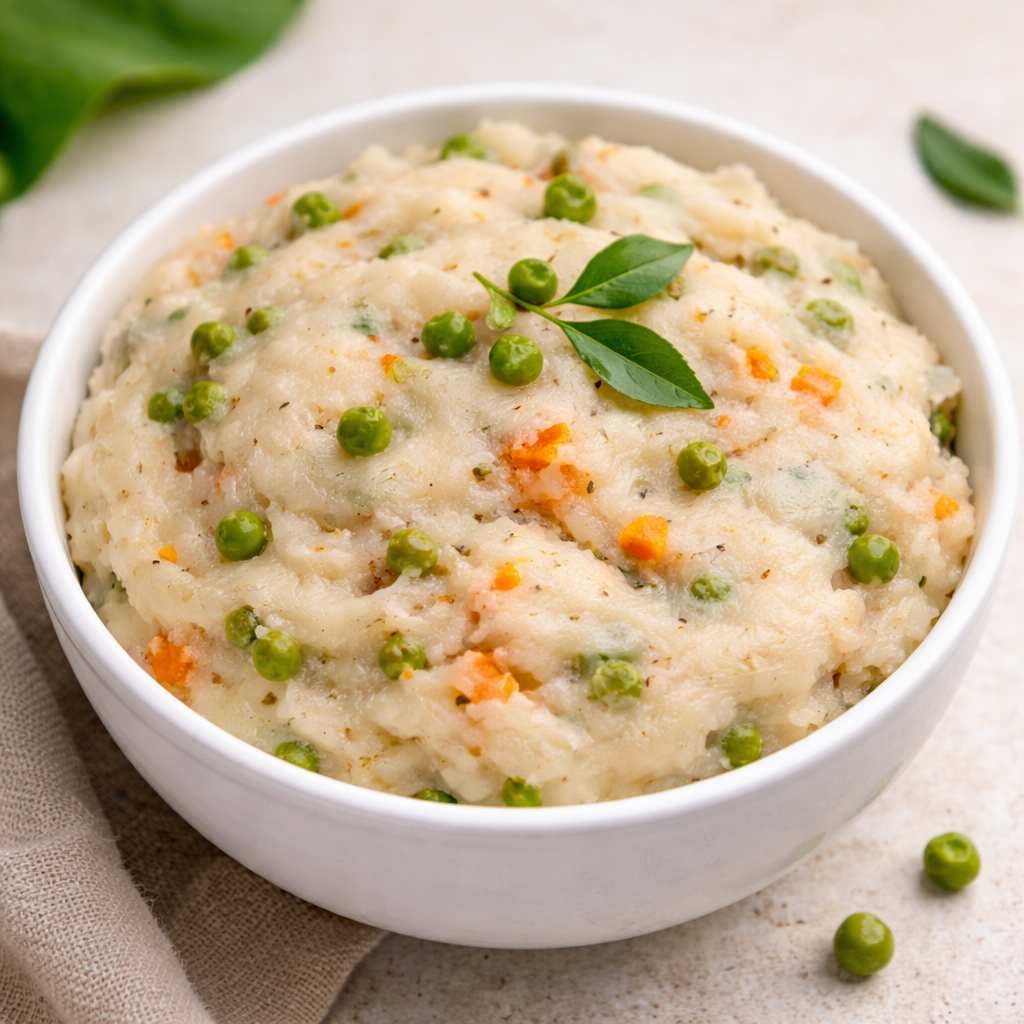
Vegetable Rava Upma (Oil-Free)
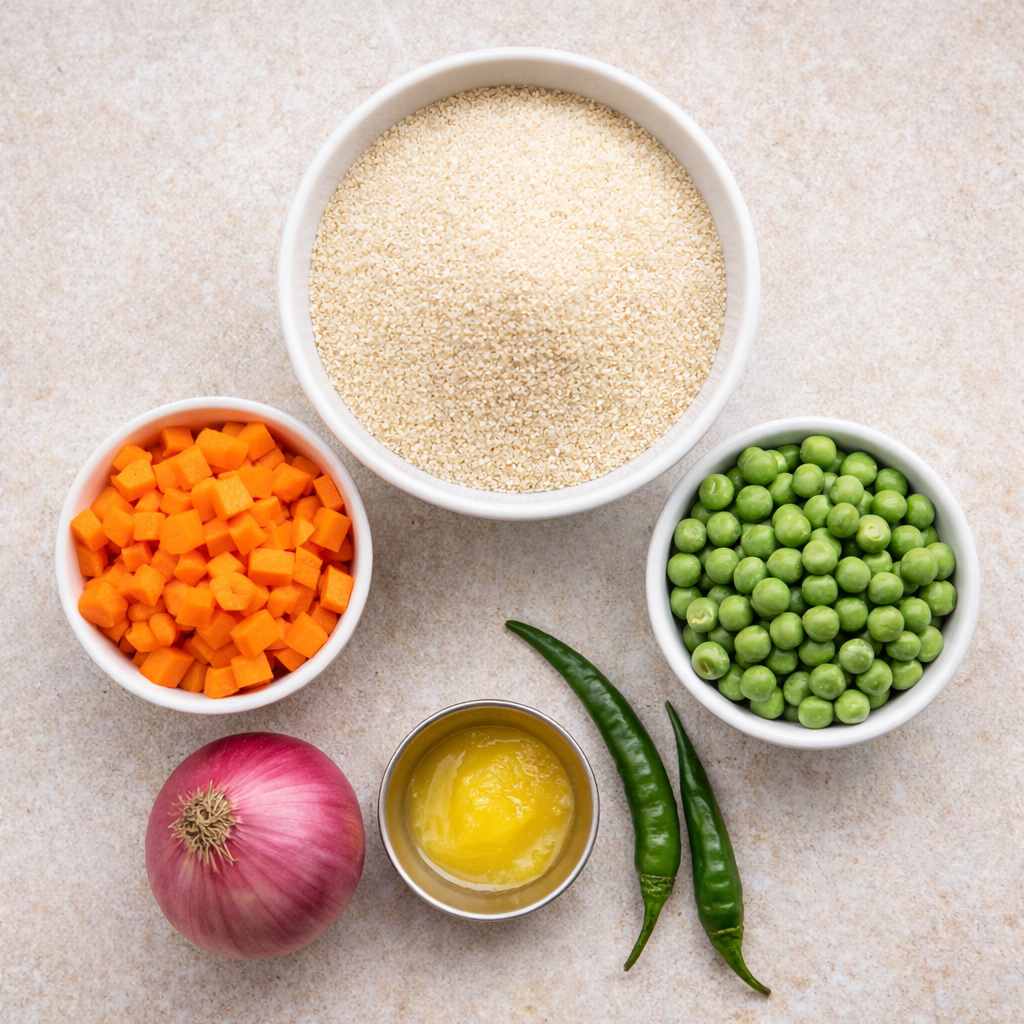
Ingredients
Equipment
Method
- Roast the Rava: In a pan, roast 1 cup of rava for 5 minutes until fragrant. Set aside.
- Tempering: Heat the pan and add 1 tbsp ghee. Once hot, add mustard seeds and let them splutter.
- Aromatics: Add curry leaves and sliced onions. Saute until onions are translucent, then add green chillies.
- Cook Veggies: Add carrots and green peas. Saute until they are 60% cooked. Add salt.
- The Rolling Boil: Add 3 cups of water. Bring the mixture to a rolling boil.
- Combine: Slowly add the roasted rava while stirring continuously to ensure it won’t form lumps.
- Finish: Cover and cook for a minute on low heat until the water is absorbed and the upma is fluffy.
Notes
- Perfect Water Ratio: For a soft and fluffy texture, always follow the 1:3 ratio — 1 cup rava to 3 cups water. This simple rule is the secret to making an easy rava upma recipe that is never dry.
- Vegetable Cooking Tip: After adding the vegetables, do not add water immediately. Let the carrots and peas cook for at least 60% on low to medium heat. When you add water and bring it to a boil, the vegetables will finish cooking fully, giving the upma better texture and flavor.
- Lump-Free Technique: To avoid lumps in your south Indian upma, add the rava only after the water reaches a rolling boil and stir continuously while adding.
- Oil-Free Cooking: This is an oil-free breakfast recipe made using just 1 tablespoon of ghee. It gives authentic flavor without the need for refined cooking oil, making it a great breakfast without oil.
- Ginger-Garlic Free: Since this is a ginger garlic free upma, it is gentle on the stomach and suitable for those who prefer simple, no onion-garlic style cooking.
- Fiber Boost Tip: You can increase the quantity of carrots and green peas to add more fiber, which helps keep the meal filling and satisfying.
- Serving Suggestion: This Indian upma recipe tastes best when served hot with coconut chutney or a small sprinkle of sugar for a classic contrast.
- Not Just for Breakfast: This vegetable rava upma also works well as a light dinner, especially when you want something easy to digest and not heavy.
- Quick Meal Option: Since it is ready in about 20 minutes, this rava upma is perfect for busy mornings or quick weeknight meals.
💡 Tips & Variations
Roasting Is Key:
Even if you are using pre-roasted rava, dry roasting it for 5 minutes on low flame enhances aroma and keeps the upma light instead of sticky.
Ghee for Flavor:
Since this is a breakfast without oil, the 1 tablespoon of ghee is essential. It adds authentic flavor and gives the upma a smooth, rich texture without using refined oil.
Vegetable Prep Tip:
Slice the onions thinly and sauté the vegetables until they are about 60% cooked. This helps them retain a slight crunch, which pairs beautifully with the soft rava.
Protein-Packed Version:
Add a handful of roasted peanuts or cashews along with the mustard seeds for extra crunch and natural protein.
Fiber Boost Option:
Increase the quantity of vegetables or add chopped beans and cauliflower to make the upma more filling and satisfying.
No-Onion Version:
This recipe is already ginger-garlic free. You can skip onions entirely to make it a simple no-onion, no-garlic version.
Light Dinner Style:
Serve this vegetable rava upma as a light dinner with a spoon of pickle or a bowl of curd for a complete yet easy-to-digest meal.
FAQ’s for Vegetable Rava Upma
Why does my upma become sticky or pasty?
This usually happens if the rava isn’t roasted enough or if it’s added to water that isn’t at a rolling boil
Is upma good for weight loss?
Yes, especially this oil-free version. It is fiber-rich from veggies and uses healthy fats from ghee
Can I make upma without onion and garlic?
Absolutely. This recipe is naturally ginger-garlic free and remains delicious and flavorful
How long should I roast the rava?
Roast the semolina for about 5 minutes on medium heat until it becomes fragrant and slightly changes color
Is vegetable upma healthy for kids?
Yes, it is a nutritious morning breakfast packed with vegetables and energy-giving semolina
Can beginners make this vegetable rava upma easily?
Absolutely. This is a beginner-friendly upma recipe with simple ingredients and easy steps. Even first-time cooks can get good results.
Can I eat vegetable rava upma for dinner?
Yes. Since this is a breakfast without oil and ginger-garlic free, it also works well as a light dinner that is easy to digest.
How long does this upma take to prepare?
This is a 20-minute rava upma recipe, including roasting, cooking, and resting time — perfect for busy mornings or quick meals.
What can I serve with vegetable rava upma?
This Indian upma recipe tastes best with coconut chutney. Some people also enjoy it with a little sugar or curd on the side.
Why is my upma watery even with the 1:3 ratio?
Rava absorption varies by grind. If it looks watery, switch off the heat and let it rest covered for 8–10 minutes. The rava will absorb the excess moisture and thicken naturally into a fluffy texture
❤️ Final Thoughts
This Vegetable Rava Upma shows how simple ingredients and a few mindful steps can create a comforting, everyday meal. Being oil-free, ginger-garlic free, and ready in just 20 minutes, it fits perfectly into busy mornings as well as light meal plans.
What I personally like about this recipe is how forgiving it is. Since rava absorbs water differently each time, allowing the upma to rest for a few minutes after cooking helps it settle into a soft, fluffy texture—making it ideal even for beginners. With carrots and green peas added, it becomes a wholesome South Indian breakfast that works well for all age groups.
This upma tastes great on its own, but pairing it with a simple Onion Chutney takes it to another level. The mild sweetness of the upma and the sharp, slightly spicy chutney balance each other beautifully, making the meal more satisfying.
Whether you enjoy it for breakfast, brunch, or even as a light dinner, this recipe is practical, reliable, and easy to repeat. If you’re looking for a simple South Indian breakfast without oil that you can make any day without stress, this vegetable rava upma is a great choice.
If you try this oil-free vegetable rava upma, I’d love to hear how it turned out! Leave a comment below or tag me in your breakfast photos