South Indian Christmas Food: How It Was in the 90s vs Now
1) What was Christmas like for someone who did not grow up celebrating it at home?
I grew up in a non-Christmas-celebrating family, so Christmas in our home was never about a tree, stars, or decorations. But what surprised me even as a child was how South Indian Christmas food still found its way into our house every December. For us, December mostly meant school holidays, a bit of extra TV time, and those lazy winter mornings. Yet the joy of Christmas somehow entered our home through our neighbours.
I still remember neighbours knocking on our door with a small plate of sweets wrapped in tissue. My mom would take it with a smile, and I would quickly peek inside. Sometimes it was plum cake wrapped in silver foil, sometimes kalkal dusted with sugar, and sometimes delicious chicken pieces that smelled amazing even before opening the lid.
Even though we didn’t celebrate Christmas ourselves, the season reached us through flavours, kindness, and simple shared food. That’s how Christmas started feeling special to me — not because of rituals, but because of the warmth of south Indian Christmas recipes shared by the people around us.
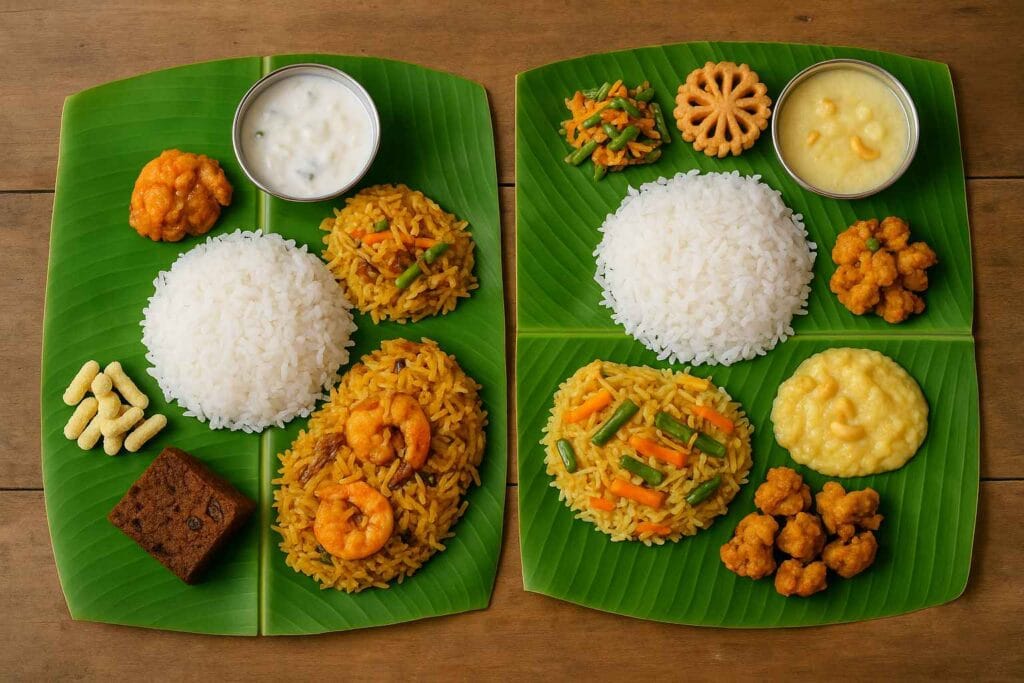
2) What kind of Christmas food did South Indian homes make in the 1990s?
If you step back into a 1990s South Indian Christmas morning, you’ll see how beautifully South Indian cuisine blended with festive traditions. The aroma of biryani drifting through corridors… the coconut oil crackling in some pan… the sweet smell of roasted cashews and ghee from someone making payasam.
Christmas food South India style back then was almost always homemade. No online orders, no bakery obsession — it was all done patiently in the kitchen.
Biryani was the big hero — definitely one of the most loved traditional South Indian Christmas dishes. It would be cooked in huge aluminium handis. The whole process — chopping onions, grinding ginger-garlic, mixing masala — was slow and detailed. It wasn’t the restaurant-style biryani we eat today. It was softer, more homely, and heavier with flavour.
Then came chicken roast or pepper chicken. This was a simple dish — lots of pepper, onions, ghee, and curry leaves. Nothing fancy. No long marination. Just soul food.
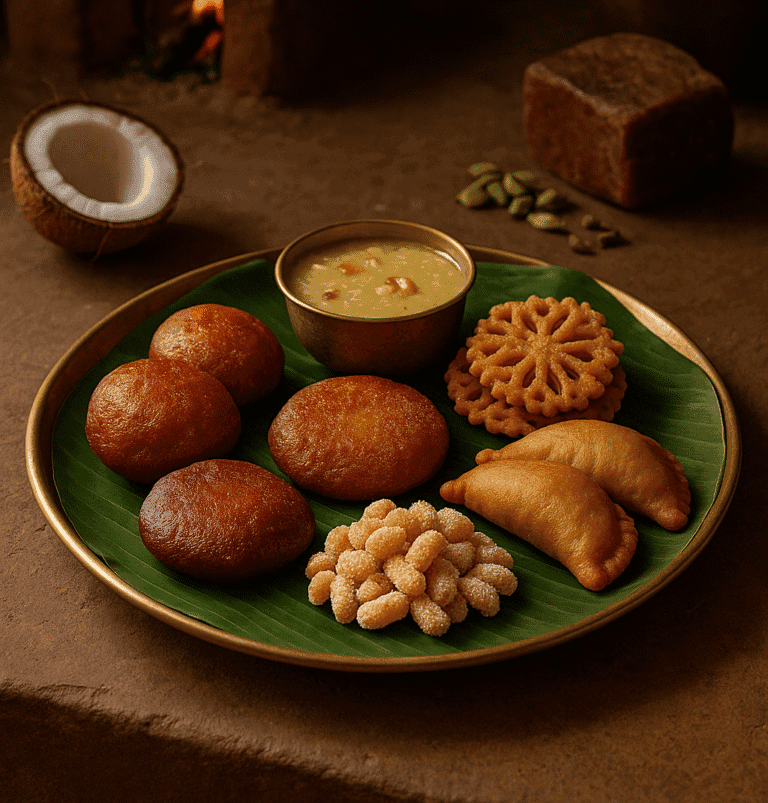
For sweets, Christmas was incomplete without kalkal, rose cookies, adhirasam, coconut barfi, and of course, old-style plum cake — all classic South Indian Christmas sweets. That plum cake wasn’t like the modern bakery cakes. It was darker, filled with soaked dry fruits, and had this deep, rich smell that felt festive even without icing or topping.
Payasam was always present — usually semiya or ada. One spoon and you’d know Christmas had officially started.
These were the flavours that made 90s Christmas food unforgettable.
3) Why does biryani feel like the “heart” of Christmas meals in South India?
Because biryani is not just a dish here — it’s an emotion. It makes any day feel like a celebration.
Even today, biryani remains the heart of many south Indian Christmas recipes.
In the 90s and even now, Christmas lunch in most South Indian Christian homes is never complete without biryani. It’s the kind of dish that brings people together.
One big vessel, everyone serving themselves, some eating standing near the kitchen, some sitting wherever they find space — that’s the Christmas lunch scene I remember.
Even for families who couldn’t afford too many side dishes, biryani itself was enough. It filled the house with aroma, filled the stomach with comfort, and filled the day with happiness.
Maybe that’s why biryani is still one of the first things we think of when we think about Christmas food South India style.
4) What were the Christmas sweets that made the 90s memorable?
The charm of 90s Christmas sweets is unmatched. They were made at home, in batches, with love and no shortcuts — these sweets truly represent south indian christmas sweets.
Kalkal was the cutest — those little curls coated with sugar. Every bite felt like childhood.
Rose cookies(Achu Murukku) were crispy and airy, made using a special mould that was dipped in batter and then fried. Kids used to wait for the first batch to be done.
Coconut milk agar agar pudding (china grass jelly) was another simple and popular sweet. It had a smooth, wobbly texture and carried the fresh flavour of coconut milk. Many families made it the previous night and kept it in the fridge to set.
Coconut burfi was simple but delicious. Many homes made it last-minute.
Gulab jamun in the 90s was always homemade — soft, warm, soaked beautifully in sugar syrup.
Plum cake — oh, that was the superstar. Dark, fruity, intense. Wrapped in foil. Given to neighbours in small pieces but treasured like gold.
These sweets weren’t about perfection. They were about love and sharing, and they still remain a part of today’s traditional South Indian Christmas dishes.
5) How is Christmas food different now compared to the 90s?
Christmas today looks very different. Tasty — but different.
Earlier almost everything was cooked at home. Now, a lot of families get biryani from restaurants or place bulk orders. Plum cakes come from bakeries or online. Desserts are modern — brownies, cheesecakes, cupcakes, cake jars.
We also see a lot of fusion Christmas food South India homes now try — pasta, garlic bread, air-fryer starters, and restaurant-style starters.Kerala-style appam and stew, though traditional, are becoming common in Tamil and Karnataka homes too.
Christmas has become a mix of old and new. But the warmth behind sharing food remains the same.
6) What are some simple South Indian Christmas menu ideas?
If you want to prepare a homely festive meal, here are two easy menus often seen in Christmas menu South India households.
Non-Vegetarian Menu
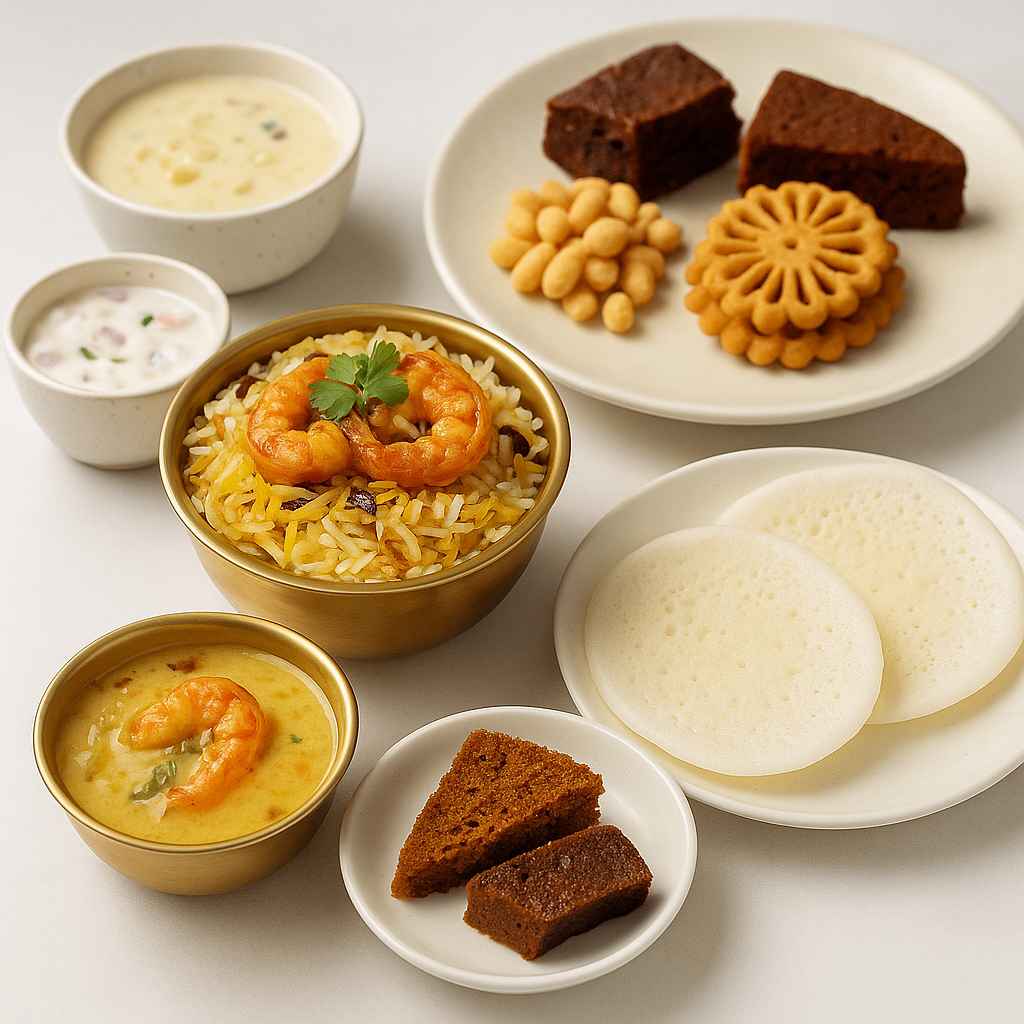
• Chicken or Mutton Biryani: A fragrant, flavourful rice cooked with soft meat and spices. Every spoon feels warm and festive.Serve with: simple cooling raita (curd + onions/cucumber).
• Pepper Chicken: A sharp, earthy, spicy chicken fry made with crushed black pepper and curry leaves. Comforting heat.
• Fish Fry: Crispy on the outside, soft inside, marinated with chilli, turmeric, and lemon. Tangy, spicy, and light.
• Prawn Masala / Prawn Fry: Juicy prawns cooked with chilli, garlic, pepper, and coconut oil. Strong coastal flavour — spicy, slightly smoky, and perfect with rice or biryani.
Vegetarian Menu
• Appam: Soft in the middle, lightly crispy at the edges, with a mild fermented coconut aroma.
• Vegetable Stew: A gentle coconut-milk curry with vegetables — creamy, mild, and soothing.
• Coconut Milk Rice: Soft, slightly sweet, and fragrant rice cooked in coconut milk.
• Vegetable Biryani : A colourful biryani made with ghee and vegetables — lighter than meat biryani but aromatic.
• Cauliflower 65: Crispy cauliflower fritters with a tangy, spicy coating — a great veg starter.
• Payasam : A warm, silky dessert made with milk or coconut milk. Sweet, simple, and festive.
7) What Christmas foods connect the 90s and today?
Some dishes never change. Plum cake — whether homemade or bakery — still brings joy. Biryani remains everyone’s favourite. Gulab jamun still appears in many homes because it’s simple and comforting. Payasam too — always present on special days.
These dishes feel like a bridge between our childhood Christmas memories and the modern Christmas we see today.
8) Why do Christmas food memories feel so special even for someone who didn’t celebrate it?
Because food is emotional.
It carries warmth.
It carries stories.
It carries people.
Those plates shared by neighbours in the 90s felt like little gifts of love. Even though we didn’t celebrate Christmas, the season still felt special because of these gestures.
Every December, these memories come back — the biryani aroma, the crunch of rose cookies, the sweetness of kalkal, the laughter in corridors, the friendly knocks on doors.
Christmas taught me that festivals are not just about rituals.
They are about sharing.
They are about food.
They are about people.
And that’s why Christmas continues to feel warm for me, years later.
9) Final Question: What does Christmas mean to you today?
I still think of Christmas as a time for welcome togetherness. Whether it’s the old 90s-style sweets or today’s bakery cakes, food always brings back that familiar warmth.
I may not have celebrated Christmas in a traditional way growing up, but I celebrated it in the form of shared food, shared plates, and shared smiles.
And that’s enough to make Christmas feel special — even today.
FAQ For South Indian Christmas food
What is the most iconic South Indian Christmas food?
Biryani is the most iconic South Indian Christmas food. Almost every home prepares a big pot, and it brings everyone together for lunch.
Do South Indian Christmas menus always include non-veg?
No, many families also make a full vegetarian menu with appam, vegetable stew, coconut milk rice, payasam, and simple sweets.
Are South Indian Christmas sweets difficult to make?
No, most are simple. Kalkal, achu murukku, coconut burfi, and agar-agar jelly are easy homemade sweets even beginners can prepare.
What dessert is commonly gifted to neighbours during Christmas?
Plum cake is the most gifted dessert. Small pieces wrapped in foil or paper are shared with neighbours every December.
What is a quick Christmas breakfast in South Indian homes?
Most South Indian homes keep Christmas breakfast simple — idli, dosa, or semiya. In some regions, families also prepare appam with a mild coconut-based curry.