Thengai Therattipal Recipe – Easy 30-Min Coconut Jaggery Sweet with Palm Jaggery
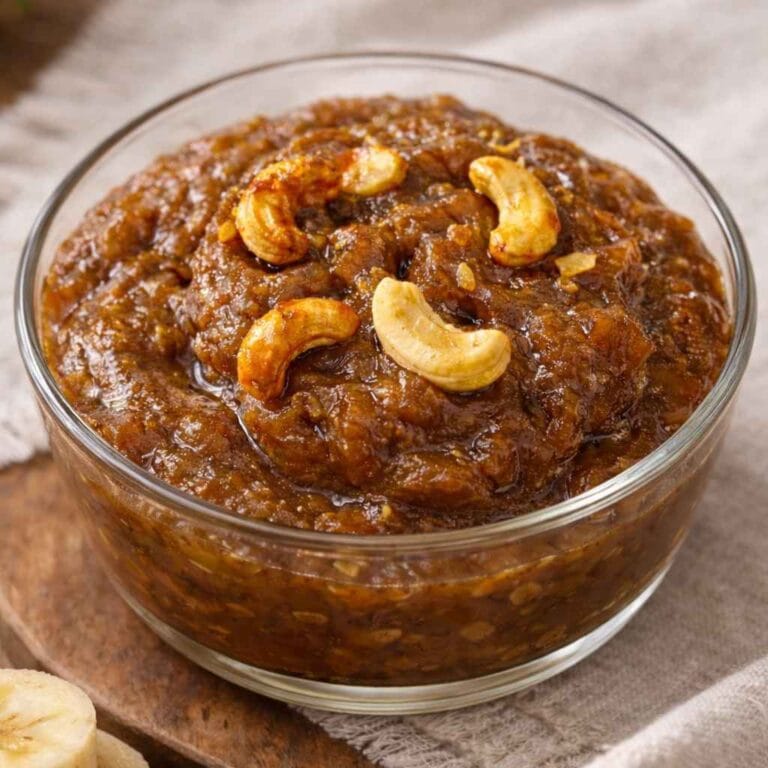
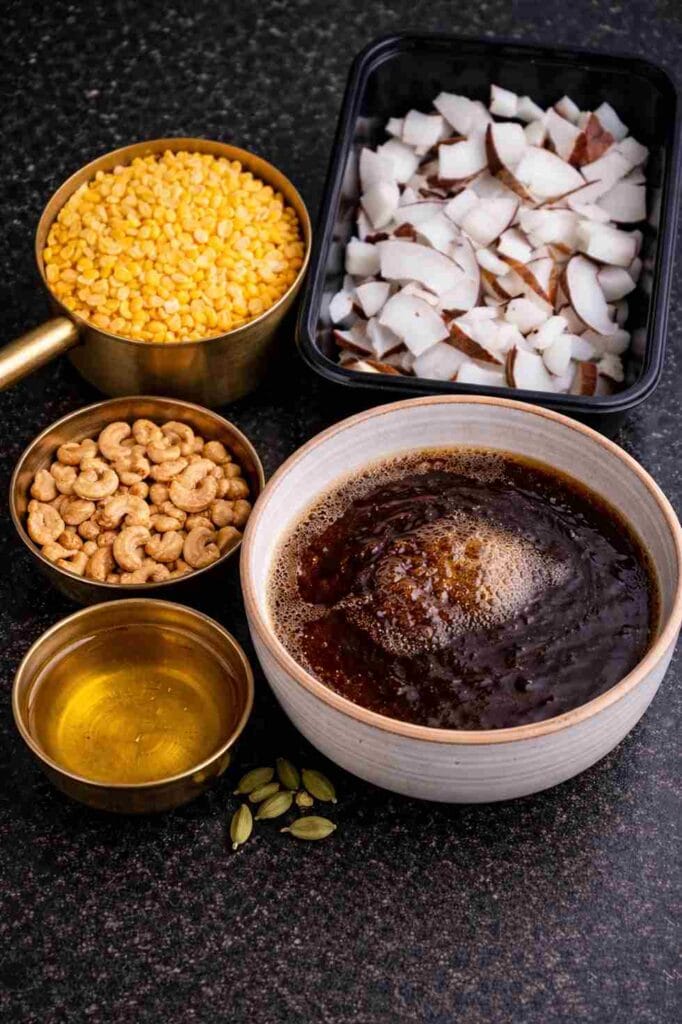
Thengai Therattipal Recipe is a classic Deepavali sweet from Tamil Nadu — made with fresh coconut, palm jaggery, roasted moong dal, ghee, and cardamom. No refined sugar, no milk, no complicated steps.
This traditional coconut jaggery sweet is especially popular in Tirunelveli and Thanjavur households, where it has been made for generations. Serve it soft and warm as therattipal or press it into a tray and cut it like a coconut barfi — both ways are delicious.
If you enjoy traditional sweets made with jaggery and simple ingredients, you may also like some of our other easy sweet recipes like Quick Ragi Sweet Under 20 Minutes, Easy Aval Burfi Recipe, Traditional Wattalappam Recipe, and Banana Halwa Recipe with Jaggery . These sweets are also made with natural sweeteners and are perfect for festivals, special occasions, or as a simple homemade dessert.
The best part? It comes together in under 30 minutes and anyone can make it right the first time.
What is Thengai Therattipal? (தேங்காய் திரட்டுப்பால்)
Thengai Therattipal — also written as Coconut Thirattipal or Thengai Therattupal — is a traditional South Indian coconut sweet made by slow-cooking freshly ground coconut with palm jaggery and roasted moong dal until it thickens into a soft, fudgy consistency.
The word Thengai means coconut and Therattipal means thickened or reduced — which perfectly describes how this sweet is made. It is often compared to kamarkat, but unlike kamarkat which is firmer and chewier, therattipal is softer and melts in the mouth.
It is different from thenga pooranam (the coconut filling used inside kozhukattai) — therattipal is cooked longer, has a deeper colour from the palm jaggery, and is eaten as a standalone sweet.
How to Make Thengai Therattipal Recipe at Home – Step by Step
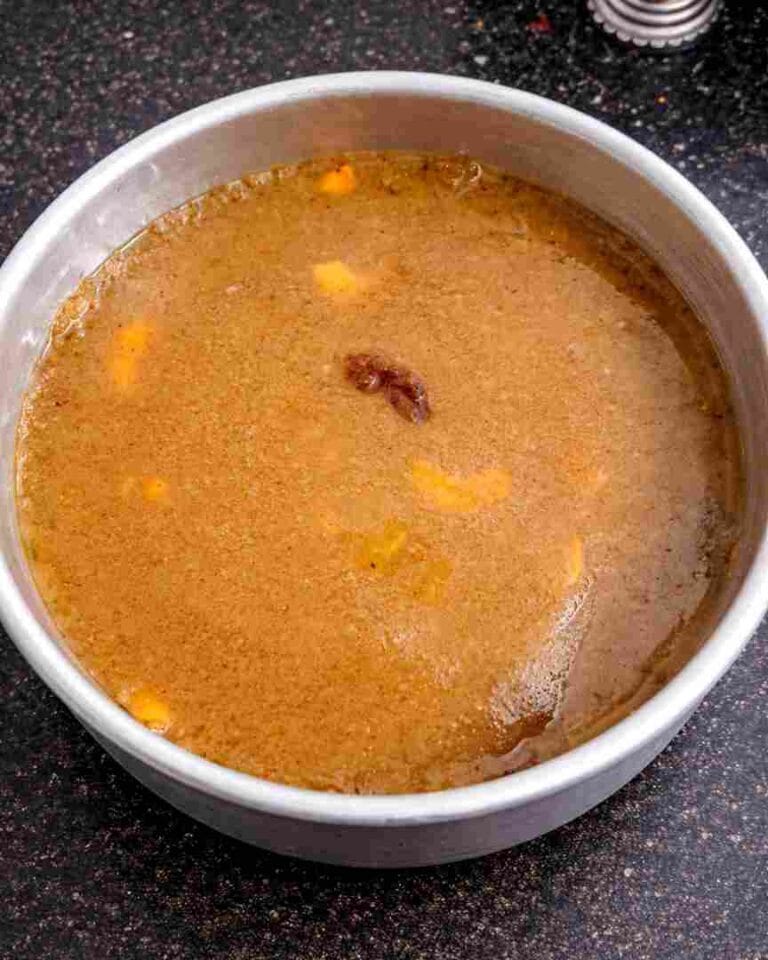
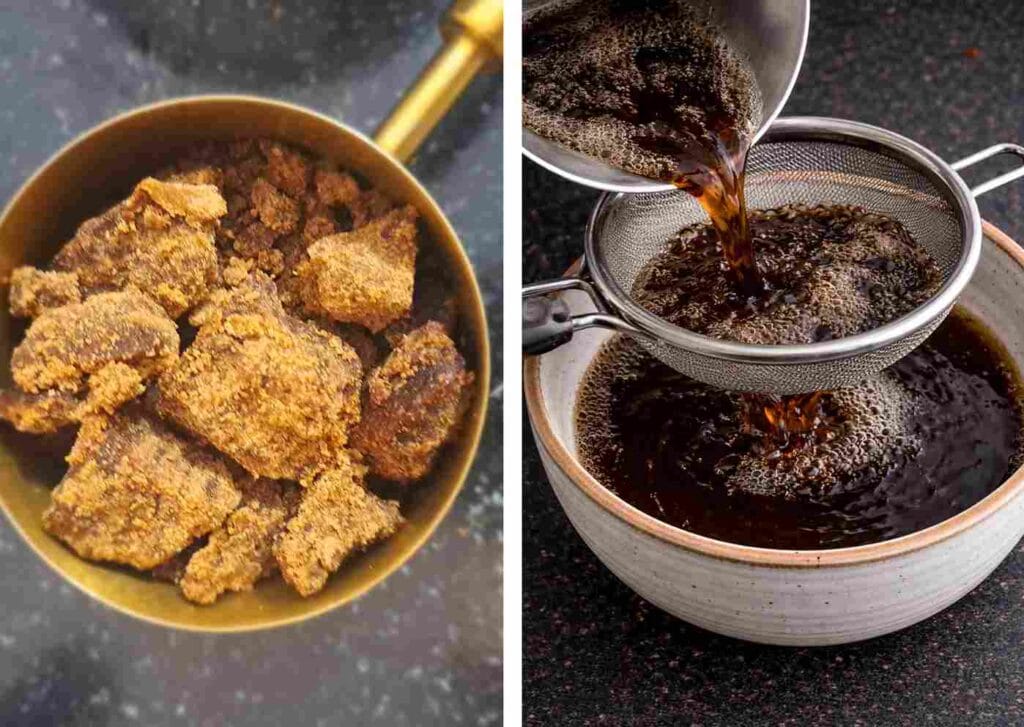
Step 1: Melt and Strain the Palm Jaggery
Palm jaggery is melted with a little water and strained to remove impurities before adding to the coconut mixture for making Thengai Therattipal.
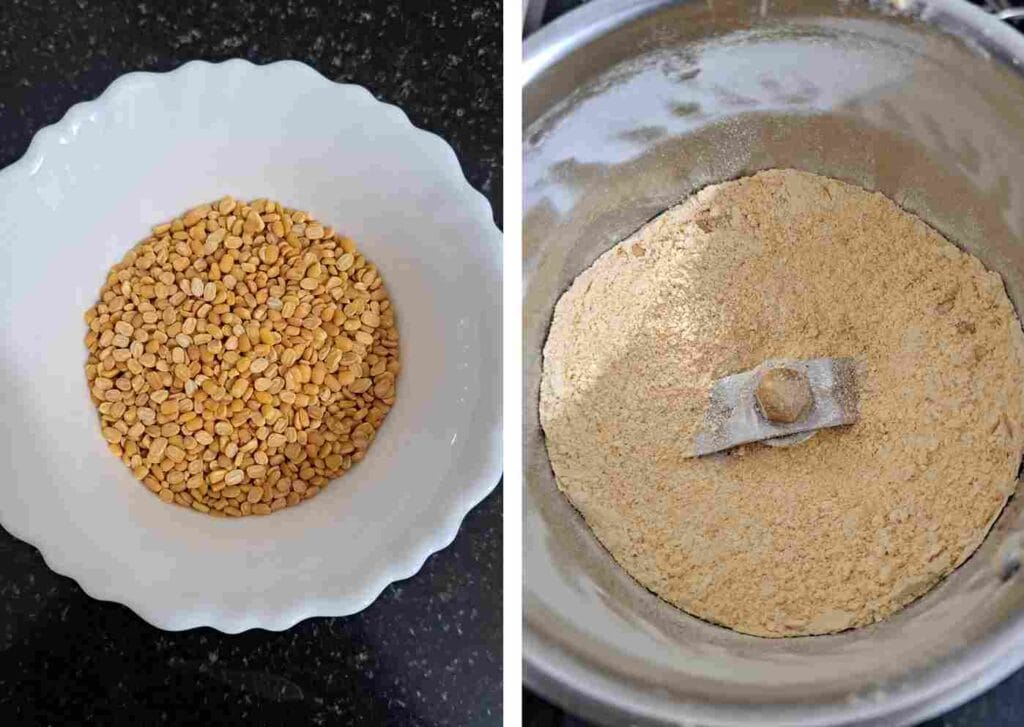
Step 2: Roasting and Grinding Moong Dal – Thengai Therattipal Recipe
Moong dal is roasted until aromatic, cooled, and ground into a fine powder to give body and texture to the therattipal.
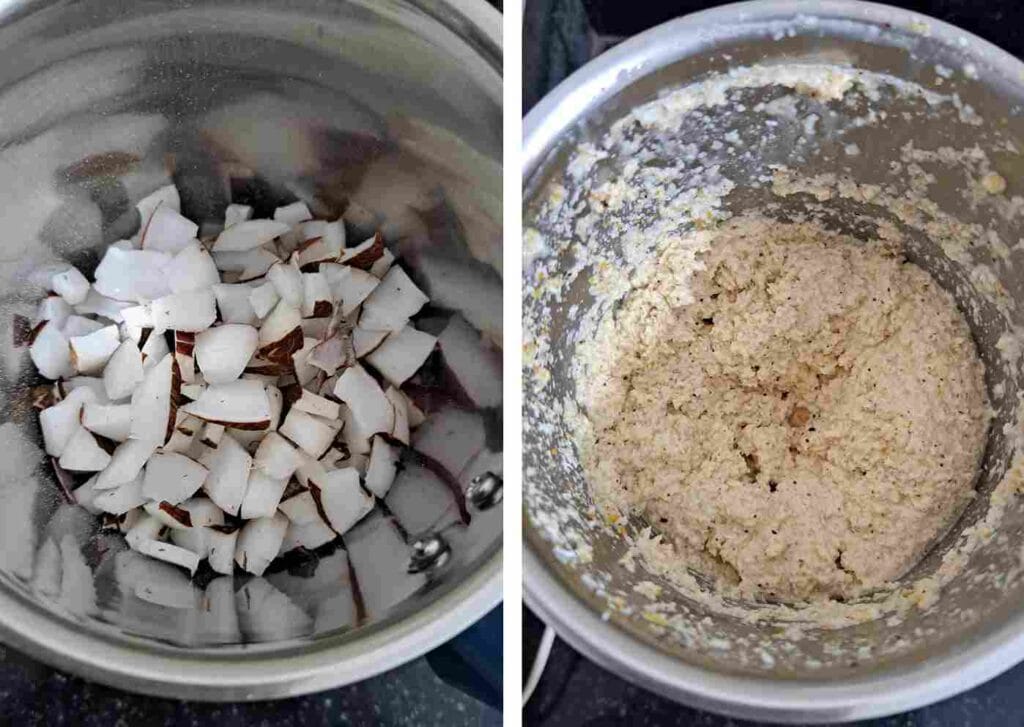
Step 3: Grinding Coconut and Moong Dal Coarsely – Thengai Therattipal
Fresh coconut and moong dal powder are ground coarsely with a little water to form a slightly grainy mixture for therattipal.
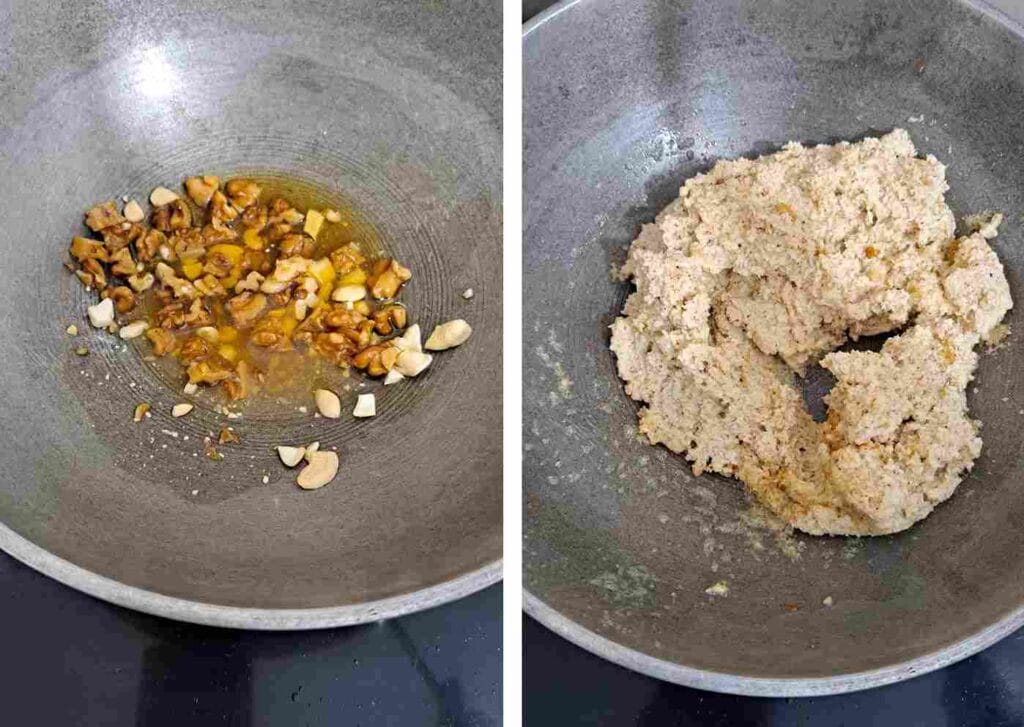
Step 4: Roasting Cashew Nuts in Ghee and Cooking Coconut Mixture – Traditional Tamil Sweet
Roasting cashew nuts in ghee adds flavour and richness to the therattipal. Cooking the coconut mixture before adding jaggery helps remove excess moisture and gives the sweet a thick, perfect texture.
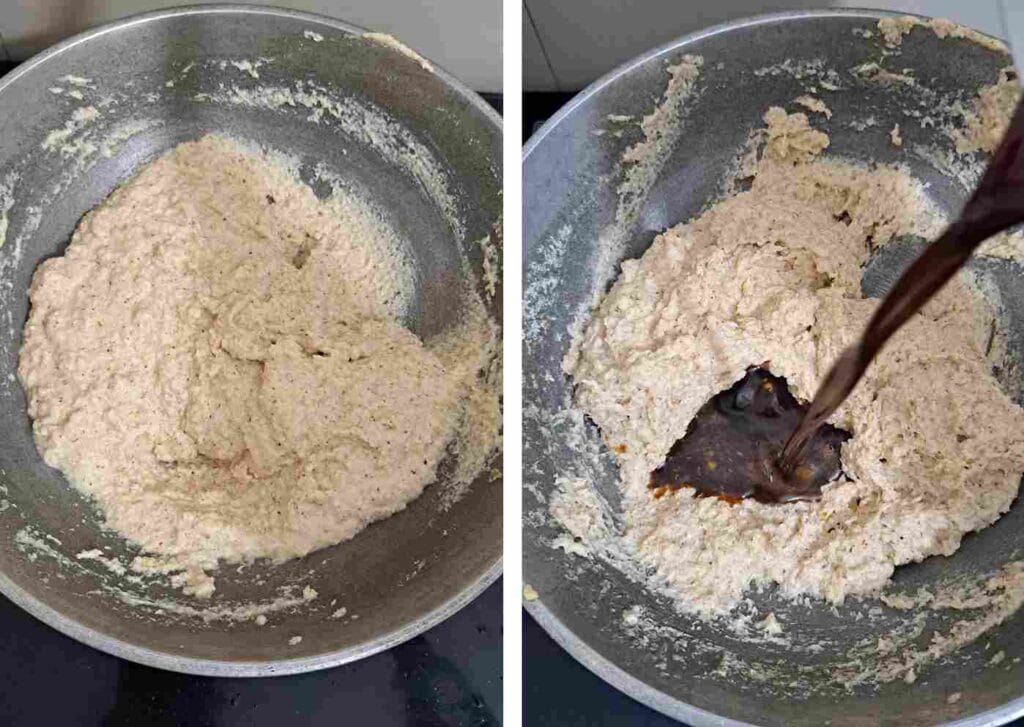
Step 5: Adding Palm Jaggery Syrup to Cooked Coconut Mixture – Thengai Therattipal
After the coconut mixture is cooked and moisture is reduced, palm jaggery syrup is added and stirred continuously to make the traditional coconut jaggery sweet.
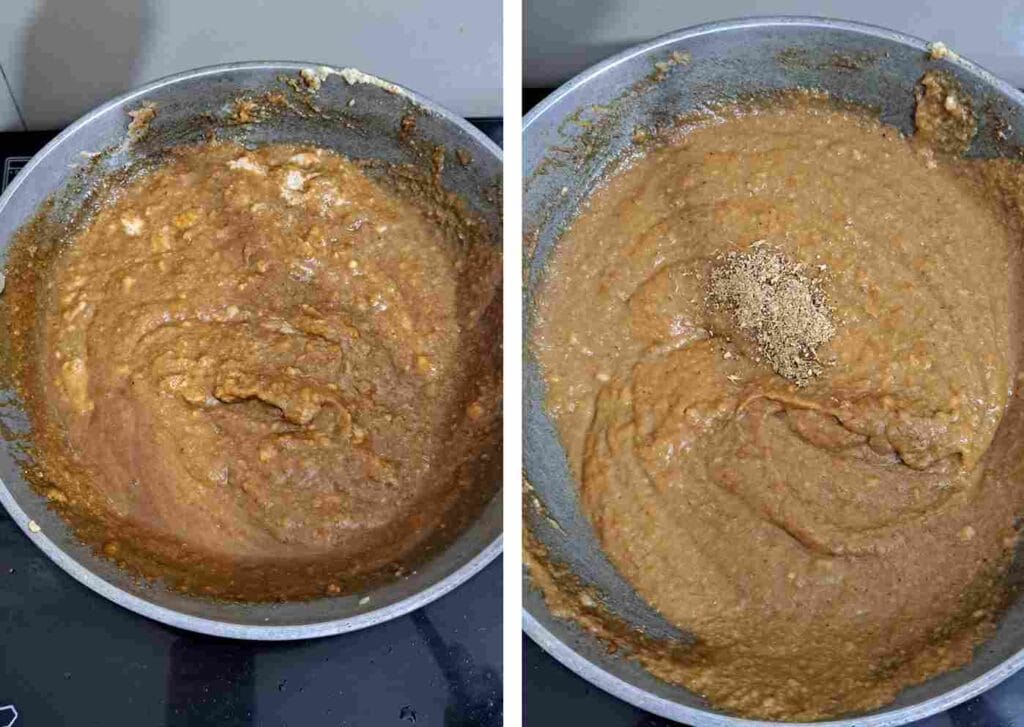
Step 6: Cooking Until Thick and Adding Cardamom – Thengai Therattipal
The coconut jaggery mixture is cooked until thick and glossy, then cardamom powder is added for flavour.
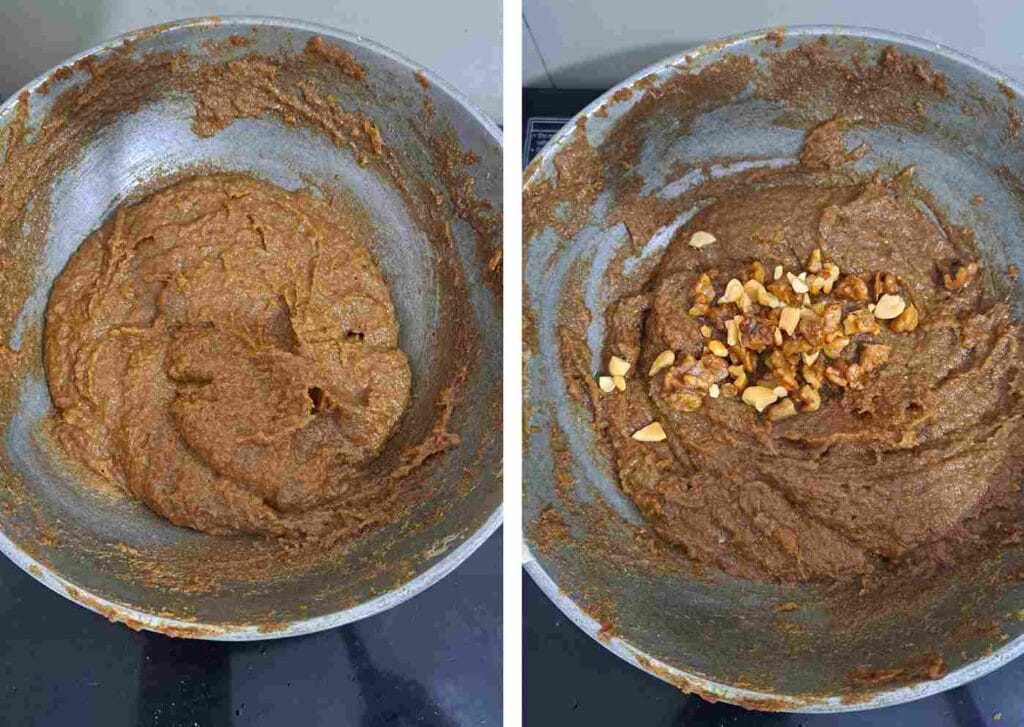
Step 7: Thengai Therattipal Ready to Serve
Once the mixture becomes thick and leaves the sides of the pan, add roasted nuts, mix well, and the thengai therattipal is ready to serve.
For exact measurements, step-by-step instructions, cooking time, and tips, please check the recipe card below.
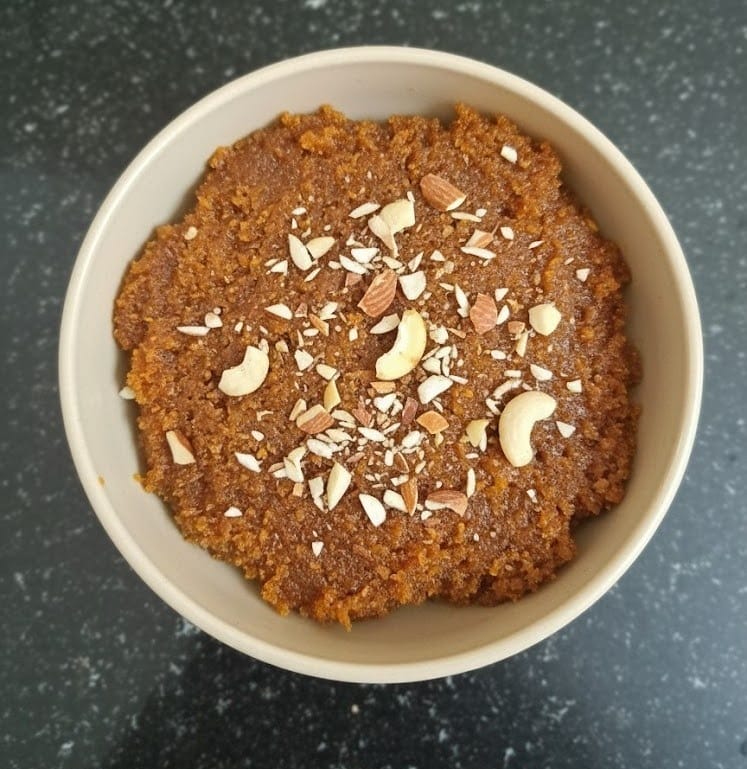
Thengai Therattipal Recipe – Easy 30-Min Coconut Jaggery Sweet with Palm Jaggery
Ingredients
Equipment
Method
- Add palm jaggery and 1 tbsp water to a pan. Heat until melted. Strain the jaggery syrup to remove impurities and keep aside.
- Dry roast moong dal until the color slightly changes and aroma comes. Cool completely and grind into a fine powder.
- Add sliced coconut, moong dal powder, and ¼ cup water into a mixer. Grind coarsely (about 90% ground, not a fine paste).
- Heat 1 tbsp ghee in a pan and roast cashew nuts until golden. Keep aside.
- In the same pan, add the ground coconut mixture. Add ¼ cup water and cook for about 5 minutes until the water evaporates. this step removes the raw smell of coconut
- Pour the strained jaggery syrup into the coconut mixture and stir continuously.
- Add ghee little by little while stirring continuously until the mixture thickens to a halwa consistency.
- Add roasted cashews and cardamom powder. Mix well and switch off the flame.
- Transfer to a bowl and serve warm
Notes
- Do not over roast the moong dal, otherwise the taste will change.
- Grind the coconut mixture coarsely for the correct therattipal texture.
- Keep stirring continuously after adding jaggery syrup to avoid sticking.
- Palm jaggery gives traditional flavor and color.
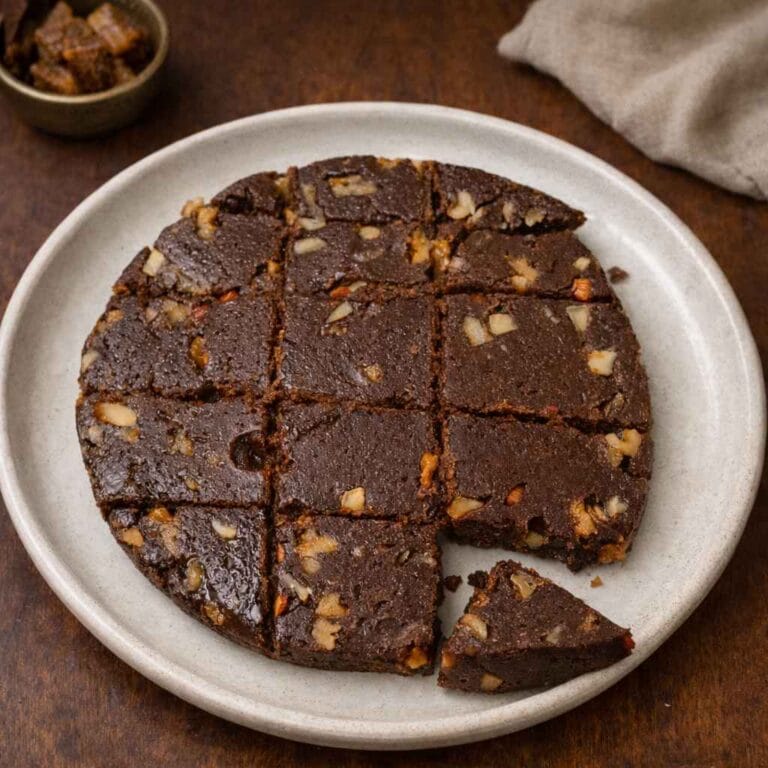
- You can cook a little longer if you want barfi consistency.
💡 Tips
- Add 2 cardamom pods while grinding the mixture, or add cardamom powder at the end for a fresh aroma.
- A small pinch of salt always enhances the sweetness and balances the overall flavor.
- You can use palm jaggery, normal jaggery, or country jaggery powder based on availability. Palm jaggery gives the deepest colour and flavour.
- Always use freshly grated coconut for the best texture and aroma.
- If the mixture becomes too thick while grinding, add water 1 tbsp at a time. Keep the paste thick.
- Cook on low flame to avoid burning the coconut mixture.
- Grease the tray with ghee if you plan to set it like barfi.
- Add saffron soaked in warm milk for extra flavour and a richer colour (optional).
- Store in an airtight container and refrigerate for 1–2 days. Warm slightly before serving.
FAQs for Thengai Therattipal Recipe
Can I use regular jaggery instead of palm jaggery?
Yes, you can use regular jaggery or country jaggery powder. Palm jaggery gives a deeper flavour and colour, but all three work well for this recipe.
Why do we add roasted moong dal in Thengai Therattipal?
Roasted moong dal adds thickness, aroma, and structure to the mixture. It helps the sweet bind better, especially when setting it as barfi.
How to store Thengai Therattipal?
Store it in an airtight container in the refrigerator for 1–2 days. Reheat slightly before serving if it becomes firm.
Can I use desiccated coconut instead of fresh coconut?
Fresh coconut is recommended for best taste and texture, but desiccated coconut can be used by soaking it in warm water for a few minutes before cooking.
Is Thengai Therattipal the same as Kamarkat?
No, Kamarkat is a hard coconut jaggery candy, while Thengai Therattipal is soft and halwa-like in texture.
Can I make Thengai Therattipal as barfi?
Yes, cook the mixture a little longer until thick and spread on a greased plate. Cut into pieces once cooled to make coconut jaggery barfi.
If you love simple sweets prepared with minimal ingredients, you may also like my [Ukkarai Recipe], another festival favourite.
Is the Thengai Therattipal Recipe really worth trying at home?
Absolutely yes — and here’s why. The Thengai Therattipal recipe is one of those timeless traditional sweets that truly feels like home. This coconut jaggery sweet is simple, honest, and made with ingredients we usually already have in our kitchen — fresh coconut, jaggery, a little moong dal, and ghee.
What makes this traditional South Indian sweet special is its authenticity. Every household has its own style of making Thengai Therattipal, yet the soul of the recipe never changes — slow cooking on low flame, the aroma of coconut and ghee, and the moment the mixture thickens into that soft, melt-in-the-mouth texture. It is a traditional Tamil sweet that does not require refined sugar or complicated techniques.
The Thengai Therattipal recipe is also a better choice compared to many other festival sweets because it uses natural sweeteners like palm jaggery or country jaggery, fresh coconut, and moong dal. It is a homemade sweet you can confidently make for kids, elders, or guests during festivals like Deepavali or special family occasions.
And the best part? This coconut jaggery sweet is genuinely easy to make. Even beginners can prepare this successfully. As long as you cook on low flame and stir patiently, the therattipal will come out perfect every time. You can enjoy it warm as soft therattipal or cook a little longer and set it like coconut jaggery barfi.
Thengai Therattipal can also be served as a light dessert after a heavy meal like biryani. The mild sweetness of coconut pairs very well with spicy dishes. If you are planning a special lunch menu, this traditional sweet works perfectly as a dessert.
This is one recipe that carries memories, flavour, and tradition in every bite — a simple Tamil sweet that always makes you feel connected to home.