Beetroot Halwa Recipe – Easy Homemade Sweet with Jaggery
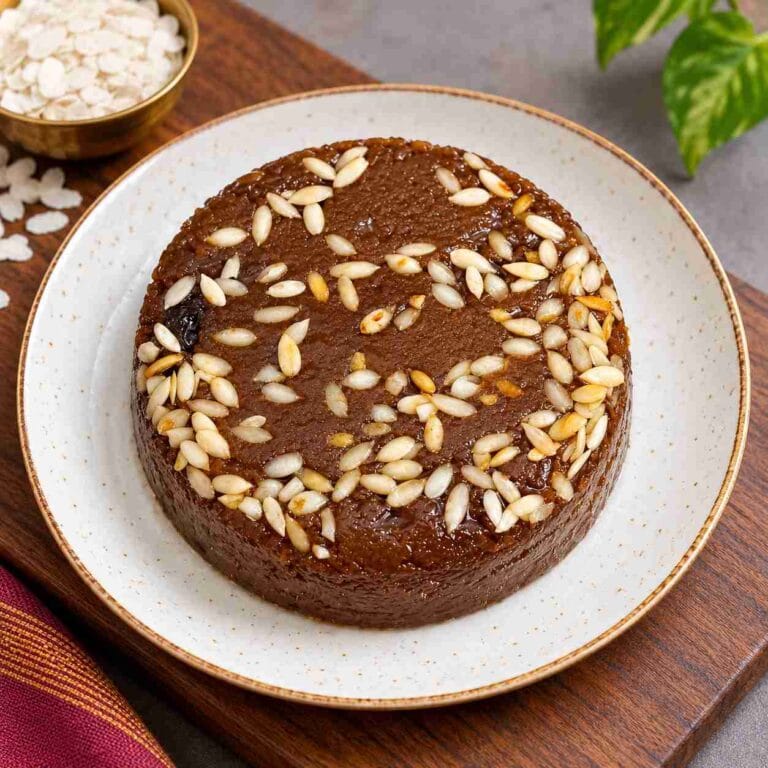
Beetroot Halwa with Jaggery is a vibrant, glossy Indian sweet that is healthy, delicious, and incredibly easy to make. Unlike the traditional grated version that requires hours of slow cooking in milk, this Beetroot Corn Flour Halwa comes together in just 30 minutes and sets into perfect, sliceable squares.
Because this is a Beetroot Halwa no milk recipe, it is naturally vegan, lighter on the stomach, and has a longer shelf life than milk-based sweets. The addition of corn flour gives it a unique, jelly-like texture—similar to Bombay Halwa—that kids and adults alike will love. Let’s learn how to make this quick, glossy dessert at home!
If you enjoy naturally sweetened traditional desserts like Banana Halwa Recipe with Jaggery, you’ll probably enjoy this version too. Both recipes rely on simple ingredients and slow cooking — the kind of sweets that feel satisfying without being overpowering.
This is a dessert I genuinely enjoy making for my family, whether it’s for a small celebration or just a homemade sweet craving. Knowing exactly what goes into it makes the effort feel worth it every single time.
Beetroot Halwa – Easy Homemade Sweet with Jaggery
Ingredients
Equipment
Method
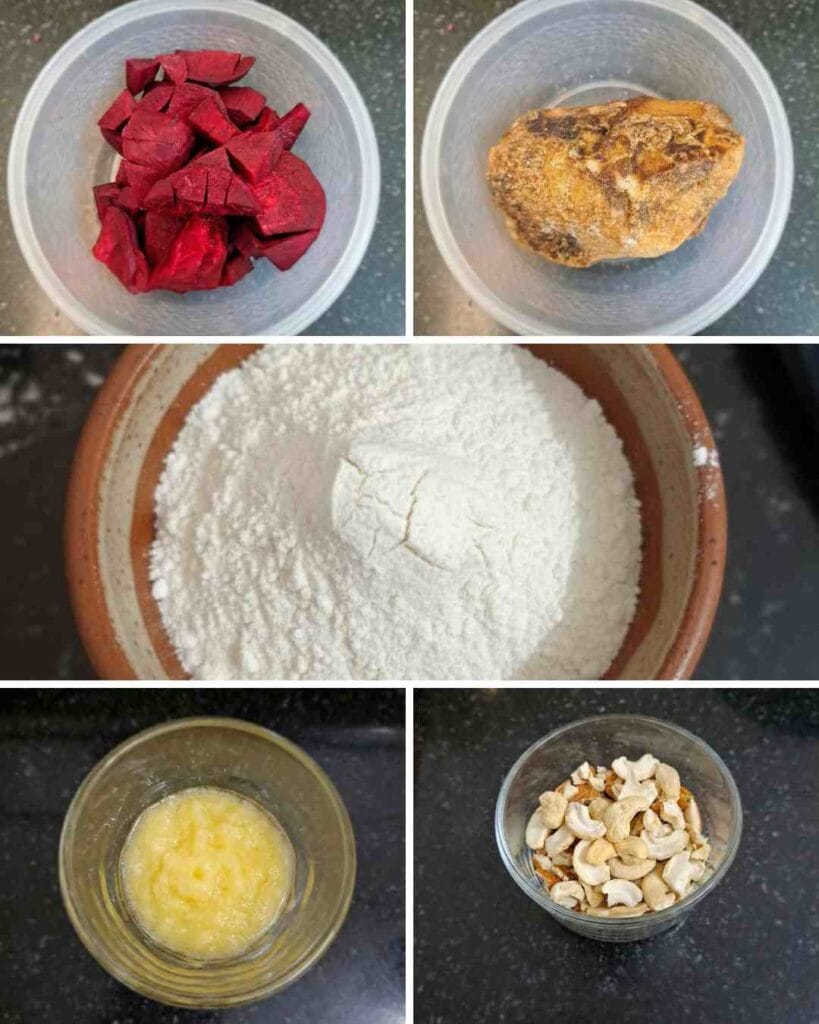
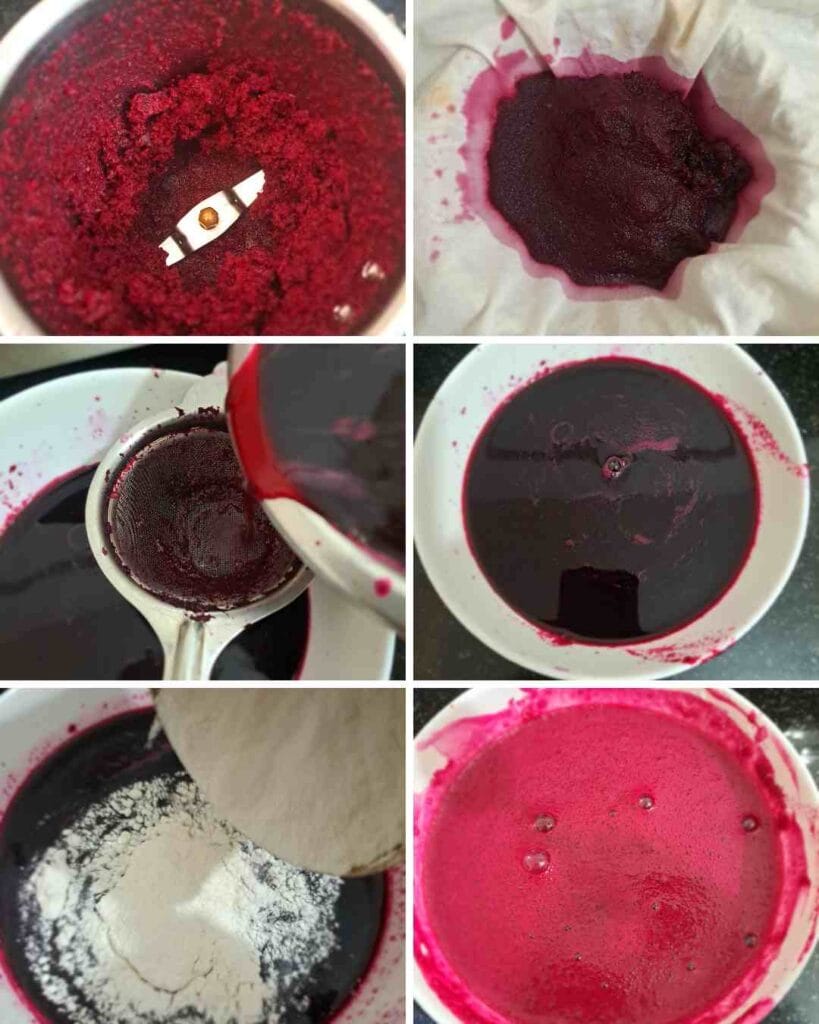
- Wash, peel, and chop the beetroot. Grind it with added water until smooth. Strain the mixture using a cloth or fine strainer and extract the juice. Measure 2 cups (approximately 400ml) beetroot juice and keep aside.
- Beetroot Juice Prep : The star ingredient, You will need about 1 cup of fresh juice. Grate fresh raw beetroots and squeeze them to extract the juice. Tip: Do not boil the beets first; raw juice gives the best vibrant color and setting property.
- In a pan, add jaggery and ½ cup water. Heat until the jaggery melts completely. Switch off the flame, filter the syrup to remove impurities, and allow it to cool.
- Corn Flour (Corn Starch) : This is the binding agent that gives the halwa its glossy, jelly-like texture.Important Note: Ensure you are using white corn starch (often labeled as Corn Flour in India). Do not use yellow maize flour or makki ka atta, as the texture will not set.
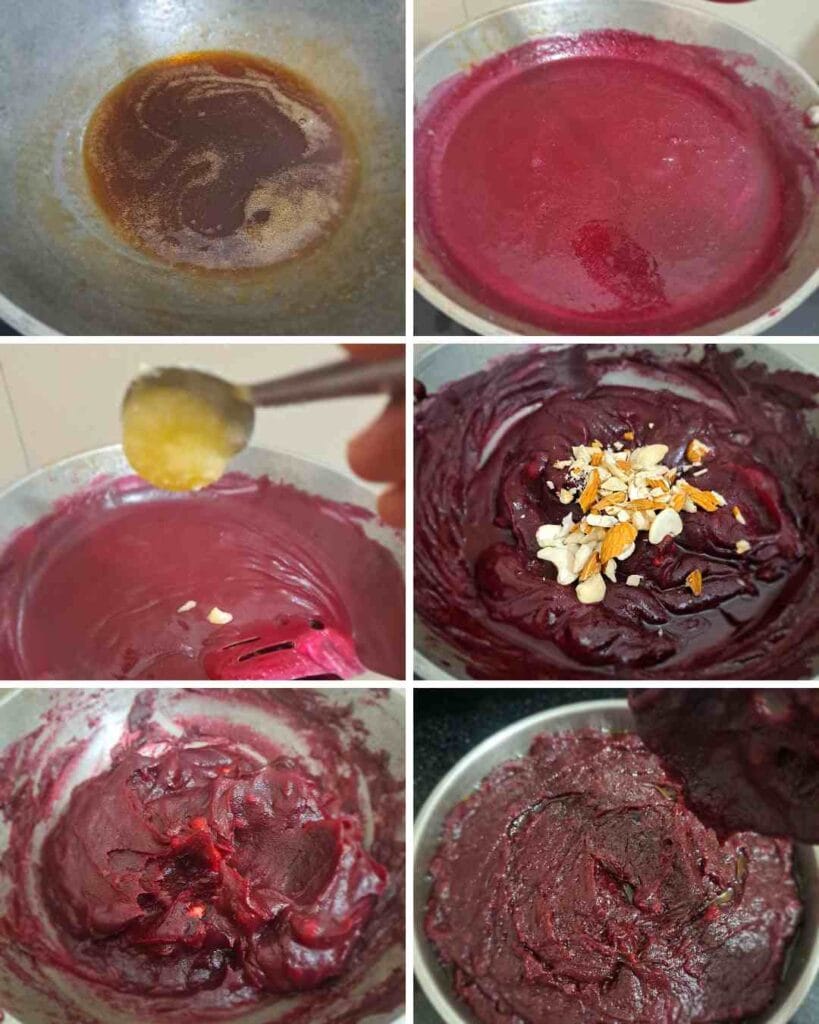
- In a mixing bowl, add corn flour. Slowly pour in the beetroot juice and the cooled jaggery syrup. Mix well using a whisk or spoon until smooth and completely lump-free. Keep this mixture aside.
- Heat a heavy-bottomed pan and add 2 tbsp ghee. Add the chopped nuts and roast until lightly golden. Remove the nuts and keep aside.
- In the same pan, add 1 tbsp ghee and pour in the prepared beetroot mixture.
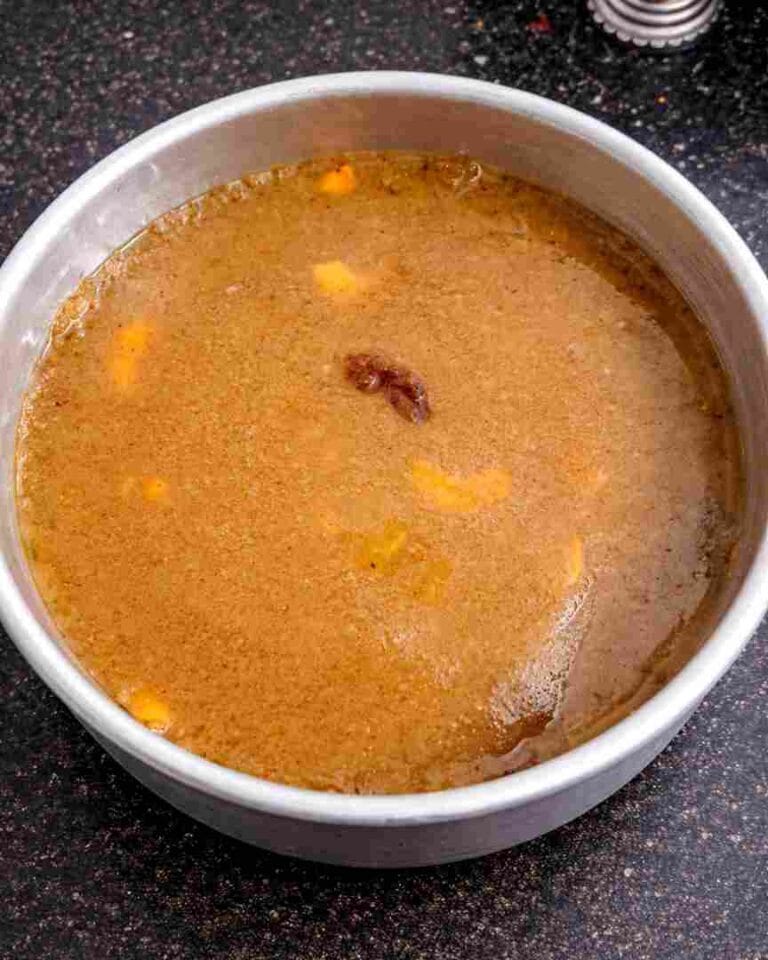
- Cook on medium flame, stirring continuously. At first, the mixture will be watery. Keep stirring and scraping the bottom and sides to prevent sticking.
- As the mixture begins to thicken, add 1 tbsp ghee at a time, mixing well after each addition. Continue stirring continuously. You will gradually use 6 to 8 tbsp ghee in total during this stage.
- When the halwa becomes glossy, thick, and starts leaving the sides of the pan, add the roasted nuts and cardamom powder.
- Continue cooking until the halwa comes together as a soft mass, with no raw smell of corn flour and a shiny finish.
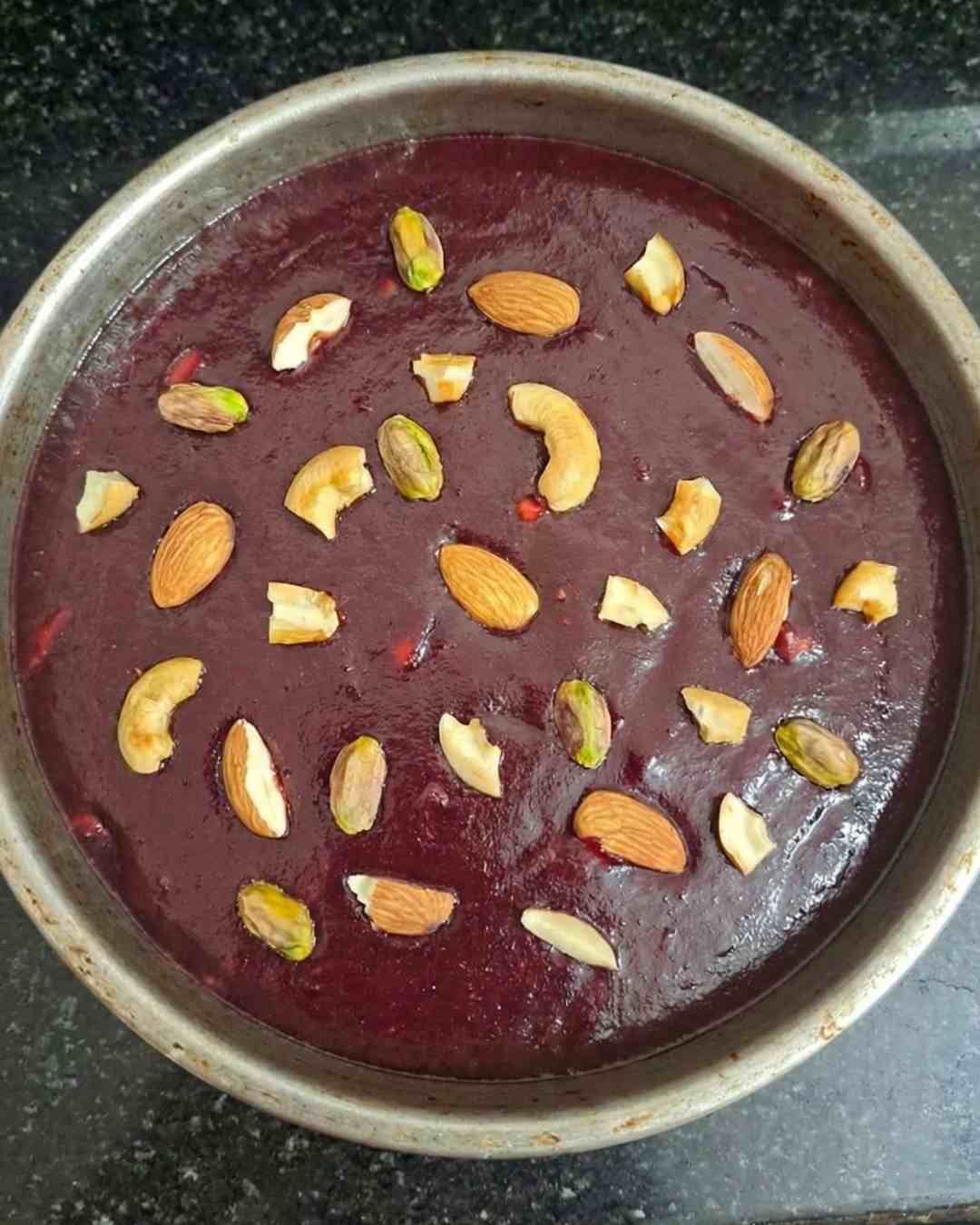
- Transfer the hot halwa into a greased tray or plate. Level the top using a spatula.
- Allow it to set for at least 4 hours at room temperature. Once set, cut into pieces and serve.
Notes
- Ghee control tip: Add ghee little by little as the halwa thickens. This gives a glossy finish and prevents the mixture from becoming sticky or greasy.
- No lumps guarantee: Always mix corn flour with cooled beetroot juice and jaggery syrup. Never add corn flour directly to hot liquid.
- Flame matters: Cook only on medium flame. High heat can burn the bottom and leave a raw corn flour taste.
- Texture check: The halwa is ready when it starts leaving the sides of the pan, looks shiny, and moves together as one mass.
- Too thick? Sprinkle 1–2 tbsp of warm water and stir gently to adjust consistency.
- Too soft after setting? Next time, cook for a few extra minutes before transferring to the tray.
- Nut variation: Cashews work best, but almonds or pistachios add a festive touch.
- Flavour boost: A tiny pinch of edible camphor can be added for special occasions.
- Serving idea: This halwa tastes best when served at room temperature after setting.
- Storage tip: Store in an airtight container for up to 2days at room temperature or upto 10days refrigerate for longer freshness.
- Jaggery (Gud): I use organic dark jaggery for a deep, rich red color. If you use light-colored jaggery or sugar, your halwa will be a translucent pink. Both taste great!
Tips & Variations
- Coconut milk variation: For a richer flavour, replace ½ cup of beetroot juice with thick coconut milk. This gives a soft, traditional taste similar to Thengai Paal sweets.
- Festival version: Add a small pinch of edible camphor along with cardamom powder for a temple-style aroma.
- Jaggery choice: Dark jaggery gives deeper colour and flavour, while light jaggery keeps the halwa mildly sweet.
- Nut-free option: Skip nuts completely if making for children or elders with digestion sensitivity.
- Shape variation: Instead of setting in a tray, you can serve it soft and warm like spoon halwa.
- Extra shine tip: Adding ghee gradually while stirring gives the halwa its glossy finish and smooth texture.
- Vegan option: Replace ghee with cold-pressed coconut oil and use coconut milk for a fully vegan version.
- Colour note: Natural beetroot colour varies. Fresh beetroot gives the best vibrant shade.
FAQs for Beetroot Halwa Recipe
Can I replace jaggery with sugar?
Yes, you can. However, using Beetroot Halwa with Jaggery gives a deep, dark red color and an earthy taste. If you use white sugar, the halwa will be lighter and translucent pink, similar to Bombay Halwa
How do I know when the halwa is perfectly cooked?
The halwa is ready when it reaches the ‘Glossy Ball’ stage. It should look shiny, transparent, and leave the sides of the pan completely without sticking. This ensures it sets into perfect sliceable squares
Why should the halwa be set for a few hours?
Setting helps the halwa firm up naturally, making it easier to cut into neat pieces while keeping the inside soft.
Why does my beetroot halwa turn sticky?
Sticky texture usually happens when ghee is added all at once or the halwa is undercooked. Adding ghee gradually and cooking until glossy helps avoid this.
Can I make beetroot halwa with maida?
Yes, but it is not recommended. Maida makes the halwa heavy. This recipe avoids maida and uses corn flour for a lighter texture.
Is this Beetroot Halwa Vegan?
Yes! Since this is a Beetroot Halwa no milk recipe, it is naturally dairy-free. Just swap the ghee for coconut oil or cashew butter to make it 100% vegan
What is the Tamil name for this sweet?
In Tamil Nadu, this jelly-style sweet is often called பீட்ரூட் அல்வா (Beetroot Alva) or Beetroot Halwa without milk
Can I use yellow corn flour (Makki Atta)?
No! You must use White Corn Starch (often labeled as Corn Flour in India). Yellow maize flour will not dissolve properly, and your halwa will not set
❤️ Final Thoughts
This Beetroot Halwa Recipe is special to me because it’s one of those sweets that feels both comforting and thoughtful at the same time. I wanted to make a dessert that I could enjoy without feeling heavy, and that’s why I chose to prepare it without maida and refined sugar, using jaggery instead.
What I personally love about this recipe is how simple ingredients come together with a bit of patience. Slowly stirring the halwa, adding ghee little by little, and watching it turn glossy is something I genuinely enjoy. It reminds me of the kind of sweets we make at home ,unhurried and made with care.
If you enjoy traditional, home-style sweets, you might also like Ukkarai, another recipe where vegetables and jaggery are used in a beautiful way. Both these sweets share that same feeling of warmth and tradition.
Beetroot is known for its natural colour and nutritional value, and when used in desserts, it provides a better alternative to heavily processed sweets. You can also explore more about beetroot benefits to understand why it is widely used in wholesome Indian cooking.
For me, this beetroot halwa works perfectly for small celebrations, pooja days, or even when I just feel like making something sweet at home. I hope you enjoy making it as much as I do.