Rava Kesari Recipe | Soft South Indian Sweet (ரவை கேசரி)
This Rava Kesari Recipe is a classic South Indian sweet made using semolina (rava), sugar, ghee, and nuts. It is one of the easiest sweets that can be prepared at home without using any fancy ingredients.
This simple sweet comes together in very little time, making it perfect for sudden sweet cravings, poojas, festivals, or when you want to make something quick for family. With just a few pantry staples, you can make a soft, melt-in-mouth kesari that tastes rich and comforting. If you enjoy such quick and traditional sweets, you may also like this Ukkarai recipe, which is another simple South Indian sweet made using basic ingredients.
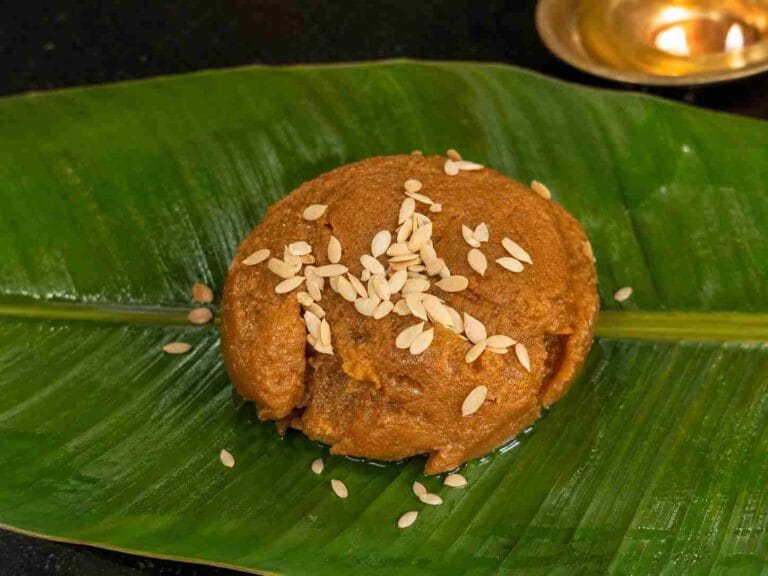
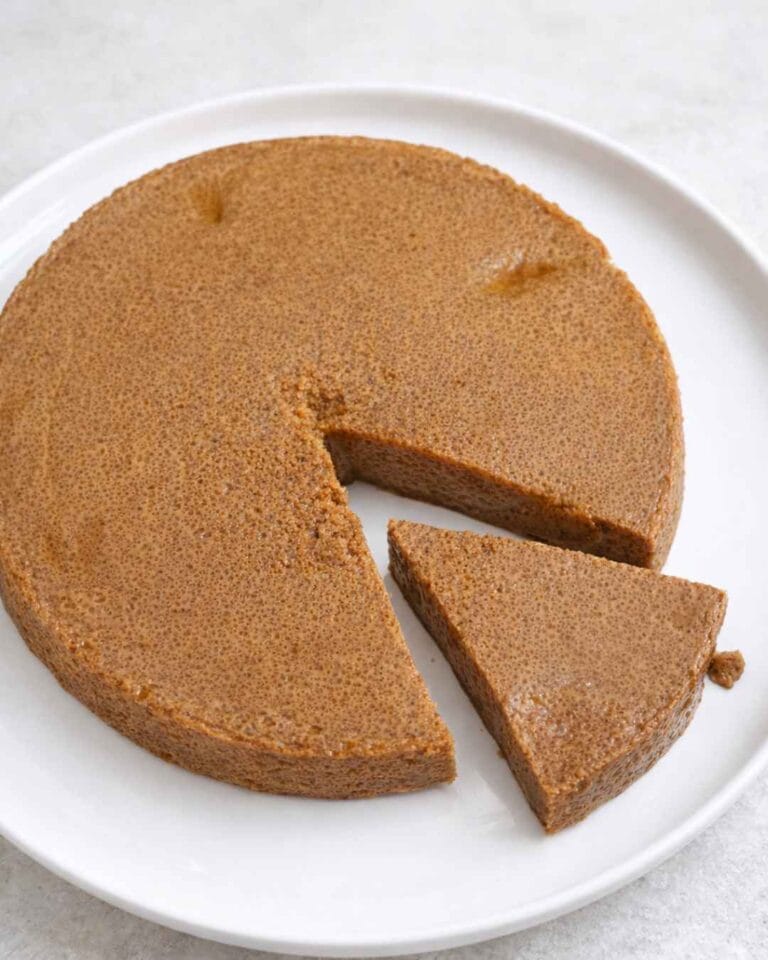
In this recipe, I share a traditional and beginner-friendly method to prepare soft rava kesari by slowly roasting the rava and adding hot water carefully to avoid lumps. Known as ரவை கேசரி (Ravai Kesari) in Tamil, this sweet is loved for its smooth texture, ghee aroma, and beautiful golden colour.
Rava Kesari Recipe (South Indian Style)
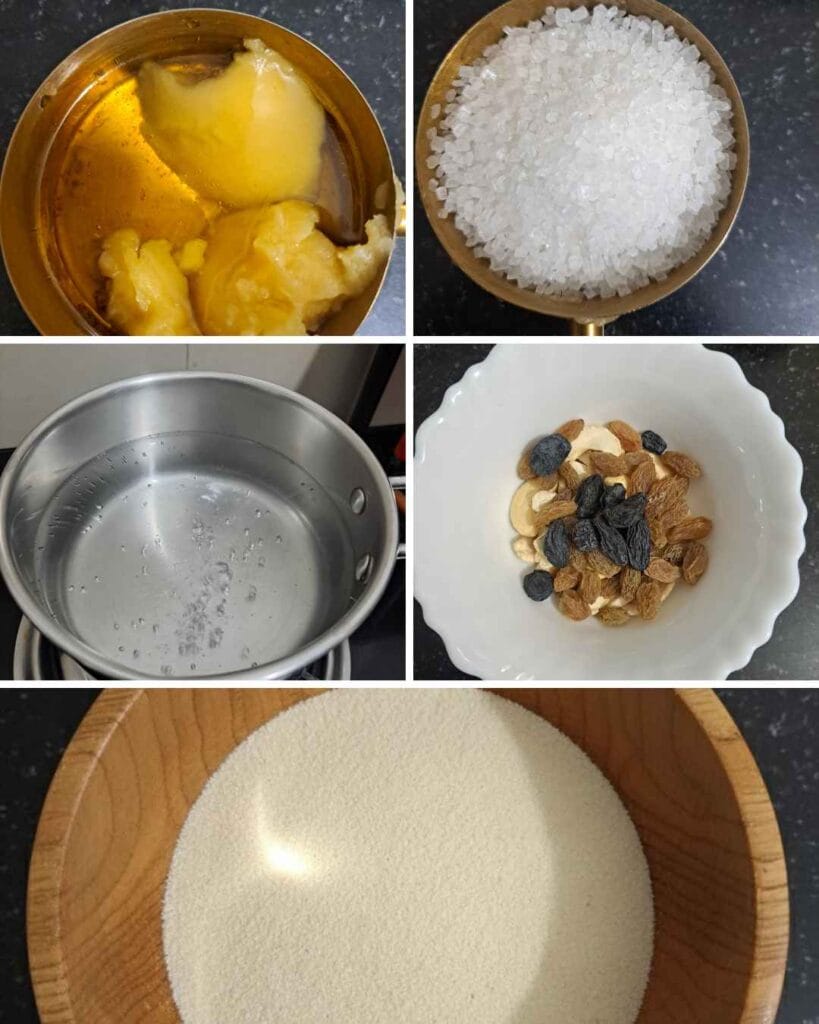
Ingredients
Equipment
Method
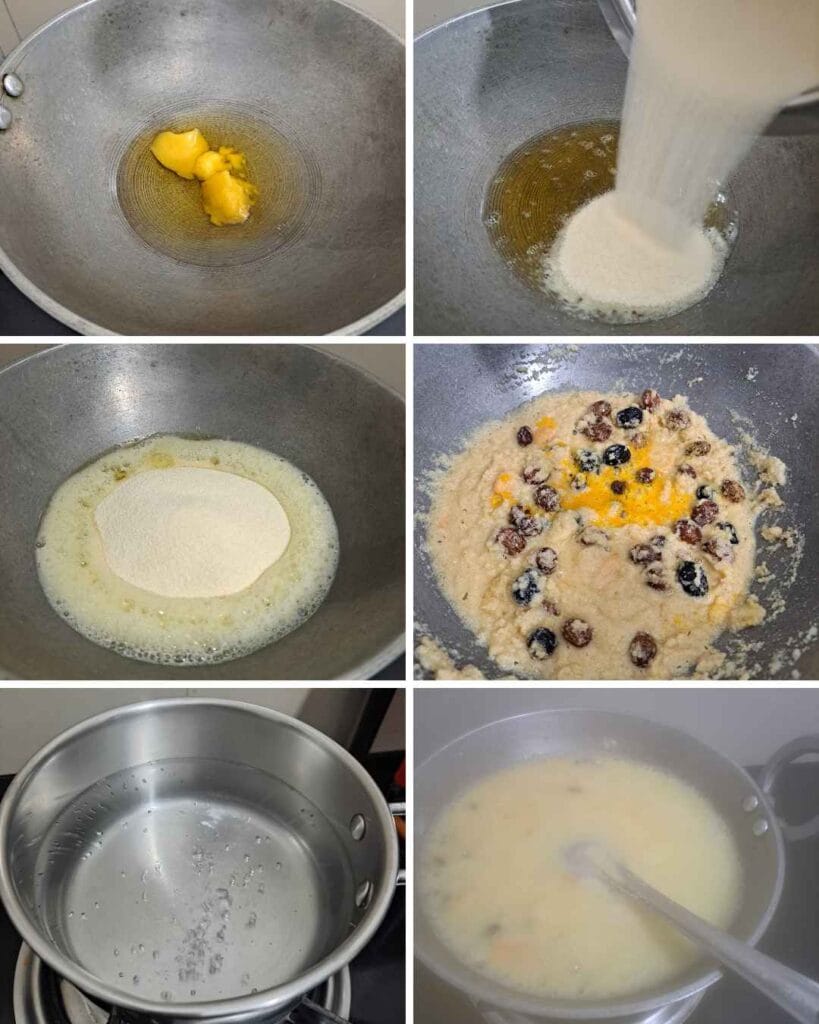
- Heat a heavy-bottomed kadai on medium flame. Add ½ cup oil and ¼ cup ghee together and allow the ghee to melt completely.
- Add cashews and raisins to the hot ghee–oil mixture. Fry until the cashews turn light golden and the raisins puff up. Remove them and keep aside if you prefer visible garnish, or leave them in the pan.
- Reduce the flame to low and add 1 cup rava (semolina) to the pan. Roast the rava slowly while stirring continuously to avoid burning. Roast until the rava becomes aromatic and is well coated with ghee.
- Meanwhile, in a separate vessel, bring 4 cups of water to a rolling boil. The water must be very hot before adding to the rava.
- Slowly add the hot water to the roasted rava while stirring continuously. Stir well to ensure there are no lumps. The mixture will thicken quickly.
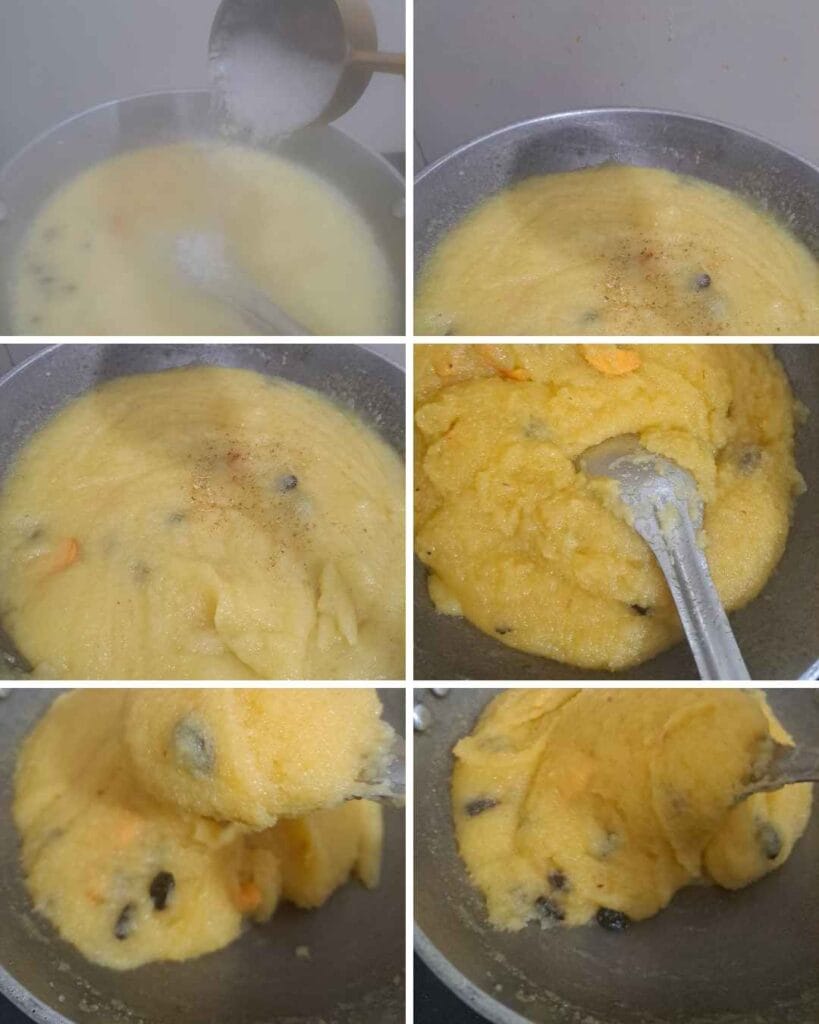
- Add food colour if using and mix evenly. Cook on medium flame for a few minutes until the rava absorbs all the water.
- Now add 1.5 cup sugar and mix well. The kesari will loosen initially as the sugar melts. Keep stirring continuously.
- Continue cooking until the mixture thickens again, turns glossy, and starts leaving the sides of the pan.
- Add the fried cashews and raisins if kept aside. Mix gently.
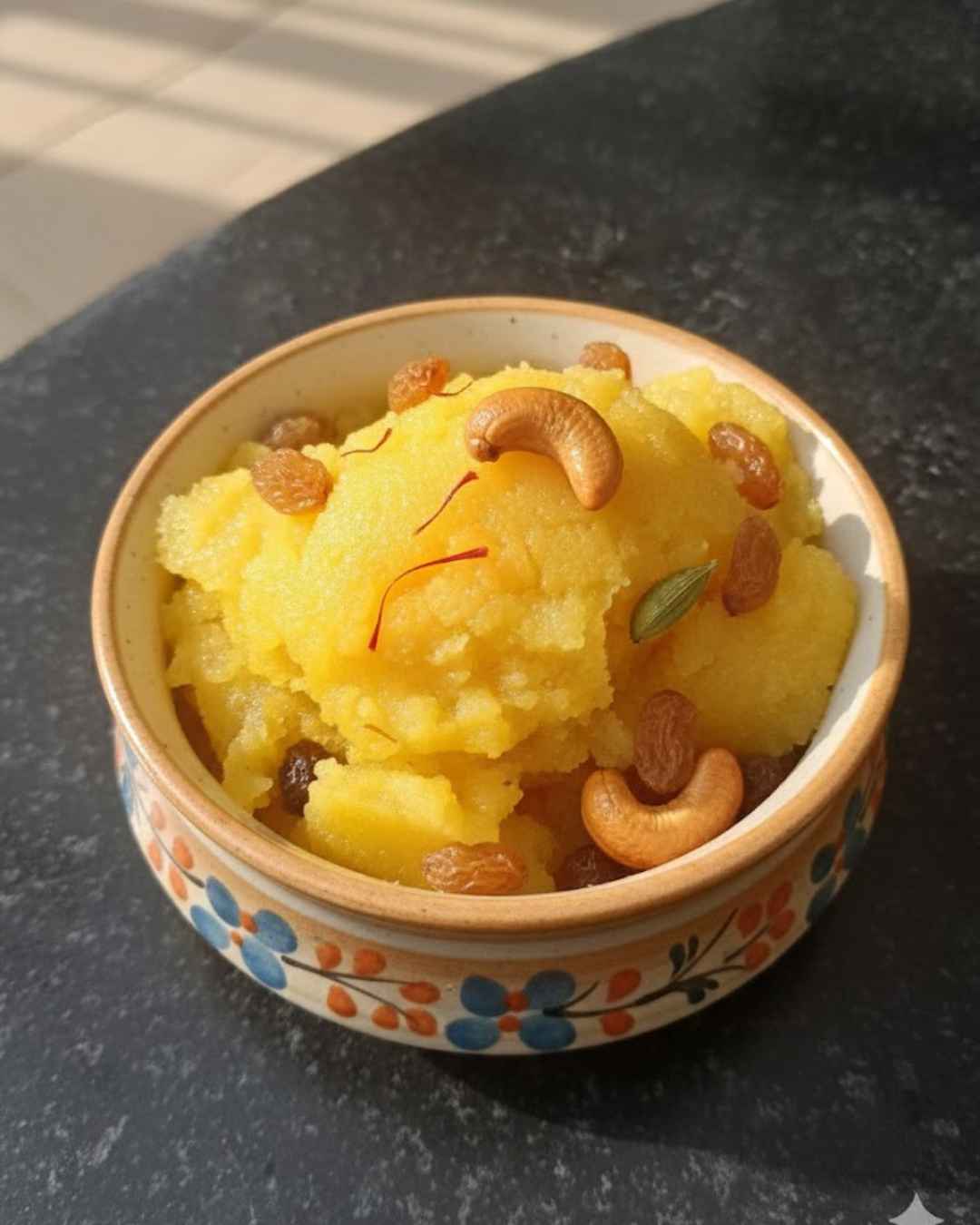
- Switch off the flame and add a pinch of cardamom powder if using. Mix once and allow the kesari to rest for 2–3 minutes.
- Serve warm for the best soft and melt-in-mouth texture.
Notes
- Use fine rava/sooji for a smooth kesari texture.
- Adjust ghee and oil quantity based on personal preference.
- Colour is optional and does not affect taste.
- Kesari thickens more as it cools, so switch off the flame slightly soft.
💡 Tips & Variations
- Add a pinch of cardamom powder for extra aroma.
- A few strands of saffron soaked in warm milk give a temple-style flavour.
- For a richer version, drizzle a little ghee at the end before serving.
- You can try variations like pineapple kesari or milk kesari as separate recipes.
⭐ FAQs for Rava Kesari Recipe
Why does rava kesari become hard after cooling?
Rava kesari thickens as it cools. Switching off the flame while it is still slightly soft helps maintain a smooth texture even after cooling.
Can I reduce the amount of ghee in this recipe?
Yes, you can slightly reduce the ghee, but ghee gives kesari its flavour and softness. Reducing it too much may affect taste and texture.
Is food colour necessary for rava kesari?
No, food colour is optional. It is added only for appearance and does not change the taste of the kesari.
Which rava is best for making kesari?
Fine rava or fine sooji works best for a smooth and soft kesari texture.
What natural food colour can be used for rava kesari?
You can use a pinch of turmeric powder for a light yellow colour or add a few strands of saffron soaked in warm milk for a natural golden colour and aroma. These natural options enhance colour without affecting taste.
How long does rava kesari stay fresh?
Rava kesari stays fresh for up to one day at room temperature when stored properly.
Why Should You Try This Rava Kesari Recipe?
Is it because they need only a handful of ingredients, or because they bring back the comfort of home and familiar flavours?
This rava kesari recipe is perfect when you want to make a sweet quickly without using any fancy ingredients. It comes together in very little time, yet the result is soft, rich, and deeply satisfying. Whether it’s for a pooja, an unexpected guest, or a sudden sweet craving, this recipe never disappoints.
If you enjoy making such traditional South Indian sweets, why not also try Beetroot Halwa, a naturally colourful and mildly sweet dessert, or Thengai Thirattu Paal, a rich coconut-based sweet often prepared for special occasions? Each recipe offers a different texture and flavour while staying rooted in homestyle cooking.
Have you noticed how versatile rava (semolina) is in Indian kitchens? From sweets to breakfast dishes, it plays an important role in everyday cooking. Learning more about rava and its uses can inspire you to try many more simple and comforting recipes at home. Rava kesari is one of those timeless sweets that reminds us how simple ingredients and home cooking can create the most comforting flavours. This rava kesari recipe is often prepared during poojas, New Year celebrations, and special family occasions, making it a sweet that is closely tied to tradition, simplicity, and togetherness.