15-Minute Kovakkai Varuval | Simple Kovakkai Fry for Everyday Rice Meals
This kovakkai varuval is a simple kovakkai fry that I make often for everyday meals. It is an easy kovakkai fry recipe that does not need any grinding, making it perfect for busy days or beginner cooks. If you are looking for a kovakkai fry without grinding masala, this recipe is just right for you.
The kovakkai is first cooked covered with spices until soft, then roasted till it turns dry and slightly crispy. This method gives a lovely texture and makes it a perfect kovakkai fry side dish for rice. It pairs beautifully with sambar rice, rasam rice, curd rice, and even plain rice with ghee.
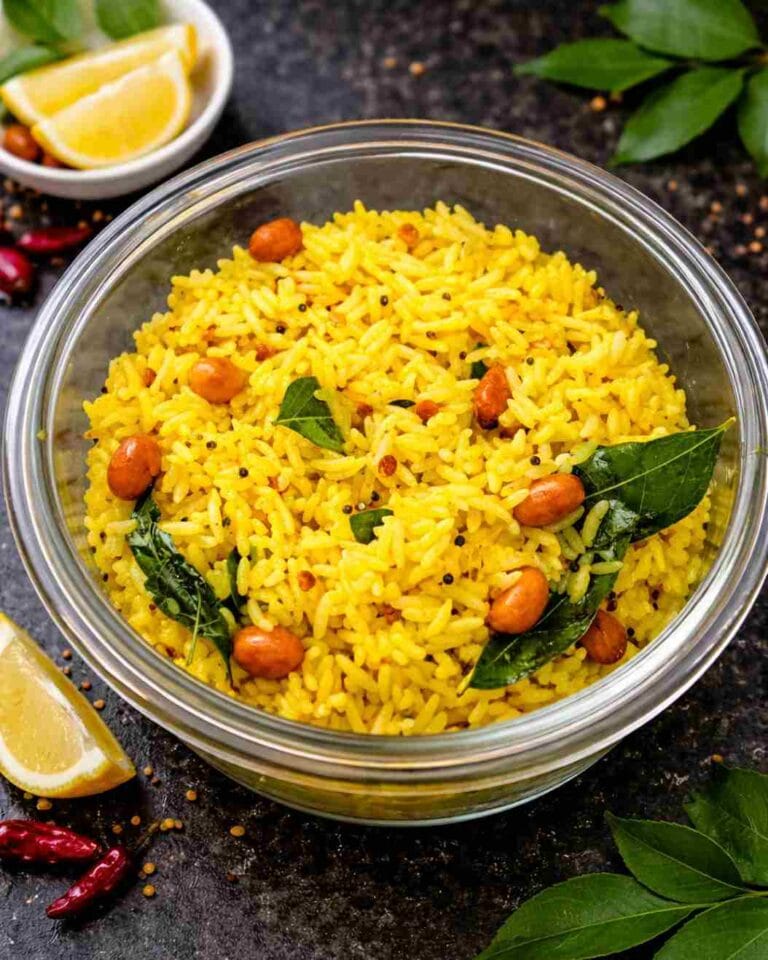
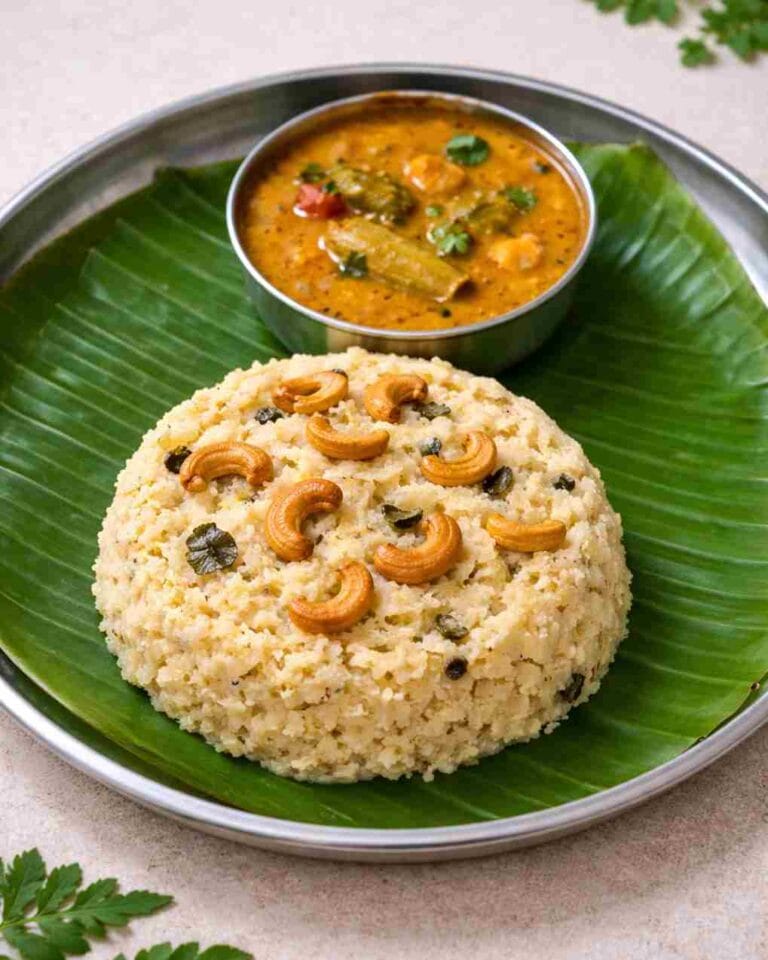
I especially love serving this kovakkai fry with lemon rice on days when I want a quick yet satisfying South Indian meal. Simple ingredients, homestyle flavour, and ready in just 15 minutes — this is the kind of everyday vegetable recipe that never fails.
What is Kovakkai Varuval?
Kovakkai varuval is a South Indian stir-fry made using kovakkai (ivy gourd/tindora), onions, oil, and simple spices. The vegetable is first cooked until soft and then roasted uncovered until slightly crispy.
This dry-style vegetable fry is commonly served as a side dish with:
- sambar rice
- rasam rice
- curd rice
- lemon rice
- simple dal rice meals
Unlike deep-fried versions, this homemade kovakkai fry uses less oil and focuses on slow roasting for texture and flavor.
Apart from being delicious, Kovakkai is known for its incredible nutritional value, as it is rich in fiber and vitamins.
Is Kovakkai Healthy?
Yes, kovakkai (ivy gourd) is considered a healthy vegetable in many traditional Indian kitchens. It is naturally low in calories and contains fiber, vitamins, and antioxidants.
Since this recipe uses simple ingredients and less oil than restaurant-style fried dishes, it works well as a light homemade side dish for regular meals.
Many people also prefer ivy gourd recipes because:
- they are easy to digest
- they cook quickly
- they pair well with balanced rice meals
- they feel light yet filling
Ingredients for Easy Kovakkai fry recipe
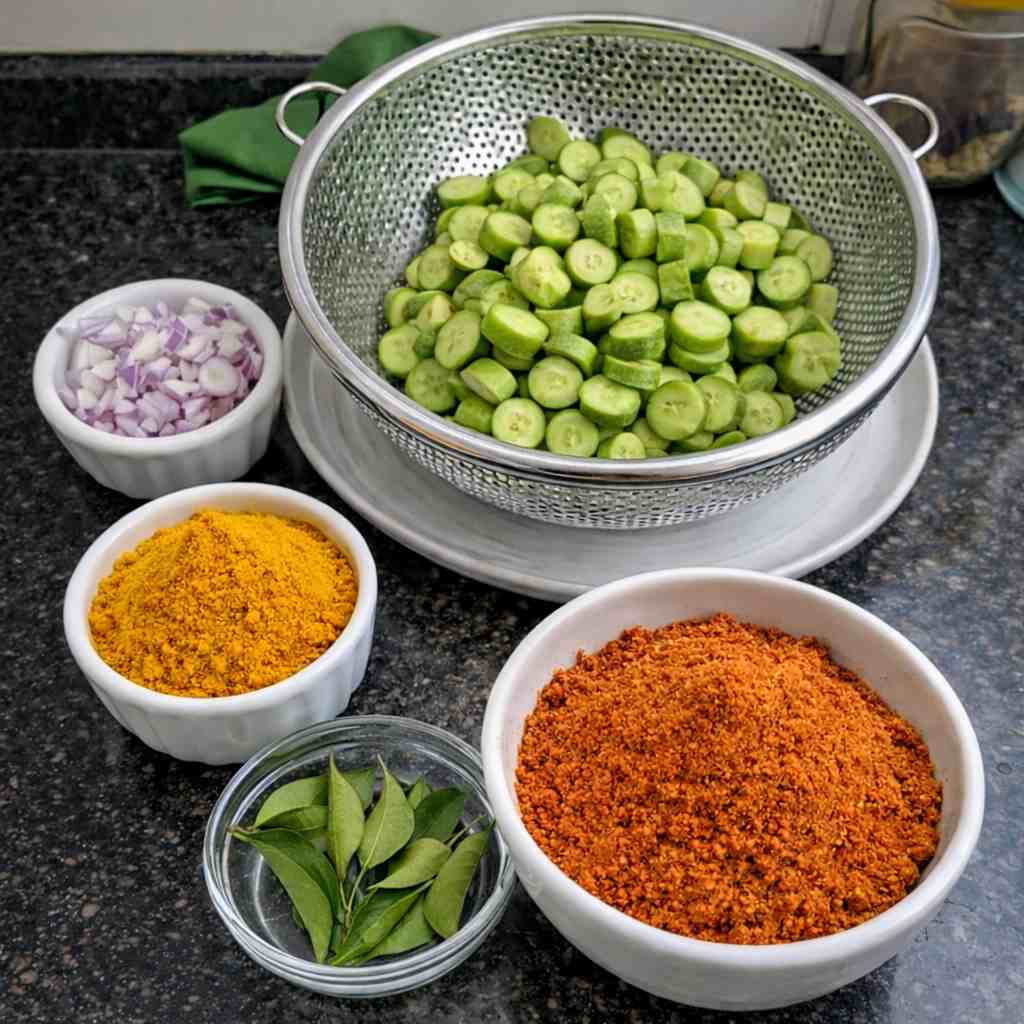
- 250 grams kovakkai (ivy gourd/tindora)
- 1 medium onion, sliced
- Few curry leaves
- 2 tablespoons oil
- Salt as required
- 1½ tablespoons homemade kuzhambu powder
(OR) - 1 tablespoon red chilli powder
- 1 tablespoon coriander powder
- ¼ teaspoon turmeric powder
How to Make Crispy Kovakkai Fry
Step 1 — Prepare the Kovakkai
- Wash the kovakkai thoroughly and trim both ends. Slice them into thin rounds or thin strips.
- Thin slices are very important because thick pieces take longer to cook and may become soft instead of crispy.
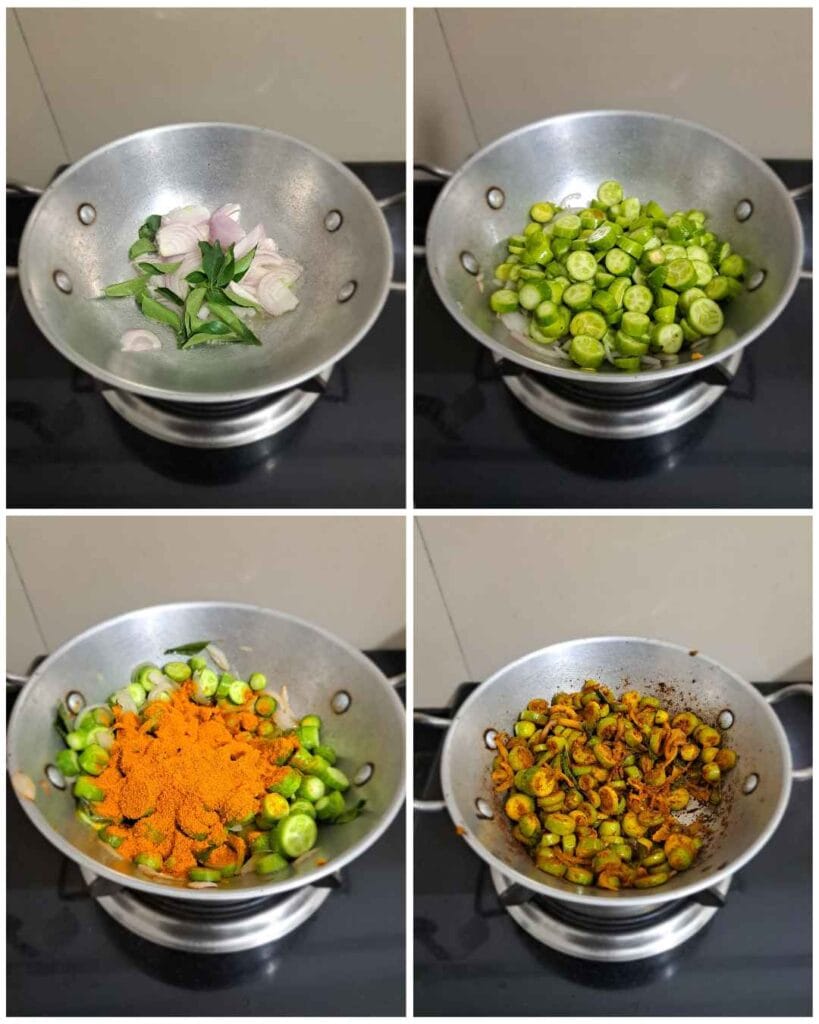
Step 2 — Saute Onion and Curry Leaves
- Heat oil in a wide pan or kadai. Add sliced onions and curry leaves.
- Saute for 2–3 minutes until the onions become soft and slightly translucent.
Step 3 — Add the Kovakkai
- Add the sliced kovakkai to the pan and mix well with the onions.
- Cook for a minute so the vegetable starts absorbing the flavor.
Step 4 — Add Spices
- kuzhambu powder (or chilli + coriander powder)
- turmeric powder
- salt
Mix thoroughly until all the slices are evenly coated with the masala.
Step 5 — Cook Covered
- Cover the pan and cook on low-medium flame for around 5–7 minutes.
- The steam helps soften the kovakkai without adding extra water.
- Stir occasionally to avoid sticking.
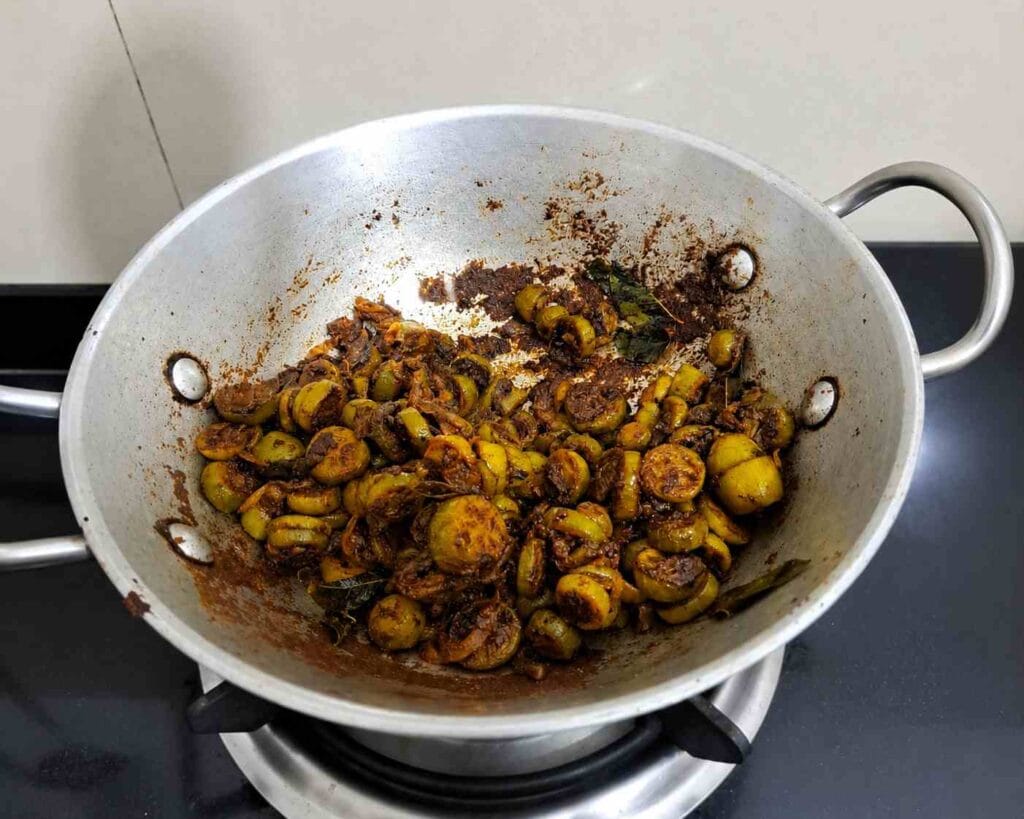
Step 6 — Roast Until Crispy
- Once the vegetable becomes soft, remove the lid completely.
- Increase the flame slightly and roast uncovered for a few more minutes.
- This step removes moisture and gives the crispy roasted texture.
- Keep stirring occasionally until the edges become slightly brown and crisp.
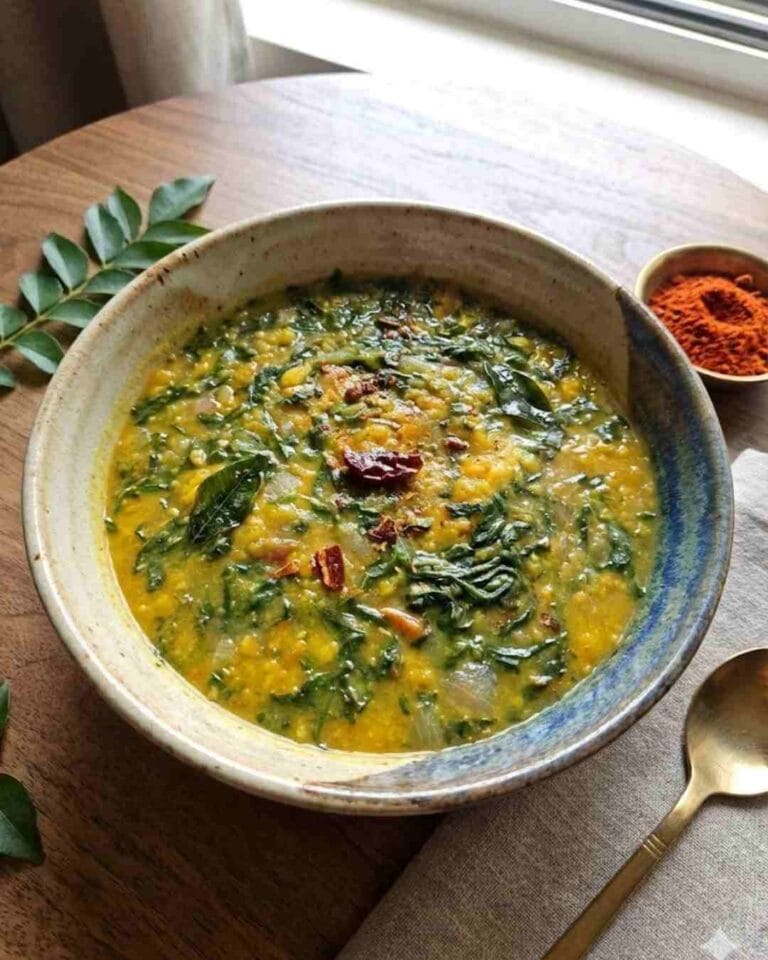
This kovakkai varuval tastes especially good with hot rice and comforting dishes like Siru Keerai Masiyal Without Dal, Mor Kulambu Recipe, and Mullangi Sambar Recipe.
Why Does Kovakkai Fry Become Mushy?
Kovakkai fry usually becomes mushy because:
- the pan is overcrowded
- the slices are too thick
- too much moisture remains in the pan
- the lid is kept closed too long
For crispy kovakkai fry:
- slice thinly
- roast uncovered
- use a wide pan
- avoid adding water
Tips & Variations
- This kovakkai varuval is perfect for busy weekdays because there is no grinding or complicated preparation. Just slice the vegetable, add the spices, and roast until flavorful.
- If your kuzhambu powder is very spicy, reduce the quantity slightly and adjust based on your taste.
- For extra flavor, you can sprinkle a little black pepper powder at the end while roasting.
- Thinly sliced kovakkai gives the best roasted texture and cooks much faster.
- This fry tastes especially good with sambar rice, rasam rice, curd rice, and even simple dal rice meals.
- You can also pack this as an easy lunch box side dish because it stays flavorful even after cooling slightly.
Variations for Kovakkai Varuval Recipe
- Skip onions and add a pinch of asafoetida (hing) for a simple traditional variation.
- Add a little fresh grated coconut/ roasted peanut grounded powder during the final roasting stage for a softer South Indian-style variation.
- Add crushed garlic or black pepper for stronger flavor.
Best Side Dishes to Serve With Kovakkai Fry
This crispy ivy gourd fry pairs beautifully with:
- sambar rice
- rasam rice
- curd rice
- lemon rice
- dal rice
- simple lunch box meals
It also works well as a dry side dish for chapati.
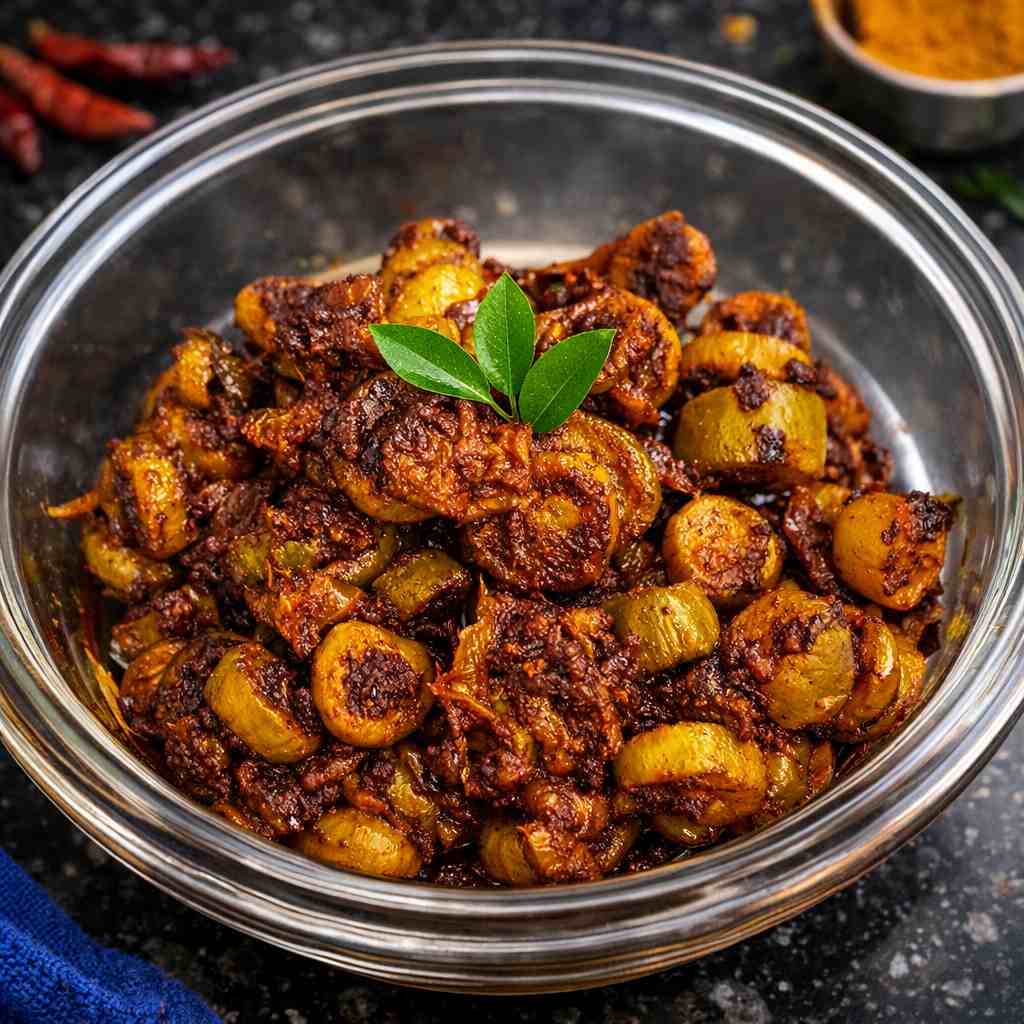
Kovakkai Varuval (Simple Kovakkai Fry)
Ingredients
Equipment
Method
- Prep: Wash the kovakkai (ivy gourd) thoroughly. Trim the ends and slice them into thin rounds or lengthwise strips.
- Saute Aromatics: Heat oil in a wide pan or kadai. Add the sliced onions along with add curry leaves and saute for about 3 minutes until they turn soft and translucent.
- Add Veggies: Add the sliced kovakkai to the pan and give it a quick stir.
- Spice it up: Add the homemade kuzhambu powder (or red chilli powder and coriander powder), turmeric powder, and salt. Mix thoroughly to ensure the masala coats the ivy gourd evenly.
- Steam Cook: Cover the pan with a lid and cook on low-to-medium flame. The steam will help the kovakkai become soft (this usually takes about 5–7 minutes).
- Roast for Crispiness: Once the veggie is cooked, remove the lid. Increase the heat slightly and roast, stirring occasionally, until the water evaporates and the kovakkai becomes dry and lightly crispy.
- Serve: Switch off the flame and serve hot as a side dish.
Notes
- Slicing is Key: For the best texture and to ensure the 15-minute cook time, slice the kovakkai into very thin rounds. Thicker pieces take much longer to cook through and won’t get as crispy.
- The “Crispy” Secret: Once the kovakkai is soft, do not put the lid back on. Roasting it uncovered at the end is what allows the moisture to evaporate and gives you that perfect kovakkai varuval crunch.
- Spice Substitutes: If you don’t have homemade kuzhambu powder, a 1:1 mix of red chili powder and coriander powder works perfectly. You can also add a teaspoon of Sambar powder for an extra flavor boost.
- Preventing Bitterness: When buying kovakkai, try to pick the ones that are firm and bright green. If you find any that are red inside, they are overripe—these can be slightly sour or mushy, so it’s best to discard them.
- Reheating: If you have leftovers, reheat them in a pan for 2 minutes rather than a microwave. This helps bring back the roasted texture.
FAQ’s for Kovakkai Varuval Recipe
Can I make kovakkai varuval without homemade kuzhambu powder?
Yes, absolutely. If you don’t have homemade kuzhambu powder, you can use a 1:1 mix of red chilli powder and coriander powder. The kovakkai fry will still taste delicious and flavourful.
Why is my kovakkai fry mushy instead of crispy?
The most common reason is keeping the lid closed for too long. To get a crispy kovakkai varuval, make sure to remove the lid once the veggie is soft and roast it on medium heat for the final 5 minutes until the moisture evaporates.
Which rice dishes go well with kovakkai varuval?
Kovakkai varuval pairs well with sambar rice, rasam rice, curd rice, lemon rice, and even plain rice with ghee. It’s a versatile side dish for everyday meals.
Can I make this kovakkai fry with less oil?
Yes. You can reduce the oil slightly, but using enough oil helps in roasting and gives better texture. Cooking on low flame and roasting patiently is the key.
Can I make this recipe without onion?
Yes! If you prefer a no-onion version, simply skip the onions and add a pinch of asafoetida (hing) to the hot oil before adding the kovakkai. It will still taste delicious and authentic.
Is kovakkai (Ivy Gourd) healthy?
Absolutely. Kovakkai is low in calories and high in fiber. It is also known for its low glycemic index, making it an excellent vegetable choice for those managing blood sugar levels
How do I know if the kovakkai is ripe or spoiled?
When slicing, if you see the inside is bright red, it means the kovakkai is overripe. Overripe ones can be sour and won’t get crispy. For this recipe, always look for firm, green ones that are white/pale green inside
If you try this crispy kovakkai varuval recipe, I’d truly love to hear how it turned out for you. Did you enjoy it with sambar rice, rasam rice, or curd rice? Did you make it extra crispy or add your own favorite twist?
Simple homemade recipes always become more special when shared with family and friends, and this easy ivy gourd fry is one of those comforting side dishes that fits beautifully into everyday meals.
If this recipe helped you, please:
- leave a comment below
- share this recipe with someone who loves simple South Indian cooking
- subscribe to our newsletter for more easy homemade recipes, healthy meal ideas, and traditional comfort food inspiration
Your support helps Indian Recipes Today continue sharing simple and authentic home-style recipes for everyday cooking.