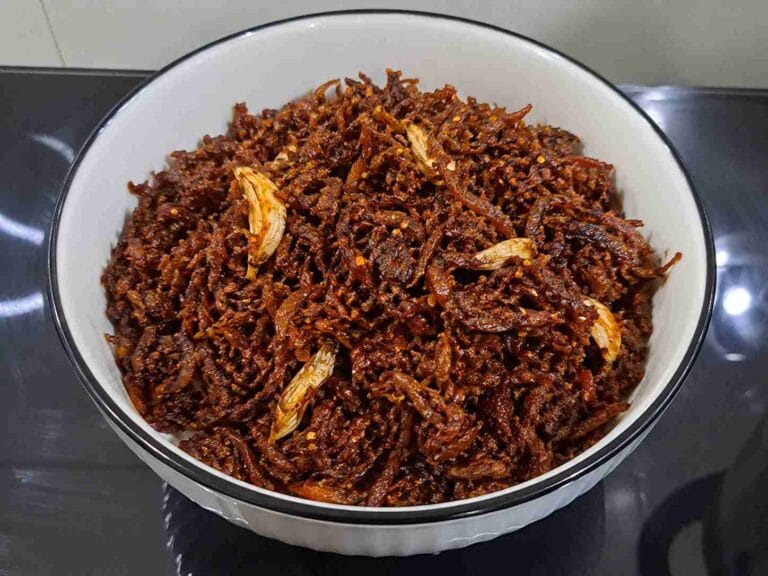
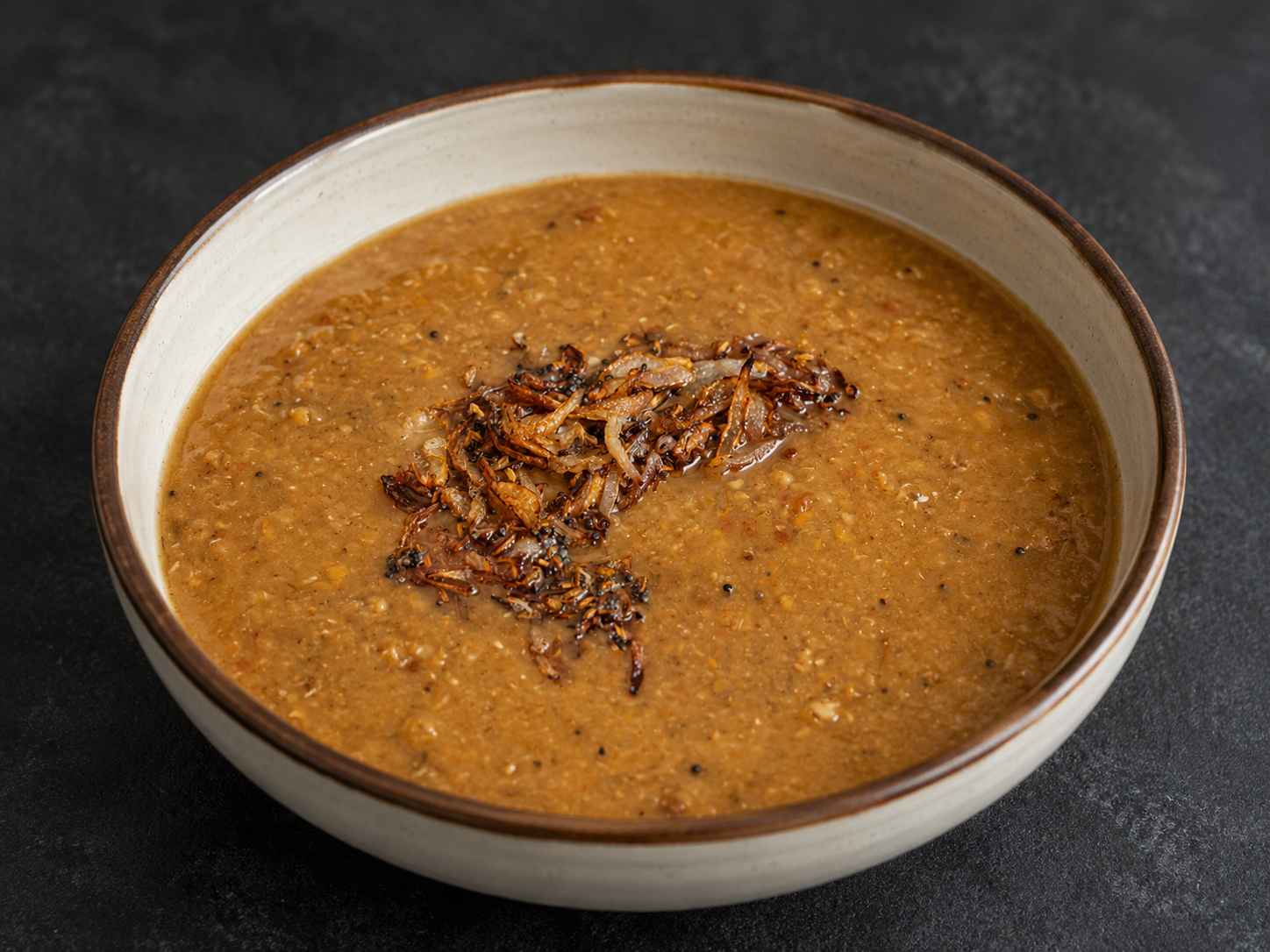
Kollu Paruppu Recipe | Traditional Kollu Masiyal (Horse Gram Dal)
Kollu Paruppu Recipe is one of those dishes that has rescued me on countless busy mornings. Whenever I don’t have a plan for the next day’s lunch box, I simply wash a cup of kollu before going to bed and leave it soaking overnight. Somehow, knowing that the kollu is already soaking makes the next morning feel a lot easier.
What I like most about this recipe is that it doesn’t need a long list of ingredients. Most of the time, I already have onion, tomato, garlic and a few green chillies sitting in the kitchen. Once the kollu is pressure cooked, the rest comes together without much effort.
This recipe also reminds me of how nothing was wasted in our kitchens. After cooking the kollu, I never throw away the kollu cooked water . The cooked kollu becomes a comforting paruppu for lunch, while kollu water (horse gram cooked water ) is saved for kollu rasam. One cup of horse gram, two simple dishes, and a satisfying meal for the family.
On days when I’m running late, a bowl of hot kollu paruppu with rice, a spoon of ghee and a simple poriyal is more than enough. It may not be a fancy dish, but it is one of those dependable recipes that I keep coming back to again and again.
What is Kollu Kadayal (Kollu Masiyal)?
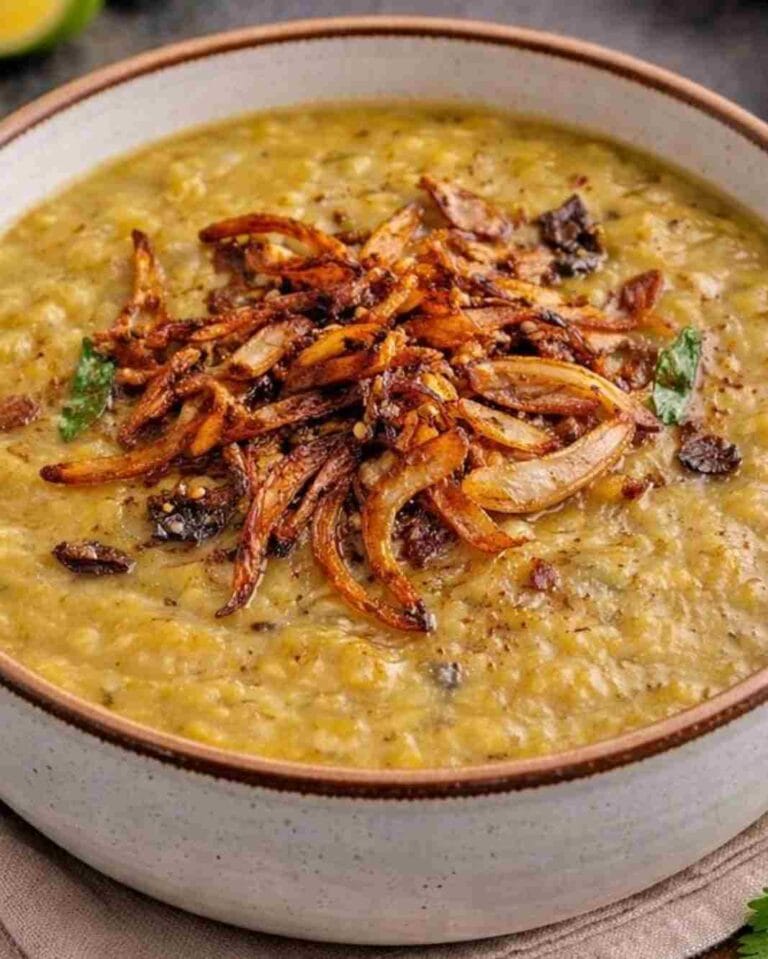
Kollu Kadayal, also called Kollu Masiyal or Kollu Paruppu, is a simple Tamil Nadu recipe made by mashing(Kadiyal) cooked horse gram with onion, tomato, garlic and a few basic ingredients. It is usually served with hot rice and is especially popular in the Kongu region.
Around our side, this recipe is known by different names. Some call it Kollu Paruppu, some call it Kollu Masiyal, and some call it Kollu Kadayal. Don’t get confused by the names. The idea is the same – cooked horse gram is mashed along with onion, tomato, garlic and a few basic ingredients to make a simple side dish for rice.
Every home has its own version. Some people add kulambu powder, some add coconut, and some keep it very simple. I usually prefer the simple version because the flavour of the kollu itself comes through nicely.
Benefits of Kollu (Horse Gram)
1.Traditionally Associated with Weight Management
In Tamil households, there is a well-known saying, “Ilaichavanukku Ellu, Kozhuthavanukku Kollu.” This traditional wisdom reflects the long-standing belief that horse gram can be a good addition to a balanced diet for those looking to manage their weight.
2. Rich Source of Plant Protein
- Helps keep you fuller for longer.
- Good option for vegetarians.
- Useful in everyday meals.
Even a simple bowl of kollu paruppu can be surprisingly filling because horse gram contains a good amount of plant-based protein.
3. High in Dietary Fiber
- Supports digestion.
- Helps you feel satisfied after meals.
4. Traditionally Consumed During Rainy and Winter Seasons
- Many families prepare kollu rasam, kollu soup, or kollu paruppu during colder months because kollu is traditionally believed to have warming properties.
5. Good Source of Iron and Minerals
- Iron
- Calcium
- Phosphorus
- One of the reasons kollu remains popular in many homes is that it is affordable, easy to store, and highly nutritious.
Ingredients Needed for Kollu Paruppu Recipe
- 1 cup kollu (horse gram) – about 150 grams
- 1 medium onion, roughly chopped
- 1 medium tomato, roughly chopped
- 3 garlic cloves
- 2 green chillies
- Small piece of tamarind
- ¼ teaspoon turmeric powder
- ½ cup water
- Salt to taste
For Tempering
- 1 tablespoon oil
- ½ teaspoon mustard seeds
- 1 dried red chilli (optional)
- 1 small onion, finely chopped
Ingredient Notes
- Kollu (Horse Gram): Soaking overnight helps the kollu cook faster and gives a softer texture for mashing.
- Tamarind: Just a small piece is enough to balance the earthy flavour of the horse gram.
- Green Chilli: Adjust according to your spice preference.
- Onion Tempering: The final tempering adds a lovely flavour and texture to the mashed kollu.
How to make Kollu Paruppu Recipe (Step by step )
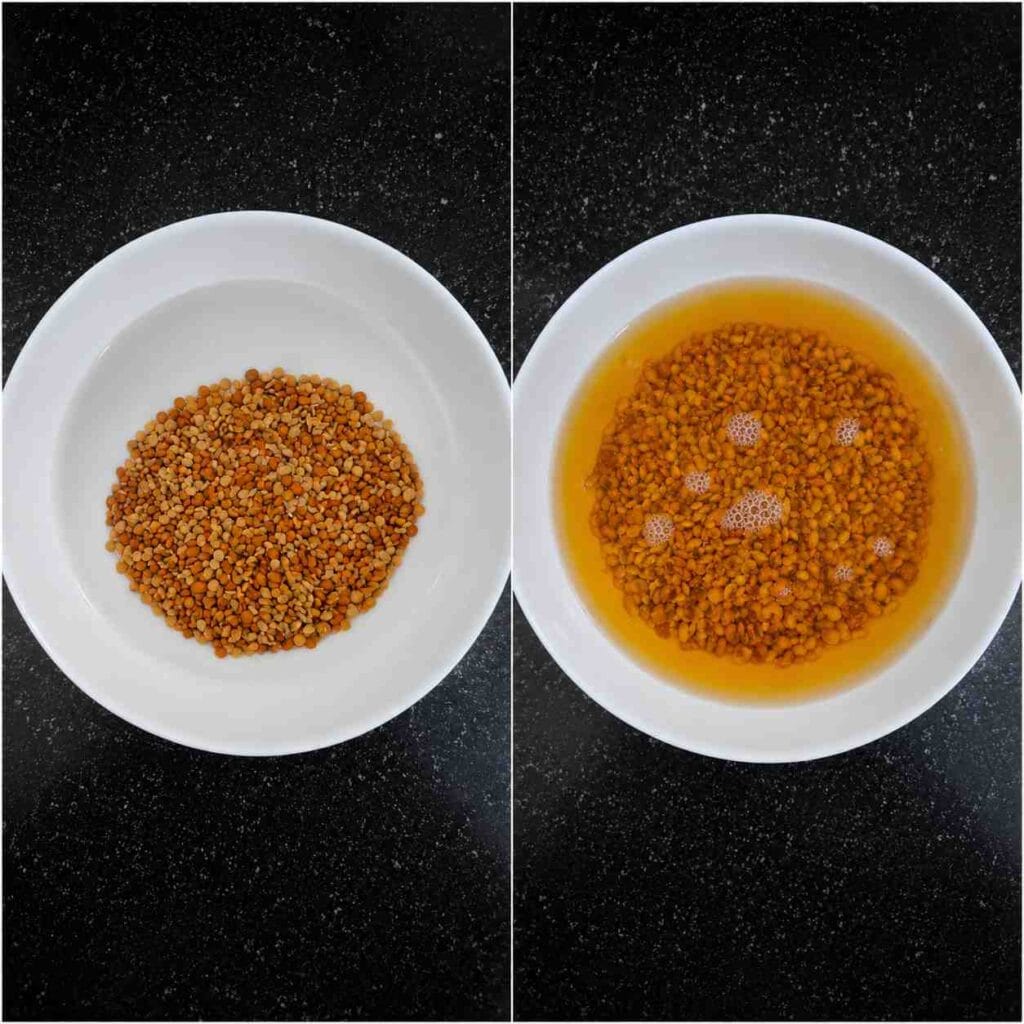
Step 1: Wash and Soak the Kollu
Wash the kollu (horse gram) thoroughly and soak it in water overnight. Soaking helps the kollu cook faster and gives a softer texture for mashing later.
Note : I usually discard the soaked cooked water and add a fresh water while boiling the kollu , because the soaking water may contain some of the impurities, dust, and compounds released by the horse gram during soaking.
Step 2: Add Ingredients to the Pressure Cooker
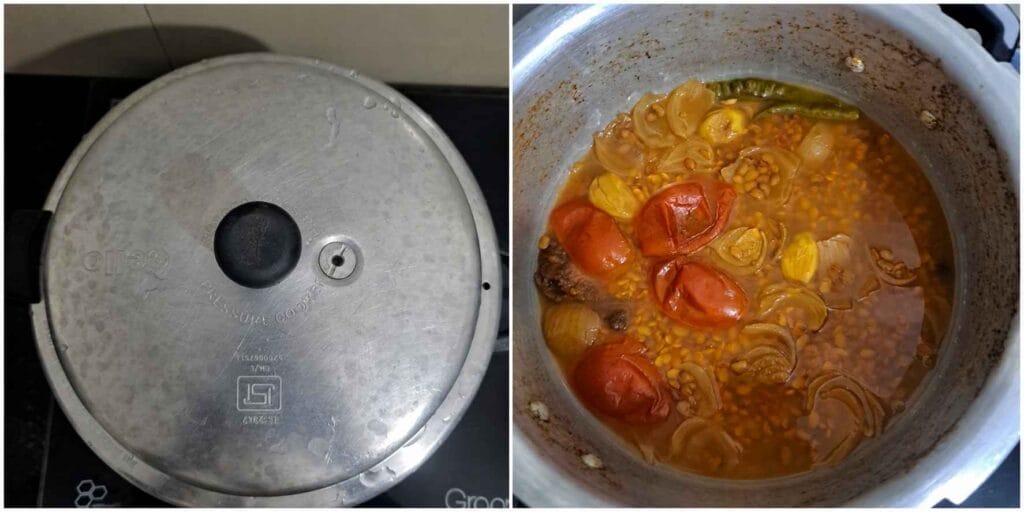
Drain the soaked kollu and add it to a pressure cooker along with onion, tomato, garlic, green chilli, tamarind, turmeric powder, and water.
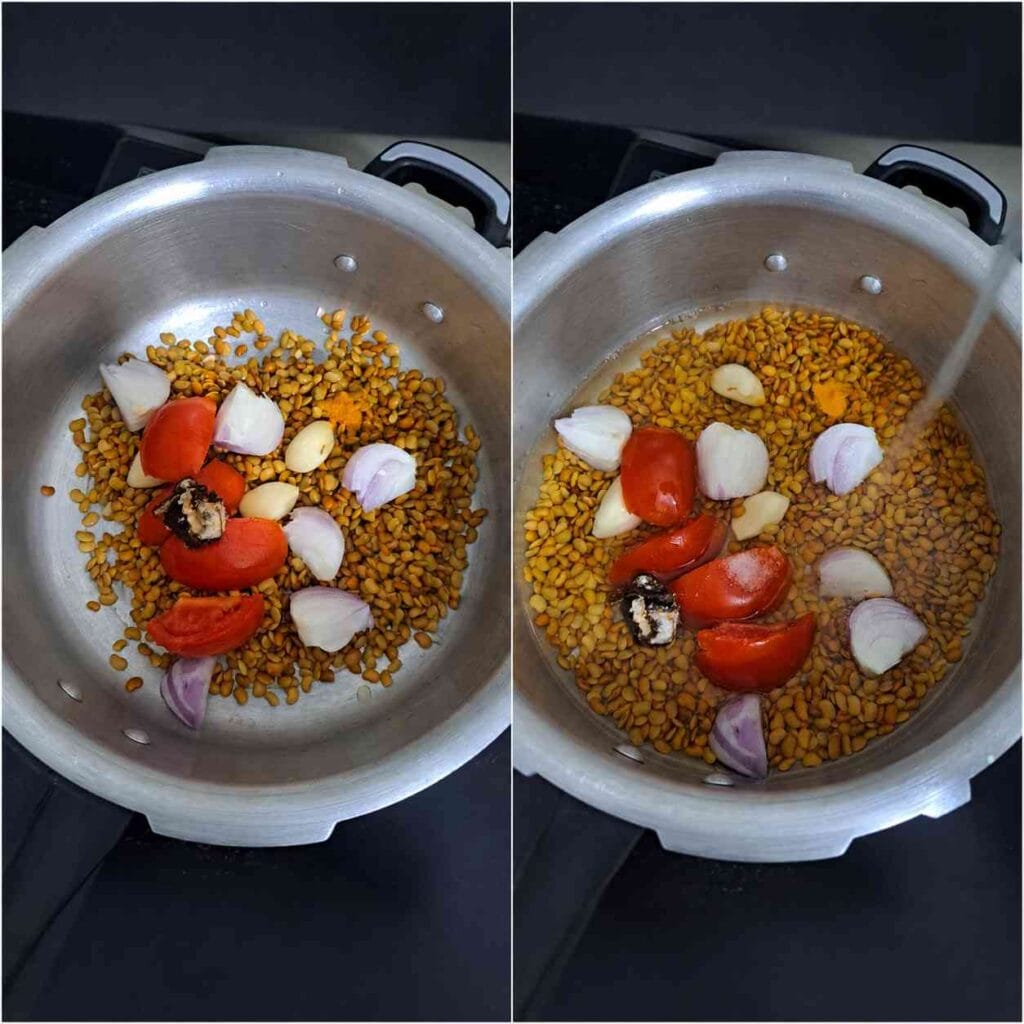
Step 3: Pressure Cook Until Soft
Close the cooker and cook for 4 to 5 whistles or until the kollu becomes soft. The cooking time may vary slightly depending on the quality and age of the horse gram.
Step 4: Reserve the Kollu Water
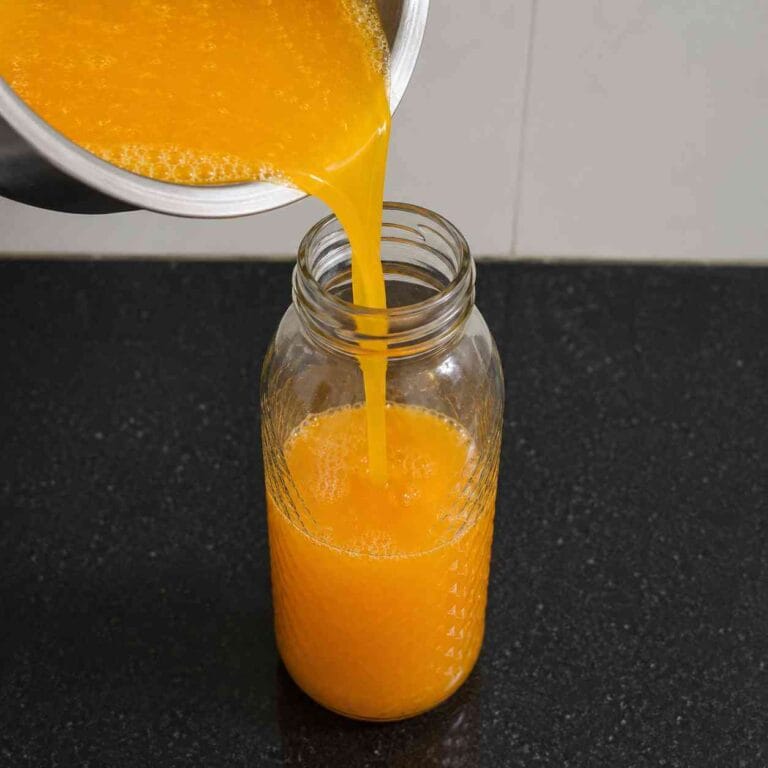
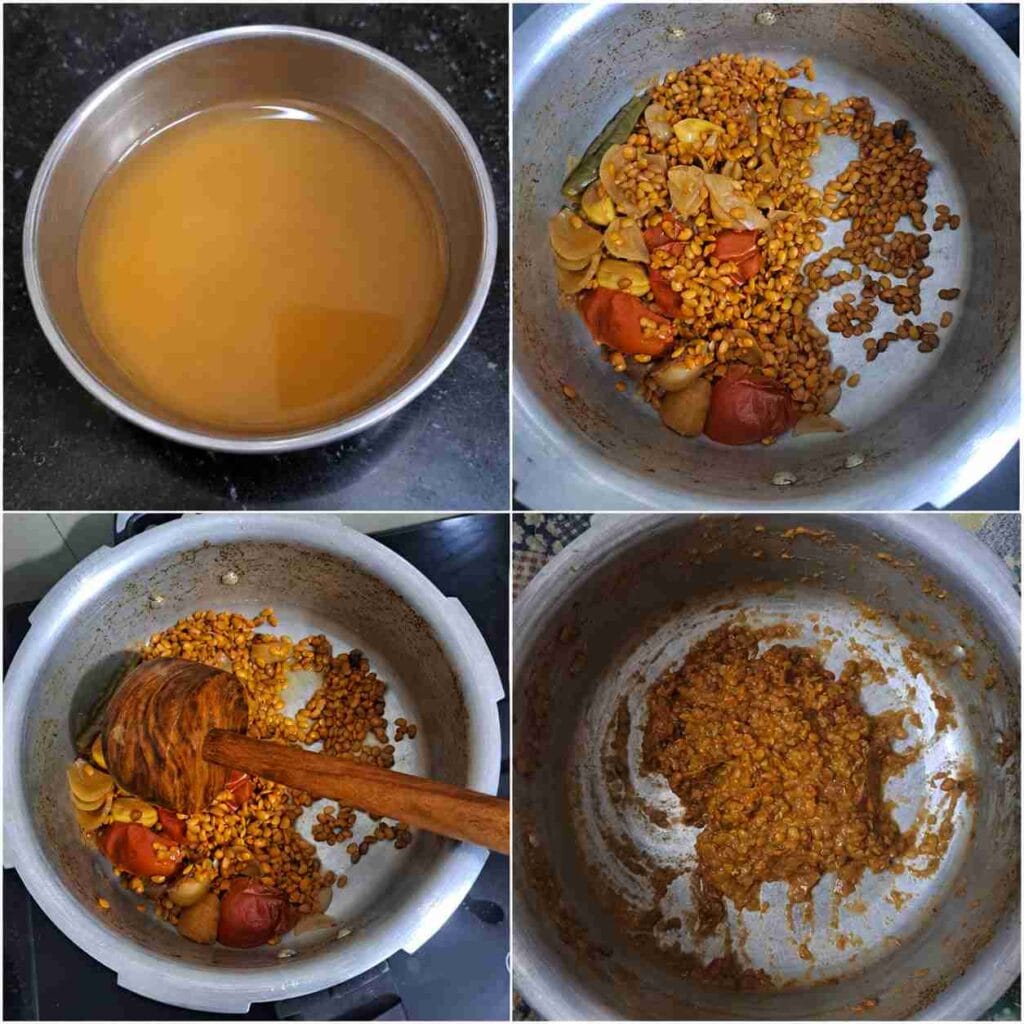
Once the pressure releases naturally, drain the cooked kollu water into a separate bowl and keep it aside. This flavorful and nutritional water can later be used to prepare Kollu Rasam.
Step 5: Mash the Cooked Kollu Mixture
Using a masher( i used wooden mathu) , mash the cooked kollu, onion, tomato, and garlic together until you get a soft and slightly coarse texture.
Step 6: Adjust the Consistency
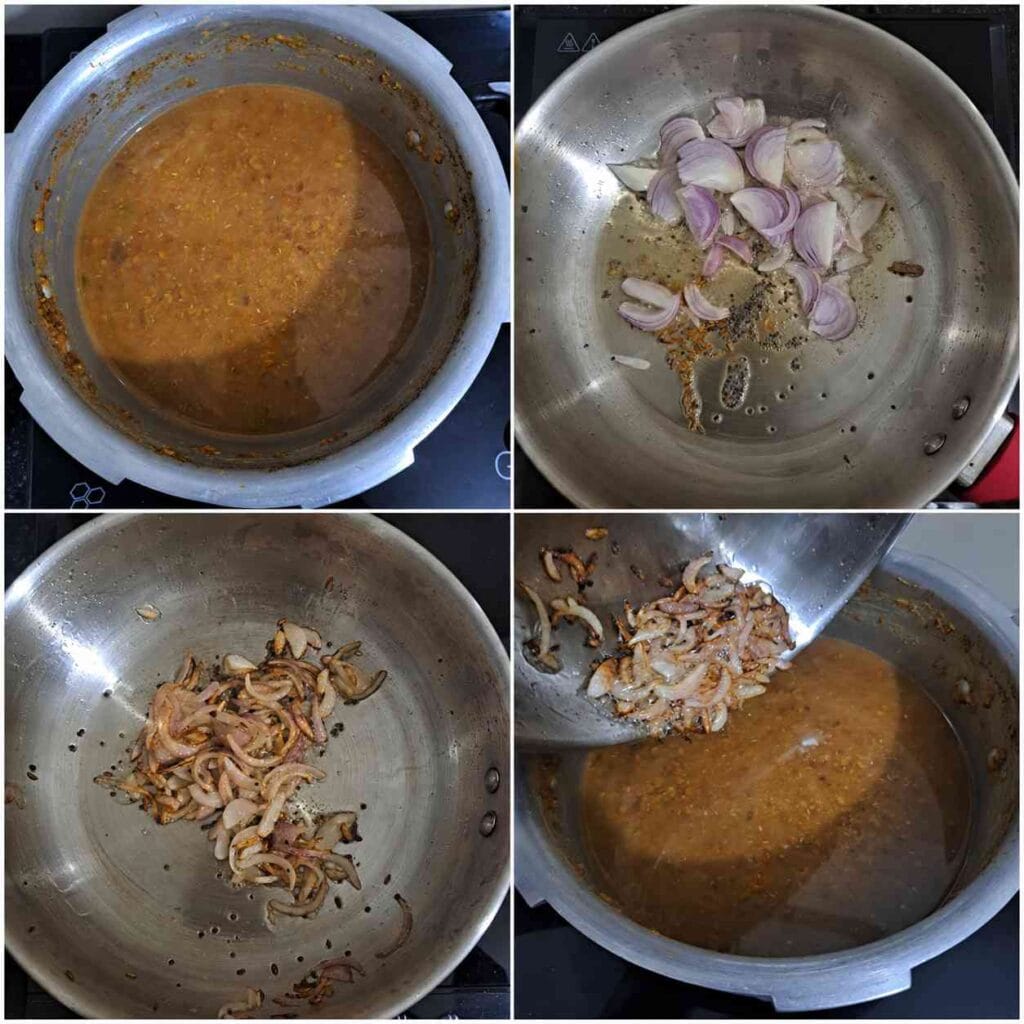
Now add the reserved kollu water or a fresh water , little by little while adjusting the consistency. Some people like it thick, while others prefer it slightly loose and boil it for 2 to 3mins after adding water .
Step 7: Prepare the Tempering
Heat oil in a pan and add mustard seeds. Once they begin to splutter, add finely chopped onions and saute until they turn golden brown.
Step 8: Add the Tempering
Pour the onion tempering over the prepared kollu mixture. This simple step adds wonderful flavour and aroma to the dish.
Step 9: Serve and Enjoy
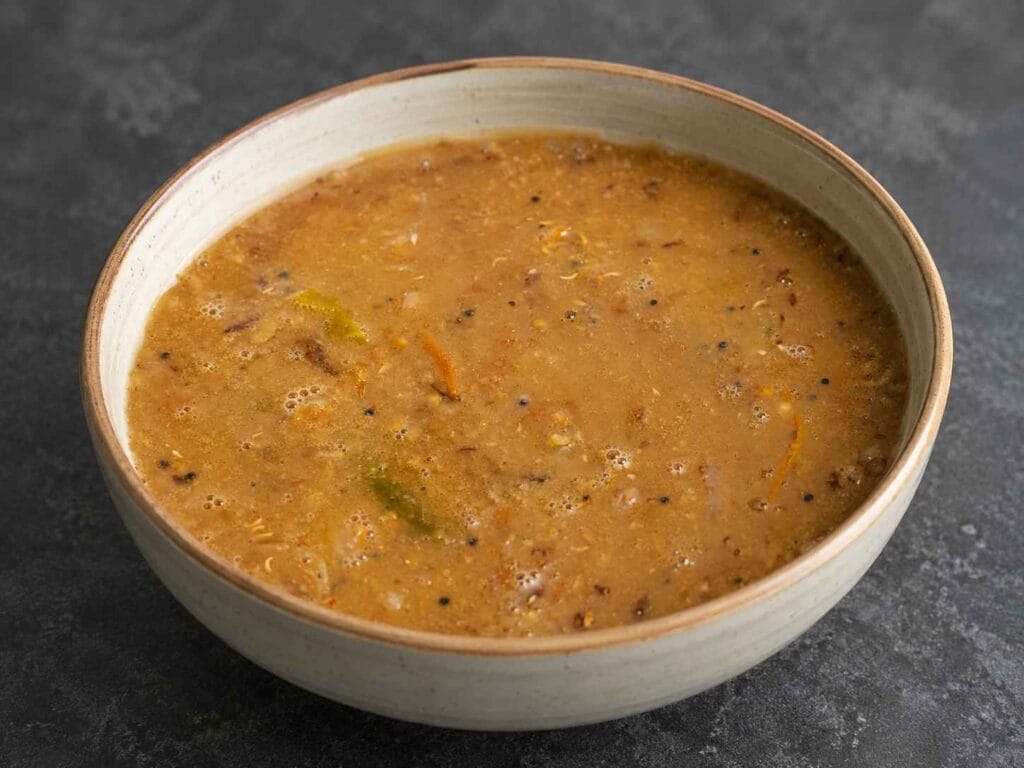
Serve the Kollu Paruppu hot with steamed rice, a spoon of ghee, and your favourite poriyal. Enjoy it as a comforting and wholesome meal.
Serving Suggestions
- Serve Kollu Paruppu recipe hot with steamed rice and a spoon of ghee.
- Pair it with potato roast, beans poriyal, cabbage poriyal, or any simple vegetable side dish.
- Appalam or vadagam makes a great crunchy side for this comforting meal.
- A simple combination of hot rice, Kollu Kadayal, ghee, and pickle is often enough for a satisfying meal.
- It can also be packed for lunch boxes as it pairs well with rice and stays filling for longer.
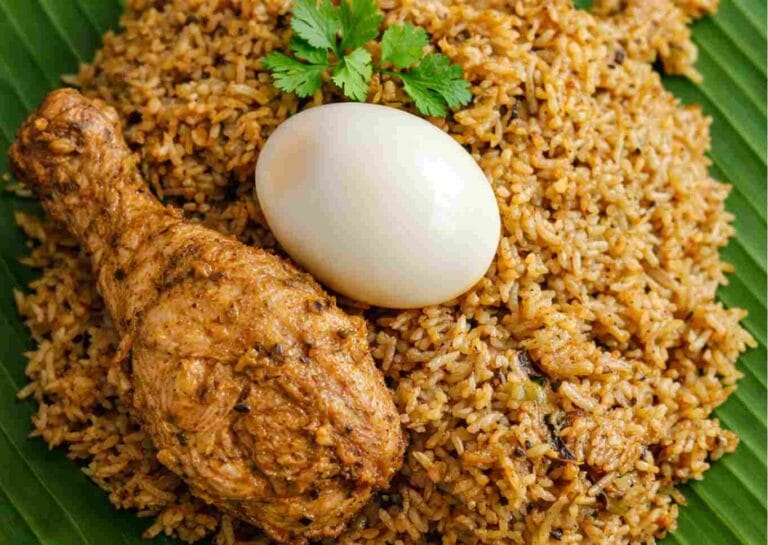
- If you prefer non-vegetarian sides, serve it with a boiled egg, omelette, egg roast, or crispy Chicken 65.For a more elaborate meal, pair it with country chicken fry or pepper chicken along with hot rice.
Tips for Kollu Kadiyal Recipe
- Don’t forget to soak the kollu atleast 6 to 8hrs . It helps to cooks much faster and becomes easy to mash.
- If the kollu is not soft after pressure cooking, give it a few more whistles. Old kollu usually takes a little longer to cook.
- Mash the kollu while it is still warm. It is much easier than trying to mash it after it cools down.
- Don’t rush the onion tempering. Nicely browned onions add a lot of flavour to the dish.
- If you like spicy food, add an extra green chilli or a dried red chilli while tempering.
- A spoon of ghee on hot rice with Kollu Paruppu tastes absolutely delicious.
- This recipe goes really well with a simple poriyal, potato roast, appalam, or even just pickle on the side.
You May Also Like this
Kollu Paruppu Recipe
Ingredients
Method
- Wash the kollu and soak it overnight.
- Drain the water and add the kollu to a pressure cooker.
- Add onion, tomato, garlic, green chilli, tamarind, turmeric powder and water.
- Pressure cook for 4 to 5 whistles until the kollu becomes soft.
- Allow the pressure to release naturally.
- Reserve the cooked kollu water in a separate bowl.
- Mash the cooked kollu and vegetables until soft.
- Add the reserved kollu water or normal water as required based on your consistency and simmer for 2 to 3 minutes.
- Heat oil in a pan and add mustard seeds.
- Add finely chopped onions and sauté until golden brown.
- Pour the tempering over the kollu mixture and mix well.
- Serve hot with rice and ghee.
Notes
- Soaking overnight helps the horse gram cook faster.
- Adjust water according to your preferred consistency.
- For a smoother texture, lightly blend the cooked mixture before simmering.
- Do not discard the kollu wtaer ; it is highly nutritious and flavorful.
- always discard the water used for soaking the kollu and cook it in fresh water.
FAQs for Kollu Paruppu Recipe
Is kollu good for weight loss?
Kollu has been traditionally associated with weight management in Tamil households. In fact, there is a popular saying, “Ilaichavanukku Ellu, Kozhuthavanukku Kollu,” which reflects this belief. Since horse gram is rich in protein and fibre, it can help you feel full for longer when included as part of a balanced diet.
Can I eat kollu every day?
Yes, kollu can be included as part of a balanced diet. However, like any food, moderation is important. Many people enjoy it a few times a week in the form of rasam, paruppu, chutney, or soup.
Why is kollu soaked before cooking?
Soaking helps the horse gram absorb water, reducing the cooking time and making it softer and easier to digest. It also helps achieve a smoother texture when making Kollu Paruppu.
Is kollu heaty for the body?
According to traditional food practices, kollu is considered a warming food. This is why many families prepare kollu-based dishes during rainy or colder months.
Why is the kollu soaking water discarded before cooking?
The soaking water may contain some of the impurities, dust, and compounds released by the horse gram during soaking. Using fresh water for cooking is often believed to make the dish easier to digest and improve the overall taste.
Tried This Kollu Kadayal Recipe?
I’d love to hear how it turned out for you! If you tried this recipe, leave a comment below and let me know your thoughts.
Every region and every family has their own way of making Kollu Kadayal. Do you add coconut, kulambu powder, or any special ingredient? Share your native style of making Kollu Kadayal in the comments — I’d love to learn how it’s prepared in your home.
If you share your photos on Instagram, don’t forget to tag @indianrecipestoday. I always enjoy seeing your recreations and serving ideas.
For more traditional South Indian recipes, cooking tips, and fresh recipe updates, subscribe to our newsletter and stay connected.