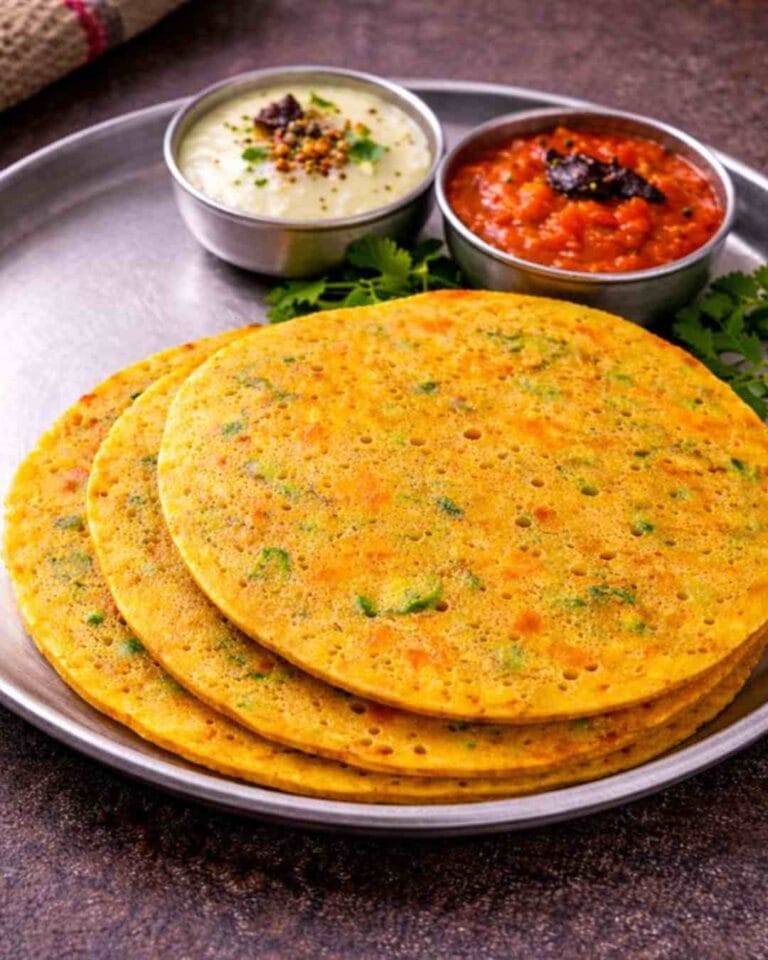
Foxtail Millet Dosa Recipe | Thinai Dosa with Javvarisi
Foxtail Millet Dosa, also called Thinai Dosa or Thinai Dosai, is a crispy fermented dosa made with foxtail millet, idli rice, urad dal and javvarisi (sago).
This is my first time trying a millet dosa, and I came up with my own ingredient ratio using what I had in my kitchen.
Usually, I don’t use millets for dosa or idli. I mostly make upma or kanji with millets. But one day, I wanted to make regular dosa batter and found that I had only one cup of idli rice left at home. While thinking about what to do, I noticed some thinai (foxtail millet) in my kitchen and thought, why not try making dosa with it?
I looked at a few recipes online, and most of them used methi and other ingredients. Instead of following any one recipe, I decided to try my own ratio with thinai, the idli rice I had, urad dal and javvarisi.
To my surprise, the dosa turned out really well and came out crispy like a regular dosa.
But I did notice one thing during my first attempt—the batter became a little watery after fermentation. So, after trying and understanding the consistency, I found that the batter needs to be kept thick before fermentation. In this recipe, I have explained the right batter consistency and the small tips that helped me get crispy Thinai Dosa.
What Is Foxtail Millet Dosa?
Foxtail Millet Dosa, also known as Thinai Dosa or Thinai Dosai, is a fermented South Indian dosa made using foxtail millet. Unlike a regular dosa, part of the rice is replaced with thinai, giving the dosa its mild millet flavour while still keeping the familiar dosa texture.
For this recipe, I use thinai, idli rice, urad dal and javvarisi (sago). The ingredients are soaked, ground, fermented and then spread on a hot tawa just like a regular dosa. The addition of javvarisi helps me get a dosa that turns out thin and crispy when cooked properly.
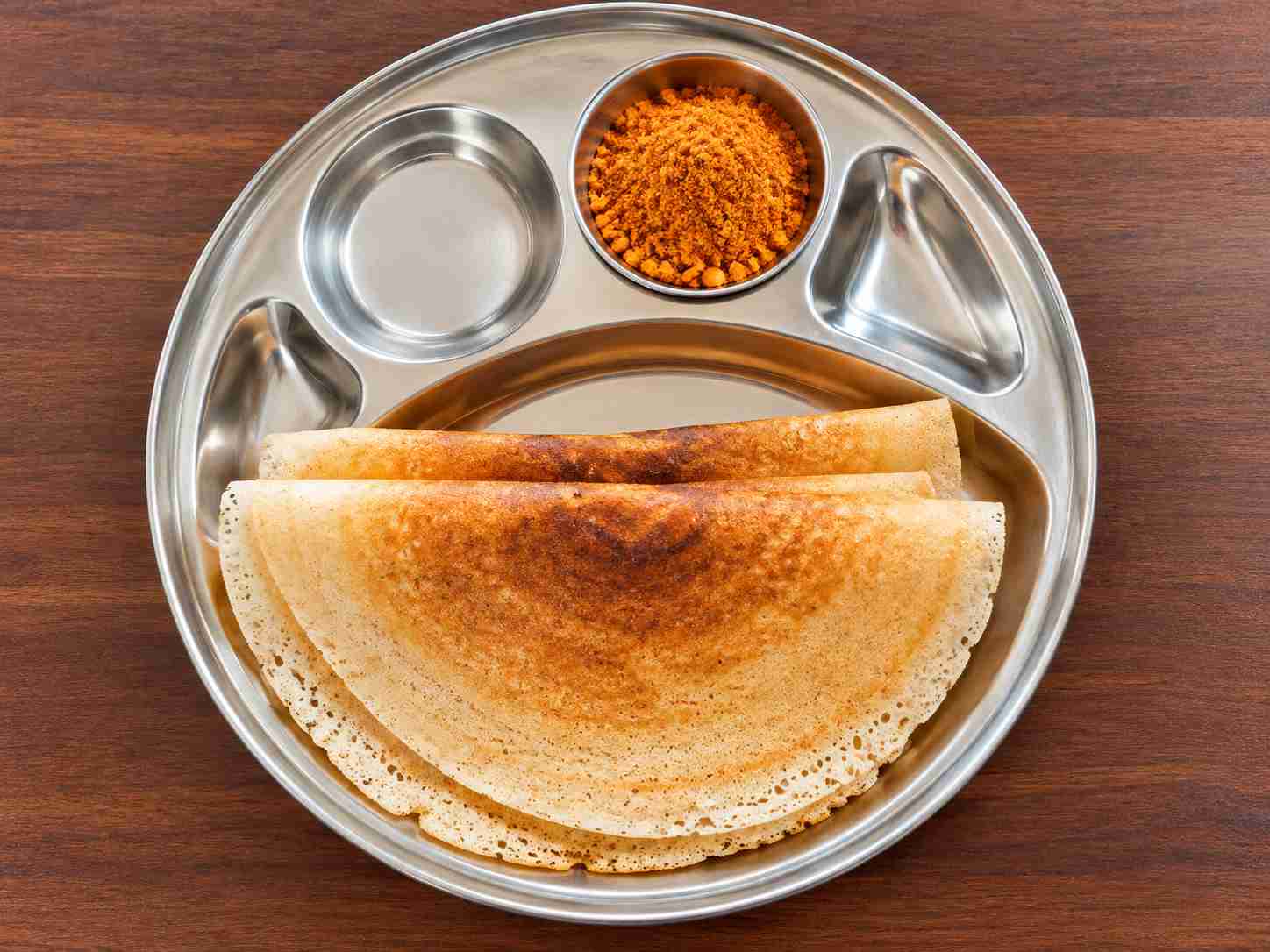
I also tried this Thinai Dosa with idli podi, and I really liked the combination. The crispy dosa with the spicy podi was simple and tasty.
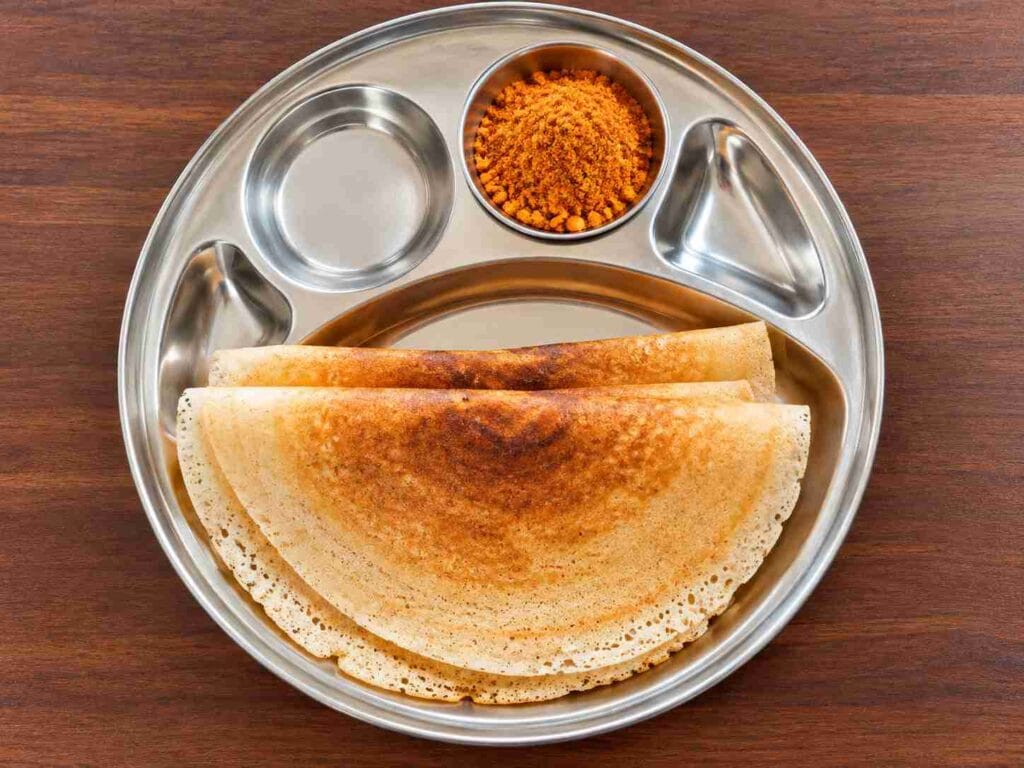
Why I Added Javvarisi to This Thinai Dosa
Javvarisi was not part of my original plan when I first tried this dosa. I was simply working with the ingredients I had at home and wanted to see how my own ratio of thinai, idli rice and urad dal would turn out.
I had some javvarisi in the kitchen, so I decided to add a small amount to the batter. I soaked it separately and ground it before mixing it with the other ingredients.
The result surprised me. The dosa came out thin and crispy, while still having the familiar texture of a regular dosa.I liked the result, so this combination became the version I wanted to share with you.
You can make idli with this batter too. So if you have some batter left after making dosa, don’t worry—you can use the same batter to make idli.
Ingredients for Foxtail Millet Dosa
- Thinai (Foxtail Millet) – 300 g
- Idli Rice – 100 g
- Urad Dal – 50 g
- Javvarisi (Sago) – 50 g
- Salt – as needed
- Water – as needed for grinding
How to Make Foxtail Millet Dosa Recipe
1. Soak the Ingredients
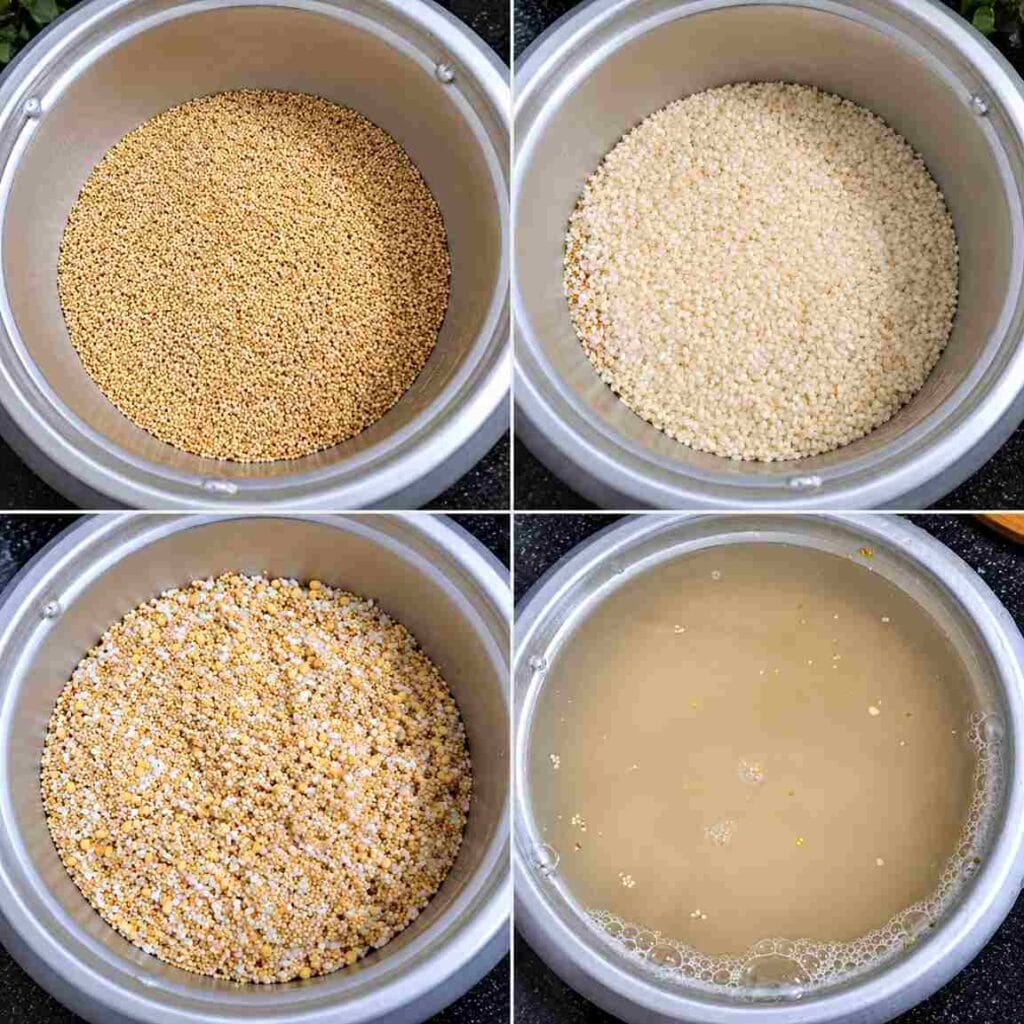
- Wash the foxmillet (thinai), idli rice and urad dal together and soak them in enough water for about 6 hours.
- In a separate bowl, soak the javvarisi for about 6 hours as well.
- I prefer soaking the javvarisi separately because I grind it on its own before combining it with the millet mixture.
2. Grind the Javvarisi
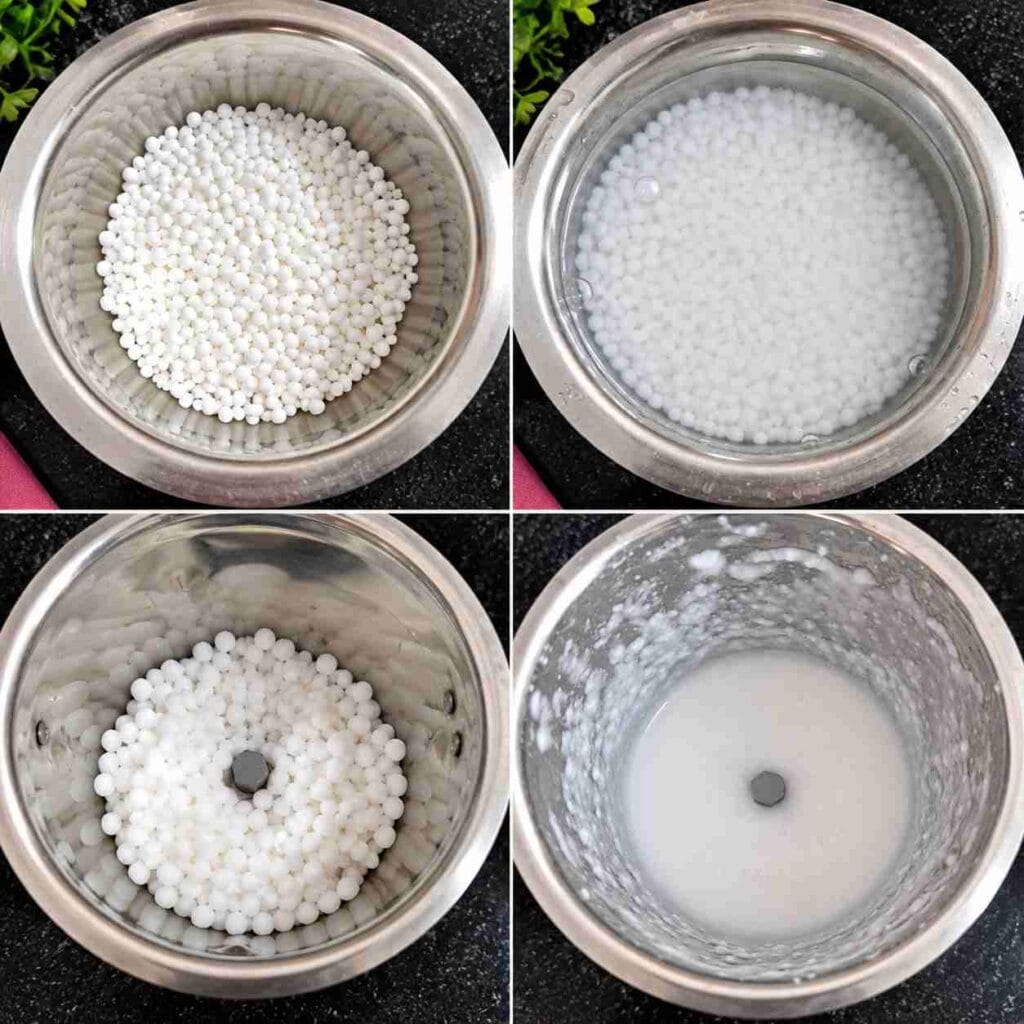
- After 6 hours of soaking, drain the water from the javvarisi.
- Transfer the soaked javvarisi to a blender and grind it smoothly, adding a little water at a time. Once it becomes smooth, transfer it to a large bowl.
- Keep this ground javvarisi mixture aside while you prepare the thinai, rice and urad dal mixture.
3. Grind the Thinai, Rice and Urad Dal
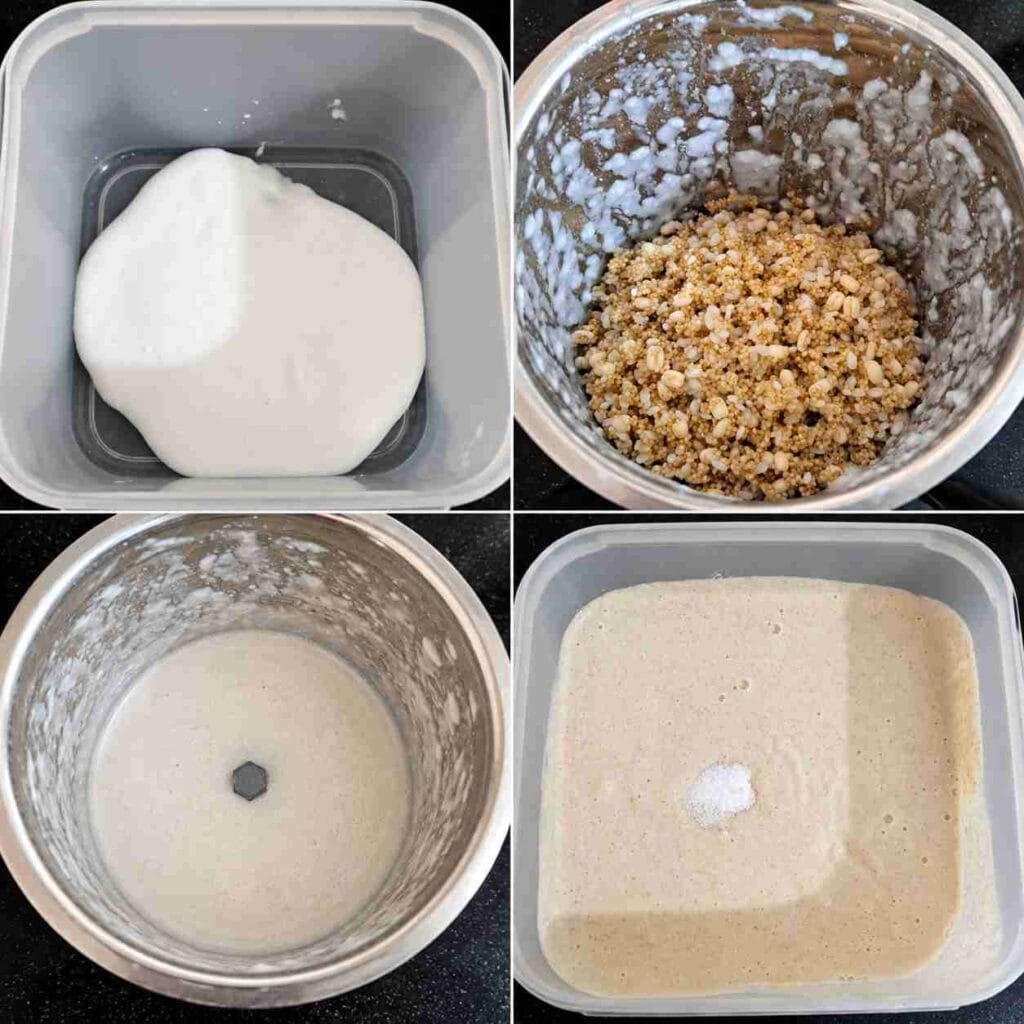
- Drain the water from the soaked thinai, idli rice and urad dal.
- Transfer them to a blender and grind smoothly, adding water little by little as needed. For this batch, I used about 150 ml of water while grinding.
- Once the mixture is smooth, transfer it to the same bowl as the ground javvarisi and mix well.
4. Mix the Batter and Get the Right Consistency
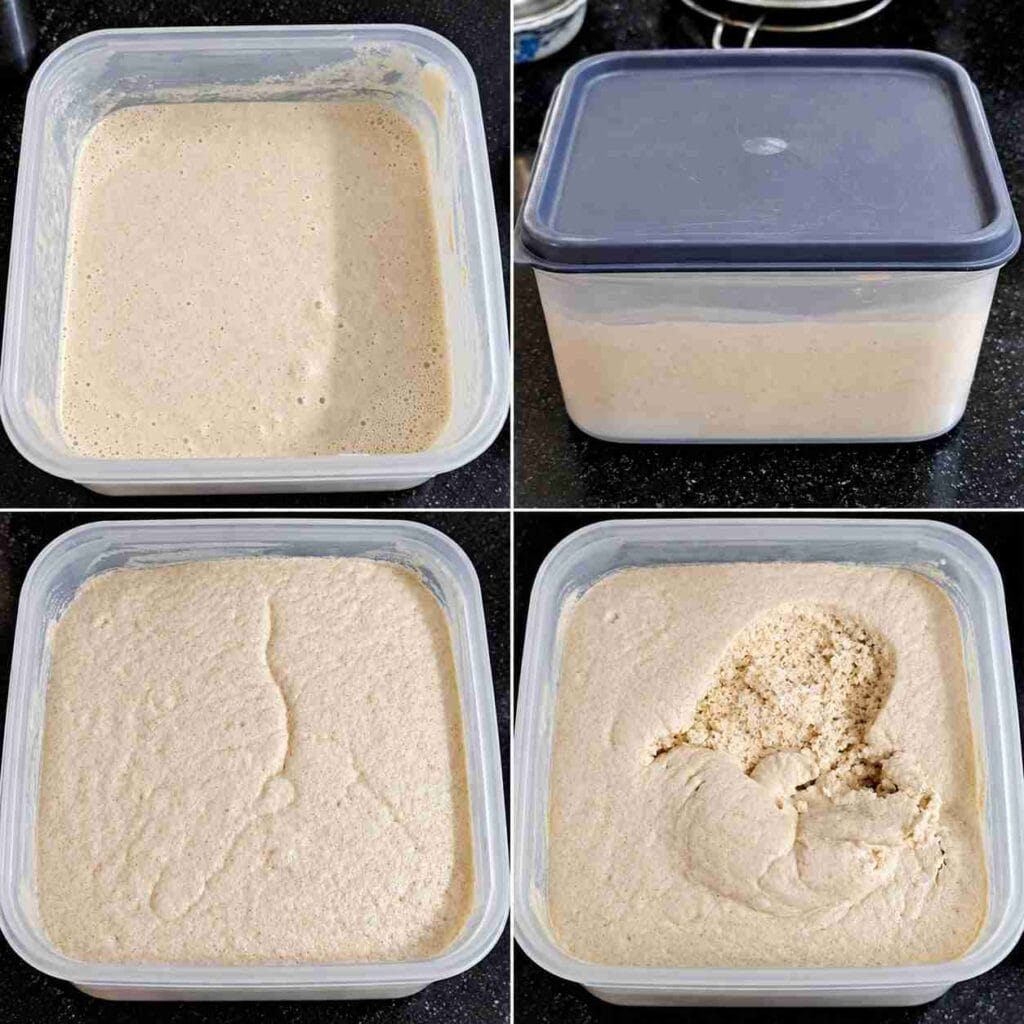
- Add the ground javvarisi mixture to the ground thinai, idli rice and urad dal mixture. Add salt and mix everything well.
- At this stage, do not add extra water to the batter. Keep the batter slightly thick before fermentation.
- This is an important step in this recipe. During my first attempt, I noticed that the batter became a little watery after fermentation. So, keeping the batter thick at this stage helps you get the right consistency later.
- Cover the bowl and let the batter ferment for about 8 hours or overnight, depending on the weather and fermentation conditions.
5. Make the Thinai Dosa
- After fermentation, gently mix the batter once. Check the consistency before making the dosa. If it has become slightly loose after fermentation, do not add more water.
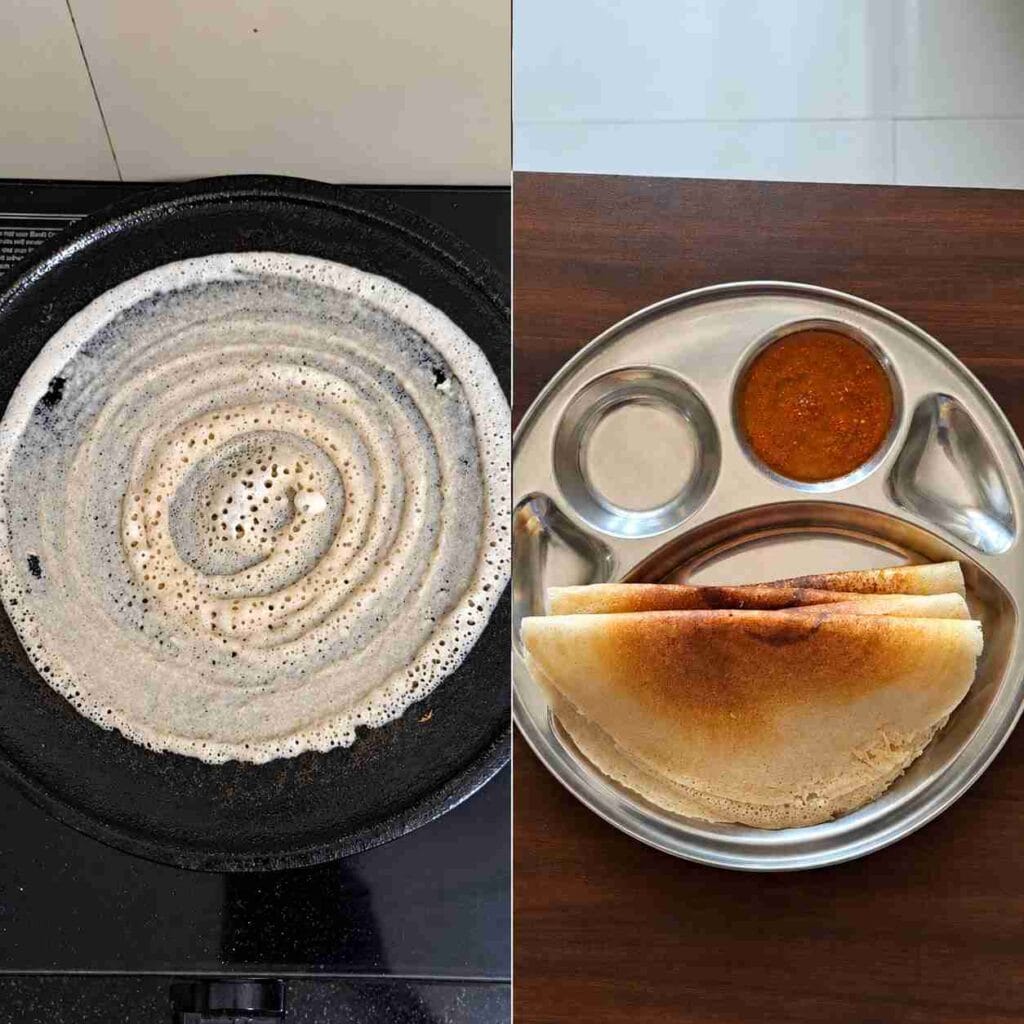
- Heat a dosa tawa over medium heat and lightly grease it if needed. Pour a ladleful of batter onto the hot tawa and spread it in a thin, even circle, just like a regular dosa.
- Drizzle a little oil around the edges and cook until the dosa turns golden and crispy. Once the edges start to loosen from the tawa, fold and serve hot.
Looking for something to serve with this dosa? Check out my Side Dish Recipes for more chutney, sambar and other South Indian side dish ideas.
Tips for Crispy Thinai Dosa
- Keep the batter thick before fermentation: Don’t add extra water before fermenting. In my experience, this batter becomes slightly looser after fermentation.
- Ferment properly: Give the batter enough time to ferment. Around 8 hours or overnight worked for me.
- Spread the dosa thin: Once the tawa is hot, spread the batter evenly and thinly for a crispier dosa.
- Cook until golden: Let the dosa cook properly on the tawa until the edges become crisp and golden before folding it.
- Make it fresh: For the best crispy texture, serve the dosa hot from the tawa.
What Should the Foxtail Millet Dosa Batter Consistency Be?
- One thing I learned while making this dosa is the batter consistency.
- Before fermentation, keep the batter slightly thick. Don’t add extra water at this stage.
- When I tried this recipe for the first time, I noticed that after fermentation the batter became a little watery. So now I make sure the batter is thick before I keep it for fermentation.
- After fermentation, just mix the batter well and check the consistency. It should be smooth and easy to spread on the tawa, but it should not be too watery.
- This small thing made a difference for me, especially when I wanted to make thin and crispy Thinai Dosa.
FAQs for Thinai Dosa Recipe
Is Thinai Dosa the same as Foxtail Millet Dosa?
Yes. Thinai is the Tamil name for foxtail millet, so Thinai Dosa and Foxtail Millet Dosa refer to the same type of dosa. You may also see it written as Thinai Dosai.
Can I make idli with this Foxtail Millet Dosa batter?
Yes, you can. The same fermented batter can also be used to make idli. If you have some batter left after making dosa, you can use it for idli instead of keeping it only for dosa.
What should be the consistency of Foxtail Millet Dosa batter?
Keep the batter slightly thick before fermentation. I noticed during my first attempt that the batter became a little watery after fermentation, so I don’t add extra water before fermenting. After fermentation, check the batter and make sure it is smooth and easy to spread on the tawa.
Why does my Thinai Dosa batter become watery after fermentation?
The batter can become a little loose after fermentation. I noticed the same thing when I first made this recipe. That is why I recommend keeping the batter slightly thick before fermentation and checking the consistency again after fermentation instead of adding water beforehand.
How long should I ferment Thinai Dosa batter?
I ferment this batter for about 8 hours or overnight. The actual fermentation time can vary depending on the weather and temperature, so check the batter rather than following the time blindly.
How do I make Thinai Dosa crispy?
For a crispy Thinai Dosa, keep the batter at the right consistency, spread it thinly on a hot tawa, and let it cook properly until the edges become golden and crisp. I also prefer serving it hot, straight from the tawa.
Can I make this dosa without Javvarisi or use something else?
Yes. You can use soaked poha or boiled rice instead of javvarisi. If using poha, soak it before grinding. If using boiled rice, use cooked rice and grind it along with the other ingredients.
Foxtail Millet Dosa Recipe | Thinai Dosa with Javvarisi
Ingredients
Equipment
Method
- Wash the thinai, idli rice and urad dal together and soak them in enough water for about 6 hours.
- In a separate bowl, soak the javvarisi for about 6 hours.
- Drain the soaked javvarisi and transfer it to a blender.
- Grind it smoothly, adding a little water at a time. Transfer the ground javvarisi to a large bowl and keep it aside.
- Drain the soaked thinai, idli rice and urad dal.
- Transfer them to a blender and grind smoothly, adding water little by little as needed. I used about 150 ml of water for this batch while grinding.
- Transfer the ground mixture to the same bowl as the javvarisi mixture.
- Add salt and mix everything well.
- Keep the batter slightly thick before fermentation. Do not add extra water at this stage.
- Cover and leave the batter to ferment for about 8 hours or overnight.
- After fermentation, gently mix the batter and check the consistency.
- The batter may become a little loose after fermentation. It should be smooth and easy to spread on the tawa, but it should not be watery.
- Heat a dosa tawa over medium heat.
- Pour a ladleful of batter onto the hot tawa and spread it into a thin, even circle.
- Drizzle a little oil around the edges and cook until the dosa becomes golden and crispy .Fold and serve hot.
Notes
Serving Suggestions
Foxtail Millet Dosa tastes best hot and crispy, straight from the tawa. You can serve it with:
Tried this?
I’d love to hear how it turned out for you and which side dish you paired with this dosa. Leave a comment below and share your experience.
If you make this recipe, don’t forget to share your photos on Instagram and tag @indianrecipestoday.
Love easy and traditional South Indian recipes? Subscribe to our newsletter and get the latest recipes delivered straight to your inbox.
Happy Cooking! ❤️