Mint Chutney Recipe | Easy Pudina Chutney Without Coconut
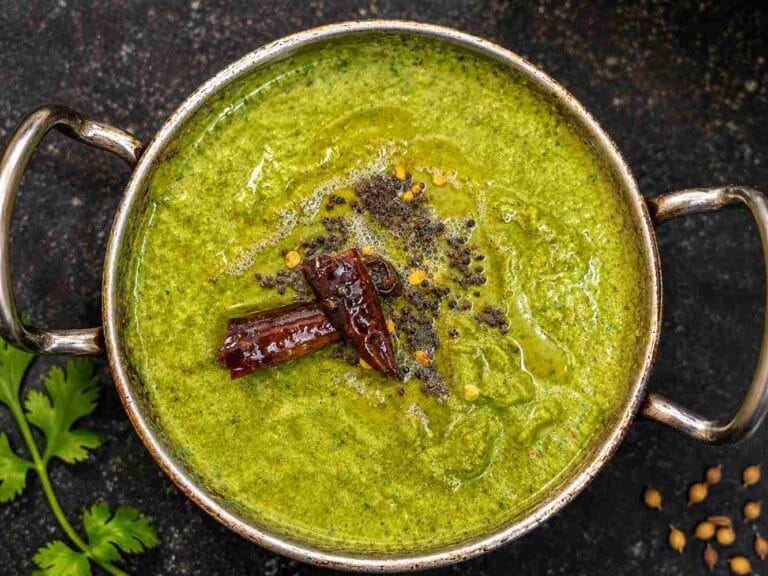
If you’re looking for a simple and flavorful chutney to serve with dosa, idli, chapati, sandwich, or even hot steamed rice, this Mint Chutney Recipe is one of the best options to try. Chutney is a regular part of almost every South Indian kitchen, and while there are countless varieties to choose from, pudina chutney has always been one of my favorites.
This recipe came together unexpectedly. I have a lot of fresh mint growing in my home garden, and after harvesting a bunch, I decided to make mint chutney for dinner. That’s when I realized I had no coconut and no chana dal in my pantry. Instead of skipping the recipe, I used toor dal, hoping it would still turn out delicious. To my surprise, the chutney was thick, flavorful, and everyone at home loved it.
One cooking habit I never skip is roasting the garlic with its skin on before adding the other ingredients. It gives the chutney a mild smoky aroma and enhances the overall flavor without making the garlic taste too strong. I also follow a few simple tips to keep the chutney naturally green without using any artificial ingredients, and I’ll share those with you in this recipe.
Whether you’re making breakfast or a quick dinner, this easy South Indian mint chutney comes together in minutes and pairs beautifully with your favorite dishes.
What is Mint Chutney (Pudina Chutney)?
Mint Chutney, also known as Pudina Chutney, is a popular South Indian condiment made with fresh mint leaves, onions, garlic, lentils, tamarind, and spices. It is commonly served as a side dish with idli, dosa, chapati, uthappam, paniyaram, and sandwiches, adding a fresh, mildly spicy, and tangy flavor to every meal.
Every household has its own way of making mint chutney. Some recipes include coconut or roasted gram (chana dal), while others are prepared without them. This version is made without coconut, using toor dal and urad dal to create a naturally thick and flavorful chutney.
What makes this recipe a little different is roasting the garlic with its skin on before sauteing the remaining ingredients. This simple step gives the chutney a mild smoky aroma and enhances the flavor without overpowering the fresh taste of the mint. The result is a delicious homemade pudina chutney that’s perfect for everyday meals.
Health Benefits of Pudina (Mint)
Fresh pudina (mint) is not only known for its refreshing aroma but also for its many health benefits. Adding mint chutney to your meals is an easy way to enjoy its natural goodness.
- Rich in Antioxidants: Mint leaves contain antioxidants that help protect the body’s cells from damage caused by free radicals.
- Supports Digestion: Pudina is traditionally used to aid digestion and may help reduce bloating, gas, and indigestion, especially after a heavy meal.
- Refreshing and Cooling: Mint has a natural cooling effect, making it a great ingredient during hot summer days.
- May Freshen Breath: The natural oils in mint help reduce bad breath and leave your mouth feeling fresh.
- Contains Essential Nutrients: Mint provides small amounts of vitamin A, vitamin C, iron, and folate, which contribute to overall health when included as part of a balanced diet.
- Naturally Low in Calories: This mint chutney is made without coconut, making it a lighter side dish that pairs well with healthy breakfasts and meals.
Ingredients for Mint Chutney Recipe
You’ll only need a few simple pantry ingredients to make this flavorful Mint Chutney Recipe. Fresh mint leaves are the star of this recipe, while roasted lentils add body and garlic brings a wonderful aroma.
- Mint leaves (Pudina) – 1 cup (100 g), washed and cleaned
- Cooking oil – 1 tablespoon
- Garlic – 4 cloves (with skin)
- Urad dal – 1 tablespoon
- Toor dal – 1 tablespoon
- Onion – 1 small to medium, roughly chopped
- Dry red chilies – 3, broken into pieces (adjust to your spice preference)
- Tamarind – 1 small piece
- Salt – To taste
For Tempering
- Cooking oil – 1 teaspoon
- Mustard seeds – ¼ teaspoon
- Dry red chilies – 2, broken into pieces
How to Make Mint Chutney Recipe (Step-by-Step)
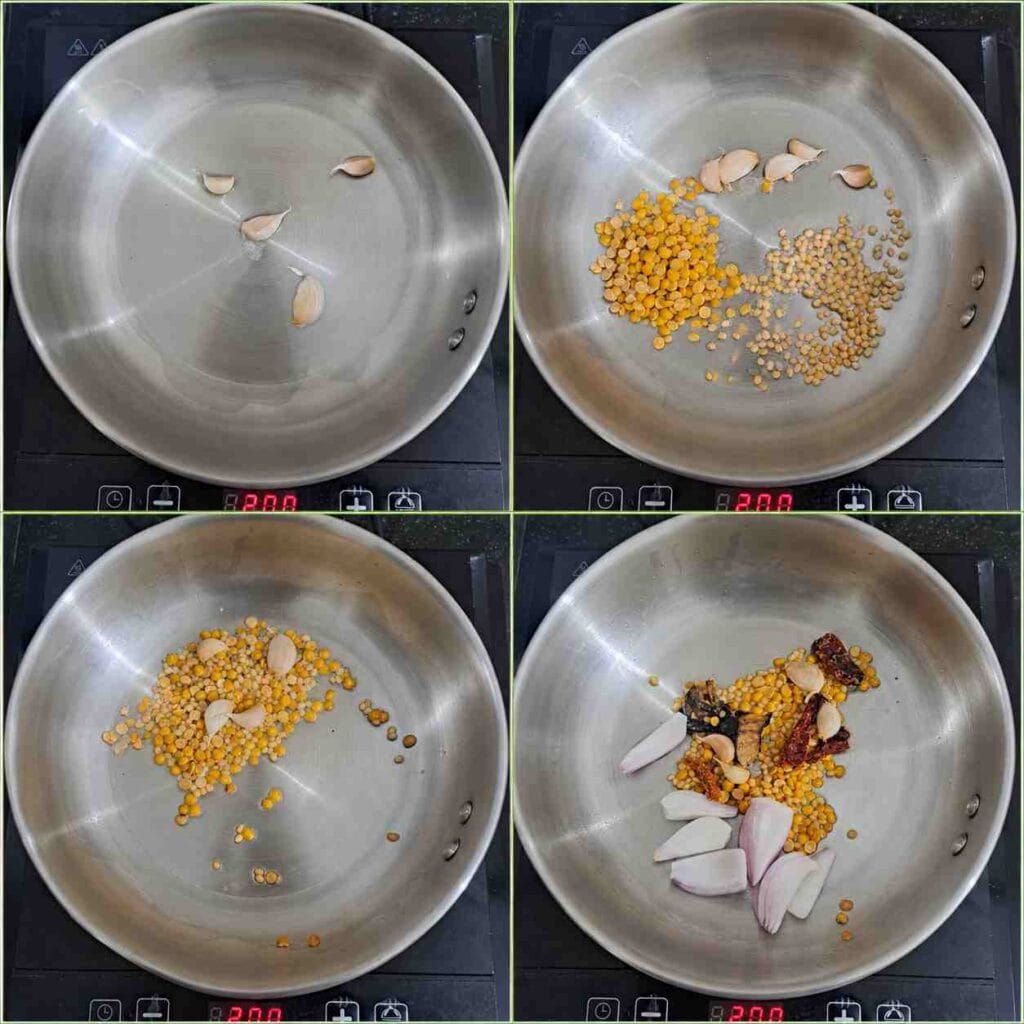
Step 1: Roast the garlic and lentils
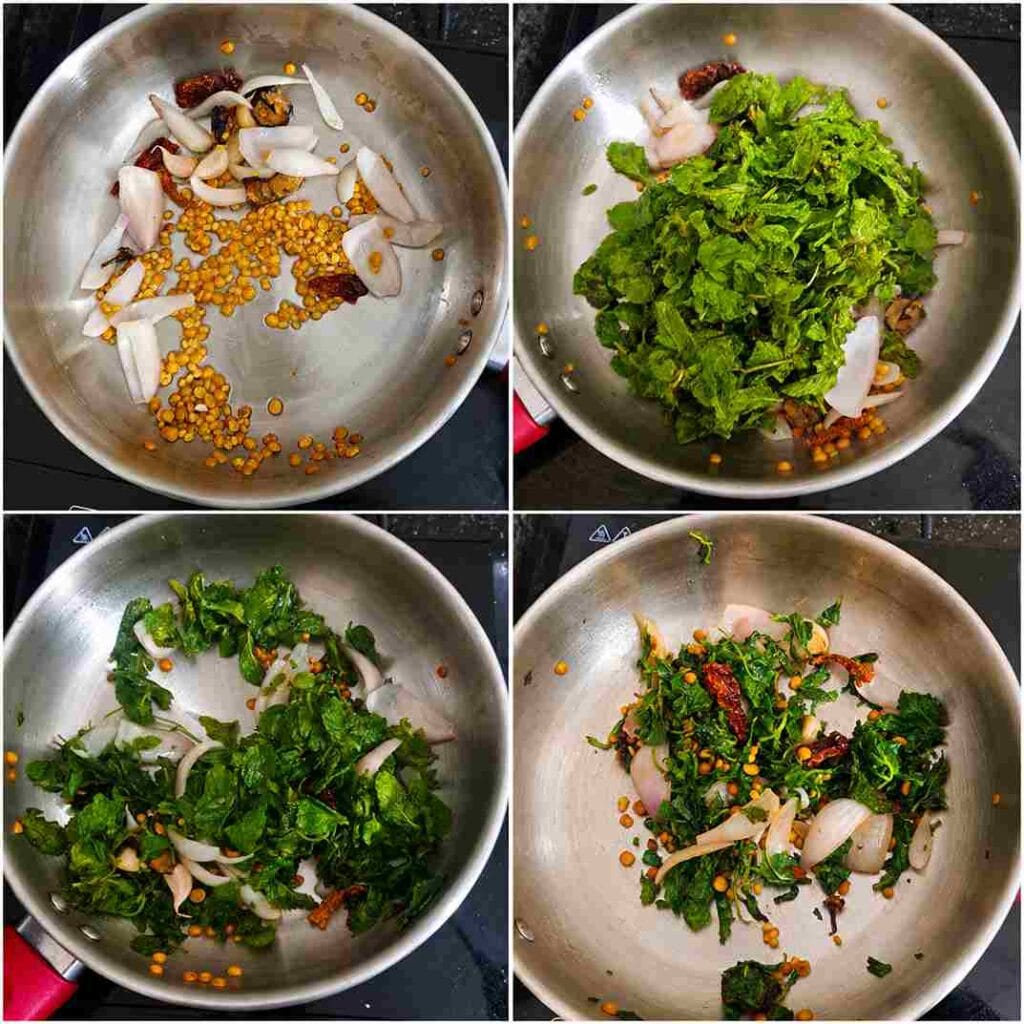
Heat 1 tablespoon of oil in a pan over medium heat. Add the garlic cloves with their skin on and roast for about 3 minutes until they become aromatic. This simple step gives the chutney a rich, smoky flavor. Next, add the urad dal and toor dal, and roast until they turn light golden brown.
Step 2: Add the remaining ingredients
Add the broken dried red chilies, tamarind, and roughly chopped onion. Saute for 2–3 minutes, or until the onion becomes soft and translucent.
Step 3: Saute the mint leaves
Add the fresh mint leaves to the pan and sauté for 2–3 minutes, just until the leaves wilt and reduce in volume. Avoid overcooking the mint, as it can lose its vibrant green color and fresh flavor.
Step 4: Cool and blend
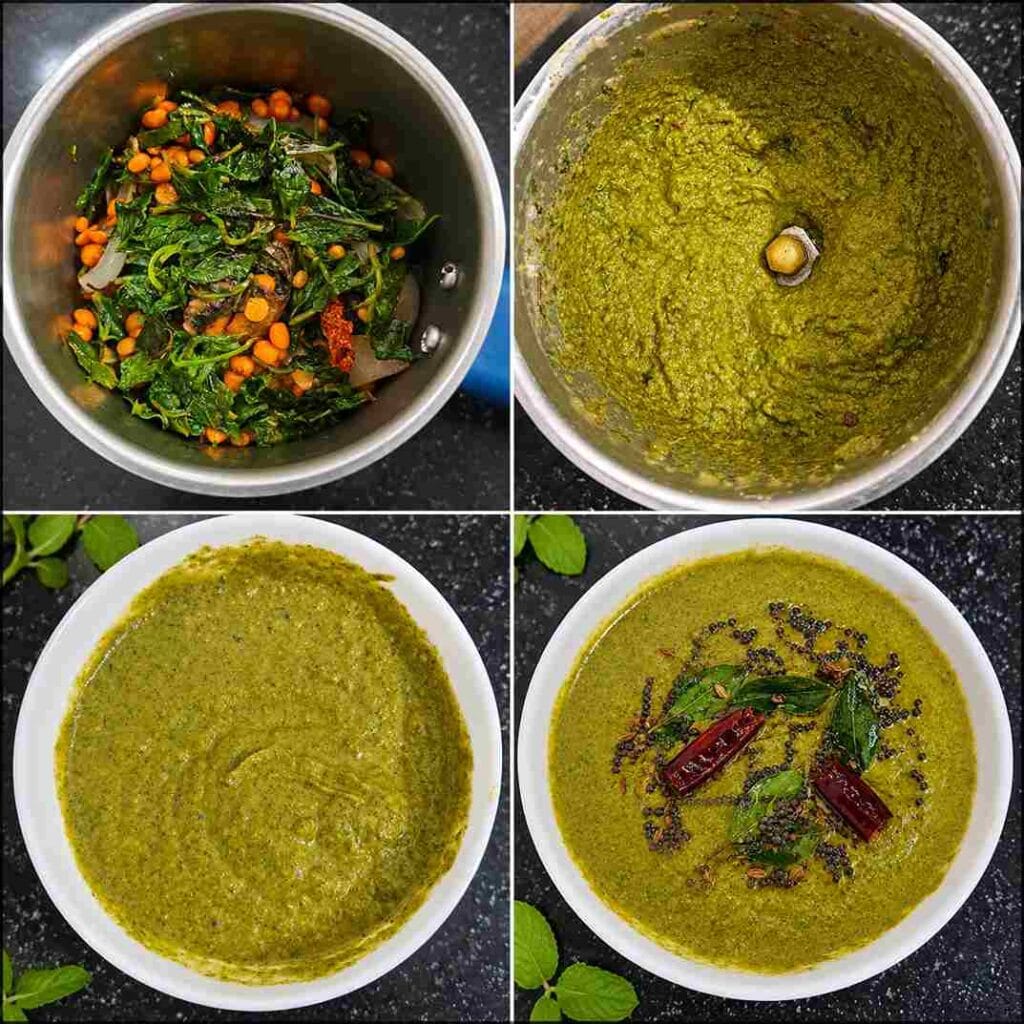
Transfer the cooked mixture to a plate and allow it to cool completely. Once cooled, add it to a mixer jar along with salt and a little water. Blend into a smooth chutney, adding more water if needed to reach your preferred consistency.
Step 5: Prepare the tempering
Heat 1 teaspoon of oil in a small tempering pan. Add mustard seeds and let them splutter. Then add 2 broken dried red chilies and sauté for a few seconds. If you like, you can also add a few curry leaves for extra flavor.
Step 6: Finish and serve
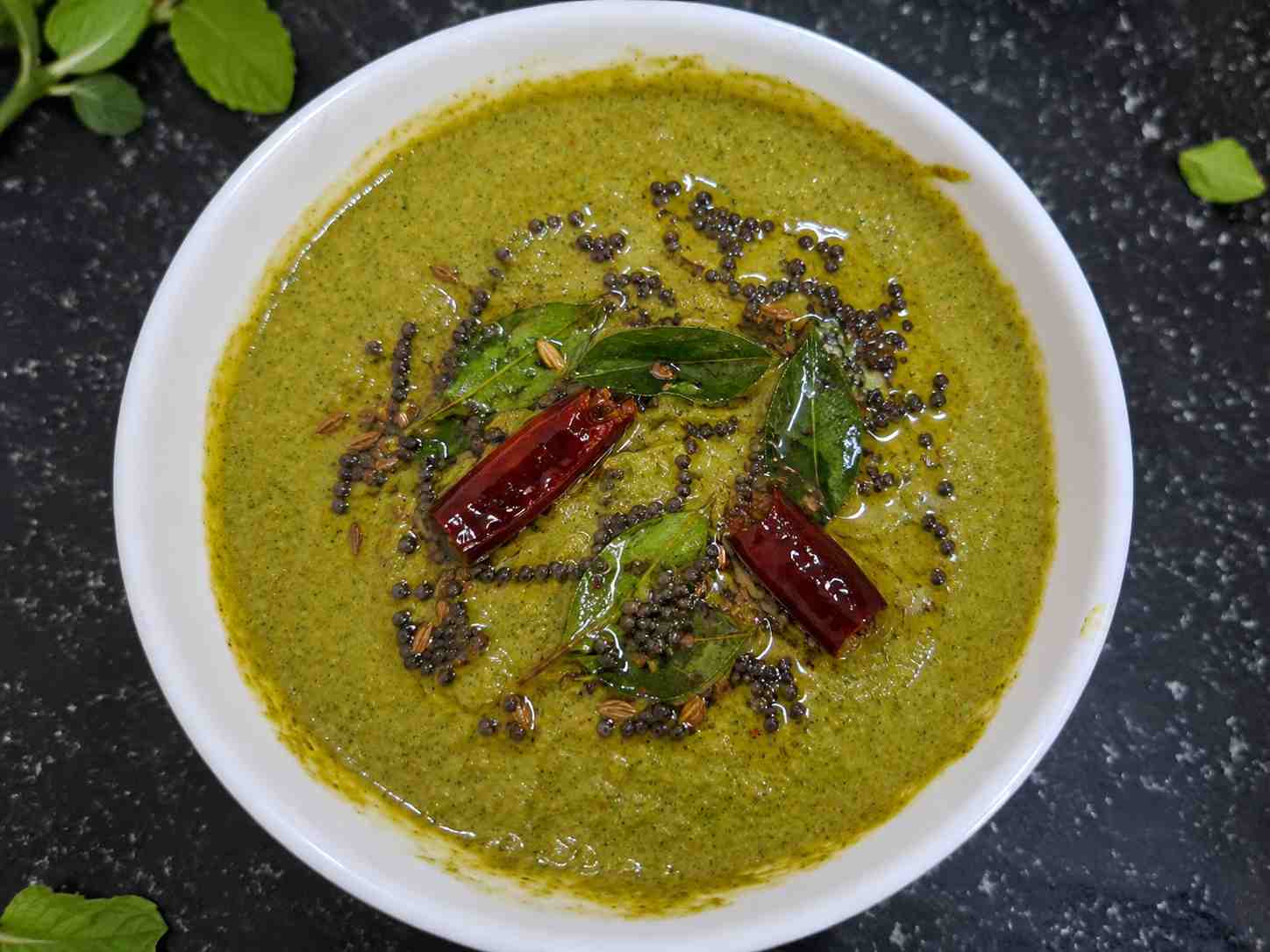
Pour the hot tempering over the freshly ground Mint Chutney and mix gently. Serve immediately with idli, dosa, chapati, paniyaram, sandwiches, or hot steamed rice.
Expert Tip
- For the best flavor, I always roast the garlic with its skin on before adding the lentils. It gives the chutney a mild smoky aroma without making the garlic overpower the fresh mint.
- Also, avoid overcooking the mint leaves and let the mixture cool before grinding to help preserve the chutney’s natural green color.
Common Mistakes to Avoid
- Overcooking the mint leaves, which can make the chutney dull in color.
- Grinding the mixture while it’s still hot.
- Adding too much water at once, making the chutney runny.
- Using old or wilted mint leaves, which reduces freshness and flavor.
- Adding too much tamarind, which can overpower the taste of the mint.
Serving Suggestions
This Mint Chutney Recipe is a versatile side dish that pairs well with many South Indian breakfasts and evening snacks. Here are some delicious ways to enjoy it:
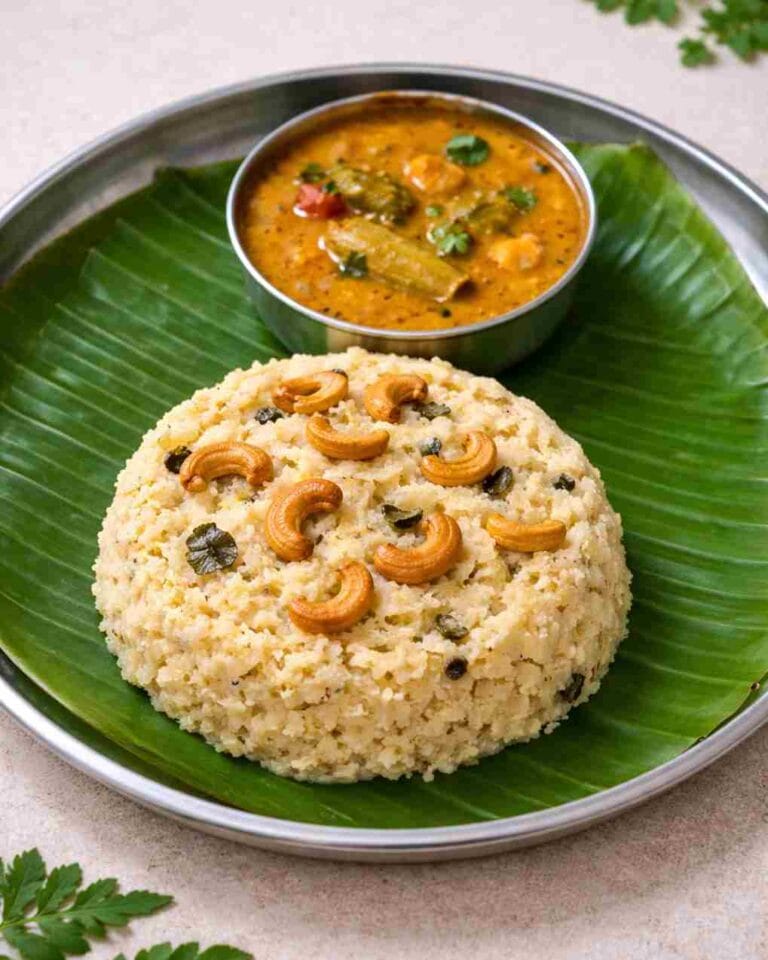
- Idli: Serve this flavorful Pudina Chutney with soft idlis for a simple and satisfying breakfast.
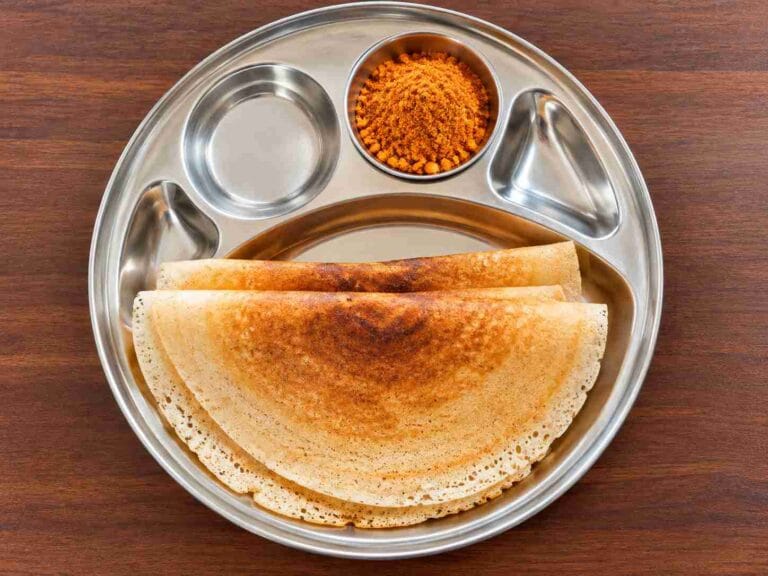
- Dosa: It tastes delicious with crispy dosa, set dosa, rava dosa, and pesarattu.
- Chapati: Use it as a quick side dish for chapati or phulka instead of regular curry.
- Sandwiches: Spread the chutney on bread to make flavorful vegetable or grilled sandwiches.
- Paniyaram: Pair it with kuzhi paniyaram for a delicious breakfast or evening snack.
- Uttapam: Serve alongside onion, vegetable, or plain uttapam for a refreshing combination.
- Steamed Rice: Mix a little mint chutney with hot steamed rice and a drizzle of ghee or sesame oil for a quick and comforting meal.
- Snacks: Enjoy it as a dip with pakoras, vada, bajji, cutlets, or samosas.
FAQs for Mint Chutney Recipe
Can I make mint chutney without coconut?
Yes. This Mint Chutney Recipe is made without coconut. Instead of coconut or roasted gram (chana dal), I use toor dal and urad dal, which give the chutney a thick texture and rich flavor.
Why does my mint chutney turn dark green?
Mint chutney can turn dark if the mint leaves are overcooked or if the hot mixture is blended immediately. Saute the mint for only 2–3 minutes and let the mixture cool completely before grinding to help retain its natural green color.
How long does mint chutney stay fresh?
Store the chutney in an airtight container in the refrigerator for up to 2–3 days. Since this recipe doesn’t contain coconut, it stays fresh slightly longer than coconut-based chutneys.
Why do you roast the garlic with its skin on?
Roasting garlic with the skin on gives the chutney a mild smoky aroma and a richer flavor. It’s a simple technique that enhances the taste without making the garlic too strong.
Is this mint chutney vegan and gluten-free?
Yes. This recipe is naturally vegan, gluten-free, and dairy-free, making it suitable for a variety of diets.
Mint Chutney Recipe | Easy Pudina Chutney Without Coconut
Ingredients
Equipment
Method
- Heat oil in a pan and roast the garlic with its skin on for about 3 minutes until aromatic.
- Add the urad dal and toor dal. Roast until they turn light golden.
- Add the dried red chilies, onion, and tamarind. Sauté until the onion becomes translucent.
- Add the mint leaves and salt. Sauté for 2–3 minutes until the leaves wilt.
- Transfer the mixture to a plate and let it cool completely.
- Grind the cooled mixture into a smooth chutney, adding a little water as needed.
- Heat oil in a small pan. Add mustard seeds and let them splutter, then add the broken dried red chilies and sauté for a few seconds.
- Pour the tempering over the chutney, mix well, and serve.
Notes
Tried This Mint Chutney Recipe?
I’d love to hear how it turned out! Leave a comment and rating below to share your experience or any tips you tried.
If you make this recipe, tag us on Instagram @indianrecipestoday so we can see your delicious creations and feature them with our community.
Don’t forget to subscribe to our newsletter for easy South Indian recipes, healthy cooking tips, and the latest recipes delivered straight to your inbox.
Happy Cooking! 😊