Crispy Dosa Recipe (தோசை) – How to Make Perfect Plain Dosa at Home
⭐ About This Recipe
Crispy Dosa Recipe (தோசை) is one of those comforting South Indian breakfast dishes that makes you feel at home the moment you take the first bite. Whether you are a beginner, a bachelor staying alone, or someone who wants an easy, no-fail method, this dosa recipe is specially written for you.
Growing up, dosa was a daily routine in almost every South Indian home… that golden crisp edge, the soft inner layer, the aroma of hot dosa lifting from the tawa — it just brings a happy feeling to the kitchen. Today, I wanted to share a version that is simple, quick, and uses only a mixie, so anyone can make it without fancy grinders.
Many beginners struggle with dosa batter because the mixie heats up fast. That’s exactly why we add ice cubes while grinding — it keeps the batter cool, helps smooth grinding, and gives that perfect crispness when you pour it on the tawa. This trick is a lifesaver for bachelors and first-time cooks!
The best part?
This crispy dosa pairs beautifully with Peanut Chutney (நிலக்கடலை சட்னி) and a hot bowl of Chicken Kulambu if you love a spicy, homely touch.
Crispy Dosa Recipe (தோசை)
Ingredients
Equipment
Method
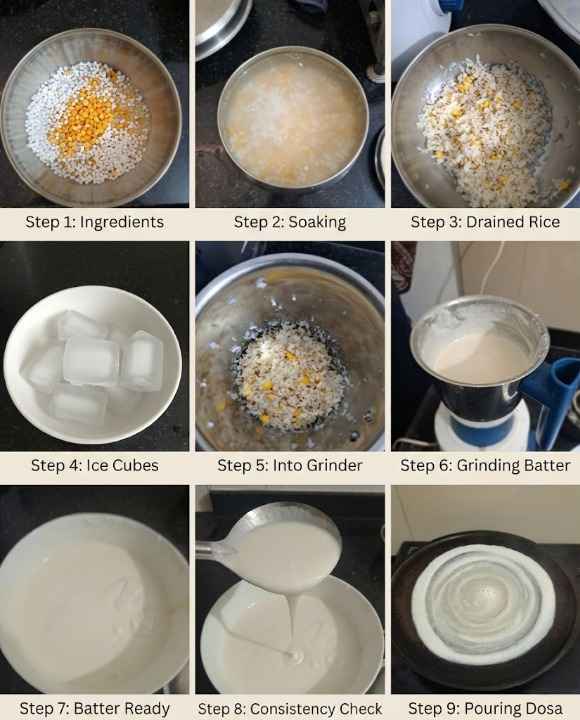
- Rinse all ingredients (raw rice, idli rice, urad dal, channa dal, javvarisi, fenugreek) 2–3 times.
- Soak them together for 4 hours.
- After soaking, drain the water completely.
- Add a handful of ice cubes to the mixie jar (helps prevent heat while grinding).
- Grind the soaked ingredients in batches using ice cubes or chilled water until you get a smooth, fluffy batter.
- Transfer the batter to a large bowl. Add salt and mix gently with clean hands.
- Cover the bowl and allow the batter to ferment for 8 hours or overnight, depending on weather.
- After fermentation, the batter will rise and look airy. Mix gently once.
- Adjust the batter consistency with a little water — it should be flowing, not thick.
- Heat a dosa tawa. Pour a ladle of batter and spread it thin in circular motion.
- Drizzle oil around the edges and cook until the dosa turns crispy and golden.
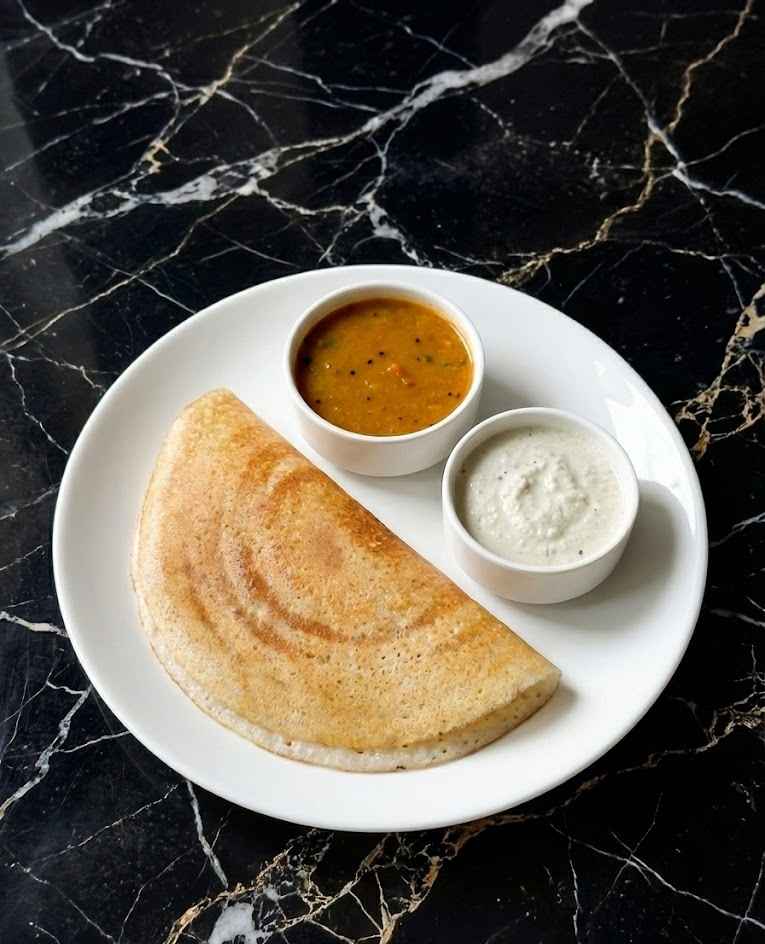
- Serve hot with chutney or sambar.
Notes
- Fermentation of 8 hours improves flavor and crispiness.
- Ice cubes act as water while grinding, so do not add water immediately. First check the batter after grinding, then add water only if needed.
- Ice cubes help avoid mixie heating and give a smooth batter.
- Batter shouldn’t be too thick, adjust with water before making dosa.
- If dosa sticks, wash the tawa and wipe with onion dipped in oil.
- Don’t pour batter on a very hot tawa , maintain medium heat.
⭐ Tips & Variations
- Replace javvarisi with poha for softer dosa.
- Add a pinch of sugar before fermentation to help in cold weather.
- For extra crispy dosa, spread the batter thin and cook longer.
- Fermented batter lasts 2–3 days in the fridge.
- You can make uttapam using this same batter by adding onion & chilli.
⭐ FAQs for Crispy Dosa Recipe (தோசை)
Can I make crispy dosa batter in a mixie?
Yes! This recipe is designed for mixie grinding. Just add ice cubes while grinding to avoid heat and get a smooth batter.
Do ice cubes replace water in dosa batter?
Yes, ice cubes act as water while grinding. So first grind with ice cubes and then add water only if required after checking the consistency.
How do I know the dosa batter consistency is correct?
The batter should be flowing but not watery. When you lift the batter with a ladle, it should drop in a smooth ribbon.
Why does my dosa stick to the pan?
Your tawa may be too new, too hot, or not seasoned well. Wash the pan, heat it again, wipe with onion/half cut potato dipped in oil, and then try spreading the batter.
Can I store dosa batter in the fridge?
Yes, fermented dosa batter stays fresh for 2–3 days in the refrigerator. Always mix gently before using.
Can I skip javvarisi (sago)?
Yes, you can replace it with poha, or boiled rice . Javvarisi gives extra crispiness.
How long should dosa batter ferment?
At least 8 hours. In hot weather, 6 hours is enough. In winter, 10–12 hours may be required.
Why are my dosas not turning crispy?
Because the batter is too thick or not spread thin. Keep the batter slightly runny, spread it thin on medium heat, and avoid applying too much oil on the tawa , excess oil stops the dosa from getting crisp.
Why does dosa become rubbery?
Because the pan is too cold or the dosa is cooked too long. Make sure the tawa is hot and cook only on one side for crispness.
Can I use normal water for grinding?
Yes, you can use normal water, but grind in small batches so the mixie doesn’t heat up. Ice cubes are better because they keep the batter cool and help make smoother, crispier dosa.
Can I soak the ingredients and keep them in the fridge?
Yes, you can soak the ingredients and keep them in the fridge. The cold soaking water can also be used while grinding, so you don’t need to bring it to room temperature.
Can I use hot water for soaking or grinding?
No, avoid using hot water for soaking or grinding. Hot water can kill the good bacteria needed for fermentation and can also affect the batter texture. Always use normal or cold water.
❤️ Final Thoughts – Why You Should Try This Crispy Dosa Recipe
If you’re someone who loves simple South Indian food or you’re just starting your cooking journey, this crispy dosa recipe is something you must try at least once. Made with everyday ingredients like raw rice, idli rice, and urad dal, this recipe is not only easy but also nourishing urad dal gives the dosa its crisp texture and adds protein, making the meal both tasty and wholesome. There is a small joy in pouring that first ladle of batter, spreading it thin, and watching it turn golden and crisp — it feels like a little victory in the kitchen.
This method is written especially for beginners and bachelors who want a no-fail recipe that works every single time. With just a mixie, a handful of basic ingredients, and a bit of patience for soaking and fermenting, you can create dosas that taste just like home.
Another plus? This batter is very versatile. If you have extra batter left, don’t waste it — you can easily convert it into delicious Kara Paniyaram for the next day.
With a little practice, you’ll be making crispy dosa just like your mom, your paati, or the roadside thattukada you love. Give it a try — your kitchen will smell like home.