Idli Recipe – Soft & Fluffy South Indian Idlis at Home
⭐ About This Recipe
Idli recipe is something I make often at home, but I won’t say I got it right from day one. Especially during winter, fermentation used to be a real issue for me. Some mornings the idlis came out fine, and on other days they were just not as soft as expected, even though I followed the same steps.
Instead of using poha or boiled rice, I add javvarisi (sago) to the batter. That small change works better for me. The batter stays moist, and the idlis turn out softer, even when the weather is cold. I also prepare this recipe using rice boiling water instead of plain water, which helps keep the batter warm during grinding and supports better fermentation in winter.
Over time, I learned not to rush fermentation. During cold weather, I keep the batter in a warm spot and simply give it more time. These small adjustments made this soft idli recipe more reliable in my kitchen. Since idli is a naturally fermented and steamed food, it is often considered light on the stomach and easy to digest — one of the reasons it is widely enjoyed as a breakfast across South India.
This South Indian idli recipe is shared exactly the way I make it at home. If winter fermentation has been a struggle for you too, this method may help.
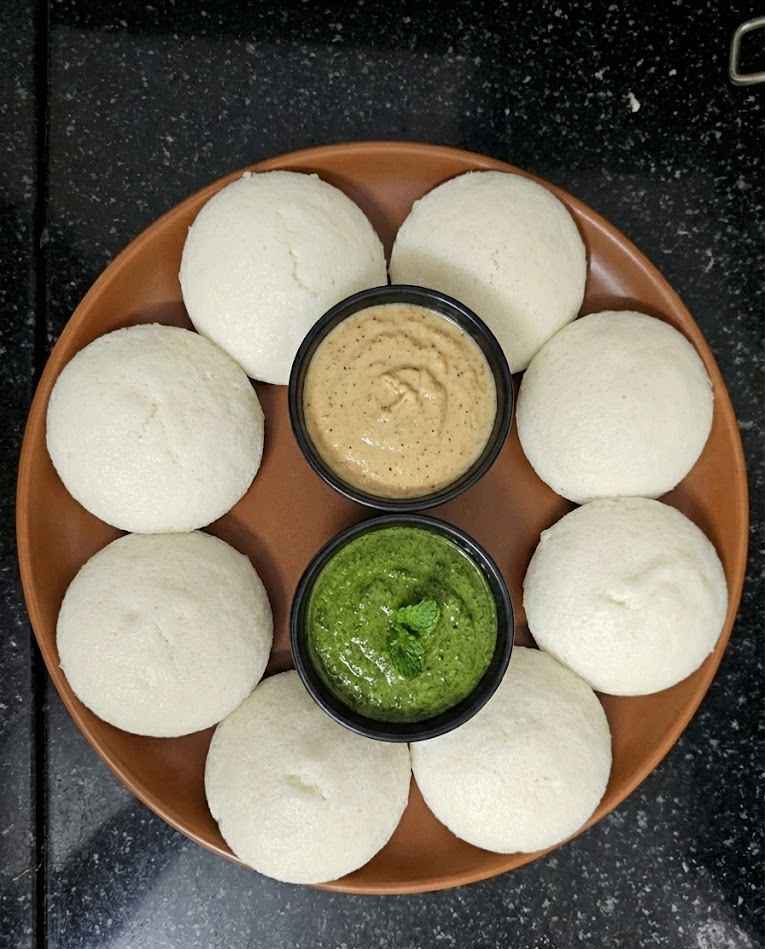
Idli Recipe – Soft & Fluffy South Indian Idlis
Ingredients
Equipment
Method
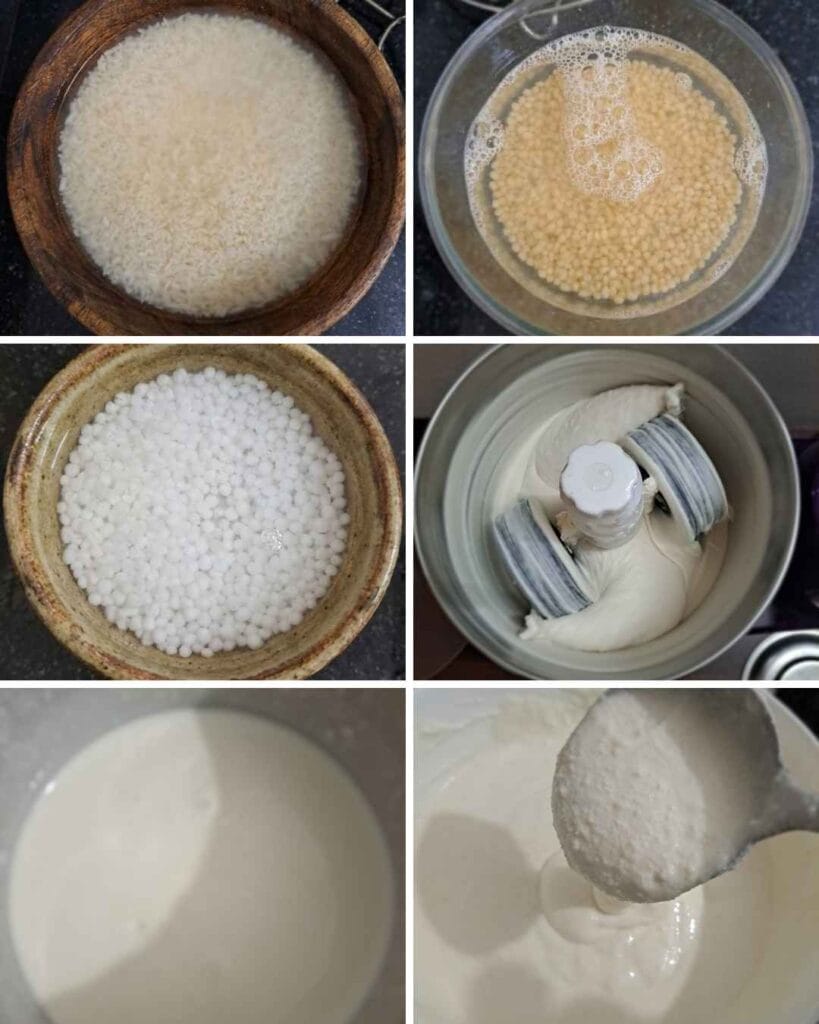
- Wash the idli rice 2–3 times until the water runs clear. Soak it in enough water for 6–8 hours.
- Wash the urad dal along with fenugreek seeds and soak separately for 4–5 hours.
- Soak javvarisi in water for 2 hours until it becomes soft and slightly swollen.
- Switch on the wet grinder and add the soaked urad dal first. Sprinkle water little by little and allow it to grind slowly. Do not add too much water at once. Grind until the batter becomes very light, fluffy, and airy, almost like whipped cream. This step is extremely important for making soft idlis.
- Once the urad dal batter is ready, transfer it to a large vessel and keep it aside.
- Now add the soaked javvarisi to the wet grinder and grind until smooth. Then add the soaked idli rice and grind to a slightly coarse yet smooth batter. The texture should not be too fine like dosa batter; a mild grainy texture works best for idlis.
- Transfer the rice–javvarisi batter to the vessel with the urad dal batter. Add salt and mix gently using your hand until both batters are well combined. Hand mixing helps retain warmth and supports better fermentation.
- Cover the batter and allow it to ferment for 8–12 hours. During winter, keep the batter in a warm place and allow extra time if needed. The batter should rise slightly and look airy once fermented.
- After fermentation, gently mix the batter once. Do not overmix, as this can deflate the batter.
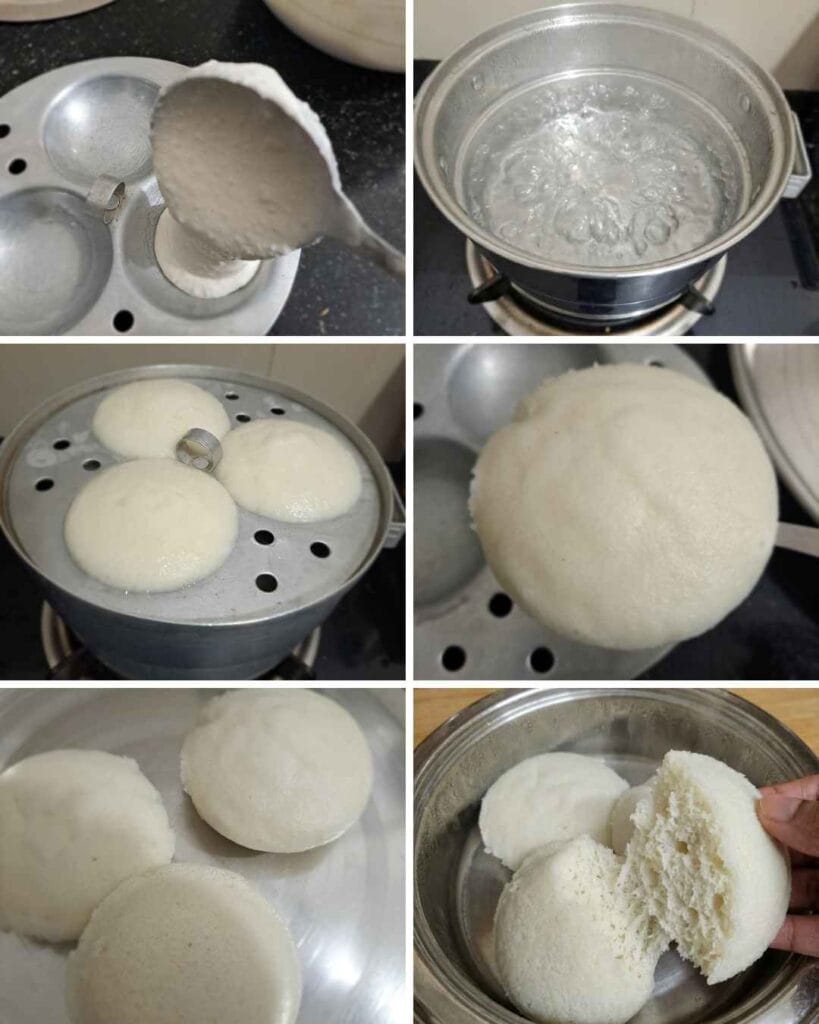
- Grease the idli plates lightly and pour the batter into each mould, filling about three-fourths.
- Heat water in the idli steamer, place the idli stand inside, and steam on medium flame for 10–12 minutes.
- Turn off the flame and let the idlis rest for 1–2 minutes before removing. Serve hot.
Notes
- I prepare this idli batter using rice boiling water instead of plain water.
- For this recipe, the overall water used for me is approximately 1½ cups, added gradually while grinding.
- Water quantity may vary slightly depending on the quality of rice, urad dal, and the wet grinder, so adjust the consistency as needed.
- The batter should be thick, airy, and not runny for best fermentation and soft idlis.
- While grinding, the idli rice batter should not be ground very soft. A slightly coarse texture is important for good rise and soft idlis.
- During summer, using rice boiling water can make the batter ferment faster, so be cautious and avoid keeping the batter in a very warm place.
- Do not store the fermented batter for too long, especially in hot weather, as it may develop a sour (pulicha) smell.
- Before placing the idli stand inside the steamer, make sure the water is at a rolling boil. This helps the idlis rise well and cook evenly.
💡 Tips & Variations
- Javvarisi helps keep idlis soft, especially during winter.
- For extra soft idlis, allow fermentation a little longer in cold weather.
- While grinding in a wet grinder, I use rice boiling water instead of plain water. The warmth helps the batter stay at a better temperature and supports fermentation, especially during winter.
- Use the same batter to make paniyram ,mini idlis or button idlis.
- Serve idlis with onion chutney, peanut chutney, coconut chutney, or idli podi.
- If making idlis for guests, grind the batter slightly thicker for a better rise and softer texture.
⭐ FAQs for Soft Idli Recipe
Why didn’t my idli batter ferment properly in winter?
During winter, low room temperature slows down natural fermentation. Keep the batter in a warm place, cover it well, and allow extra time. Using javvarisi and grinding the batter well in a wet grinder also helps improve softness even when fermentation is slow.
Can I use rice boiling water for grinding idli batter?
Yes. I prepare this idli recipe using rice boiling water instead of plain water. It helps keep the batter warm during grinding and supports better fermentation, especially in winter. Make sure the water is warm, not hot.
How much water is needed for idli batter?
For this recipe, the overall water used for me is approximately 1½ cups, added gradually while grinding. Water quantity can vary depending on rice quality, urad dal, and the wet grinder, so always adjust based on batter consistency.
Is wet grinder better than mixer grinder for idli batter?
Yes. A wet grinder gives better aeration and fluffiness to the urad dal batter, which results in softer idlis. Mixer grinders tend to heat up faster and may not give the same texture.
Why does idli batter smell sour (pulicha)?
If idli batter is kept for too long, especially during summer, it can over-ferment and develop a sour or pilicha smell. Store the batter properly and avoid keeping it too long in warm conditions.
Can I use cold water or ice cubes while grinding idli batter?
Using cold water or ice cubes can help prevent the batter from heating up while grinding, especially in a mixer grinder. However, for this recipe, I use cold rice boiling water when grinding in a wet grinder, as it helps maintain warmth and supports fermentation during winter.
Why does idli batter ferment faster during summer?
In summer, higher room temperature speeds up natural fermentation. Because of this, the batter can ferment quickly and may turn sour if kept too long. During hot weather, keep the batter in a cooler place and avoid over-fermentation.
What helps idli batter ferment during winter?
Warmth plays the biggest role in winter fermentation. Grinding urad dal well, keeping the batter in a warm place, and adding salt before fermentation help support proper fermentation. Giving the batter enough time without disturbing it is also important.
Can I add cooking soda to idli batter?
Cooking soda can make idlis look soft instantly, but it changes the natural taste and texture of idlis. In my experience, well-fermented batter made with good urad dal and proper grinding does not need cooking soda. I prefer avoiding it and allowing natural fermentation for better flavor and softness.
Why do my idlis become hard?
Idlis can turn hard for a few common reasons. If the batter is too thick or under-fermented, the idlis won’t turn soft. Grinding the urad dal until light and fluffy is very important for soft texture. Another reason can be steaming before the water comes to a rolling boil, which affects how the idlis rise. Over-steaming or letting idlis sit uncovered for a long time after cooking can also make them feel hard.
❤️ Final Thoughts
Is making idli at home really difficult?
Making a good idli recipe is more about understanding the batter than following strict rules. Weather, ingredients, and small habits in the kitchen all play a role in how soft your idlis turn out. Once you learn how your batter behaves, idli making becomes much more comfortable and predictable.
This recipe is shared from my own experience, using javvarisi and rice boiling water, with simple adjustments for both winter and summer. It’s a method that works well for everyday cooking without depending on shortcuts.
This batter is also versatile. You can use the same batter to prepare Uttapam or crispy dosa. When making dosa, add a little water to adjust the consistency so the batter becomes slightly flowing and easy to spread.
If you enjoy making idlis at home, this approach will help you get soft, fluffy idlis more consistently. Serve them hot with your favorite chutney or podi, and enjoy a simple South Indian meal made with care.