Thengai Therattipal Recipe – Traditional South Indian Coconut Sweet
⭐ About This Recipe
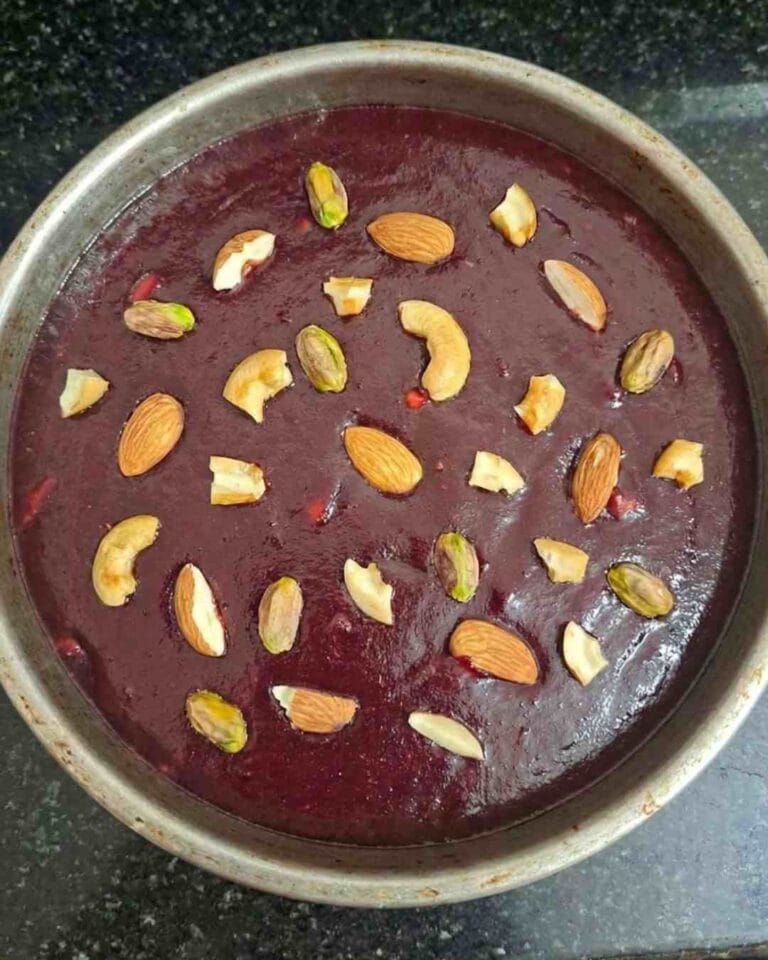
Thengai Therattipal Recipe is one of those traditional sweets I grew up watching at home, and every time I make it, the aroma takes me straight back to festive mornings. This classic coconut–jaggery sweet is simple, homely, and filled with pure comfort. I love how just a handful of ingredients — fresh grated coconut, palm jaggery, a little roasted moong dal, and ghee — come together to create such a rich, melt-in-the-mouth dessert.
The best part? You can enjoy it soft like therattipal or set it like a barfi by cooling and cutting it into pieces. The flavour deepens beautifully with palm jaggery, and the roasted nuts on top add that perfect festive touch. This is one sweet that never fails to bring warmth to the home, and I’m excited to share exactly how I make it with you.
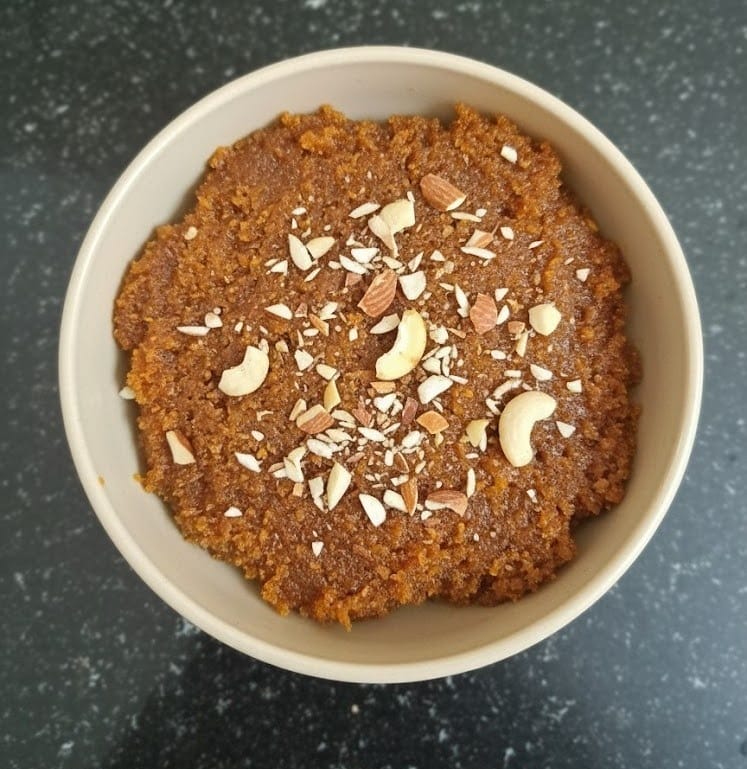
Thengai Therattipal Recipe (Coconut Thirattupal)
Ingredients
Equipment
Method
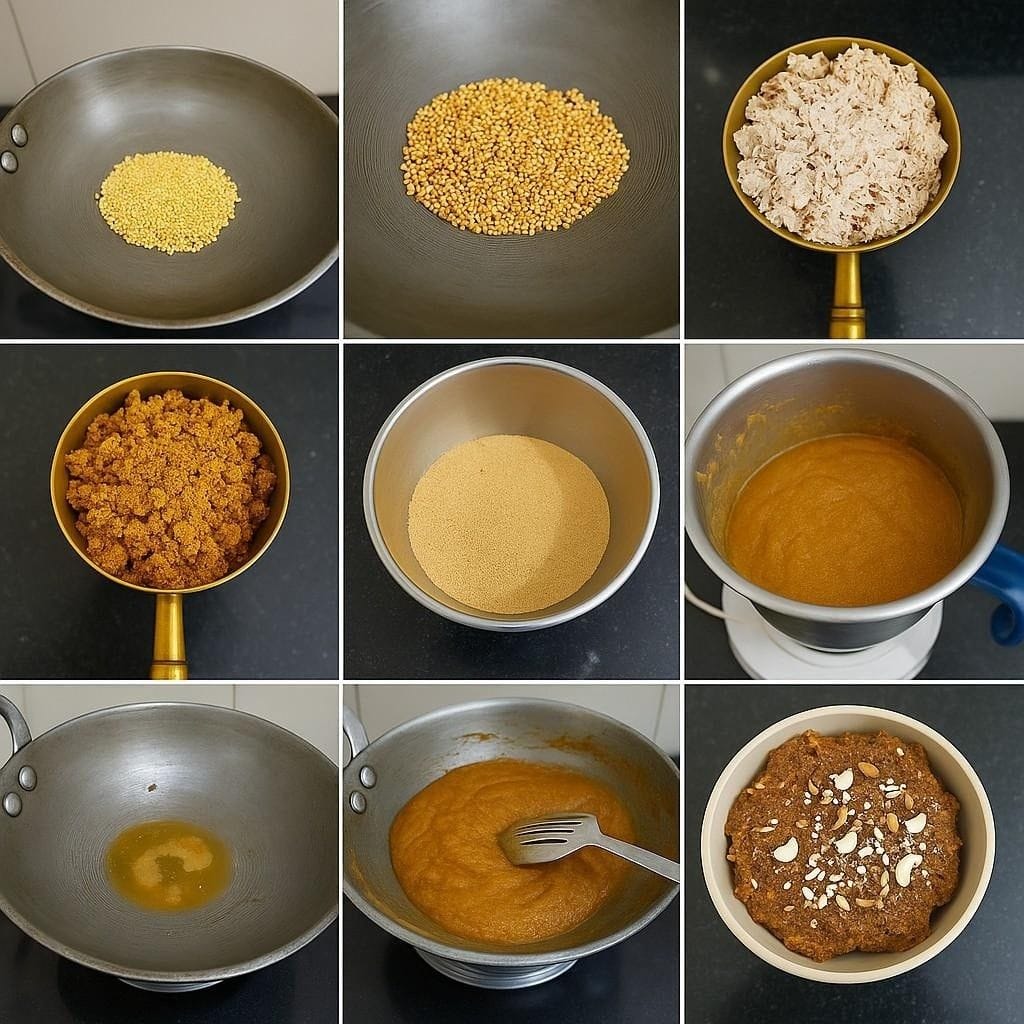
- Roast 2 tbsp of moong dal on low flame until aromatic and golden. Cool and grind into a fine powder.
- Take 1 cup freshly grated coconut and 1 cup palm jaggery.
- Add the roasted dal powder, coconut, and jaggery to a mixer jar and grind lightly. Add water little by little and grind into a thick paste.
- Heat a pan with 2 tbsp ghee. Roast cashews, raisins, and almonds until golden. Remove and set aside.
- Add the remaining 1 tbsp ghee to the same pan. Add the ground paste.
- Cook on low flame, stirring continuously, until the mixture thickens and starts to come together and add a pinch of cardamom powder
- Add half of the roasted nuts and mix well.
- Add 1/2 tbsp ghee, mix again, and switch off the flame.
- Serve warm as a soft therattipal or pour into a tray, cool, cut, and enjoy as barfi. Top with the remaining nuts.
Notes
- Adding rice flour helps the mixture bind better, especially if you’re setting it as barfi.
- Use palm jaggery (karupatti) for the best taste and color.
- Cook on low flame to avoid burning the coconut mixture.
- Texture depends on how long you cook — soft for therattipal, thick for barfi.
- Add ghee little by little for a richer flavor.
💡 Tips
- Add 2 cardamom pods while grinding the mixture, or add cardamom powder at the end for a fresh aroma.
- A small pinch of salt always enhances the sweetness and balances the overall flavor.
- You can use palm jaggery, normal jaggery, or country jaggery powder based on availability. Palm jaggery gives the deepest colour and flavour.
- Always use freshly grated coconut for the best texture and aroma.
- If the mixture becomes too thick while grinding, add water 1 tbsp at a time. Keep the paste thick.
- Cook on low flame to avoid burning the coconut mixture.
- Grease the tray with ghee if you plan to set it like barfi.
- Add saffron soaked in warm milk for extra flavour and a richer colour (optional).
- Store in an airtight container and refrigerate for 1–2 days. Warm slightly before serving.
FAQs for Thengai Therattipal Recipe
Can I use regular jaggery instead of palm jaggery?
Yes, you can use regular jaggery or country jaggery powder. Palm jaggery gives a deeper flavour and colour, but all three work well for this recipe.
Why do we add roasted moong dal in Thengai Therattipal?
Roasted moong dal adds thickness, aroma, and structure to the mixture. It helps the sweet bind better, especially when setting it as barfi.
Can I make this recipe without rice flour?
Yes, rice flour is totally optional. It simply helps the mixture set faster if you are making barfi. For soft therattipal, you can skip it.
My mixture is getting dry quickly. What should I do?
Add 1–2 tablespoons of water or ghee and stir gently. Do this only on low flame so the coconut doesn’t burn.
How to store Thengai Therattipal?
Store it in an airtight container in the refrigerator for 1–2 days. Reheat slightly before serving if it becomes firm.
Can I make Thengai Therattipal using coconut milk?
Yes, but the texture will be very different. It won’t become thick like the traditional version, it will become like payasam , because coconut milk has more liquid and less fibre. Fresh grated coconut is best for this recipe.
If you love simple sweets prepared with minimal ingredients, you may also like my [Ukkarai Recipe], another festival favourite.
❤️ Final Thoughts -Is the Thengai Therattipal Recipe really worth trying at home?
Absolutely yes — and here’s why. Thengai Therattipal is one of those timeless Traditional sweets that feels like pure home. It’s simple, honest, and made with ingredients we already have in the kitchen. Fresh coconut, jaggery, a little dal, and ghee… that’s all it takes.
What makes this sweet special is its authenticity. Every household has its own style, yet the soul of the recipe never changes — slow cooking on low flame, the aroma of coconut and ghee, and the moment it thickens into that soft, melt-in-the-mouth texture. It’s a traditional sweet that doesn’t need refined sugar or complicated techniques.
The Thengai Therattipal Recipe is also a healthier choice compared to many festival sweets. You’re using natural sweeteners like palm jaggery or country jaggery powder, fresh coconut packed with good fats, and moong dal for extra nutrition. It’s a dessert you can make confidently even for kids, elders, or guests.
And the best part? It’s genuinely easy. Anyone — even a beginner in cooking — can make this beautifully. As long as you keep the flame low and stir patiently, the sweet will turn out perfect every single time. Whether you enjoy it warm as therattipal or set it like barfi, it always brings that comforting, homemade feel.
Thengai therattipal can also be served, as a light dessert, after a meal like biryani. The light sweetness of coconut pairs well with the spicy richness of biryani. If you are planning a special lunch menu, then serving this sweet after biryani will go over well.If you tried this combination, tell me in the comments — I love hearing your meal ideas!
This is one recipe that carries memories, flavour, and tradition in every bite — a simple sweet that always makes you feel connected to home.