Thinai Sarkarai Pongal Recipe | Easy Foxtail Millet Sweet Pongal
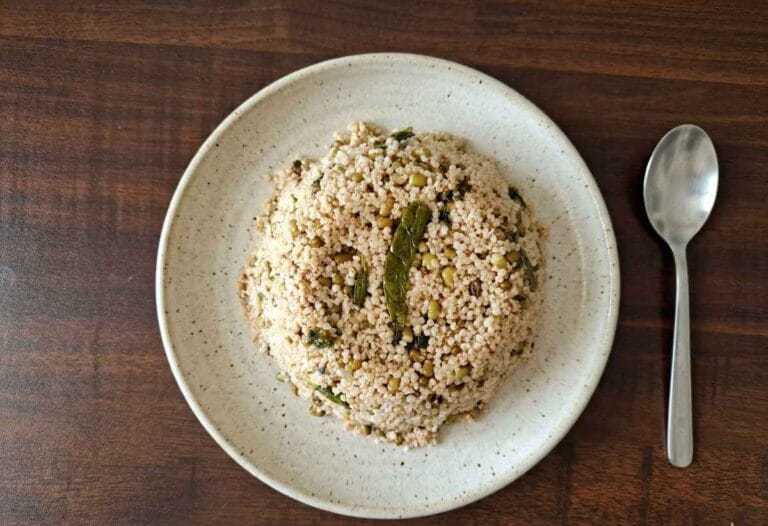
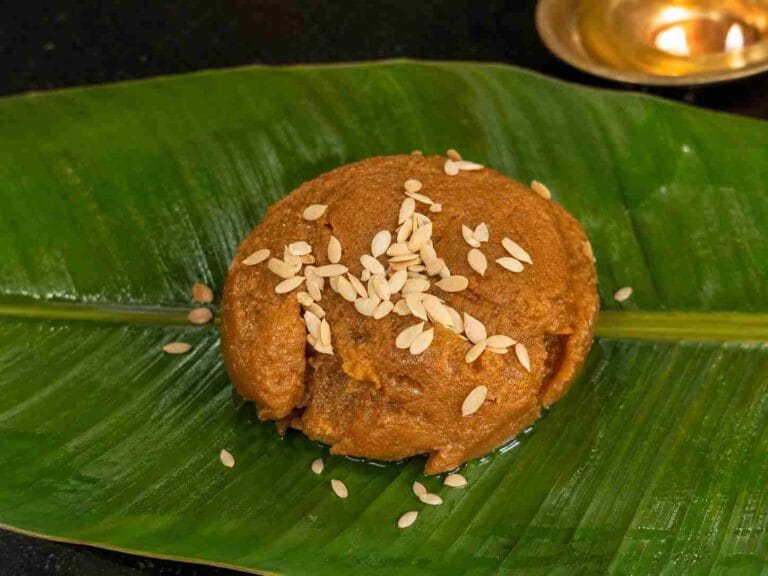
Thinai Sarkarai Pongal Recipe is one of the prasadam recipes I make during Aadi Masam, especially on Tuesdays and Fridays for pooja. Made with foxtail millet (thinai), moong dal, jaggery, and ghee, this simple sweet requires only a handful of everyday ingredients and comes together easily at home.
Unlike the traditional sweet pongal prepared with raw rice and milk, this version uses foxtail millet without milk. Even without milk, the soaked millet and moong dal cook into a soft, creamy texture, making this healthy millet pongal just as delicious and satisfying.
I usually soak the millet and moong dal for about 4 hours, so I prefer cooking it in a regular pot instead of a pressure cooker. It cooks quickly, gives me better control over the consistency, and makes a perfect prasadam for festivals, poojas, or whenever I want a wholesome homemade sweet.
What is Thinai Sarkarai Pongal?
Thinai Sarkarai Pongal is a South Indian sweet made with foxtail millet (thinai), moong dal, jaggery, ghee, cardamom, cashews, and raisins. It is a healthier alternative to the classic rice-based sakkarai pongal and is commonly prepared as prasadam during poojas, festivals, and special occasions.
Why you’ll love this recipe
- Made with foxtail millet instead of rice
- Naturally sweetened with jaggery
- No milk required
- Soft, creamy, and rich in flavor
- Perfect for Aadi Masam, Navratri, Pongal, Vinayagar Chaturthi, and other poojas
- Can be made on the stovetop or in a pressure cooker
- Beginner-friendly recipe with simple pantry ingredients
- Ready in about 30 minutes (after soaking)
Fox Millet (Thinai) Benefits
Foxtail millet (Thinai) is a nutritious whole grain that can be a healthy alternative to white rice. When included as part of a balanced diet, it may offer the following benefits:
- Rich in dietary fiber, which may support healthy digestion and help you feel full for longer.
- Provides complex carbohydrates that may support steady energy levels throughout the day.
- Contains iron, which contributes to normal oxygen transport in the body.
- A good source of magnesium and phosphorus, which support normal bone and muscle function.
- Contains zinc and iron, nutrients that contribute to normal immune function.
- Naturally gluten-free, making foxtail millet suitable for many gluten-free diets.
- Can be a healthier alternative to white rice in traditional South Indian recipes like Thinai Sarkarai Pongal.
- Naturally contains plant-based nutrients that support overall health when enjoyed as part of a balanced diet.
- May help increase whole grain intake when replacing refined grains in everyday meals.
Ingredients for Thinai Sweet Pongal
- 1 cup Fox Millet (Thinai) (100 g)
- ½ cup Moong Dal (Split Yellow Lentils / Pasi Paruppu) (50 g)
- 2 cups Jaggery Powder or Country Jaggery (adjust to taste)
- 3 cups Water (for cooking the millet and moong dal)
- 1 cup Water (for preparing the jaggery syrup)
- 1 tablespoon Cardamom Powder
- 1 tablespoon Ghee
- 10 Cashew Nuts
- 10–15 Raisins
- 1 pinch Salt
How to Make Thinai Sarkarai Pongal (Step-by-Step)
Step 1: Wash and Soak the Millet
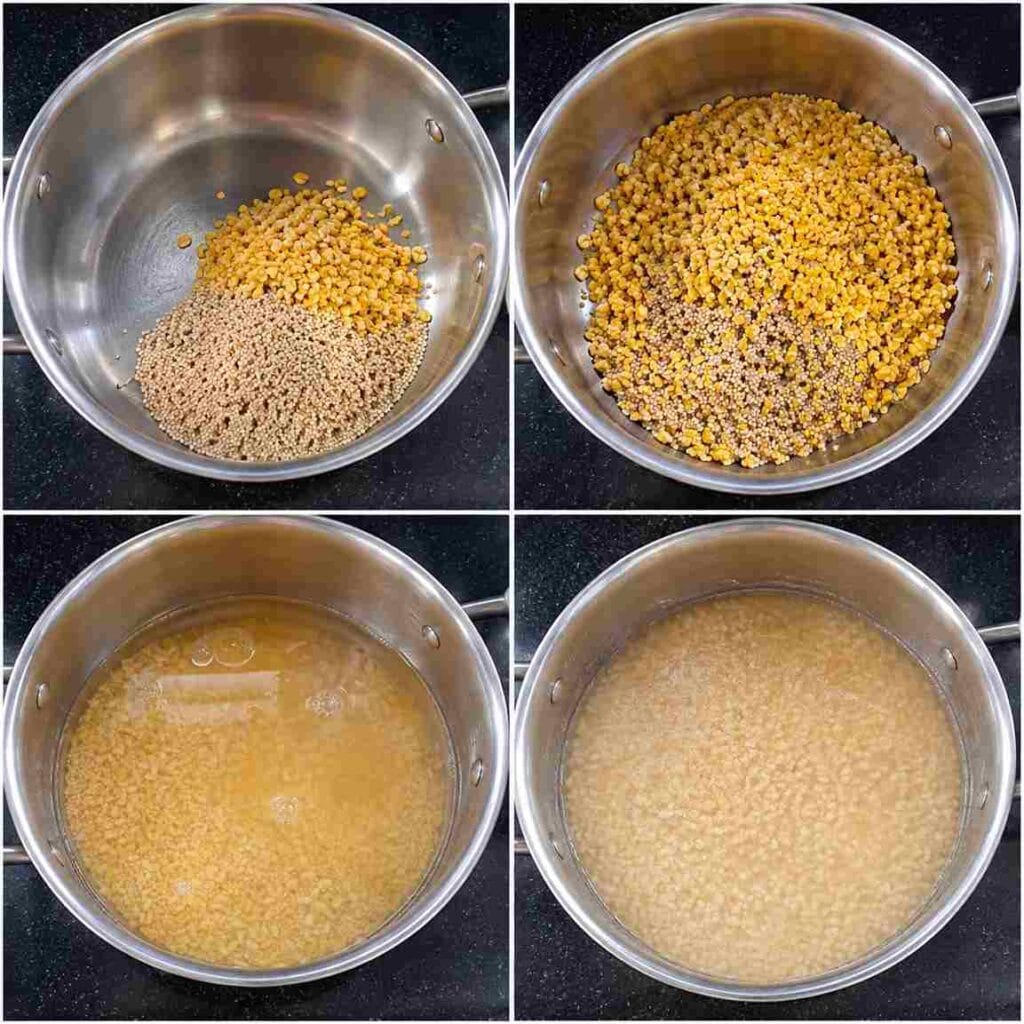
Wash the Thinai (foxtail millet) and moong dal thoroughly 2–3 times. Soak them in enough water for 4 hours. If you’re short on time, soaking for 30 minutes also works.
Step 2: Cook Until Soft
Drain the soaked millet and dal, then transfer them to a saucepan. Add 3 cups of water and a pinch of salt, then cook on medium heat until both become soft and well cooked.
Step 3: Prepare the Jaggery Syrup
Meanwhile, add the jaggery and 1 cup of water to another pan. Heat until the jaggery dissolves completely, then strain the syrup to remove any impurities.
Step 4: Add the Jaggery Syrup
Pour the strained jaggery syrup into the cooked Thinai and moong dal mixture. Mix well and cook on low heat for 5–7 minutes until everything comes together.
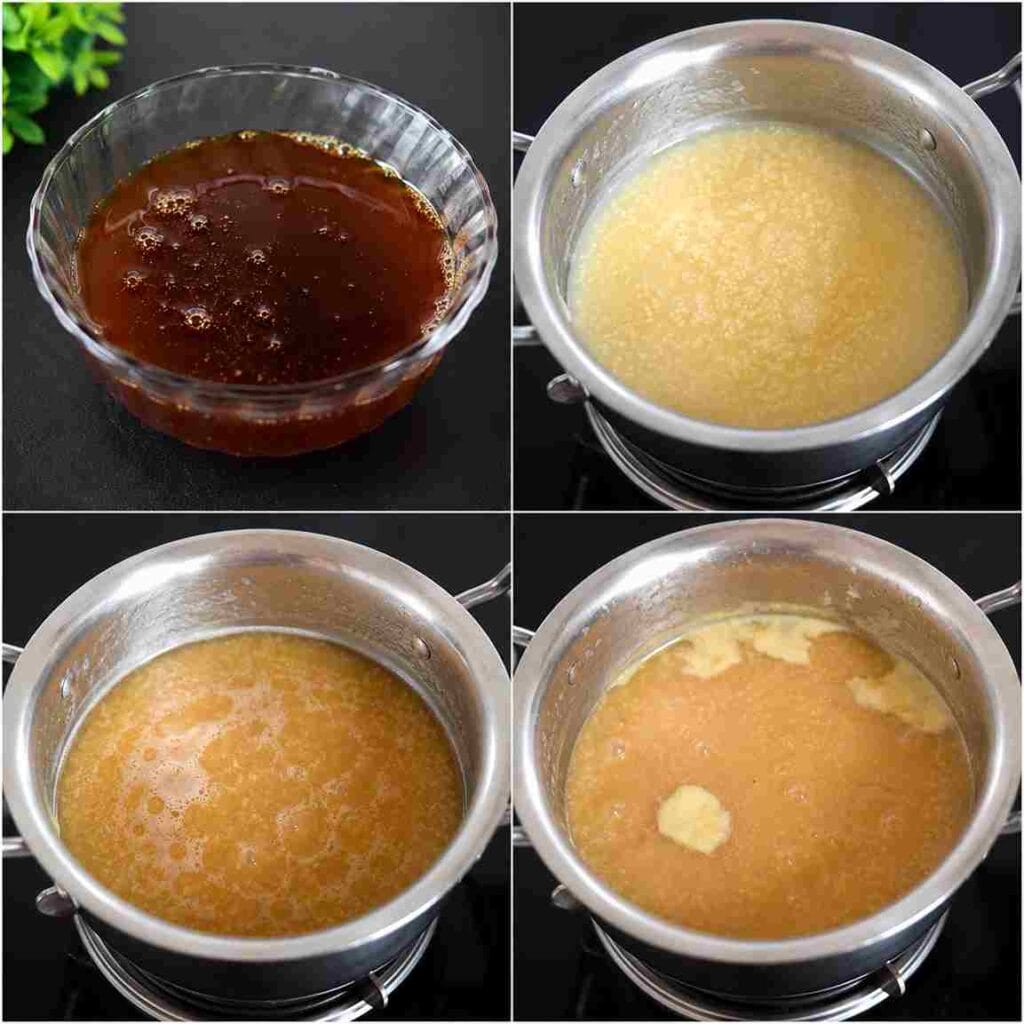
Step 5: Add Cardamom and Ghee
Stir in the cardamom powder and 1 tablespoon of ghee. Continue cooking for another 2–3 minutes until the pongal reaches a soft, slightly thick consistency.
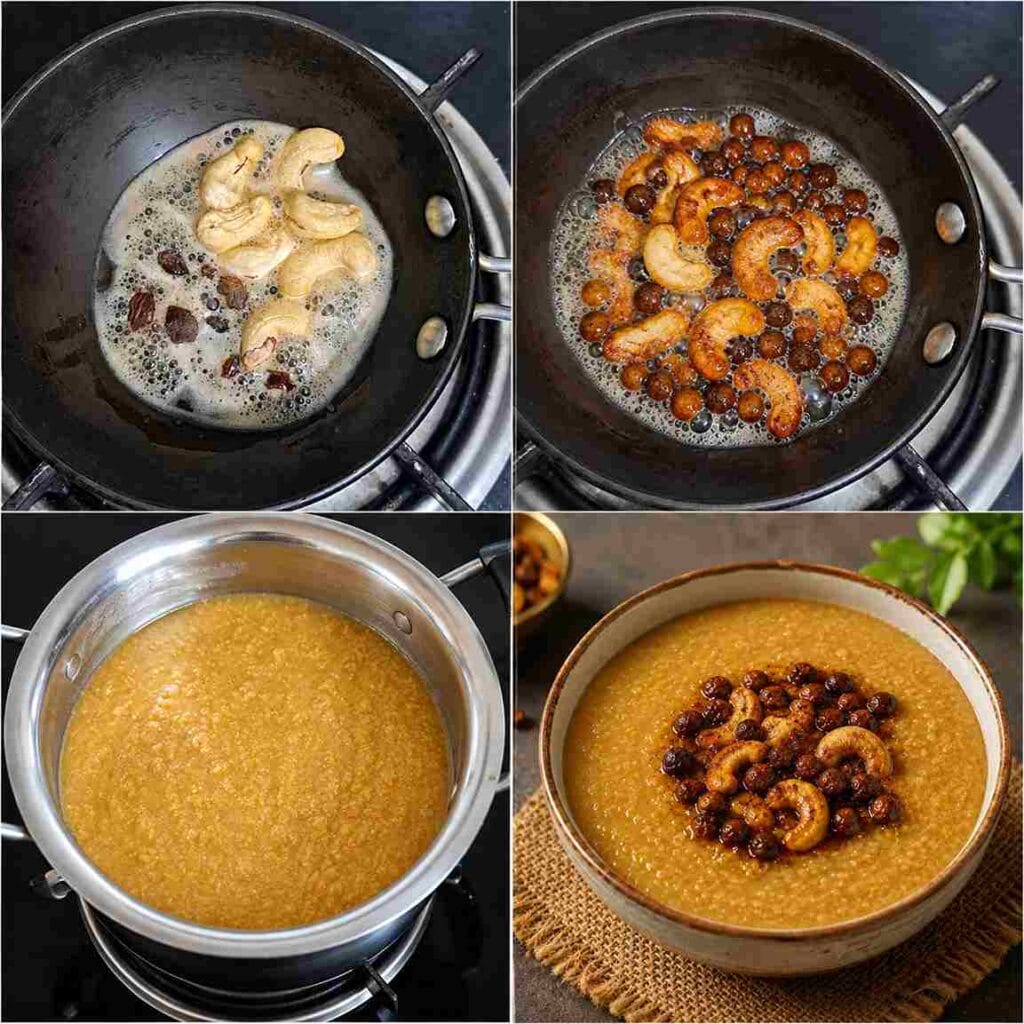
Step 6: Roast the Cashews and Raisins
Heat 1 tablespoon of ghee in a small pan. Fry the cashews until golden, then add the raisins and cook until they puff up.
Step 7: Finish and Serve
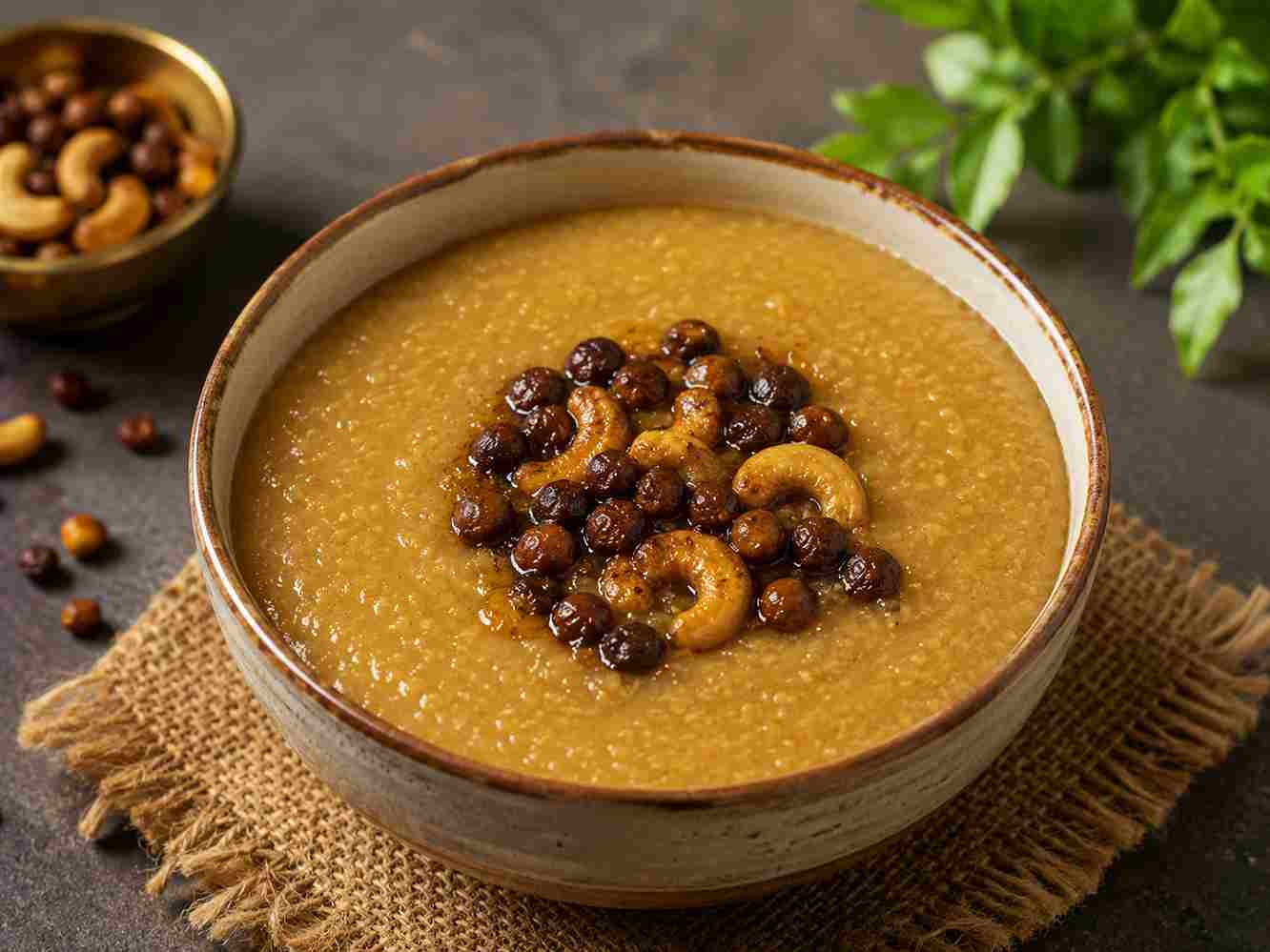
Pour the ghee-roasted cashews and raisins over the Thinai Sarkarai Pongal. Mix gently or serve them on top and enjoy warm as prasadam or as a festive South Indian sweet.
Expert Tips for Thinai Sweet Pongal
- I prefer soaking instead of roasting. While many recipes dry roast Thinai before cooking, I prefer soaking it for 4 hours. It cooks evenly, develops a soft texture, and avoids the slightly roasted flavor that can occur if the millet is over-roasted.
- Soak the Thinai for better texture. Soaking the foxtail millet for about 4 hours helps it cook faster and gives the pongal a soft texture.
- Wash the millet thoroughly. Rinse the Thinai well before soaking to remove dust and impurities. Cook until well done.
- The Thinai and moong dal should be completely cooked before adding the jaggery syrup.
- Always strain the jaggery syrup. Straining removes sand or other impurities commonly found in country jaggery.
Variations
- Add milk: For a richer version, replace 1 cup of water with milk after the millet and moong dal are cooked. Simmer gently before adding the jaggery syrup.
- Use coconut milk: Add thick coconut milk towards the end of cooking for a mild coconut flavor. Avoid boiling after adding coconut milk to prevent it from curdling.
- Pressure cooker method: Pressure cook the soaked Thinai and moong dal for 4–5 whistles. Once cooked, add the strained jaggery syrup and continue with the remaining steps.
- Add edible camphor: For a temple-style aroma, add a tiny pinch of edible camphor (pachai karpooram) along with the cardamom. Use only a very small quantity. Use palm jaggery: Replace regular jaggery with palm jaggery (Karupatti) for a deeper flavor and a darker-colored pongal. Add more ghee: For festive occasions, drizzle an extra teaspoon of ghee before serving for enhanced aroma and richness.
You May Also Like These Festival Recipes
If you’re looking for more traditional South Indian sweets to prepare for poojas and festivals, here are a few recipes you may enjoy:
- Karthigai Deepam Sweets
- Aadi Kummayam Recipe
- Easy Sweet Paniyaram Recipe
- Rava Kesari Recipe
- Nei Appam Recipe (Sweet Ghee Appam)
FAQs for Thinai Sarkarai Pongal
Can I prepare Thinai Sarkarai Pongal in advance for pooja?
Yes. You can prepare it a few hours before your pooja. Keep it covered and reheat gently with a splash of hot water or milk if it thickens before serving.
Which type of jaggery gives the best flavour?
Country jaggery (Nattu Vellam) gives a rich, traditional flavour and deep colour. You can also use jaggery powder if that’s what you have on hand.
Why do I soak Thinai before cooking?
Soaking helps the foxtail millet cook evenly and reduces the cooking time. It also gives the pongal a soft texture without the need for pressure cooking.
What can I serve with Thinai Sarkarai Pongal?
It is traditionally served on its own as prasadam or as a festive dessert after a meal. Some families also enjoy it warm with a little extra ghee.
Thinai Sarkarai Pongal Recipe | Foxtail Millet Sweet Pongal
Ingredients
Equipment
Method
- Wash the foxtail millet and moong dal thoroughly. Soak for 4 hours or at least 30 minutes.
- Drain the soaked millet and dal. Add them to a saucepan with 3 cups of water and a pinch of salt.
- Cook on medium heat until both become soft and well cooked.
- Meanwhile, heat the jaggery with 1 cup of water until dissolved.
- Strain the jaggery syrup to remove impurities.
- Pour the strained jaggery syrup into the cooked millet mixture and stir well.
- Cook for 5–7 minutes until the pongal comes together.
- Add the cardamom powder and mix well.
- Heat ghee in a small pan and roast the cashews until golden. Add the raisins and fry until they puff up.
- Pour the ghee-roasted cashews and raisins over the pongal.
- Mix gently and serve warm.
Notes
Did You Make This Recipe?
If you tried this Thinai Sarkarai Pongal Recipe, I’d love to hear how it turned out! Leave a comment and rating below to share your experience.
If you recreate this recipe, tag @indianrecipestoday on Instagram so I can see your delicious creations. Don’t forget to subscribe to our newsletter for more traditional South Indian recipes, festival specials, and healthy millet recipes delivered straight to your inbox.
Happy Cooking!!!!