Tiffin Sambar Recipe | Hotel Style Sambar for Idli & Dosa (Tamil Style)
⭐ About This Recipe
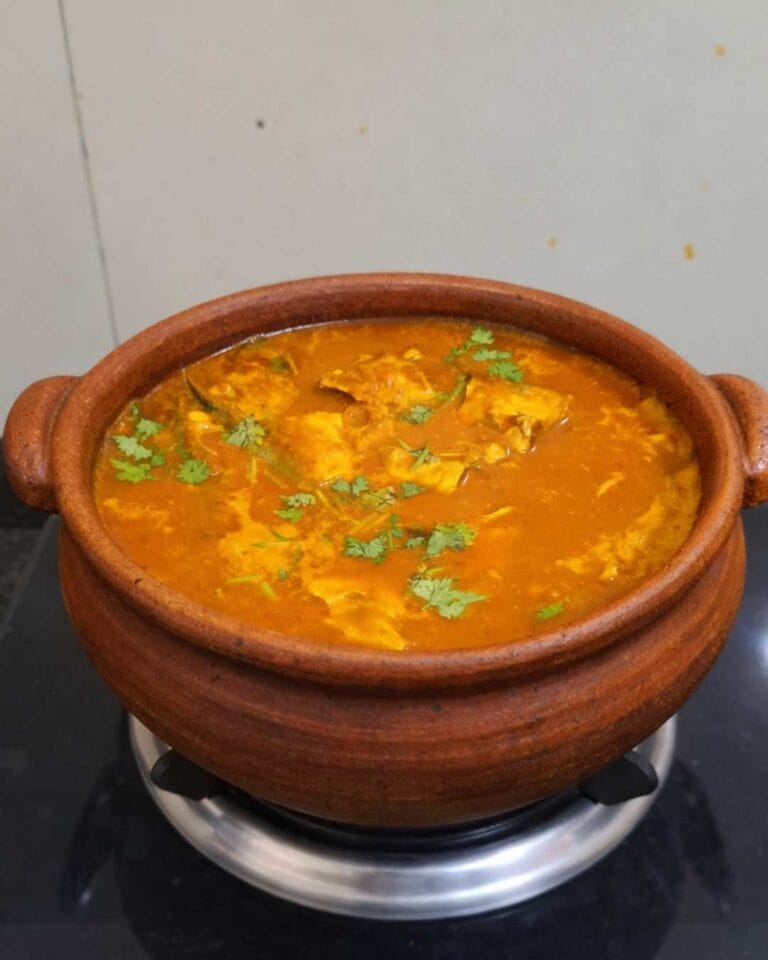
Tiffin Sambar Recipe has always been a favourite in our home, especially on lazy weekend mornings when idli or dosa feels incomplete without that thick hotel-style sambar for idli and dosa. This is not the regular everyday sambar , this version is rich, creamy and full of flavour, just like the ones we get in restaurants.
I learned this hotel style tiffin sambar from trial and error over the years, and one thing I realised is that the secret is in the roasted dal & dhaniya paste. When the masala is slow roasted and ground, the aroma and taste immediately change the whole sambar. Also, adding a little ghee in the end gives that authentic “hotel smell” that makes everyone ask for one more ladle of sambar.
One more thing I personally love about this recipe is — you don’t need to add any store-bought powders like sambar powder or chilli powder. The home-ground masala paste itself gives all the flavour and colour, which makes this sambar feel pure, fresh and comforting.
In Tamil homes, this is lovingly called டிபன் சாம்பார் / Tiffin Sambar, and it goes perfectly with idli, dosa, paniyaram, pongal and even chapati sometimes. It’s thick, smooth and mildly spiced — not too strong like lunch sambar. That’s why kids also love it.
If you are someone who enjoys sambar like restaurant style, then you will love this recipe. The dal turns soft and creamy, the masala blends beautifully, and the tempering with ghee takes the flavour to the next level. I personally feel this is one recipe that makes an ordinary breakfast feel like a hotel breakfast at home.
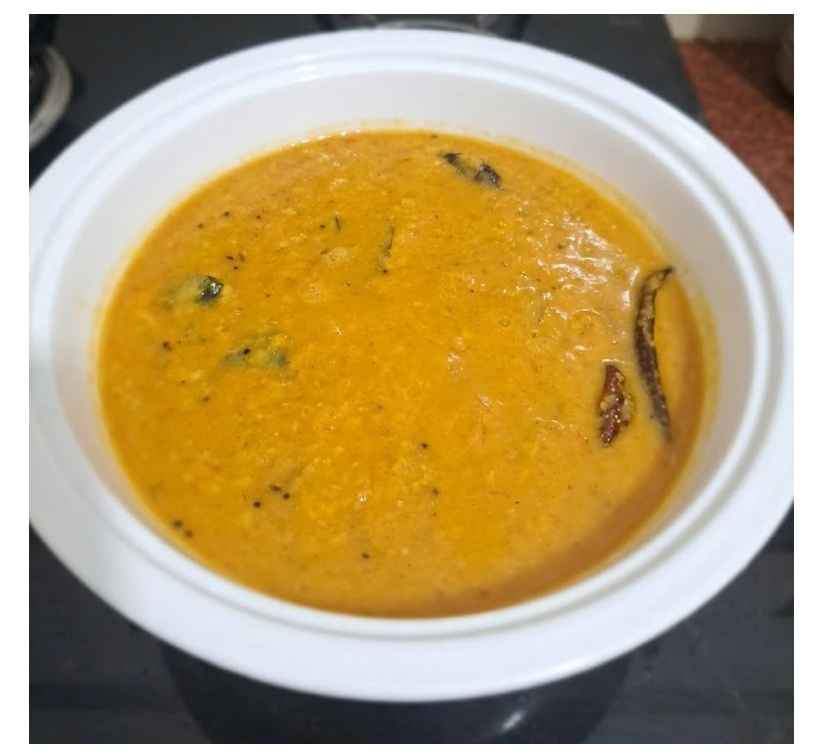
Tiffin Sambar Recipe | Hotel Style Sambar for Idli & Dosa
Ingredients
Equipment
Method
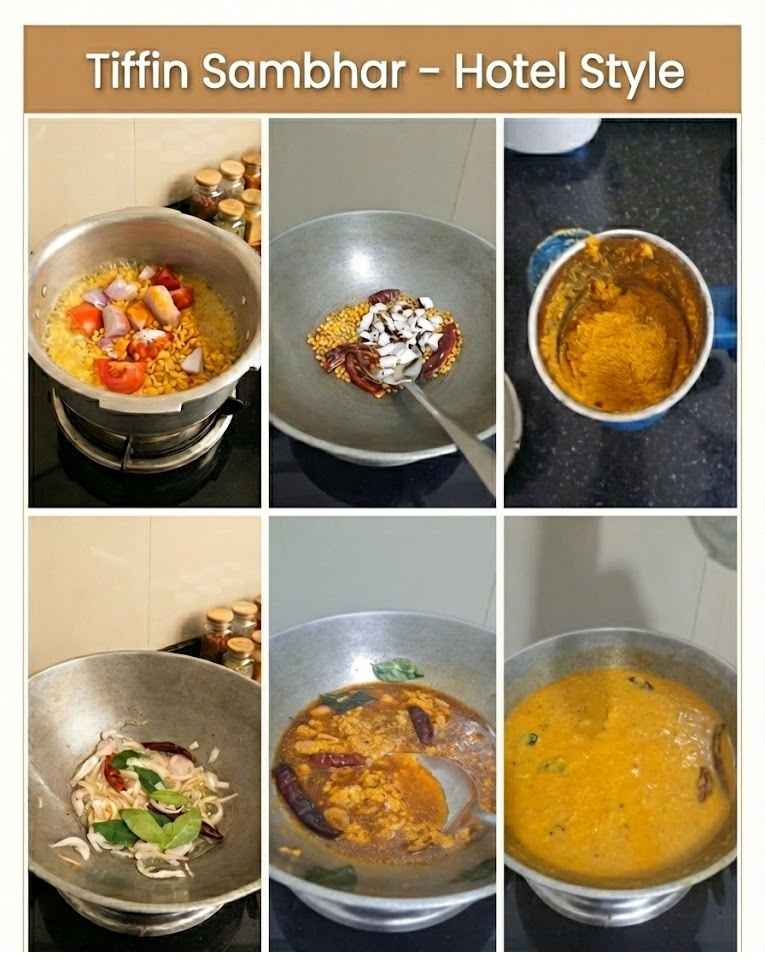
- Wash and Soak Toor dal for 1 hour.
- Add soaked dal, 1 tomato(sliced), 1 onion (sliced), turmeric, salt , hing powder and water to pressure cooker.
- Cook for 5–6 whistles until soft.
- Meanwhile, dry roast chana dal, urad dal and coriander seeds for 3 minutes.
- Add red chillies and grated coconut, roast till aromatic.
- Cool and grind to a smooth paste with little water.
- Extract tamarind water and keep aside.
- Heat ghee in a wide pan.
- Add mustard let it splutter and cumin.
- Add 2 dry red chillies broken.
- Add sliced onion and curry leaves; saute till translucent.
- Add the grounded masala paste and saute for 3 minutes.
- Add tamarind water and boil for 2 minutes. (dont over boiled the tamrind water )
- Add cooked dal mixture and mix well.
- Close lid and cook for 5–10 minutes until thick.
- Add a pinch of jaggery and switch off.
- Finish with 1/2 tbsp ghee before serving.
Notes
💡 Tips & Variations
- Roast the dals and coriander seeds on low flame — if they turn dark, the flavour changes.
- Grinding the masala to a smooth paste gives the thick hotel-style consistency.
- Always saute the masala paste in ghee before adding tamarind — this step brings the restaurant aroma.
- Don’t skip jaggery, it balances the sourness and enhances the flavour.
- Add extra hot water only if the sambar becomes too thick after boiling.
- If serving for dosa, make the sambar slightly thin; for idli, keep it thick.
- Add 1/2 tbsp ghee at the very end for that “hotel touch”.
- You can adjust the spice level by adding or reducing red chillies in the roasted masala.
- Though it is mainly made for idli and dosa, this Tiffin Sambar also tastes amazing with white rice — especially for kids.
⭐ FAQs for Tiffin Sambar Recipe
Can I add vegetables to this sambar?
Yes — though traditional tiffin sambar is often simpler, you can add vegetables like potato, carrots, beans, drumstick, or whatever you have. But avoid over-cooking vegetables; otherwise they may turn mushy.
Do I need to add sambar powder or chilli powder for this recipe?
No, as you already know, this recipe uses a home-ground masala paste made from roasted dals, coriander seeds, chillies and coconut. That paste gives enough flavour and spice, so store-bought sambar powder or extra chilli powder isn’t necessary. That’s one of the strengths of this recipe.
What should I serve this sambar with?
This sambar pairs beautifully with soft idli, dosa, paniyaram , white Pongal or medu vada. You can also enjoy it with plain white rice — gives a comforting, homely meal (especially good on rainy or cold days).
How can I adjust the spice level?
Since you are using home-ground masala paste, you can control spices easily. If you want mild sambar (for kids or light appetite), reduce the number of red chillies in the paste or skip extra chilli powder. For a stronger flavour, you can add an extra chilli or more masala paste.
What’s the difference between Tiffin Sambar and regular lunch sambar?
Tiffin sambar is usually thinner, simpler and lighter — made without heavy vegetables or rich gravies. It’s meant for breakfast/tiffin time paired with idli/dosa/medu vada. Lunch sambar on the other hand may be richer, thicker, and often includes more vegetables or heavier spices — intended as a meal with rice.
How to store this sambhar?
Let the sambhar cool down completely, then store it in an airtight container in the fridge for 1–2 days. When reheating, add a little water if it has thickened and warm it well before serving.
Why do we add jaggery to this sambhar?
A small pinch of jaggery balances the sourness of tamarind and enhances the flavour. It will not make the sambar sweet — it just gives a smooth, hotel-style taste.
Should tamarind water be boiled for a long time?
No. Do not boil tamarind water for too long — boiling for 1–2 minutes is enough. If boiled too much, the sambhar can turn dark and slightly bitter.
If you enjoyed this Tiffin Sambhar recipe, don’t miss my soft chapathi recipe — it pairs really well for breakfast or dinner.
❤️ Final Thoughts
I hope you give this Tiffin Sambhar a try in your kitchen. It’s such a simple recipe, but the taste feels like you’ve brought the hotel breakfast menu home. Toor dal has so many health benefits, which makes this Tiffin Sambhar both tasty and nourishing. If you’re someone who loves soft idli, crispy dosa or hot paniyaram on a weekend morning, this sambhar will make the whole meal feel complete.
Don’t worry too much about getting it “perfect” on the first try — once you make the roasted masala paste and add that final touch of ghee, the flavour comes together on its own. And trust me, the smell when it cooks… it’s the kind that makes everyone ask, “What’s cooking today?”
If you make this recipe, do come back and tell me how it turned out for you. It always makes me happy to hear your experience, and I’d love to know what you paired this sambhar with — idli, dosa, paniyaram or even chapathi. Until then, happy cooking and happy eating.