Ingredients
Equipment
Method
Step 1: Prepare the Paste
- Heat 1 tsp oil in a pan.
- Add toor dal, chana dal, urad dal, cumin, pepper, and fenugreek.
- Roast on low flame till golden brown.
- Add shallots, garlic, and grated coconut.
- Saute till aromatic. Cool completely and grind to a smooth paste.
Step 2: Make the Kuzhambu
- Heat gingelly oil in a wide kadai over medium-low flame. Gingelly oil gives the authentic aroma and taste, so don’t replace it with any other oil.
- Add fenugreek seeds and a pinch of asafoetida.
- Let the fenugreek slowly turn golden. This step adds depth and helps balance the bitterness of manathakkali vathal.
- Add chopped onions, garlic cloves, and curry leaves.
- Saute gently until the onions turn soft and slightly golden and the raw smell of garlic disappears. Keep the flame low to avoid burning.
- Add the chopped tomatoes and cook them on medium-low flame . Now add Redchilli powder , corriander powder and turmeric powder. Mix well and cook gently, stirring continuously, until the raw smell of the spices disappears and oil starts separating from the mixture.
- This step is very important, as it forms the flavourful base for the kuzhambu.
- Add the prepared vatha kuzhambu paste and mix well. Cook on low flame for 2–3 minutes, stirring continuously, until the paste blends well with the tomato base and releases a nice aroma.
- Pour in the tamarind extract and add salt to taste ,mix everything well,
- Let the kuzhambu boil slowly on low flame.
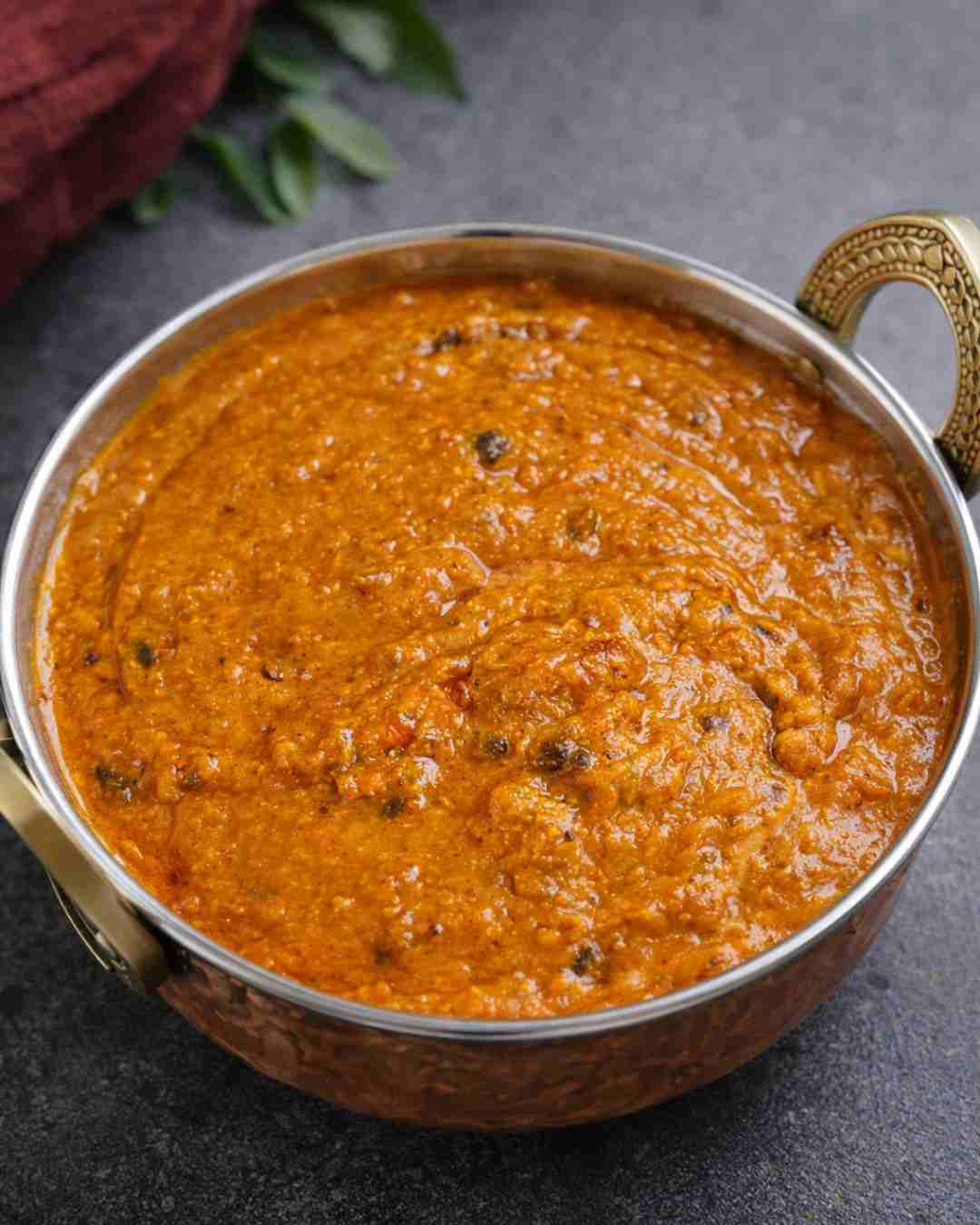
- Cook until it thickens to the right consistency and oil floats on top. This slow boiling enhances the flavour and removes the raw tamarind taste.
- Finally, add a small piece of jaggery, mix well, and simmer for 2 more minutes.
- Switch off the flame and allow the kuzhambu to rest for a few minutes before serving.
- The flavours settle beautifully during this time.
Step 3: Tempering
- Heat gingelly oil in a tadka pan.
- Add manathakkali vathal and fry till crisp.
- Pour this tempering over the kuzhambu and mix gently.
Notes
- Always cook vatha kuzhambu on low flame for best flavour.
- Oil separating on top indicates the kuzhambu is perfectly cooked.
- Adjust tamarind quantity based on sourness.
- Manathakkali vathal already contains salt, so add salt carefully in the beginning. Always add a little salt first, taste after the kuzhambu boils, and adjust only if needed.
- Manathakkali vathal should always be fried separately and added at the end. Adding it earlier can make the kuzhambu too sour.