Ingredients
Equipment
Method
Marinate the Fish
- In a bowl, add Sankara fish , turmeric powder, lemon juice, and salt. Mix well and keep aside for 10 minutes.
- This step helps remove any raw fish smell.
Prepare Tamarind Extract
- Soak tamarind in hot water. Extract the juice and keep aside.
Make Masala Paste
- Grind the tomato into a smooth paste. Add kulambu masala (or spice powders) and blend again. Keep aside.
Prepare the Base
- Heat oil in a pan. Add fenugreek seeds and let them splutter.
- Add sliced onions, green chillies, and curry leaves. Sauté until onions turn light brown.
Cook the Masala
- Add the prepared masala paste. Saute well in oil for about 5 minutes.
- Pour in a little water (I added the "masala water" from my blender) and cook until the raw smell of the spices is completely gone.
- Add chopped coriander leaves at this stage.
Add Tamarind Water
- Pour in the tamarind extract and add required water for kulambu consistency.
- Cover and allow it to boil well for 12–15 minutes until the rolling boil comes here gravy blends and thickens.
Add Fish & Cook
- Lower the flame and gently add the marinated fish pieces.
- Cook for about 10 minutes without stirring too much.
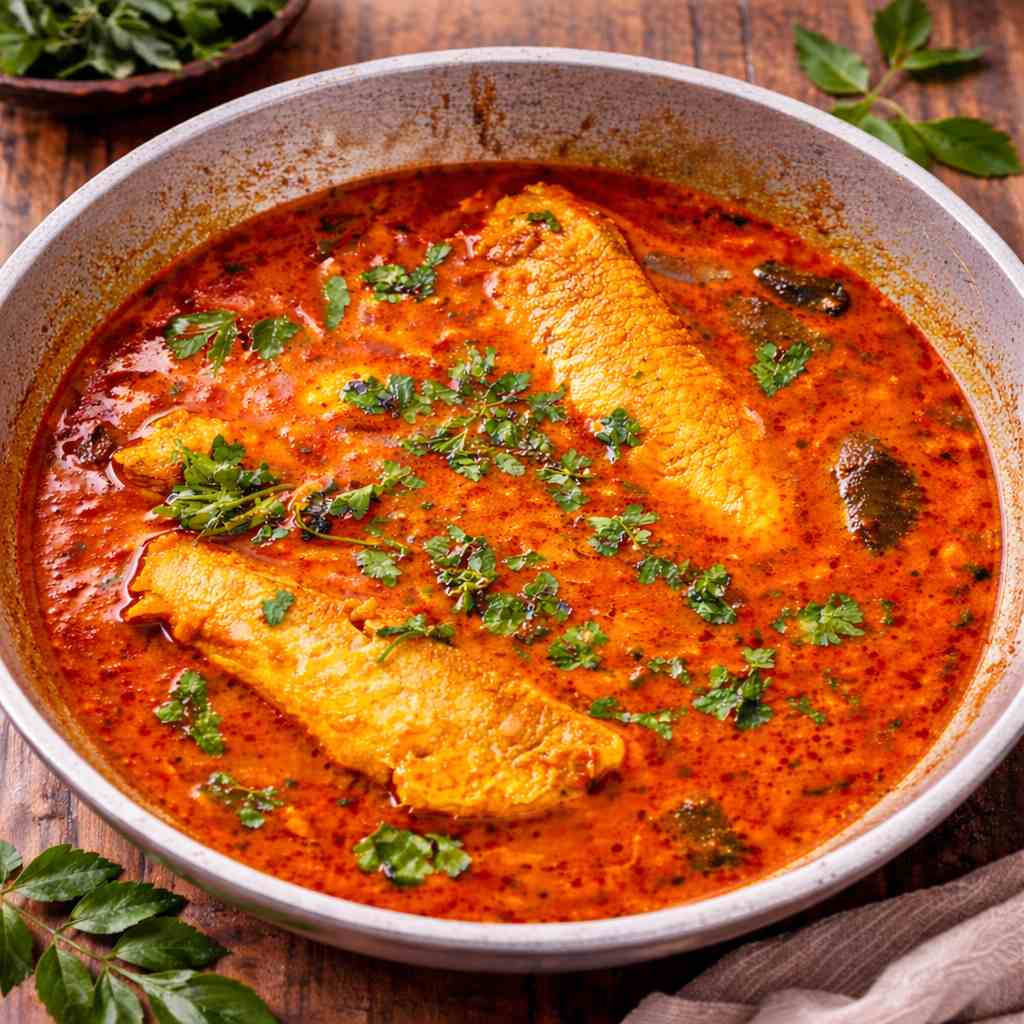
- Garnish with coriander leaves, cover, and switch off the flame.
Notes
- The Low Flame Secret: Always turn your stove to a low flame immediately after adding the marinated fish. Sankara (Red Snapper) is a delicate fish; high heat or vigorous stirring will cause the pieces to break. Let it gently simmer to stay whole and juicy.
- Consistency is Key: You are the boss of your gravy! If you prefer a thick, coating masala, use less water with your tamarind extract. For a thinner, traditional "oatru" style kulambu to mix with lots of rice, add an extra half-cup of water during the rolling boil stage.
- The Fenugreek Balance: While Fenugreek seeds (Vendhayam) are the soul of a good fish curry and provide that signature aroma, be careful with the quantity. Stick to the 1/4 tbsp mentioned; adding too much will make a bitter aftertaste to the delicate fish.
- The "Resting" Rule (Oora Vaikkayil): Fish curry is one of the few dishes that actually tastes better 3–4 hours after cooking than it does fresh off the stove. The Sankara fish needs time to absorb the tanginess of the tamarind. If you can, make this in the morning for a lunch feast.
- The Oil Choice: For that authentic Tamil Nadu "Mess" style flavor, always use Gingelly Oil (Nalla Ennai/Sesame Oil). It has a higher smoke point and a nutty flavor that perfectly balances the acidity of the tamarind and the heat of the chili
- Tomato Selection: Since this is a "No Coconut" recipe, the body of your gravy comes from the tomatoes. Use well-ripened, soft tomatoes (country tomatoes or "Nattu Thakkali" are best) for the puree. They provide a natural sweetness and a thicker texture compared to firm salad tomatoes.