Go Back
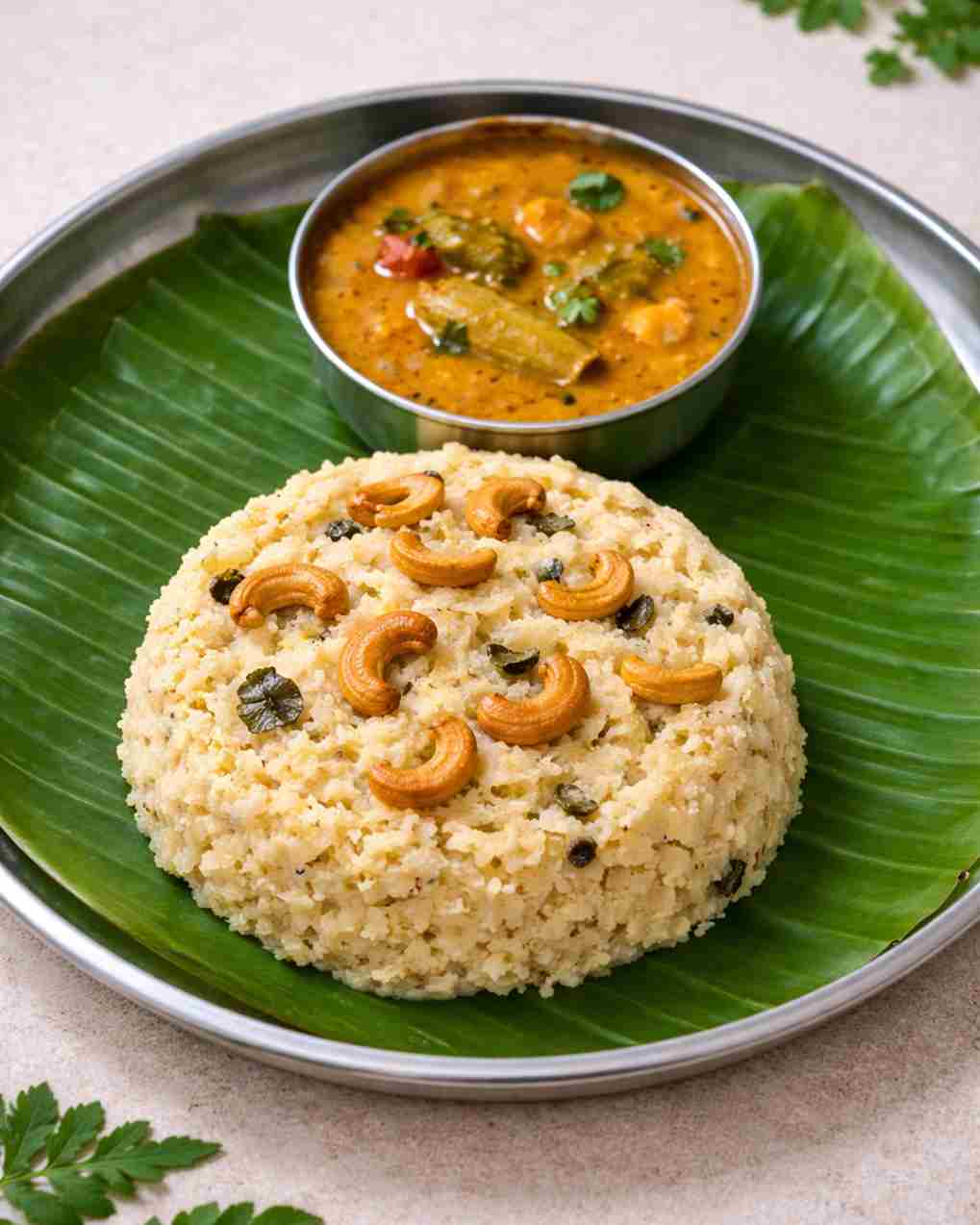
Ven Pongal served on a banana leaf with roasted cashews and a bowl of sambar

Ven Pongal Recipe (வெண் பொங்கல்)

This easy Ven Pongal recipe is a classic South Indian breakfast that's quick to make, protein-rich, and perfect for beginners.
Prep Time 30 minutes
Cook Time 10 minutes
Total Time 40 minutes
Servings: 4
Course: Breakfast
Cuisine: south indian

Ingredients
  

  • 1 cup raw rice (150 gms)
  • 1/2 cup split yellow moong dal (125 gms)
  • 1 tablespoon ghee
  • 1 tablespoon oil
  • 1 teaspoon black peppercorns
  • 1 teaspoon cumin seeds
  • 1 sprig curry leaves
  • 1 small piece of grated ginger
  • Salt to taste
  • 2 1/2 cups water (350ml)
  • Roasted cashews for garnish

Equipment

  • 1 Pressure Cooker

Method
 

  1. Rinse the rice and moong dal together, then soak for about 30 minutes and drain.
  2. In a pressure cooker, heat the ghee and oil. Add the peppercorns, cumin seeds, curry leaves, and grated ginger. Saute for a minute.
  3. Add the soaked and drained rice and moong dal to the cooker. Mix gently so the grains are coated with the tempering.
  4. Pour in 2½ cups of water and add salt to taste. Mix well and bring it to a rolling boil.
  5. Close the pressure cooker lid and cook on medium flame for 2–3 whistles.
  6. Switch off the flame and allow the pressure to release naturally.
  7. Once opened, gently mash the ven pongal using a ladle to get that soft, creamy texture.
  8. In a small pan, heat a little ghee and roast the cashews until golden. Add them to the pongal and mix well.
  9. Serve hot with sambar or chutney.

Notes

  • Always soak the rice and moong dal for at least 20–30 minutes. This helps the ven pongal cook faster and turn soft.
  • Water quantity is very important. If the pongal looks thick after cooking, you can add a little hot water and mix well.
  • Let the pressure release naturally. Do not open the cooker immediately, or the texture may not be smooth.
  • Ven pongal should be soft and slightly mushy. If it looks dry, add warm water and adjust salt.
  • Use fresh ginger and curry leaves for the best aroma and flavor.
  • Best served hot. As it cools, pongal tends to thicken.