Kodo Millet Upma Recipe (Varagu Upma) | Easy 15-Minute Pressure Cooker Breakfast
Looking for a healthy South Indian breakfast that gets ready in just one whistle? This Kodo Millet Upma Recipe, also called Varagu Upma or Varagu Arisi Upma, is one of my favorite healthy South Indian breakfast recipes to make on busy mornings. It comes together in just 15 minutes using a pressure cooker and needs only one whistle, which makes it perfect for beginners and working-day cooking.
Some days I need to cook only for myself, and on those days I never feel like doing big preparation work like soaking for hours, grinding batter, or making too many side dishes. That is when I usually make this varagu upma. It is simple, quick, and at the same time feels filling and comforting.
Upma is already a very common breakfast in most South Indian homes, but what I like in this recipe is using varagu arisi instead of regular rava. Kodo millet cooks surprisingly fast, and with the right water ratio, it comes out soft and separate without becoming sticky. I used just 1 cup of varagu arisi with 1.5 cups water and cooked it for only one whistle in the pressure cooker.
Most of the time I eat this kodo millet upma without chutney or any side dish because the tempering itself gives nice flavor. The ginger, curry leaves, onion, green chilli, and vegetables make it taste really comforting even without masala powders. Sometimes I make it plain, and sometimes I add carrot, peas, and beans depending on what vegetables are available at home.
Another thing I liked while making this pressure cooker millet upma was that I didn’t wait for the water to come to a rolling boil before closing the cooker. I directly added the water, mixed everything, and gave one whistle. That small thing actually helped me get that soft “uthri uthri” upma texture instead of a mushy texture.
If you are looking for a quick millet breakfast recipe that needs very little effort but still feels homemade and satisfying, this easy varagu upma recipe is definitely worth trying.
If you enjoy simple breakfast recipes like this, you can also try my vegetable rava upma or explore more healthy millet recipes
What is Kodo Millet (Varagu)?
Kodo millet, called varagu arisi in Tamil, is one of the millets many people nowadays are using instead of regular rice or rava. At first even I thought millet recipes would take more time to cook, but varagu actually cooks very fast, especially in a pressure cooker.
I started making this varagu upma mainly on busy mornings because it feels light after eating but still keeps me full for a good amount of time. Compared to regular rava upma, I personally feel this is less heavy and more comforting, especially when made with simple tempering and vegetables.
Another thing I like about kodo millet is that it easily absorbs all the flavor from ginger, curry leaves, onion, and green chilli, so even without adding masalas the upma tastes really good. That is why this has slowly become one of my regular quick breakfast recipes at home.
Ingredients for Kodo Millet Upma (Serves 1-2)
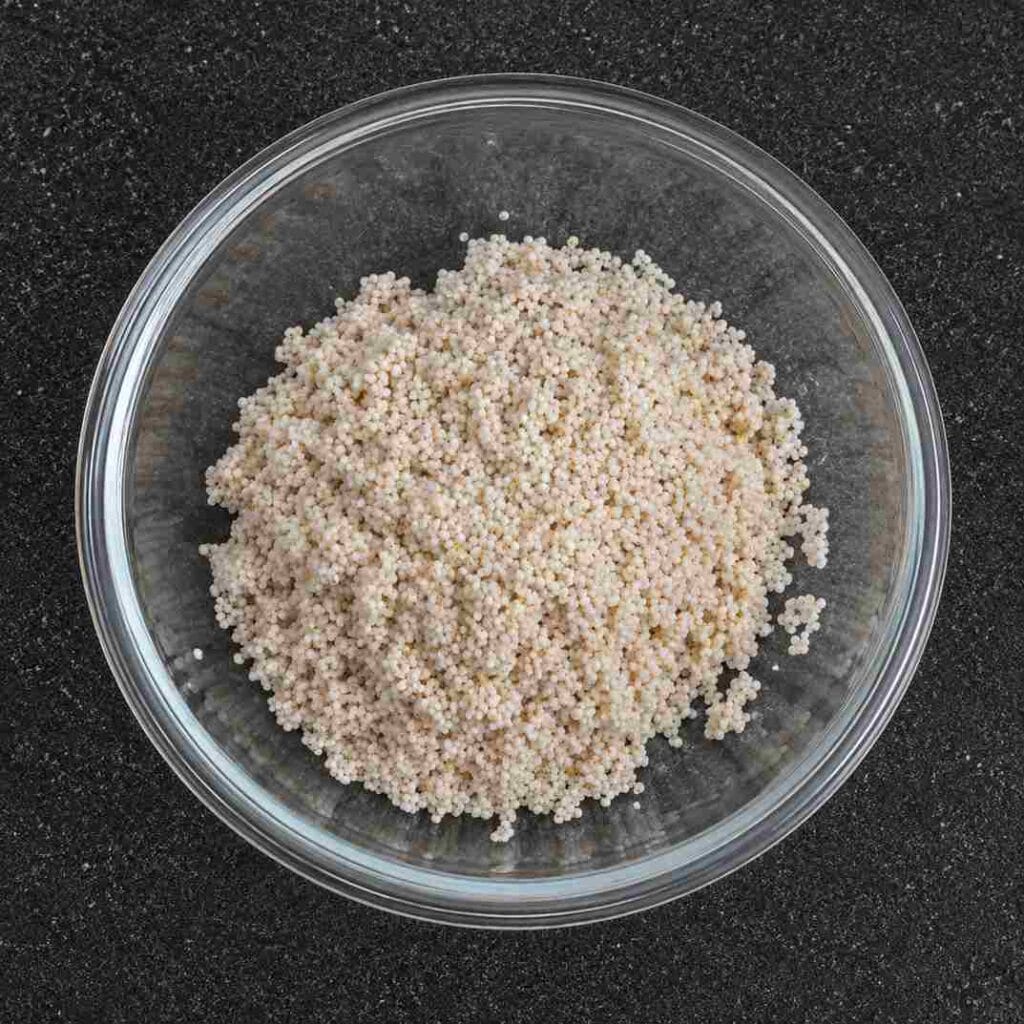
- 1 cup kodo millet (varagu) – approximately 125 grams, washed thoroughly
- 1.5 cups water – for the pressure cooker
- 2 tablespoons sesame oil – for tempering and flavor
- 1 medium onion – finely sliced
- 1 tablespoon ginger – freshly grated
- 1 green chili – finely chopped (adjust to taste)
- 1 tablespoon curry leaves – fresh and finely chopped
- 1/4 teaspoon mustard seeds – for tempering
- 1/4 teaspoon chana dal (split bengal gram) – optional but recommended
- 1/4 teaspoon urad dal (split black gram) – optional
- Salt to taste – usually about 1 teaspoon
For the Vegetables (Choose Your Mix):
- 1 cup carrots – finely diced
- 1 cup green peas – fresh or frozen
- 1 cup green beans – finely chopped
- 1/2 cup corn kernels – optional
- 2 tablespoons fresh coriander leaves – for garnish
Pro tip: You can customize the vegetables based on what’s available in your kitchen. The key is to dice everything uniformly so it cooks evenly.
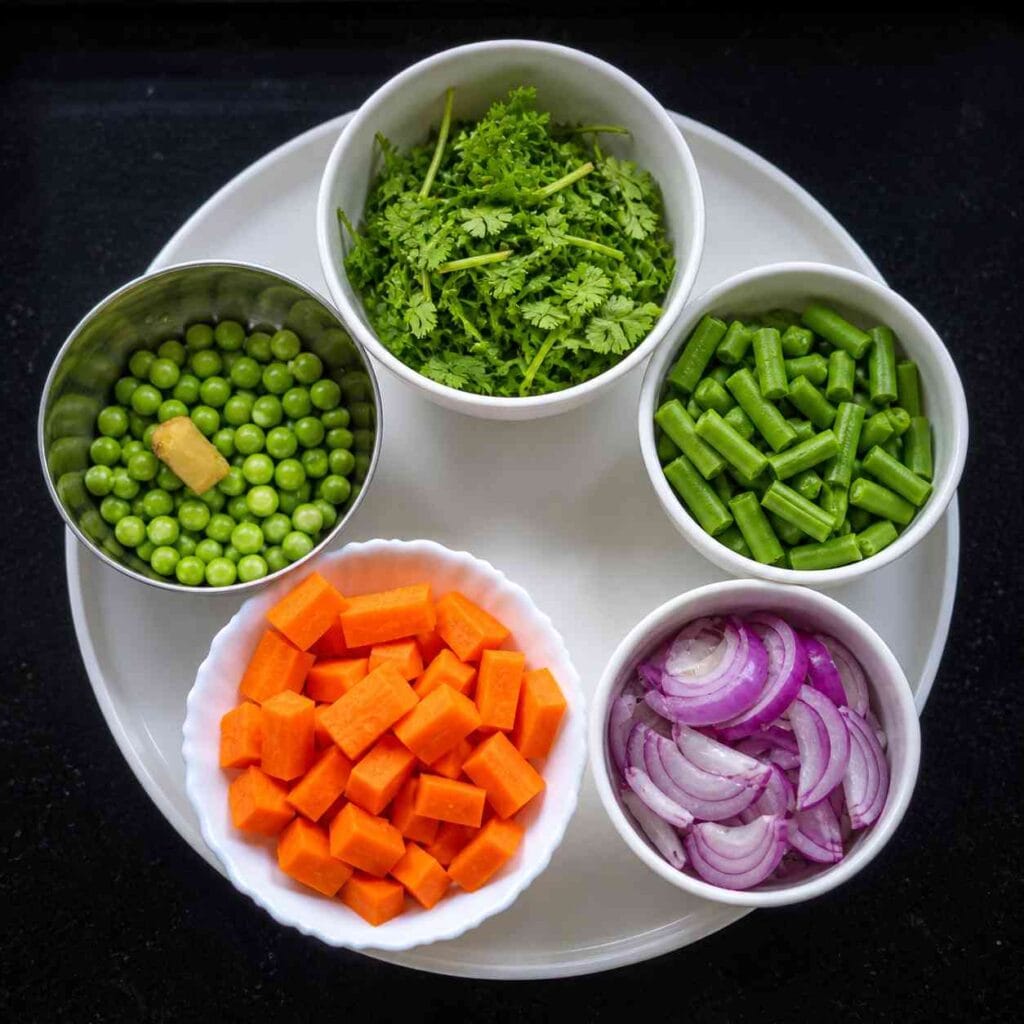
How to Make Kodo Millet Upma in Pressure Cooker
Let’s see how to make this kodo millet upma step by step.
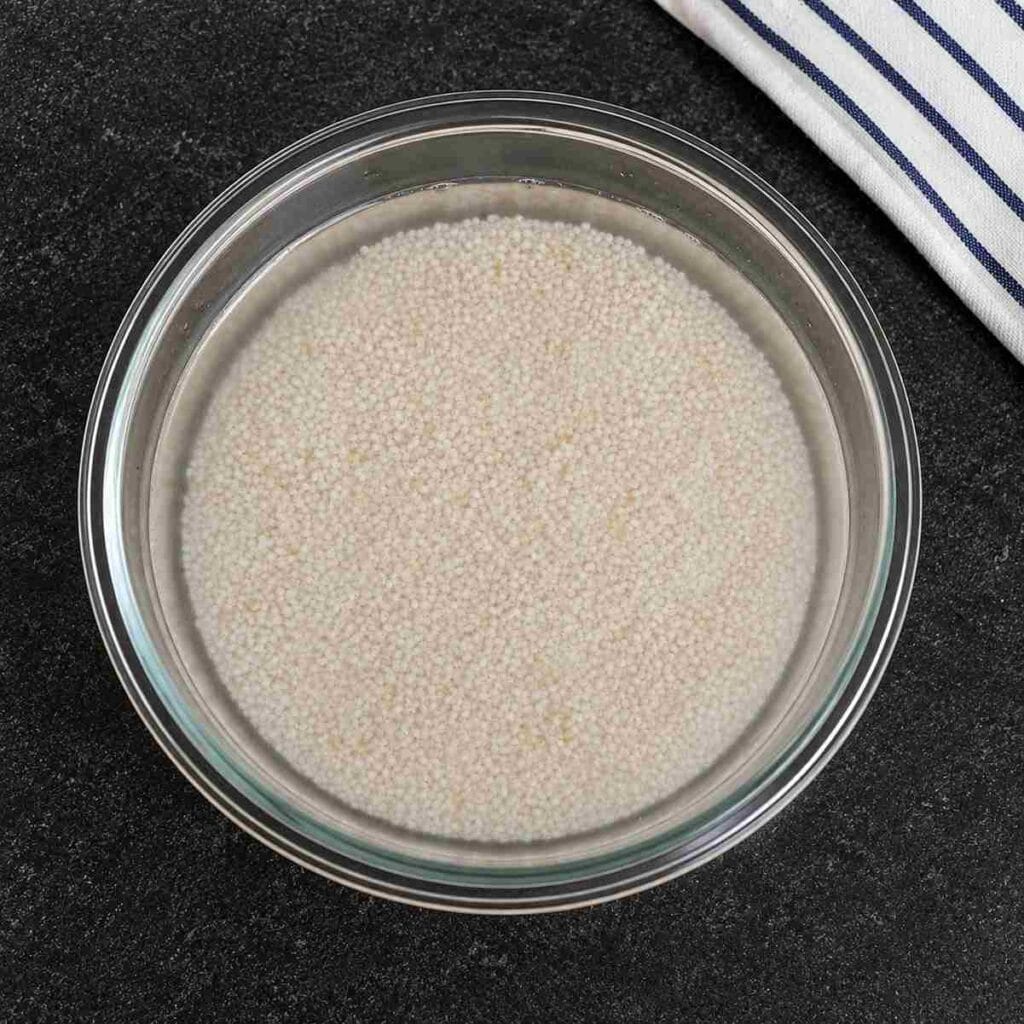
Step 1: Wash and Soak the Varagu Arisi
First wash the kodo millet well 2–3 times and soak it in water for around 10 minutes. I did not soak it for a long time because varagu cooks very quickly compared to some other millets. While the millet is soaking, you can finish cutting the vegetables, which saves time in the morning.
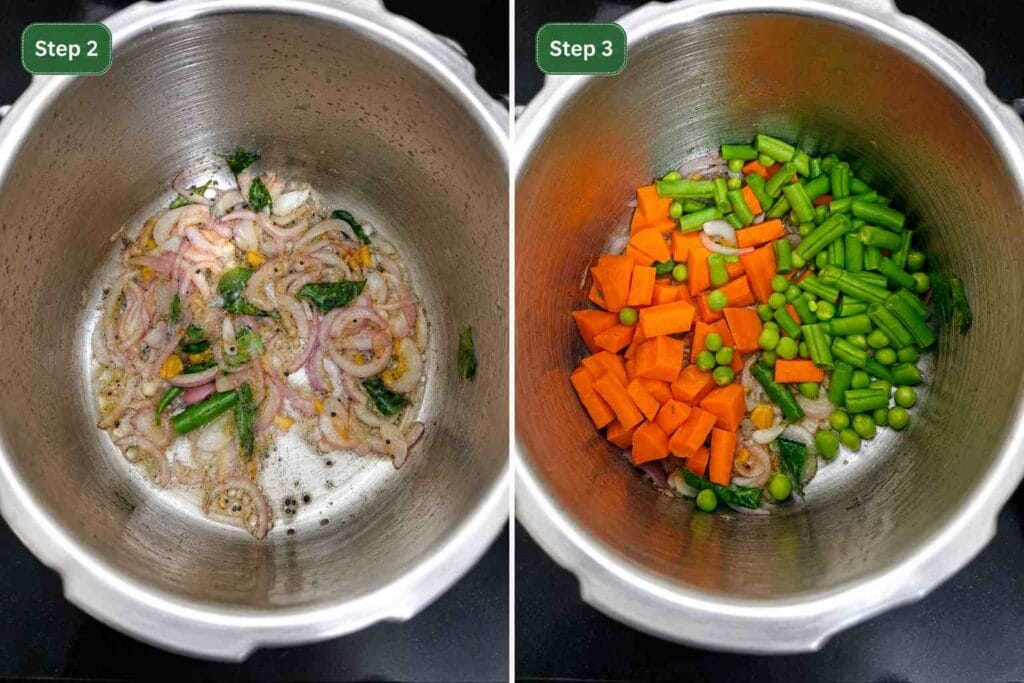
Step 2: Prepare the Tempering
Heat oil in a pressure cooker and add mustard seeds. Once it starts spluttering, add chana dal and urad dal. Then add sliced onion, green chilli, curry leaves, and grated ginger.
Saute everything until the onions become soft and slightly transparent. This simple tempering itself gives a really nice flavor to the upma.
Step 3: Add the Vegetables
Now add chopped carrot, beans, and peas. Mix everything well for a minute. I usually add vegetables to make the upma more filling, but you can also make this varagu upma plain if you want something simple and quick.
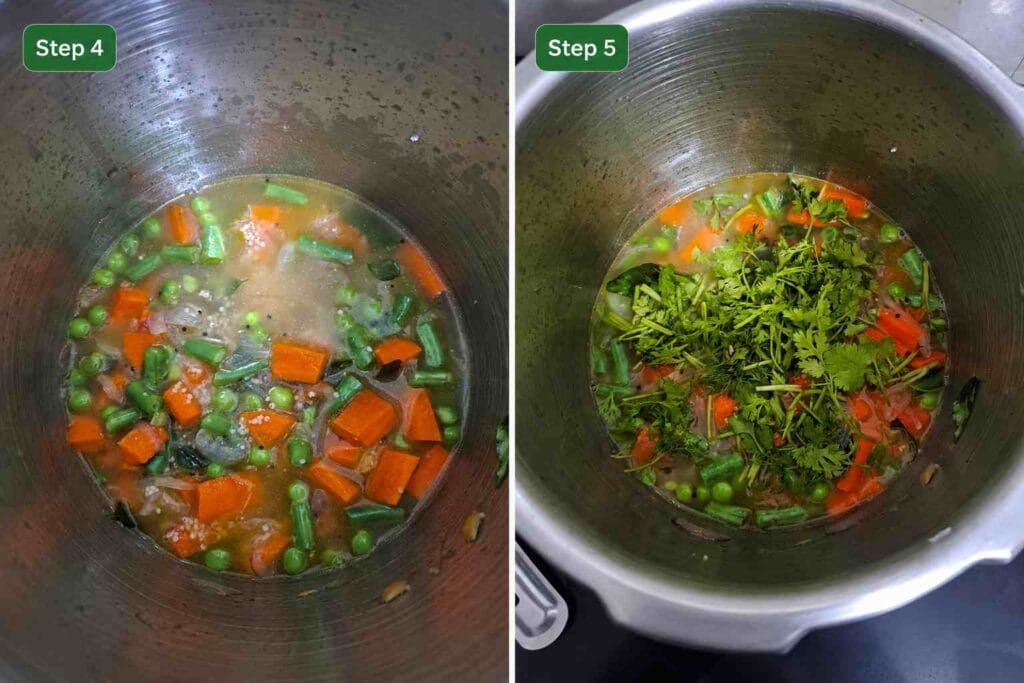
Step 4: Add Water and Seasoning
Add 1.5 cups of water for 1 cup of kodo millet. Then add salt and a small pinch of turmeric powder. Give everything a quick mix.
One thing I personally followed here is I did not wait for the water to come to a rolling boil. I directly moved to the next step, and that actually helped me get a soft yet separate texture.
Step 5: Add the Soaked Millet
Drain the soaked varagu arisi and add it to the cooker. Add coriander leaves and gently mix everything once so the millet spreads evenly with the vegetables and water.
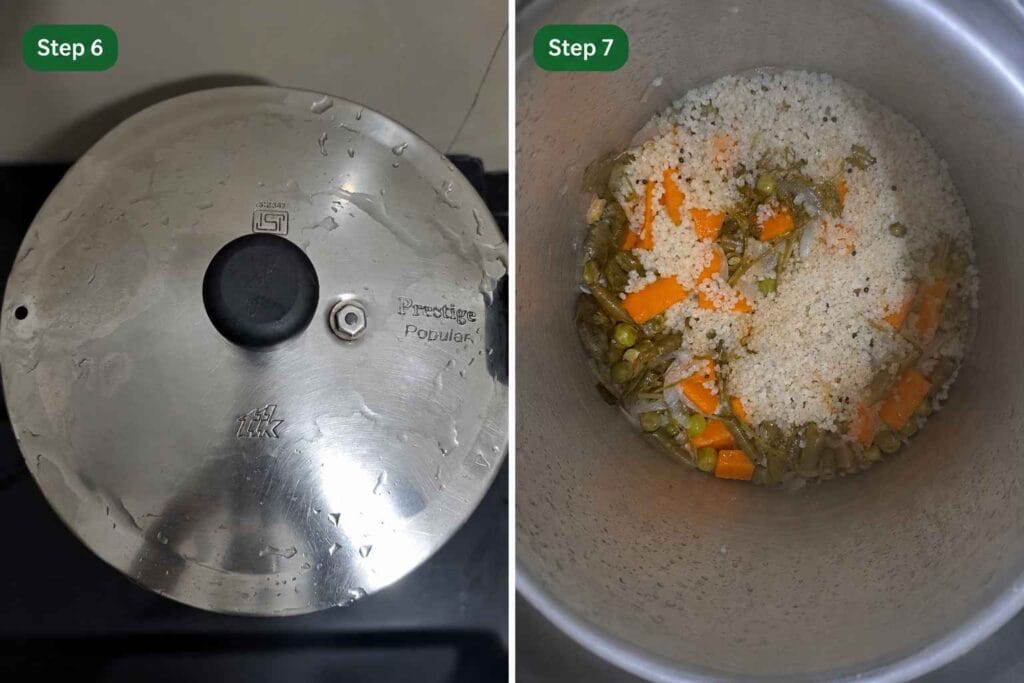
Step 6: Pressure Cook
Close the pressure cooker and cook for just one whistle. Since kodo millet cooks very fast, one whistle is usually enough for me. Cooking longer may make the upma mushy.
Step 7: Open and Fluff the Upma
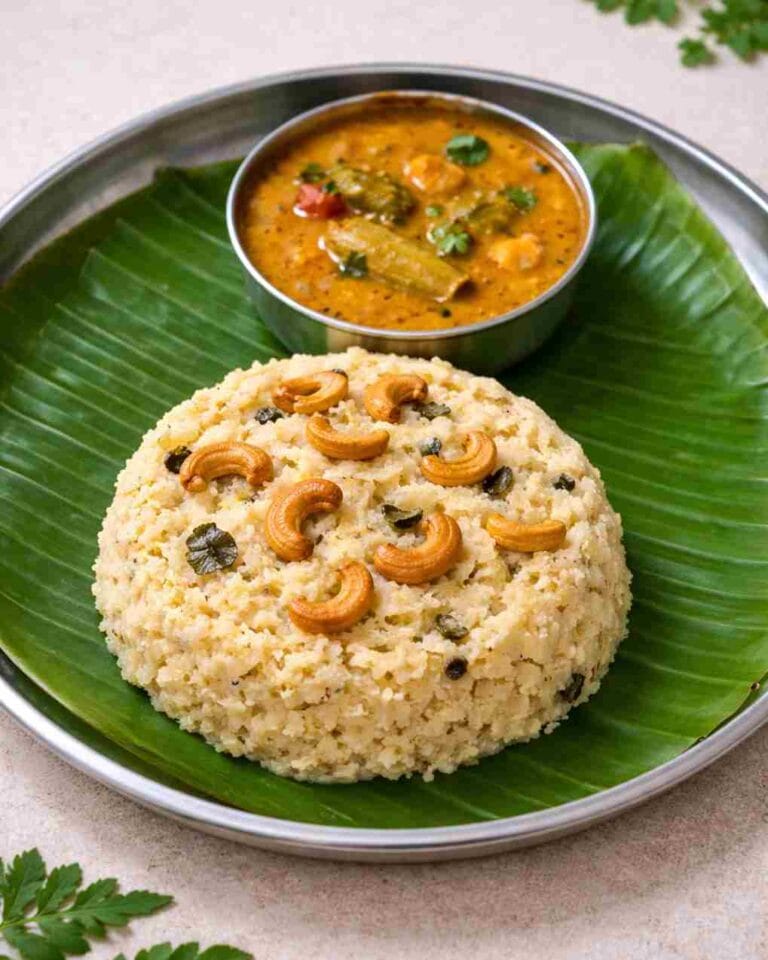
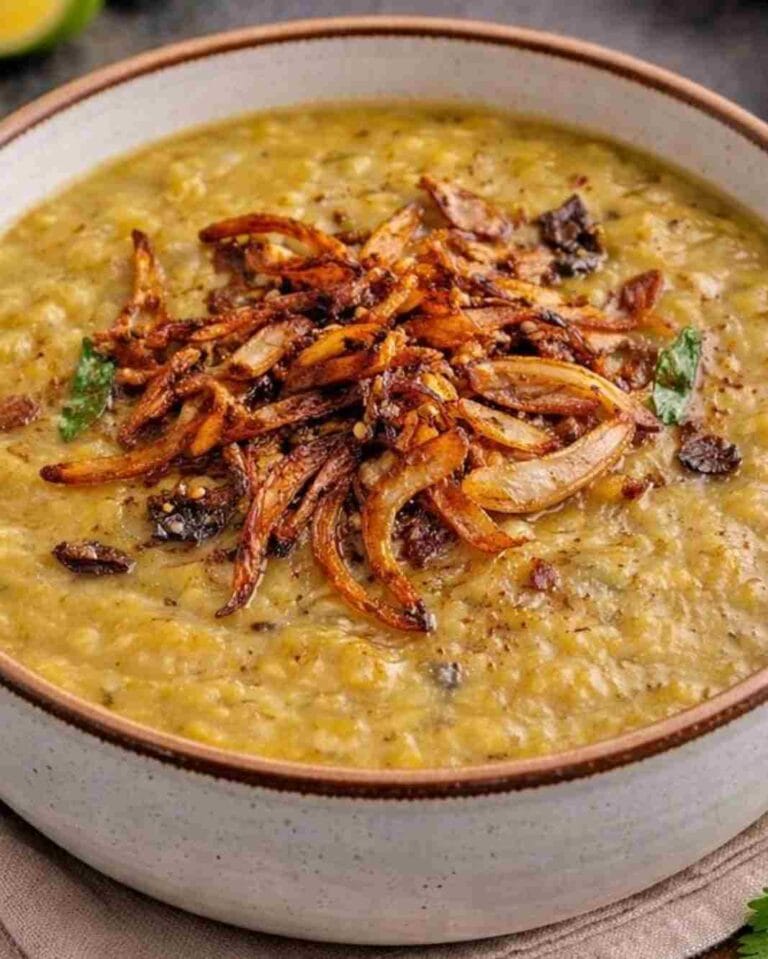
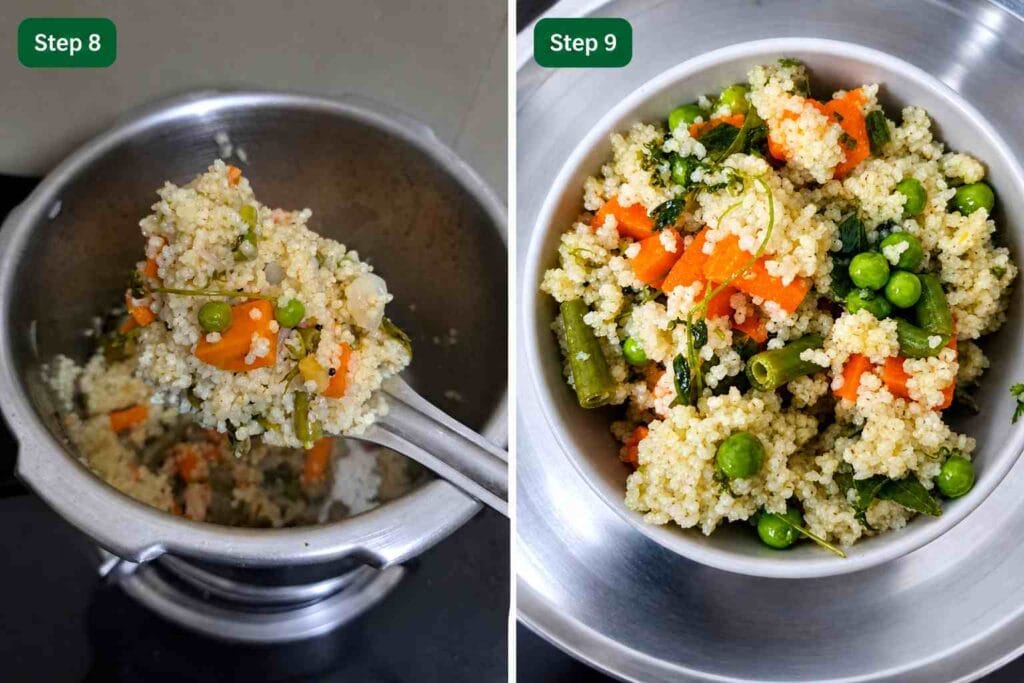
Once the pressure settles naturally, open the cooker and gently fluff the upma. You can see the grains stay soft and separate without sticking together.
Step 8: Serve Hot
Serve the kodo millet upma hot. I usually eat this without any chutney or side dish because the flavor from the ginger, curry leaves, onion, and vegetables itself tastes really comforting. The “uthri uthri” texture makes it even more enjoyable to eat.
Serving Suggestions for Kodo Millet Upma
You can serve this kodo millet upma with simple side dishes like Peanut chutney, onion chutney, or hotel-style tiffin sambar. These combinations go really well for breakfast and make the meal more comforting.
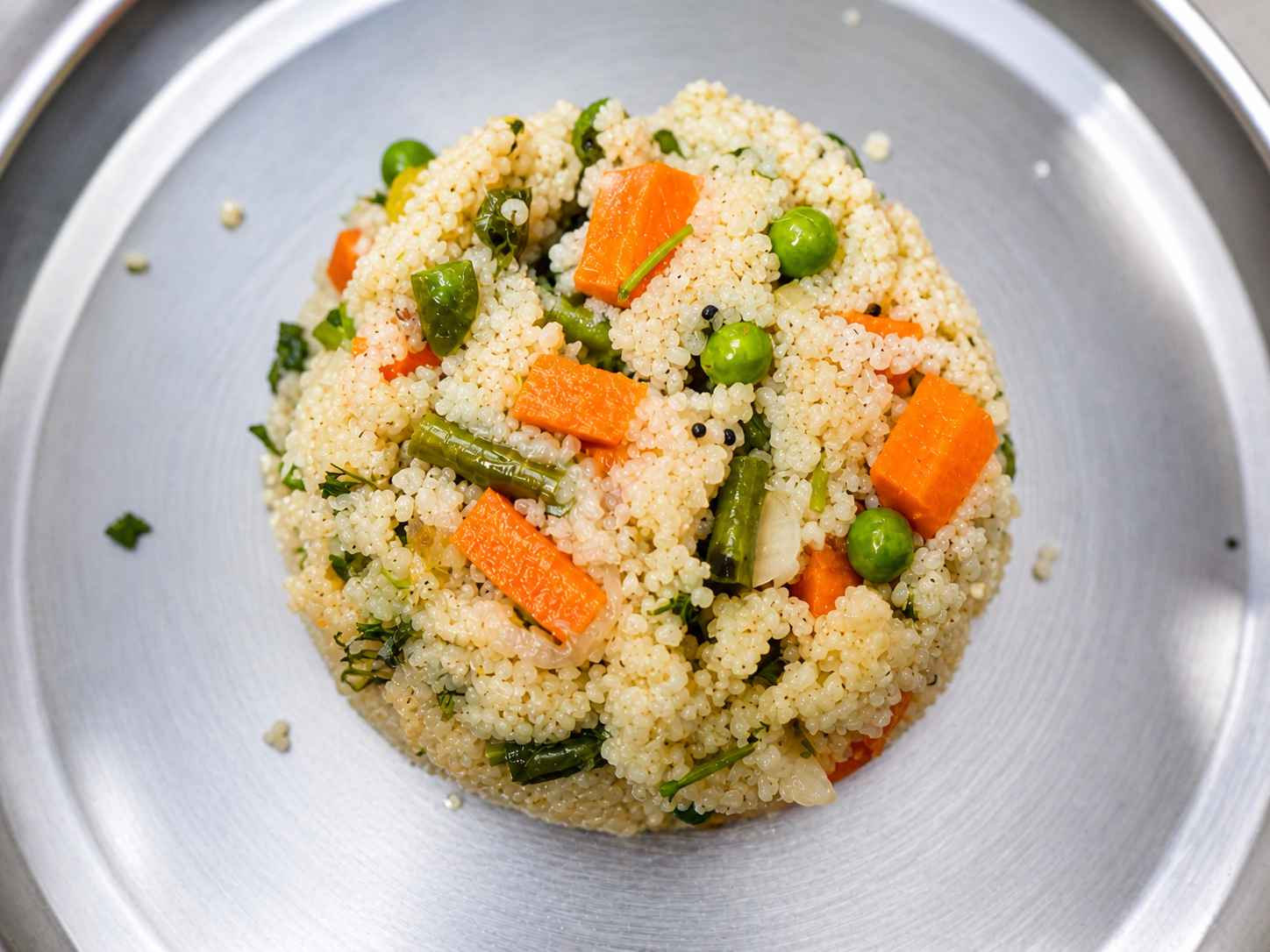
Kodo Millet Upma Recipe (Varagu Upma)
Ingredients
Equipment
Method
- Wash the kodo millet 2–3 times and soak it for 10 minutes.
- Heat oil in a pressure cooker and add mustard seeds.
- Add chana dal and urad dal, then saute for few seconds.
- Add sliced onion, green chilli, curry leaves, and grated ginger. Saute until onions become soft.
- Add carrot, beans, and peas. Mix well.
- Pour 1.5 cups water and add salt along with a pinch of turmeric powder.
- Add soaked varagu arisi and coriander leaves. Mix gently.
- Close the cooker and cook for just one whistle.
- Let the pressure settle naturally and gently fluff the upma before serving.
Notes
- Do not add extra water, otherwise the upma may become mushy.
- One whistle is enough because kodo millet cooks very quickly.
- I did not wait for rolling boil before closing the cooker, and that helped get soft yet separate texture.
- You can make this recipe plain or with vegetables based on your preference.
Tips & Variations
- Add vegetables like capsicum, corn, or green peas based on availability.
- You can use ghee instead of oil for extra flavor.
- If you like slightly spicy upma, add one extra green chilli.
- Serve with coconut chutney, pickle, curd, or enjoy it plain.
Frequently Asked Questions About Kodo Millet Upma
Can I make kodo millet upma without a pressure cooker?
Yes, you can make this varagu upma in a regular kadai or pot, but it may take a little more time compared to the pressure cooker method. After adding water, cover and cook on low flame until the millet becomes soft. I personally prefer the pressure cooker because it gives soft and separate texture very easily with less effort.
How much water to use for kodo millet upma?
For this pressure cooker kodo millet upma recipe, I used 1.5 cups of water for 1 cup of varagu arisi. This ratio helped me get soft yet separate “uthri uthri” texture without making the upma mushy.
Why did my millet upma become mushy?
Usually millet upma becomes mushy if:
extra water is added
cooked for more than one whistle
cooked for too long
In this recipe, one whistle is enough because kodo millet cooks very fast compared to some other millets.
Do I need to soak varagu arisi for a long time?
No, I soaked the kodo millet only for around 10 minutes. Since varagu cooks quickly, long soaking is not really necessary for this recipe.
What can I serve with kodo millet upma?
You can serve this millet upma with coconut chutney, pickle, curd, or sambar. But honestly, I usually eat it without any side dish because the upma itself tastes comforting and flavorful.
Is kodo millet good for breakfast?
Yes, many people prefer kodo millet recipes for breakfast because they feel light yet filling at the same time. I personally like making this on busy mornings because it keeps me full for longer compared to regular rava upma.
Can I store leftover kodo millet upma?
Yes, you can store leftover upma in the refrigerator for 1–2 days in an airtight container. While reheating, sprinkle little water and heat gently so the upma becomes soft again.
Looking for more easy breakfast ideas? Do check my Ven Pongal recipe along with this kodo millet upma for busy morning cooking.
Health Benefits of Kodo Millet Upma
Helps with Weight Loss and Metabolism
Kodo millet is high in fiber and low in glycemic index (GI), making it an excellent choice if you’re watching your weight. The fiber content helps you feel full longer, reducing overall calorie intake. Plus, the complex carbohydrates in kodo millet require more energy to digest, giving your metabolism a small boost.
Rich in Essential Minerals and Antioxidants
A single cup of cooked kodo millet provides:
- Magnesium – essential for muscle function and energy production
- Phosphorus – supports bone health and cellular energy
- Manganese – aids in metabolism and antioxidant defense
- Antioxidants – help fight inflammation and oxidative stress in the body
May Support Better Digestion
The high fiber content (about 8-9% by weight) makes kodo millet excellent for digestive health. It acts as a prebiotic, feeding the good bacteria in your gut and promoting a healthy microbiome. If you struggle with bloating or irregular digestion, millet-based dishes like upma can be a gentle, nourishing addition to your diet.
Naturally Gluten-Free
For anyone with celiac disease or gluten sensitivity, kodo millet upma is a safe, delicious alternative to wheat-based breakfasts. It’s naturally gluten-free, making it suitable for a wider variety of dietary needs.
May Help with Blood Sugar Control (Especially for Diabetics)
The low glycemic index of kodo millet means it doesn’t cause rapid spikes in blood sugar. For people managing diabetes or pre-diabetes, incorporating millet-based meals into your diet can help maintain more stable blood glucose levels throughout the day.
Important note: While kodo millet can be part of a diabetes-friendly diet, always consult with your healthcare provider or dietitian before making significant dietary changes.
Why I Love Kodo Millet Upma (And Why You Should Too)
Why This Recipe Became a Regular Breakfast at Home ? It’s the combination of taste, nutrition, and convenience that keeps bringing me back to this recipe.
When I was developing this pressure cooker version, I tested it at least a couple of times – trying different water ratios, cooking times, and vegetable combinations. What surprised me most was how consistent and foolproof the pressure cooker method became once I figured out the right technique.
Unlike stovetop upma, where you’re stirring constantly and watching for burnt edges, the pressure cooker does the work for you. In 15 minutes flat, you have a restaurant-quality breakfast that tastes like you’ve been cooking for an hour.
And then there’s the health angle. I’ve had readers tell me that switching to millet-based breakfasts helped them:
- may help support weight management
- can be part of a balanced diabetic-friendly diet
- Have more sustained energy throughout the morning
- Improve their digestion
- Feel less bloated after breakfast
If you try this kodo millet upma recipe, let me know how it turned out for you. Did you make it plain or add vegetables? Did you eat it with chutney or just like me without any side dish? I would really love to know how you make your version at home.
Happy Cooking!
Share This Recipe
If you found this helpful, please share it with a friend who’s looking to eat healthier. Your shares help me create more recipes like this one.
You can also save this varagu upma recipe on Pinterest, share it on Instagram, or subscribe to my newsletter for more quick South Indian breakfast recipes, millet recipes, and simple homemade cooking ideas.