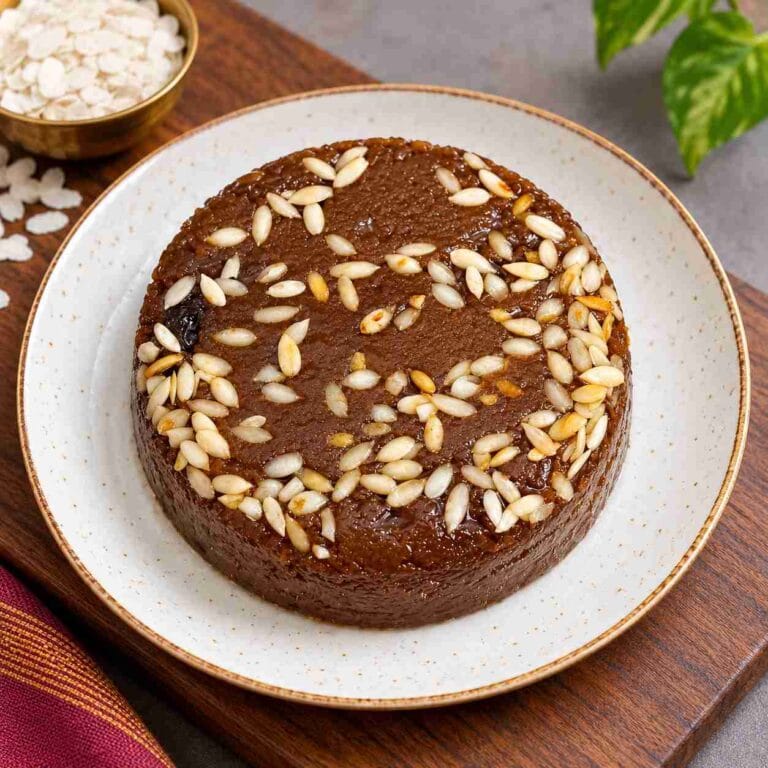
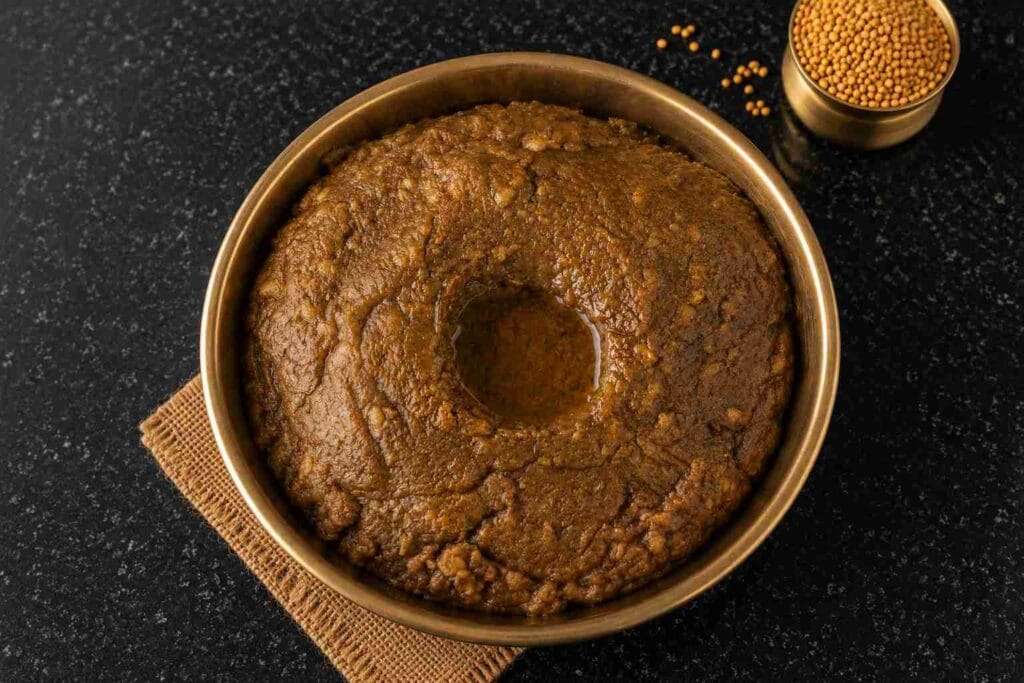
Vendhaya Kali Recipe | (வெந்தய களி) | How to make Fenugreek Kali recipe at home
(வெந்தய களி) Vendhaya Kali Recipe is commonly prepared during summer because fenugreek seeds are traditionally believed to help cool the body. I grew up watching my mother make this healthy vendhaya kali once in a every month at home. After moving to another place, I started craving this comforting homemade recipe, but it is not something you can easily order from restaurants or buy in shops. The real taste of this vendhayam kali comes only when it is slowly prepared in your own kitchen.
That craving made me learn the recipe myself. I got the method from my mother and tried making it at home, but honestly, my first few attempts did not turn out right. Sometimes the kali became too thick and solid, and other times it turned watery.
After trying it 2–3 times, learning from my mistakes, and getting a few important tips from my mother, I finally understood the correct batter consistency and cooking method. The most important part of this kali recipe is the batter texture, water ratio and slow cooking process.
In this post, I will share all the detailed step-by-step pictures, consistency tips, and common mistakes to avoid while making vendhaya kali at home.
Many people think fenugreek seeds taste too bitter to enjoy regularly, but when made as vendhaya kali with karuppatti and sesame oil, it turns into a delicious traditional breakfast that feels both comforting and nourishing. You can enjoy it as a healthy breakfast, evening snack, or even as a sweet traditional dish during summer.
If you enjoy traditional Kali recipes made for summer wellness, you may also like this soft and nourishing Karuppu Ulundu Kali Recipe
.
What is Vendhaya Kali?
Vendhaya Kali (வெந்தய களி) is a highly nutritious traditional south indian recipe with a soft, thick pudding-like texture. This healthy kali is mainly prepared using vendhayam (fenugreek seeds), idli rice/raw rice / parboiled rice , karuppatti (palm jaggery), and sesame oil.
Fenugreek seeds are traditionally believed to have many health benefits, which is this kali is commonly prepared for women and children in many South Indian homes. It is often made as a nourishing breakfast or traditional sweet, especially during summer.
Fenugreek is commonly used in many traditional dishes like this comforting Vendhaya Paruppu Kootu .
In many south indian homes, this recipe is traditionally prepared:
- During summer months
- For women’s wellness
- As a nourishing homemade breakfast
- During postpartum recovery
- During puberty ceremonies in some families
The recipe may look simple, but the real secret lies in:
- achieving the final non-sticky consistency.
- grinding the fenugreek correctly,
- cooking patiently on low flame.
Learn exactly how to make Perfect Vendhaya Kali with our step-by-step recipe guide.
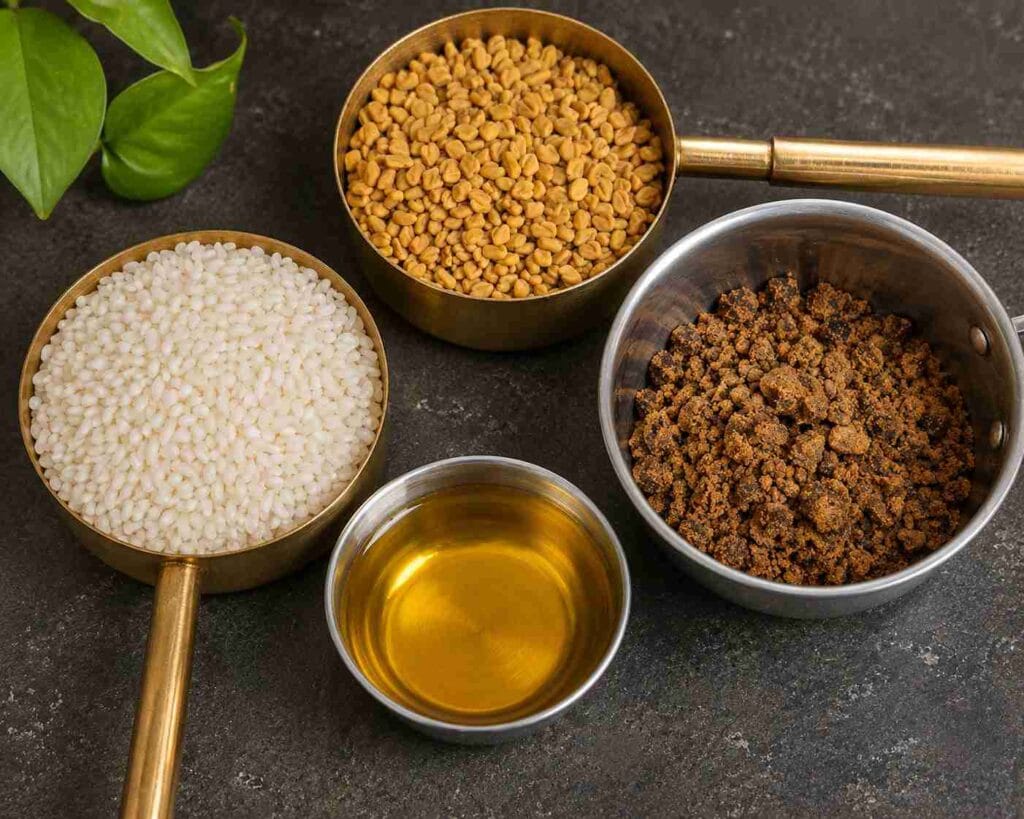
Ingredients Required for Vendhaya Kali preparation
- 1 cup idli rice (approximately 250 grams)
- 1/4 cup fenugreek seeds / vendhayam (approximately 60 grams)
- 1 cup powdered karuppatti jaggery and 1.5 cups water for jaggery syrup
- 4 cups water as needed
- 200 ml sesame oil
- Salt as needed
How to Make Perfect Vendhaya Kali at home (Step-by-Step)
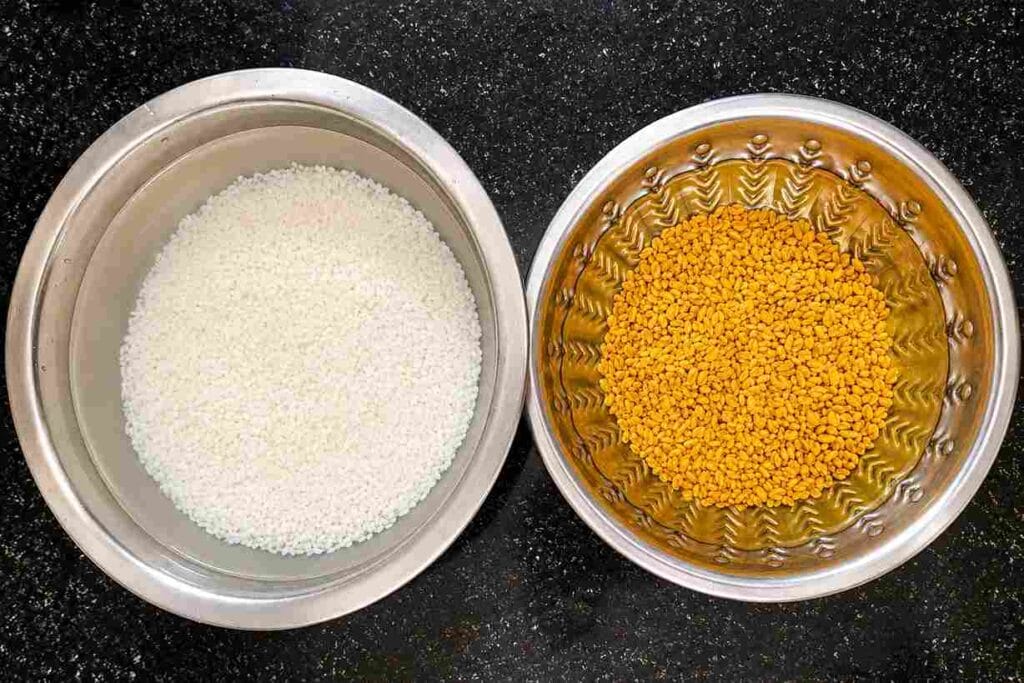
Step 1: Wash and Soak
- Wash the idli rice and fenugreek seeds separately. Soak both overnight.
- This soaking stage is important because it helps the ingredients grind smoothly and gives soft texture to the final kali.
Step 2: Grind the Fenugreek Seeds
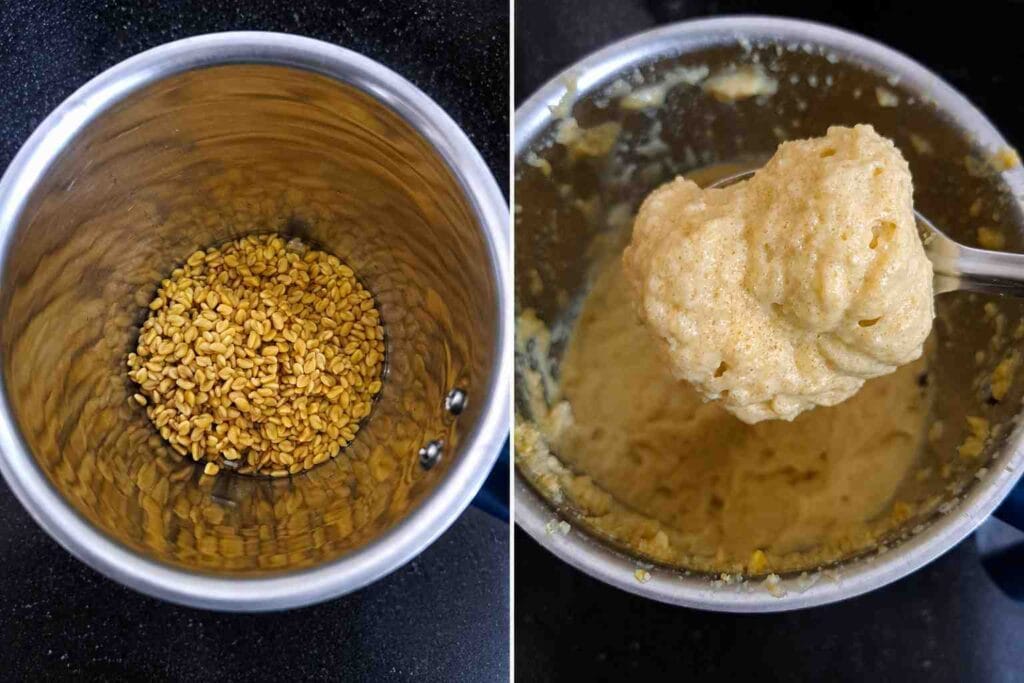
- Drain the soaked fenugreek seeds completely.
- Add them to a mixer grinder and grind smoothly by adding little water little by little (I used around 1/2 cup of water for grinding).
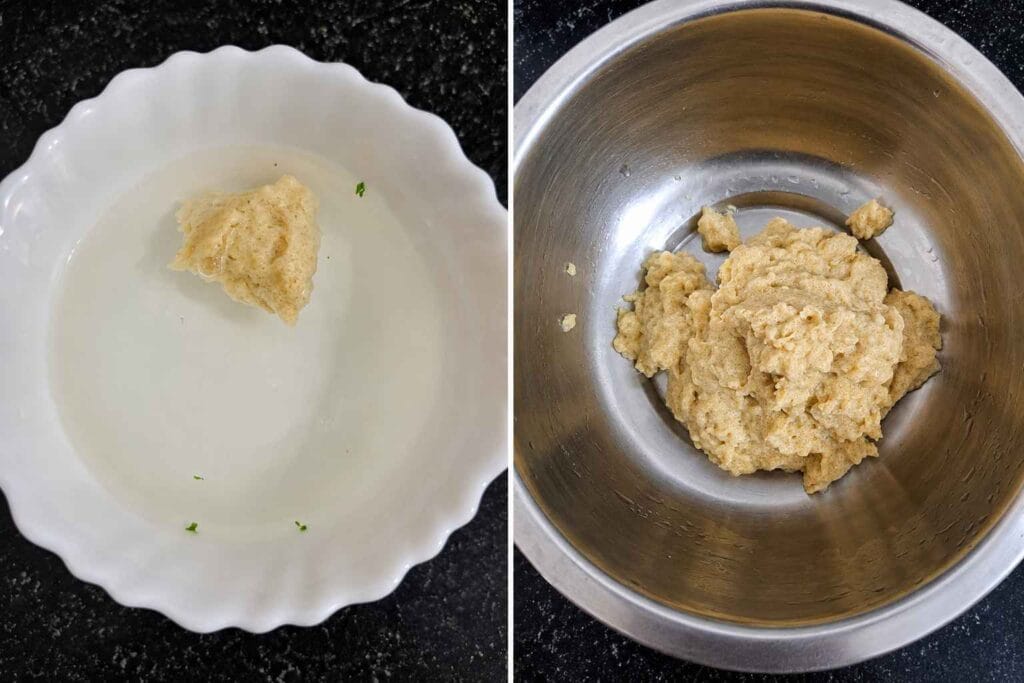
- This stage is very important. The fenugreek batter should become light and airy. When you drop a little batter into water, it should slightly float like foam.
- This is one of the key traditional consistency checks for perfect vendhaya kali.
- Transfer this ground fenugreek mixture into a bow
Step 3: Grind the Idli Rice
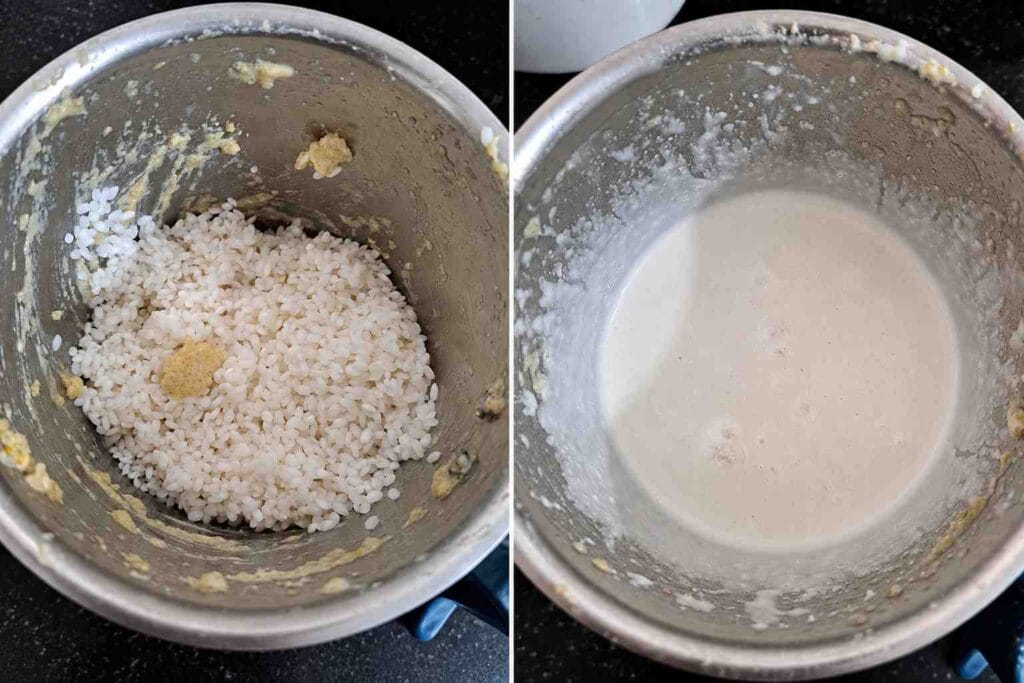
- Now grind the soaked idli rice into a smooth batter. (I used around 1/2 cup of water for grinding). )
- The texture should feel smooth like butter without rough grains.
- Add this rice batter into the same bowl containing the fenugreek mixture.
Step 4: Mix the Batter
- Mix both batters together well.
- You can add little water if needed to bring the batter to dosa batter consistency. (Mixing the batter with your hands helps combine everything evenly)
- I added the leftover mixer cleaning water during this stage.
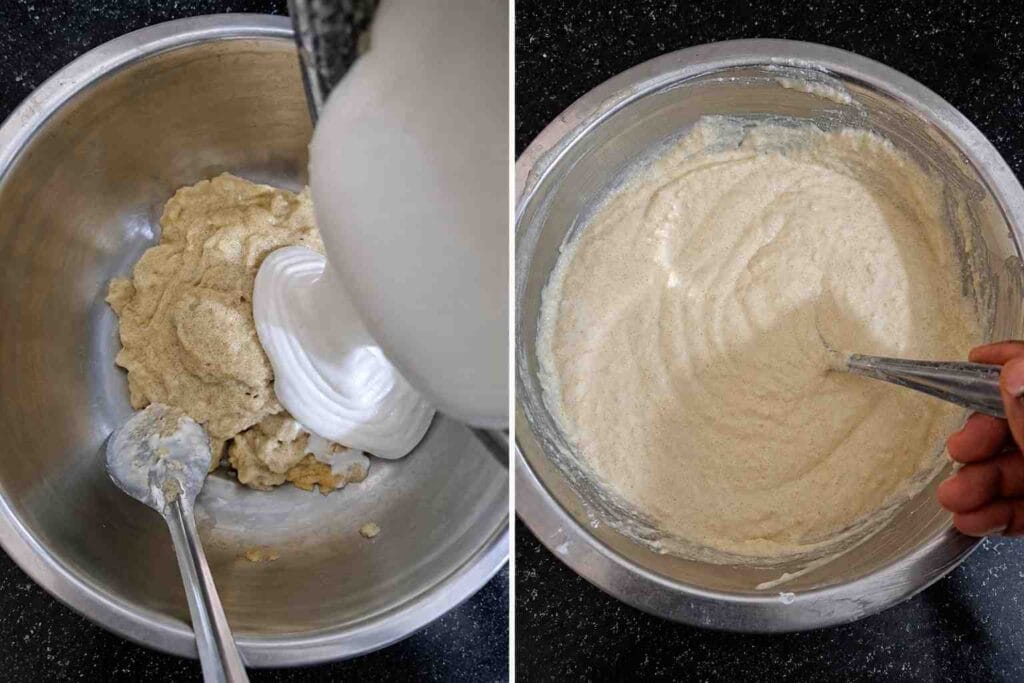
Step 5: Prepare the Karuppatti Syrup
- Dissolve powdered karuppatti in 1.5 cups water.
- Keep this syrup aside.
Cooking Vendhaya Kali
Step 6: Cook the Batter First
- Take a heavy-bottomed pan.
- Add around 3/4 cup water and little salt.
- Heat it gently.
- Now slowly pour the prepared batter while continuously stirring.
- Keep the flame low throughout the process.
- I stirred continuously for around 15 minutes until the batter thickened and the raw smell disappeared.
- This stage cooks the batter fully.
- Do not rush this step.
Step 7: Add Karuppatti Syrup
- Switch off the flame.
- Now add the prepared karuppatti syrup.
- Using a whisk or strong spatula, mix continuously until the syrup blends evenly with the cooked batter.
- The mixture will loosen slightly after adding syrup.
Step 8: Cook Again Until Thick
- Turn the flame back on.
- Continue cooking on low flame while stirring continuously.
- As the mixture thickens, add sesame oil little by little.
- This stage took around 20 minutes for me.
- Slow cooking is very important here because this is what gives vendhaya kali its glossy texture.
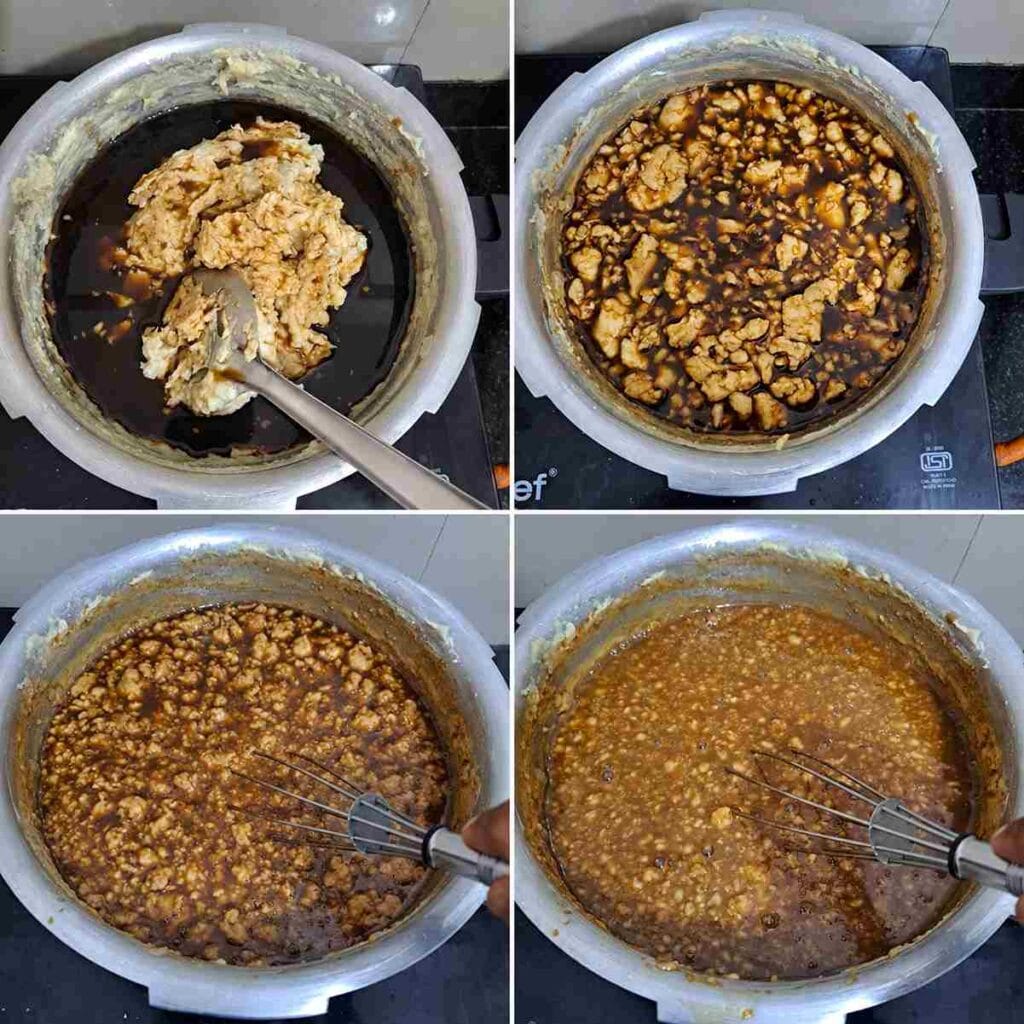
Note : For Perfect Kali texture , the kali should always be cooked on low flame with continuous stirring. Slow cooking helps the batter cook evenly, removes the raw taste, and gives the kali its smooth glossy texture.
Step 9: Check the Final Consistency
- One of the easiest ways to check whether vendhaya kali is perfectly cooked is using wet hands.
- Dip your hand in cold water.
- Take a small portion of kali and try rolling it gently.
- If it forms into a soft non-sticky ball, the consistency is perfect.
- Now your traditional vendhaya kali is ready.
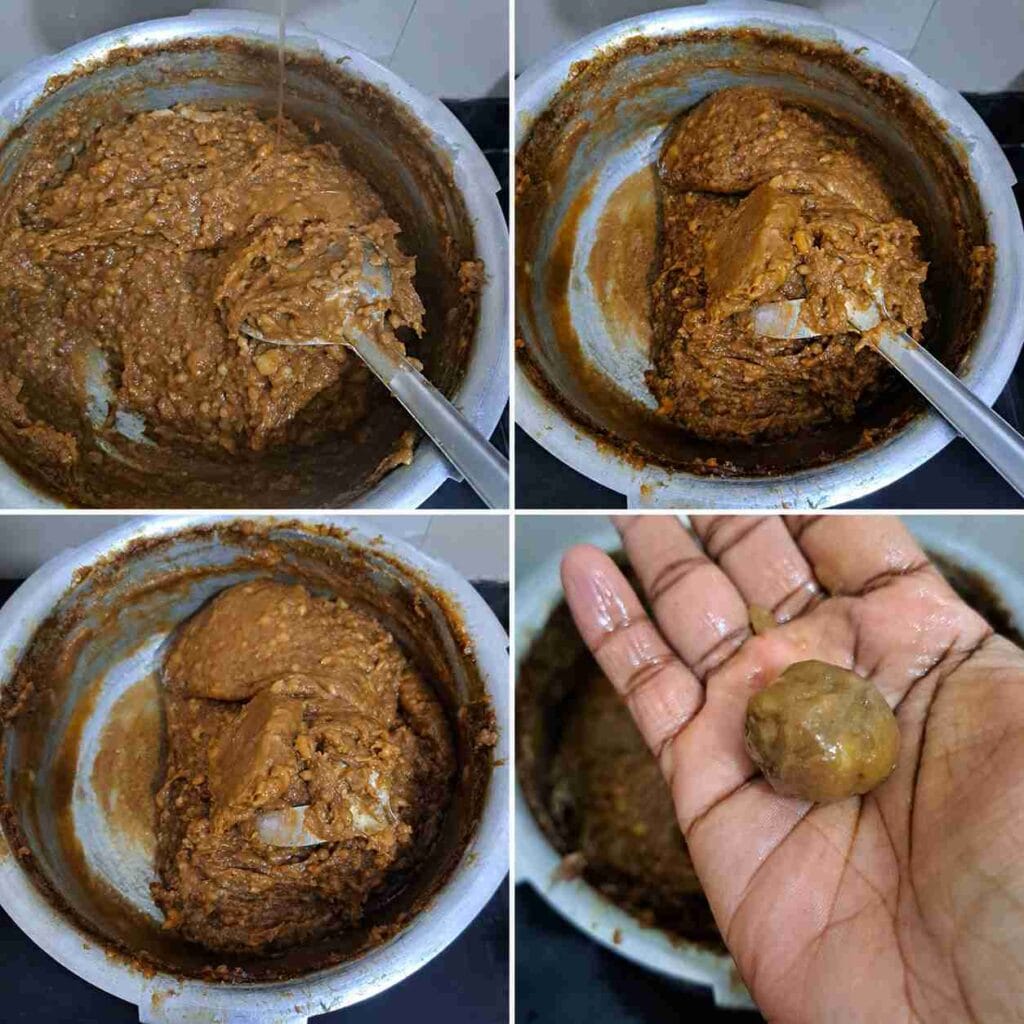
How to Know Vendhaya Kali is Perfectly Cooked
Many beginners get confused during the final stage.
Here are some signs that your vendhaya kali is cooked correctly:
- The texture becomes glossy
- Sesame oil slowly releases from the sides
- The raw smell disappears
- The kali becomes thick and smooth
- It turns less sticky
- You can roll it gently into a ball using wet hands
If the mixture still sticks heavily, continue cooking for few more minutes on low flame.
Tips for Beginners
If you are trying this fenugreek kali for the first time, these tips may help:
- Always grind fenugreek seeds until airy and smooth
- Soaking is very important for this recipe. For best results, soak the rice and fenugreek seeds for at least 4 hours or overnight.
- Use low flame throughout the cooking process
- Stir continuously to avoid lumps
- Do not add jaggery syrup before the batter cooks fully
- Use heavy-bottomed cookware
- Add sesame oil gradually
- Be patient during thickening stage
Vendhaya Kali is not a quick recipe, but the final texture is completely worth the effort.
Variations & Substitutions for Vendhaya Kali Food
- Instead of idli rice, you can use parboiled rice or raw rice for this recipe. The texture and taste may vary slightly.
- Using karuppatti (palm jaggery) gives an authentic traditional flavor and deeper taste. But regular jaggery can also be used if karuppatti is not available.
- For a richer flavor, you can replace sesame oil partially or fully with ghee.
Looking for more healthy traditional food ideas? Explore these wholesome Millet Recipes
for everyday cooking.
Common Mistakes to Avoid While Making Vendhaya Kali
1. Not soaking the rice and fenugreek properly
Soaking helps the ingredients grind smoothly and improves digestion. Minimum 4 hours soaking is important.
2. Grinding the fenugreek batter too thick
The fenugreek mixture should become light and airy. A small portion should slightly float when dropped into water.
3. Cooking on high flame
Always cook on low flame and stir continuously to avoid lumps and uneven cooking.
4. Adding karuppatti syrup too quickly
Pour slowly and keep mixing continuously so the batter blends smoothly without breaking.
5. Not checking the final consistency
Wet your hands and roll a small portion. If it forms a soft non-sticky ball, the kali is ready.
Serving Suggestions
Vendhaya Kali is traditionally served hot with extra sesame oil poured on top. Some people also enjoy it with warm milk, buttermilk, or a small piece of banana on the side.
It is best enjoyed fresh while still warm and soft.
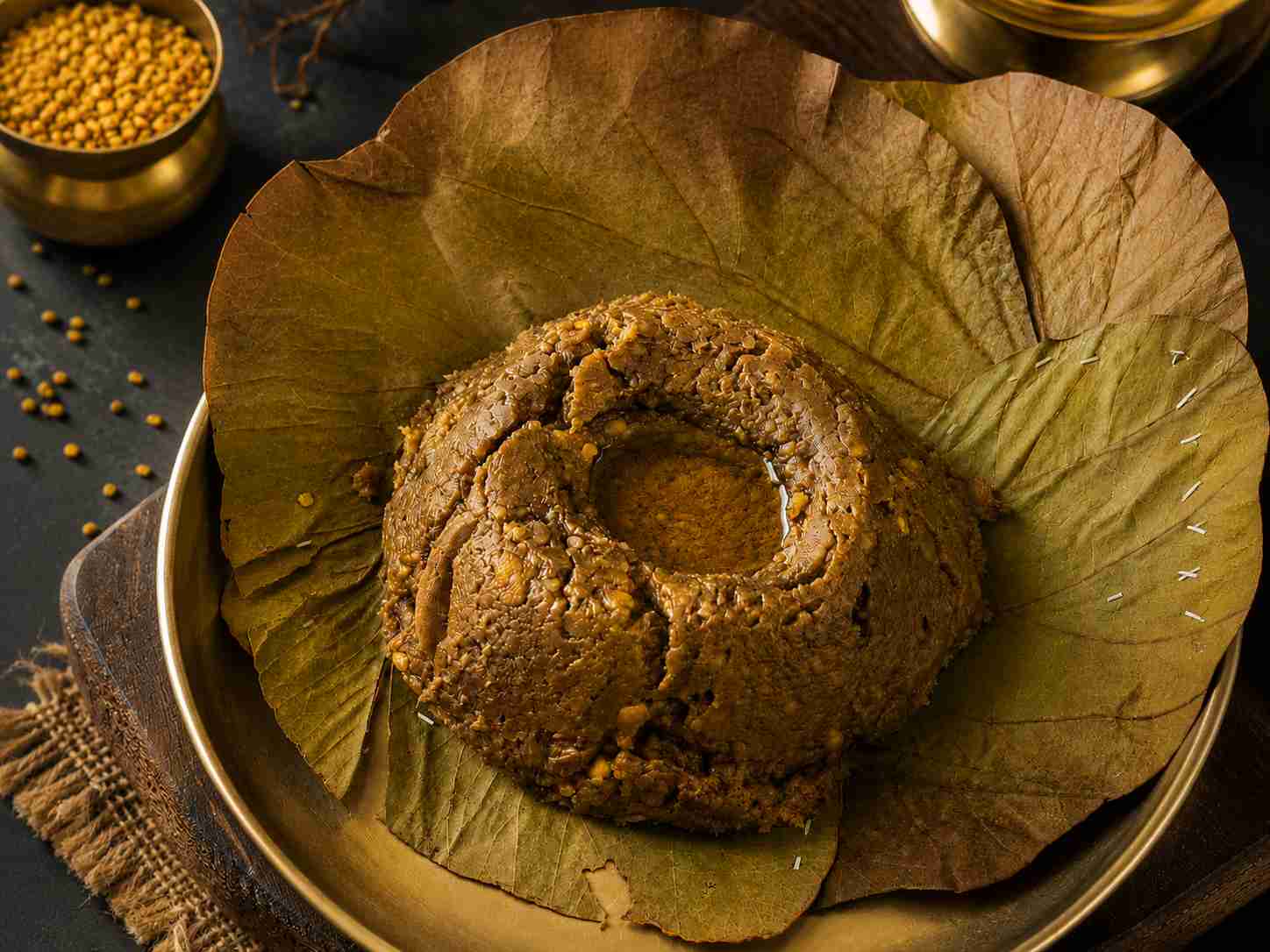
Vendhaya Kali Recipe | Traditional Home made Fenugreek Kali
Ingredients
Equipment
Method
- Wash the idli rice and fenugreek seeds separately. Soak them overnight or for at least 8–10 hours.
- Drain the soaked fenugreek seeds and grind them smoothly by adding water little by little. The batter should become light and foamy. When dropped into water, the batter should slightly float.
- Now grind the soaked idli rice into a smooth butter-like batter texture.
- Transfer the rice batter to the same bowl as the fenugreek batter. Mix both well together. Add little water if needed to bring it to dosa batter consistency.
- Dissolve powdered karuppatti in 1.5 cups water and keep the syrup ready.
- Heat a heavy-bottom pan and add 3/4 cup water with little salt. Slowly pour the prepared batter into the pan while stirring continuously on low flame.
- Cook for about 15 minutes until the batter thickens and the raw smell disappears.
- Switch off the flame and slowly add the prepared karuppatti syrup. Mix continuously using a whisk or spatula until combined smoothly.
- Turn on the flame again and continue cooking on low flame. Stir continuously for around 20 minutes.
- Add sesame oil little by little in between as the kali thickens.
- The vendhaya kali is ready when it becomes glossy and non-sticky.
- To check the consistency, wet your hands with cold water and roll a small portion into a ball. If it rolls without sticking, the kali is perfectly cooked.
- Serve hot or warm with extra sesame oil if preferred.
Notes
- Always cook on low flame for best texture.
- Continuous stirring is important to avoid lumps.
- Do not add jaggery syrup before the batter is cooked.
- Fenugreek batter should be airy and foamy for authentic texture.
- The consistency thickens more as it cools.
Why Sesame Oil is Added in Kali Recipe
Sesame oil plays a very important role in this recipe. Traditionally, sesame oil is added little by little instead of all at once. It
- improves texture,
- adds richness,
- helps prevent sticking,
- gives glossy finish,
- and balances the slight bitterness of fenugreek.
Storage & Reheating Tips
Vendhaya Kali tastes best when served hot and fresh. Leftovers can be stored in the refrigerator for 2–3 days in an airtight container.
While reheating, add little hot water or sesame oil and mix gently on low flame to bring back the soft texture.
Frequently Asked Questions About homemade Vendhaya kali
What are the key ingredients in Vendhaya Kali?
The main ingredients used are idli rice, fenugreek seeds (vendhayam), karuppatti or jaggery, sesame oil, water, and salt.
When is the best time to eat Vendhaya Kali?
Vendhaya Kali is traditionally eaten in the morning, especially on an empty stomach.
Does Vendhaya Kali support weight loss?
Vendhaya Kali can be filling and satisfying because of the fenugreek and rice combination. When eaten in moderation as part of a balanced diet, it may help you stay full for longer
Is Vendhaya Kali easy to digest?
Yes. Proper soaking and slow cooking make Vendhaya Kali easier to digest.
How long does Vendhaya Kali stay fresh?
It tastes best when served fresh and hot. Leftovers can be refrigerated for up to 1week.
How often can I eat Fenugreek Kali?
Traditionally, many families prepare this fenugreek healthy Kali recipe 2–3 times a week during summer months.
Why is Vendhaya Kali considered good for women?
This Kali Recipe is traditionally prepared in many South Indian homes for women during postpartum and summer seasons because it is considered nourishing and filling.
What are the traditional benefits of Vendhaya Kali?
Vendhaya Kali is popularly known for its cooling nature, filling texture, and traditional use during summer months. Fenugreek is also valued in traditional cooking for digestive support.
Key Health Benefits of Traditional Kali
- Hormone Support & Women’s Wellness
- Cooling Properties for Summer
- Digestive & Metabolic Benefits
- Rich in Antioxidants & Minerals
- Blood Sugar & Cholesterol Support
- Energy & Postpartum women Wellness
- Traditionally prepared for women’s wellness
- Popular during summer months
- Commonly included in homemade nourishing diets
Best Times to Eat this body coolant Kali for Maximum Benefits
Summer (April–June):
Peak season for vendhaya kali benefits. The cooling properties are most needed, and traditional kitchens across Tamil Nadu make it regularly. Frequency: 2–3 times weekly.
Early Monsoon (June–July):
Still beneficial as body continues to need cooling. Frequency: 2 times weekly.
Postpartum Period:
Traditionally made fresh daily (or every alternate day) for the first 40 days after delivery, then 3–4 times weekly for the next few months.
During Menstrual Cycles:
Some traditional practitioners recommend vendhaya kali benefits for female wellness during specific phases of the menstrual cycle. Frequency: as advised by your healthcare provider or traditional practitioner.
Year-Round:
While traditionally seasonal, vendhaya kali can be enjoyed year-round by those who find it agreeable. Some people make it weekly for sustained wellness benefits.
General note: Vendhaya kali is a food, not a medicine. Always consult your healthcare provider for personalized dietary advice, especially if you have specific health conditions.
For many South Indian families, this Kali is more than just a recipe — it is a comforting traditional food connected with summer memories and home cooking.. If you make this recipe, share your experience in the comments and subscribe to our newsletter for more traditional south indian recipes and healthy food ideas 😊