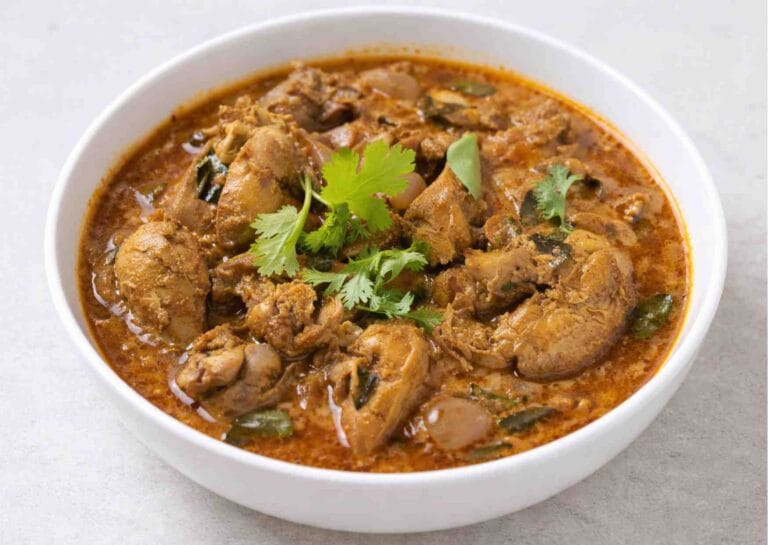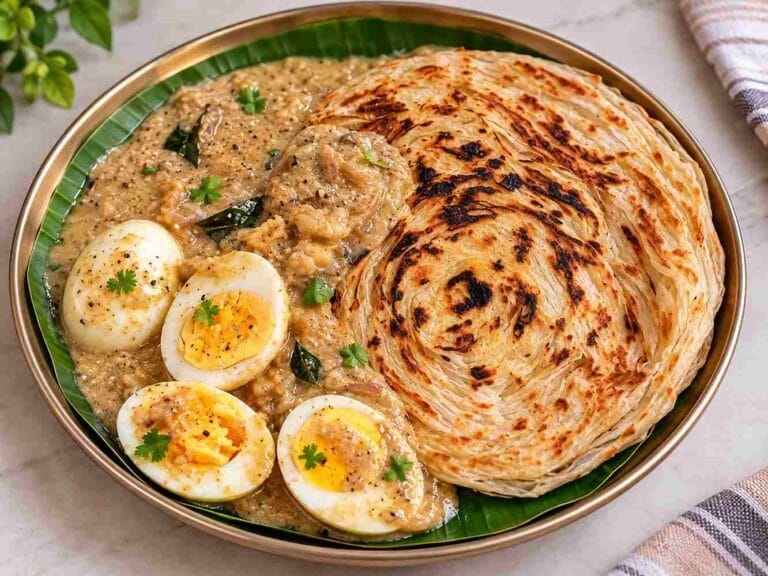
Kumbakonam Kadappa Recipe | Traditional Side Dish for Idli and Dosa
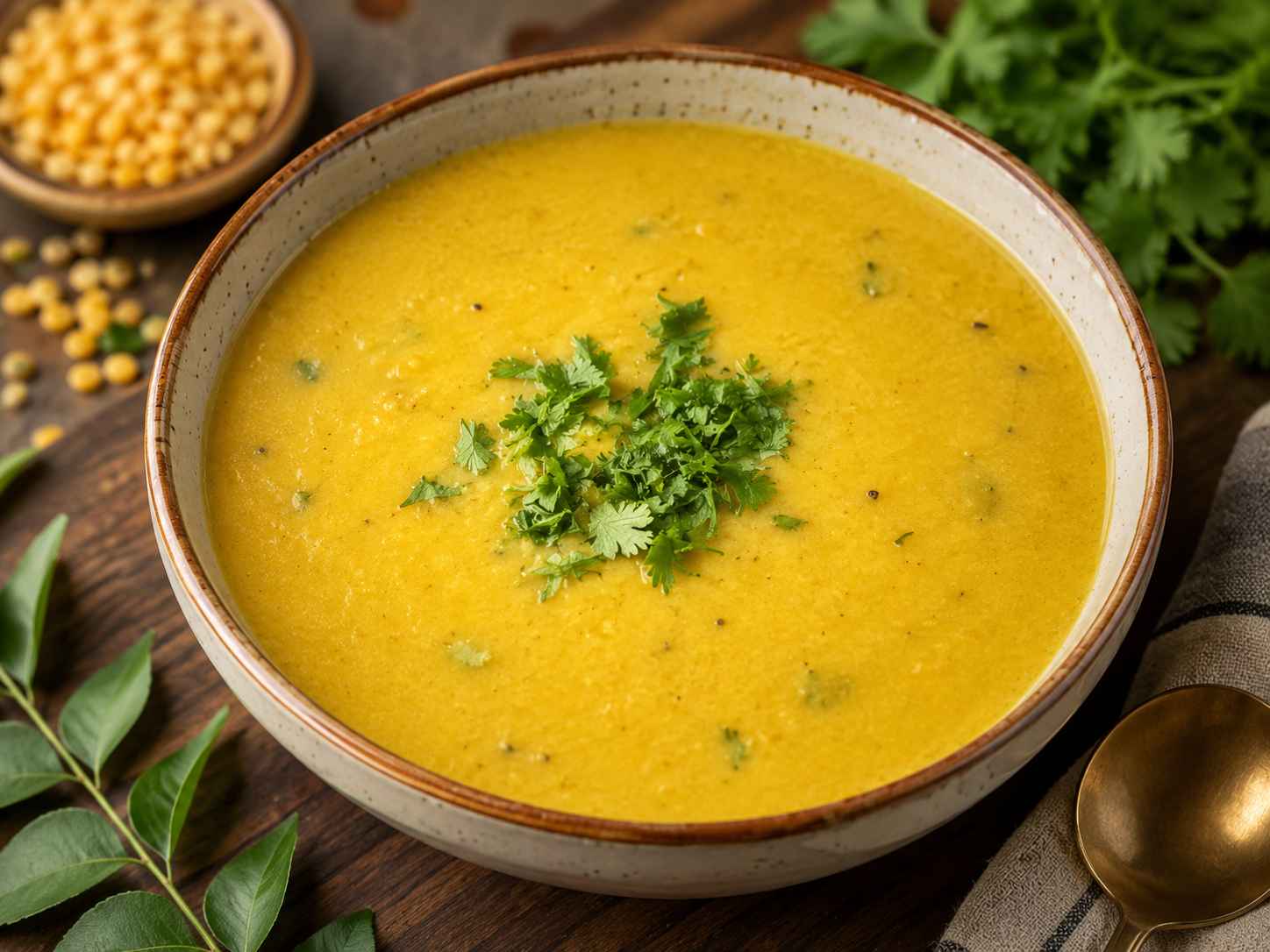
This Kumbakonam Kadappa recipe recreates the authentic hotel-style taste right in your kitchen.
I first tasted this Kadappa many years ago when I visited Thanjavur. We stopped at a very small local tiffin shop for breakfast, and that’s where I had Kadappa for the first time. Even today, I cannot forget that taste. It was so flavorful, mildly spiced, and tasted absolutely delicious with idli.
After coming back home, I wanted to recreate the same taste in my kitchen. But honestly, my first attempt was not successful. Even after making it 2 or 3 times, I still couldn’t get that exact authentic hotel-style taste. I watched many YouTube videos, read several recipe blogs, and kept trying, but something was always missing.
After a few more trials, I finally understood the small mistakes I was making and corrected them. The result was this delicious and comforting Kumbakonam Kadappa recipe that tastes very close to the one I enjoyed years ago.
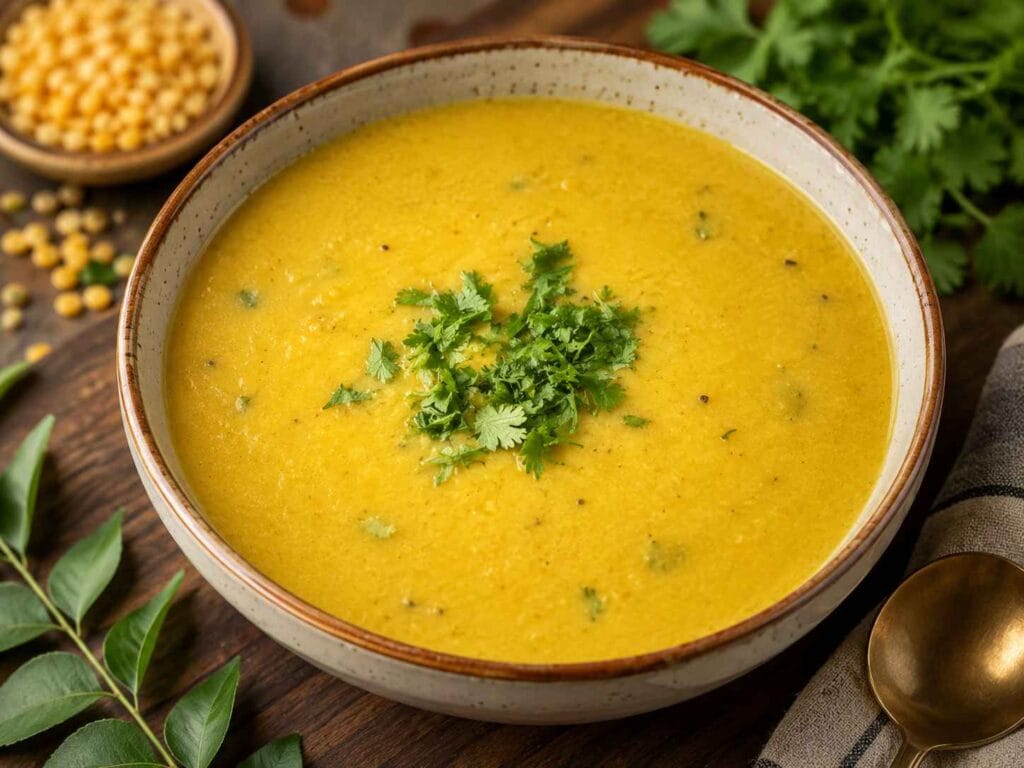
In this post, I am also sharing some simple tips that helped me make the perfect Kadappa at home. This creamy moong dal and potato gravy pairs wonderfully with idli, dosa, appam, idiyappam, chapathi, and poori.
What is Kumbakonam Kadappa?
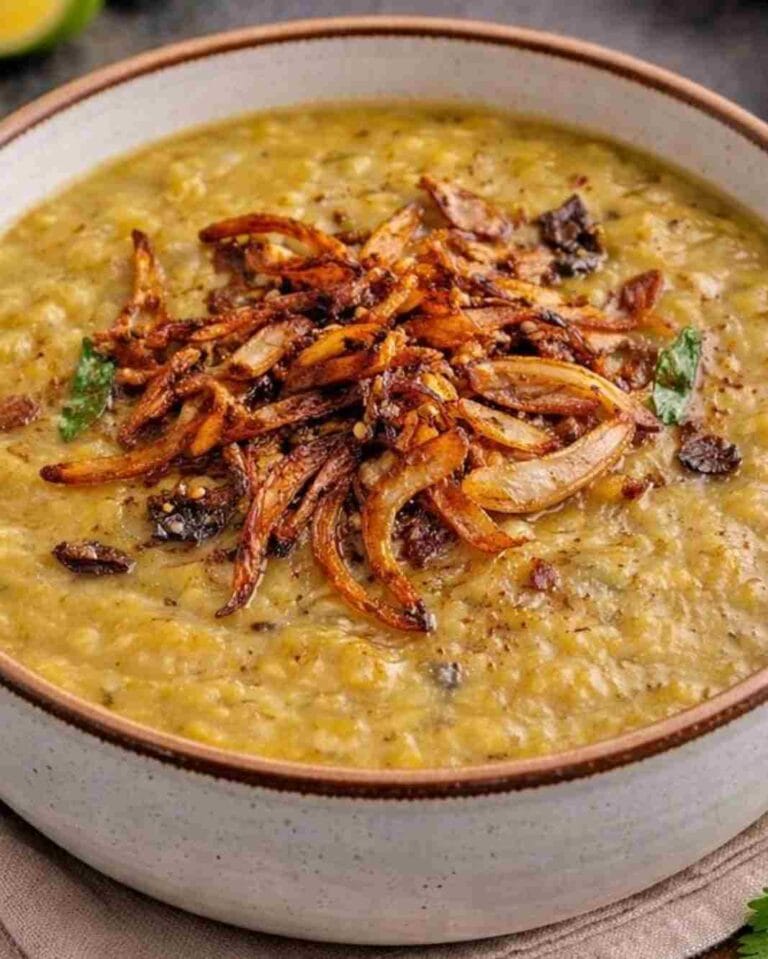
Kumbakonam Kadappa is a creamy and mildly spiced gravy that is traditionally served with idli in many homes, hotels and tiffin shops across Kumbakonam and Thanjavur. Made with moong dal, potatoes, fresh coconut, and aromatic spices, this comforting side dish pairs wonderfully with dosa, appam, idiyappam, chapathi, poori and even with hot rice .
Ingredients Needed to Make Kumbakonam Kadappa
For Cooking the Moong Dal
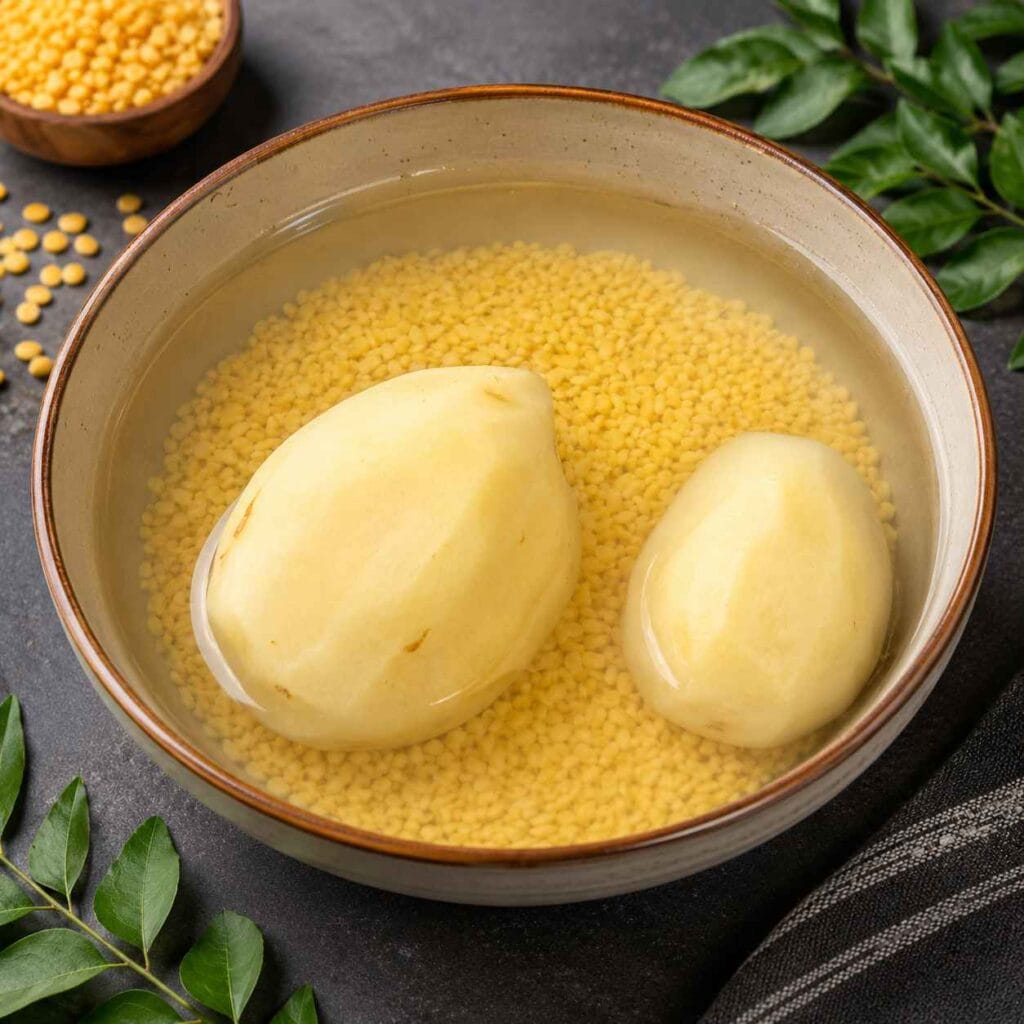
- 100 grams Pasi Paruppu (yellow split moong dal), washed and soaked for 30 minutes
- 2 medium-sized potatoes, peeled
- Water as required
To Grind
- 3 tablespoons grated coconut
- 1 tablespoon poppy seeds (khas khas)
- 2 tablespoons roasted gram dal (pottukadalai)
- 1 tablespoon fennel seeds
- ½ cup water
For Tempering
- 2 tablespoons oil
- ¼ teaspoon mustard seeds
- 2 bay leaves
- 2 cardamom pods
- 2 cloves
- 1 small cinnamon stick
- 1 strand curry leaves
Other Ingredients
- 1 medium onion, thinly sliced
- ½ tablespoon ginger garlic paste
- 2 green chillies, slit
- 2 medium tomatoes, chopped
- ½ tablespoon turmeric powder
- Salt to taste
- Water as needed to adjust consistency
- 2 tablespoons lemon juice
- Coriander leaves, chopped for garnish
How to Make Kumbakonam Kadappa (Step-by-Step)
Step 1: Cook the Moong Dal and Potatoes
- Wash and soak the moong dal for about 30 minutes .
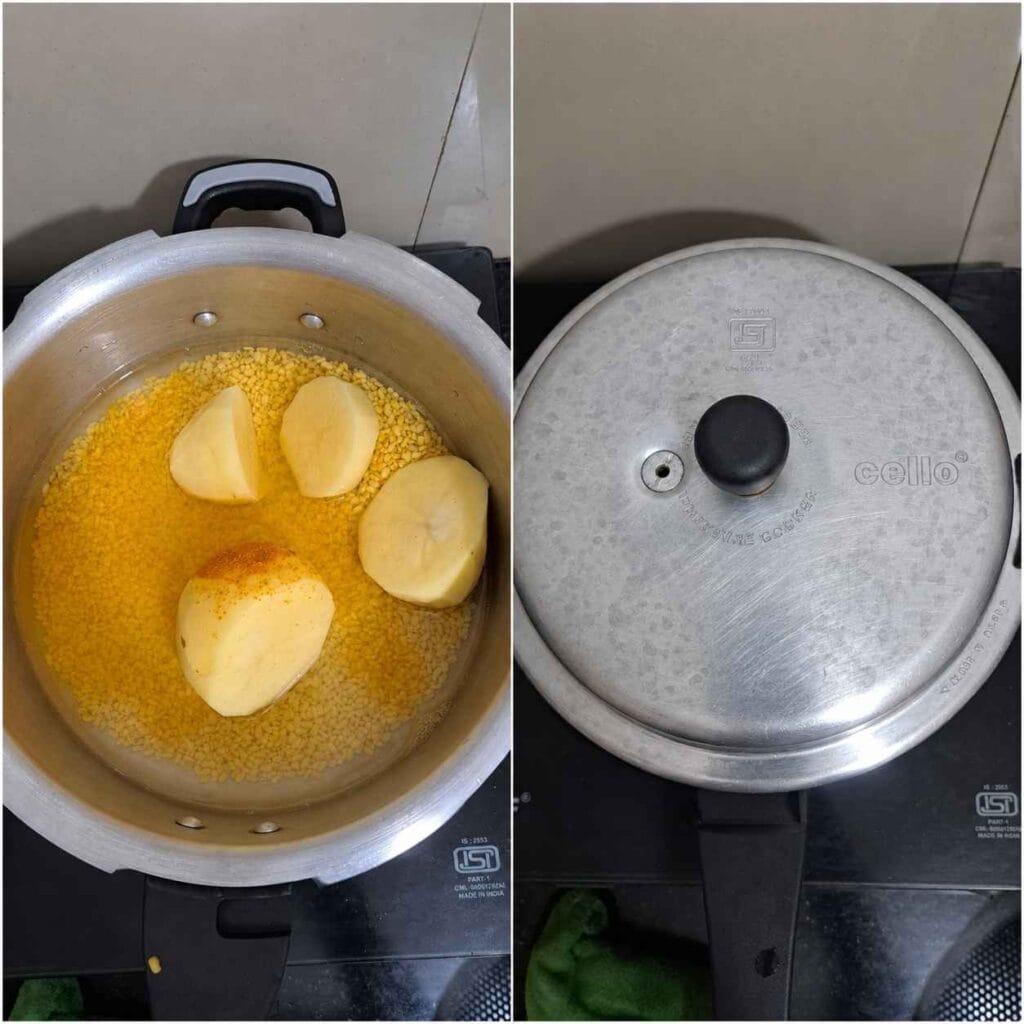
- Add the soaked moong dal and peeled potatoes to a pressure cooker with enough water.
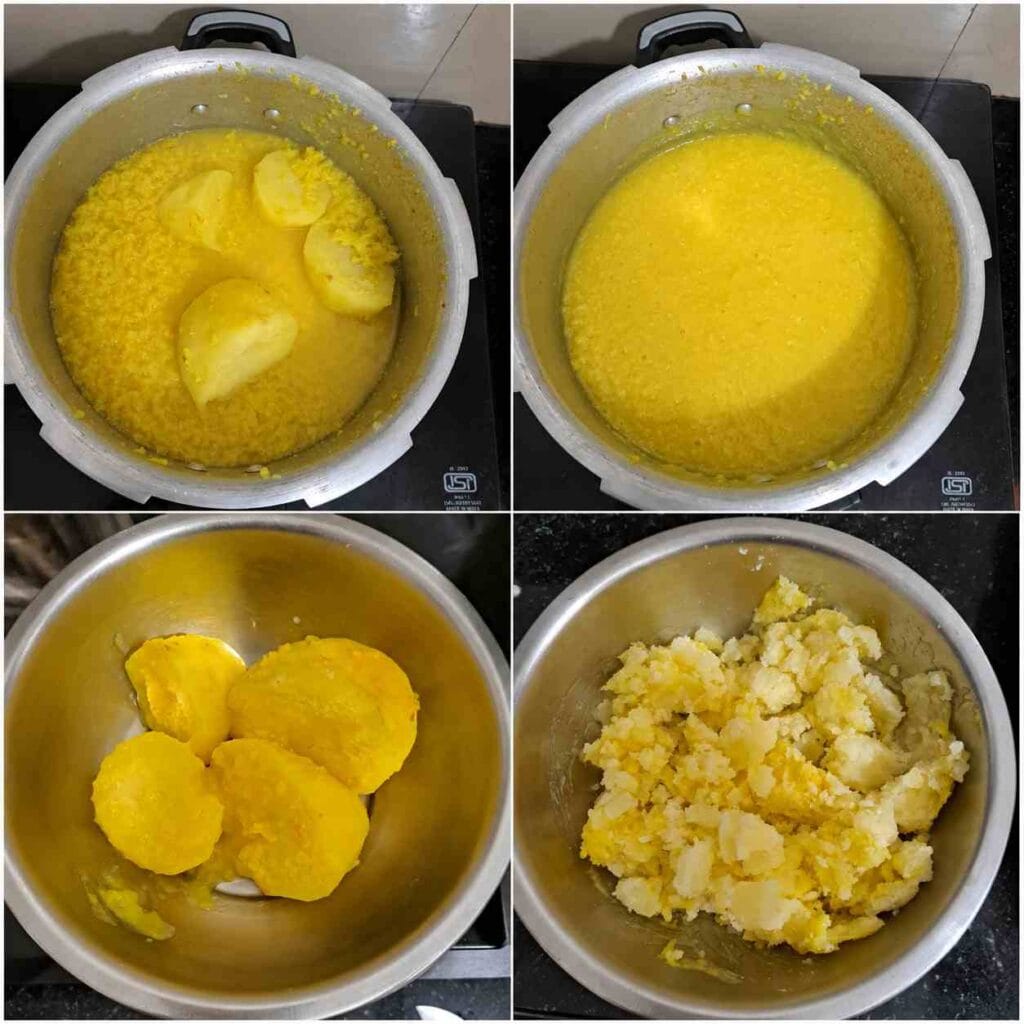
- Pressure cook for 2 whistles or until both are soft. Remove the potatoes, mash them lightly, and keep them aside.
Step 2: Prepare the Fresh Coconut Masala
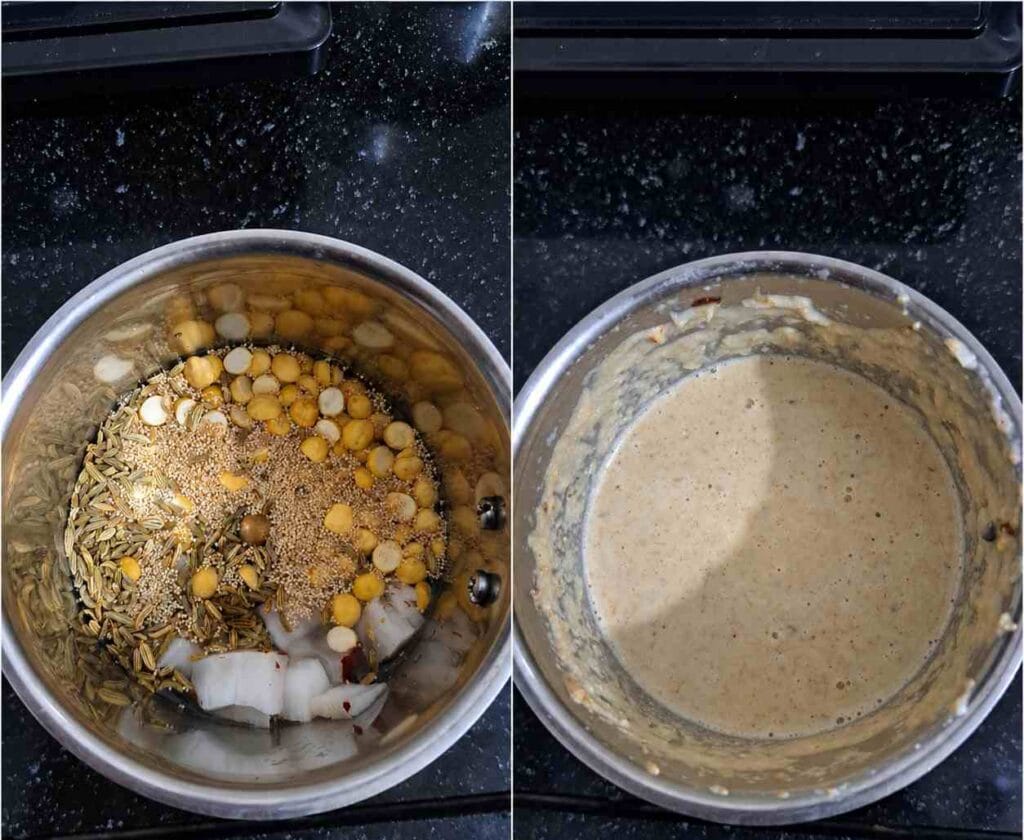
- Add fresh coconut, poppy seeds, roasted gram dal, and fennel seeds to a mixer jar.
- Add a little water and grind everything into a smooth paste. Keep the ground masala aside.
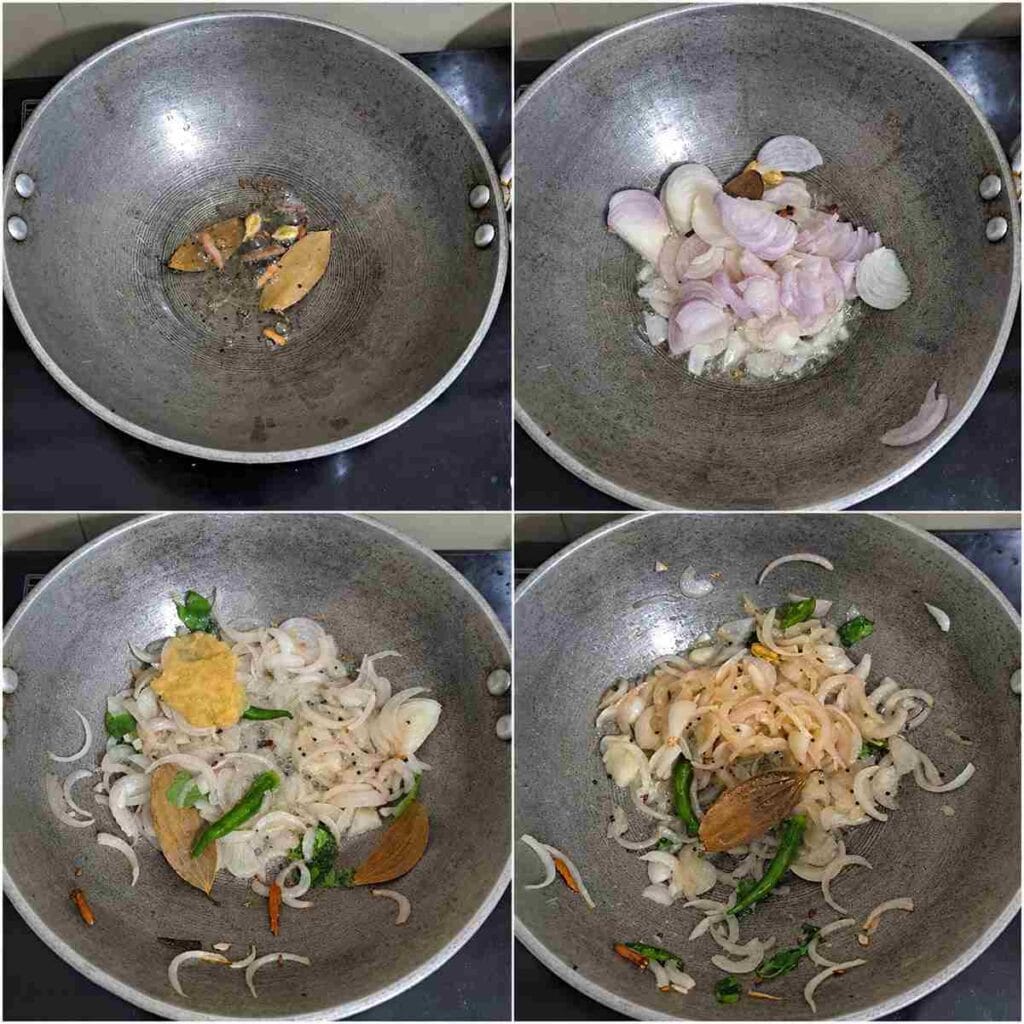
Step 3: Saute the Aromatics
- Heat oil in a pan. Add mustard seeds, bay leaves, cardamom, cloves, and cinnamon.
- Once aromatic, add sliced onions and saute until translucent. Add ginger-garlic paste, green chillies, and curry leaves. Saute until the raw smell disappears.
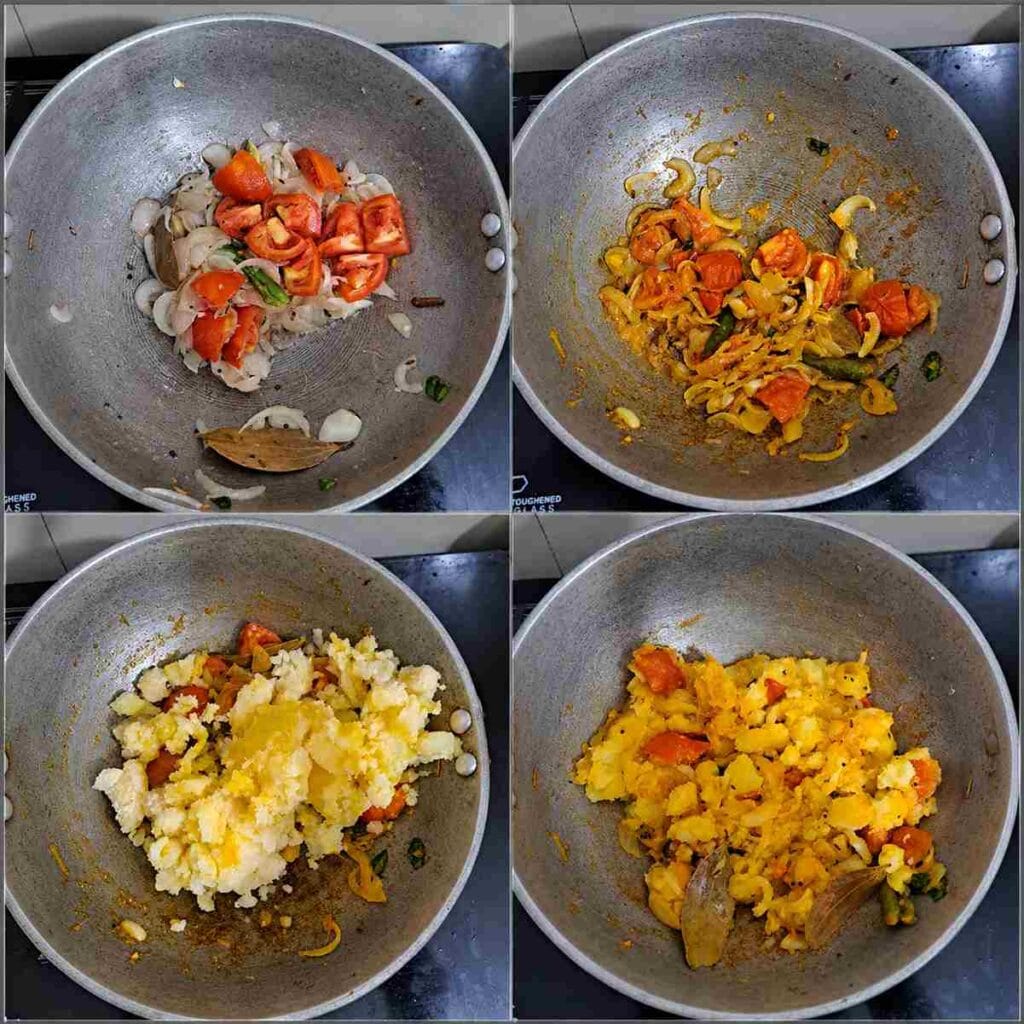
Step 4: Add Tomatoes and Mashed Potatoes
- Add chopped tomatoes and turmeric powder. Cook until the tomatoes turn soft and mushy.
- Add the mashed potatoes and mix well with the onion-tomato mixture.
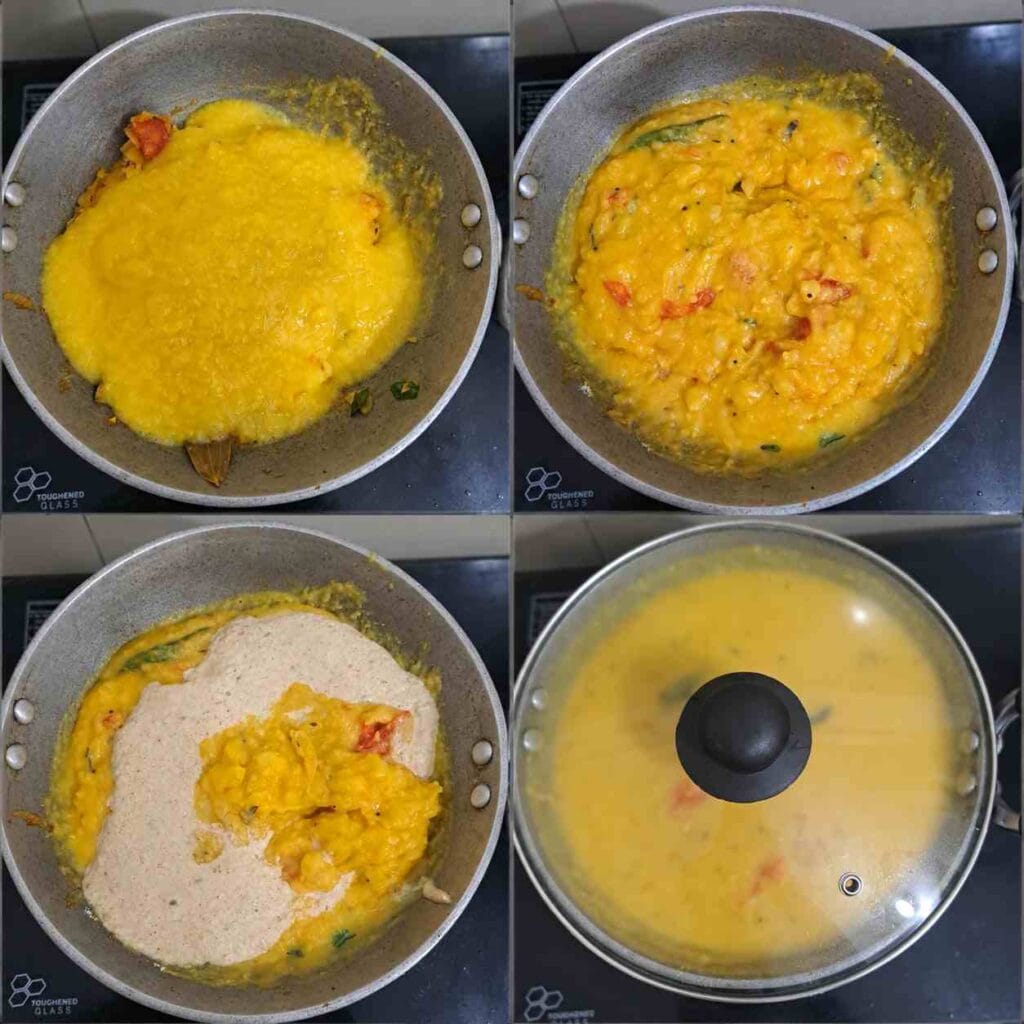
Step 5: Add the Cooked Dal and Ground Coconut Paste
- Pour in the cooked moong dal and mix well. Then add the freshly ground coconut paste.
- Add water as needed to adjust the consistency and mix everything well.
Step 6: Simmer the Kadappa
Allow the Kadappa to simmer for about 10 minutes on low flame so that all the flavors blend together beautifully.
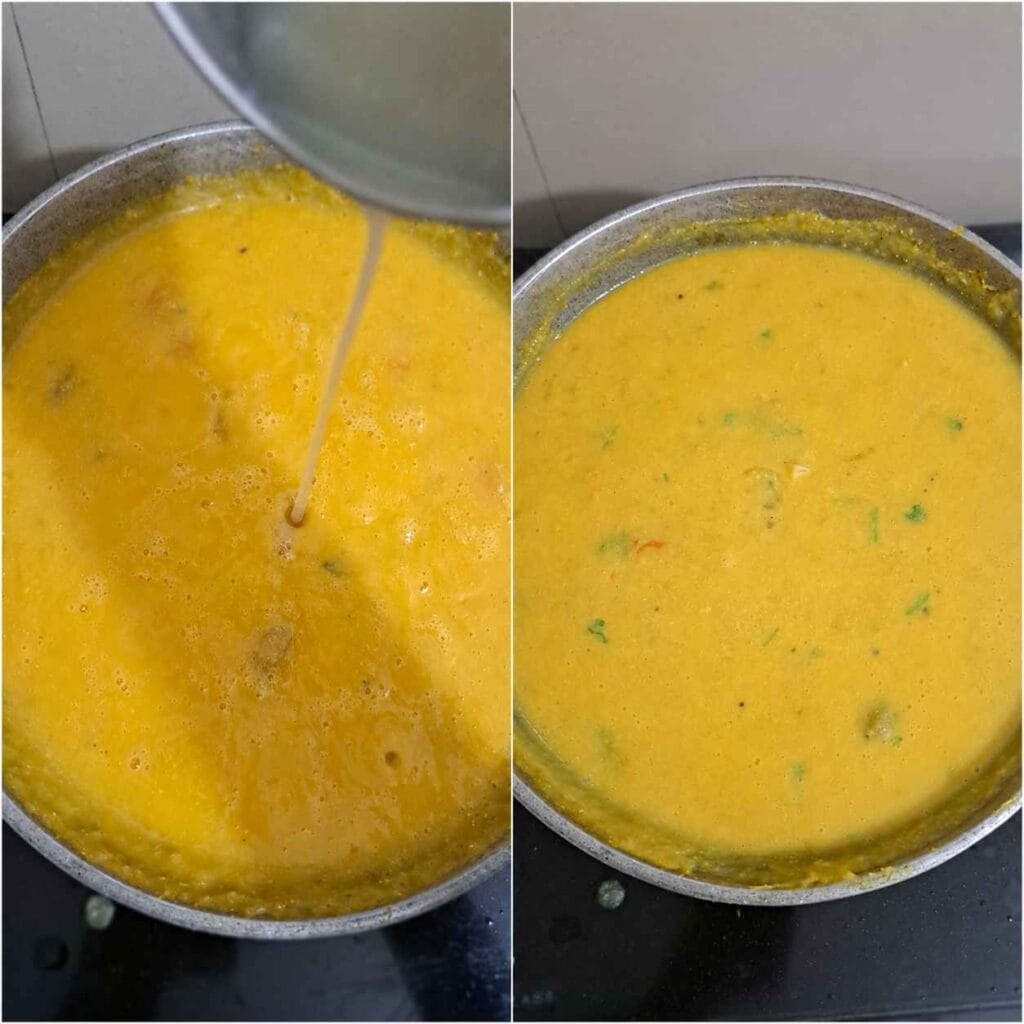
Step 7: Finish with Lemon Juice and Coriander
- Switch off the flame and add fresh lemon juice.
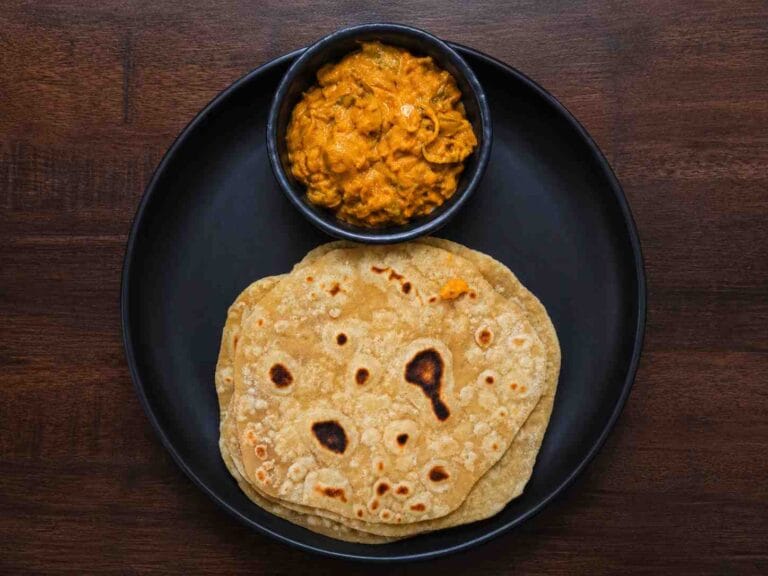
- Garnish with chopped coriander leaves and serve hot with idli, dosa, appam, idiyappam, chapathi, or poori.
Expert Tips
- Soaking moong dal for 30 minutes helps it cook faster and gives a smoother gravy.
- Use fresh coconut for the best taste and mildly spiced texture.
- Do not skip fennel seeds, as they give Kadappa its authentic flavor.
- Cook the tomatoes until soft and mushy to avoid a raw taste.
- Keep the gravy slightly thin while cooking because Kadappa thickens as it cools.
- Add lemon juice only at the end for a fresh and tangy taste.
- Simmer the Kadappa on low flame for a few minutes after adding the coconut paste.
- Adjust the spice level by increasing or reducing the green chillies.
- Kadappa tastes best when served hot with idli, dosa, appam, or chapathi.
- Keep the gravy slightly thin while cooking, as Kadappa naturally thickens as it cools. Adjust the water accordingly.
Serving Suggestions
Kumbakonam Kadappa is traditionally served with soft idli and is a popular breakfast combination in many Tamil Nadu tiffin shops. It also tastes delicious with:
- Dosa
- Appam
- Idiyappam
- Chapathi
- Poori
- Hot steamed rice
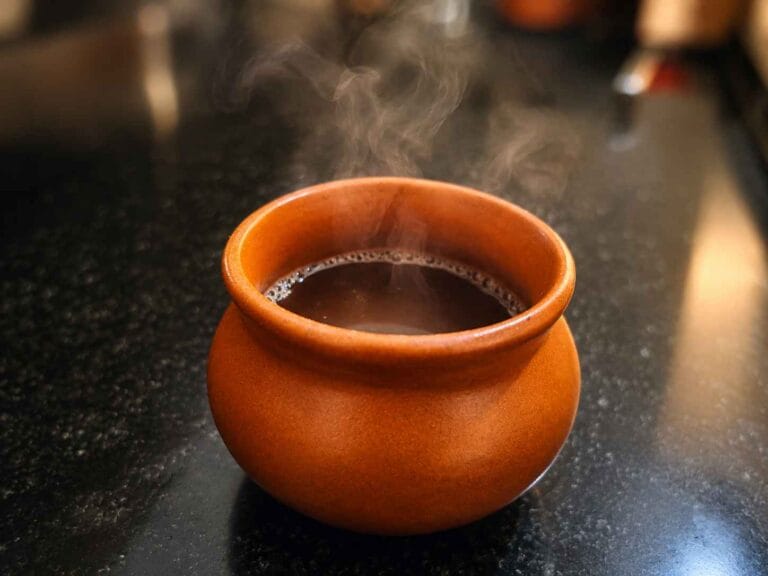
For a complete South Indian breakfast, serve Kumbakonam Kadappa with soft idlis and a cup of hot filter coffee.
You may like this other dish
- Looking for a flavorful side dish powder? Try this homemade Idli Podi Recipe that pairs perfectly with soft idlis and dosas.
- If you enjoy traditional breakfast recipes, don’t miss this soft and delicious Soft Coconut Dosa Recipe. Kumbakonam Kadappa tastes amazing with coconut dosa.
- Looking for another comforting South Indian side dish? This flavourful South Indian Veg Kurma Recipe is a great accompaniment for chapathi, appam, and idiyappam.
- If you love trying different traditional Indian recipes, do check out this wholesome Makki Atta Roti Recipe for a hearty meal.
Kumbakonam Kadappa Recipe
Ingredients
Equipment
Method
- Add the soaked moong dal and peeled potatoes to a pressure cooker with enough water. Pressure cook for 2 whistles or until soft.
- Once the pressure releases, remove the potatoes and mash them lightly. Keep the cooked dal aside.
- Add grated coconut, poppy seeds, roasted gram dal, fennel seeds, and water to a mixer jar. Grind to a smooth paste and keep aside.
- Heat oil in a pan. Add mustard seeds, bay leaves, cardamom, cloves, and cinnamon. Saute for a few seconds.
- Add sliced onions and saute until translucent. Add ginger garlic paste and green chillies. Saute until the raw smell disappears.
- Add chopped tomatoes and turmeric powder. Cook until the tomatoes turn soft and mushy.
- Add the mashed potatoes and cooked moong dal. Mix well.
- Add the ground coconut paste along with enough water to adjust the consistency. Mix well and simmer for 10 minutes.
- Switch off the flame and add lemon juice.
- Garnish with chopped coriander leaves and serve hot.
Notes
- Soaking moong dal is optional but helps it cook faster and gives a smoother texture.
- Use fresh coconut for the best flavor and creamy texture.
- Keep the gravy slightly thin while cooking, as Kadappa thickens as it cools.
- Add lemon juice only at the end for the best taste.
- Adjust the number of green chillies according to your spice preference.
FAQs for Kumbakonam Kadappa Recipe
Can I make Kumbakonam Kadappa without soaking moong dal?
Yes, you can make Kadappa without soaking moong dal. However, soaking the dal for 30 minutes helps it cook faster and gives a smoother consistency.
Why does my Kadappa become thick after some time?
Kadappa naturally thickens as it cools because of the moong dal and potatoes. You can add a little hot water and adjust the consistency before serving.
How long can I store leftover Kadappa?
Since Kadappa is made with fresh coconut paste, it is best consumed fresh. You can store leftovers in the refrigerator for up to 1 day. Reheat before serving and add a little water if needed.
Can I skip coconut in Kadappa?
Fresh coconut gives Kadappa its traditional taste and smooth texture. While you can reduce the quantity, skipping it completely will change the authentic flavor of the dish.
Can I skip poppy seeds in Kadappa?
Yes, poppy seeds can be skipped if unavailable. The Kadappa will still taste delicious.
Is Kumbakonam Kadappa spicy?
Kumbakonam Kadappa is mildly spiced and has a subtle flavor from fennel seeds, coconut, and whole spices. You can adjust the spice level by increasing or reducing the green chillies.
Tried this Kumbakonam Kadappa recipe?
I’d love to hear how it turned out for you! Leave a comment below and share your feedback.
If you make this recipe, don’t forget to share your photos on Instagram and tag @indianrecipestoday – I would love to see your creations.
For more delicious South Indian recipes delivered straight to your inbox, subscribe to our newsletter.
Happy Cooking!!